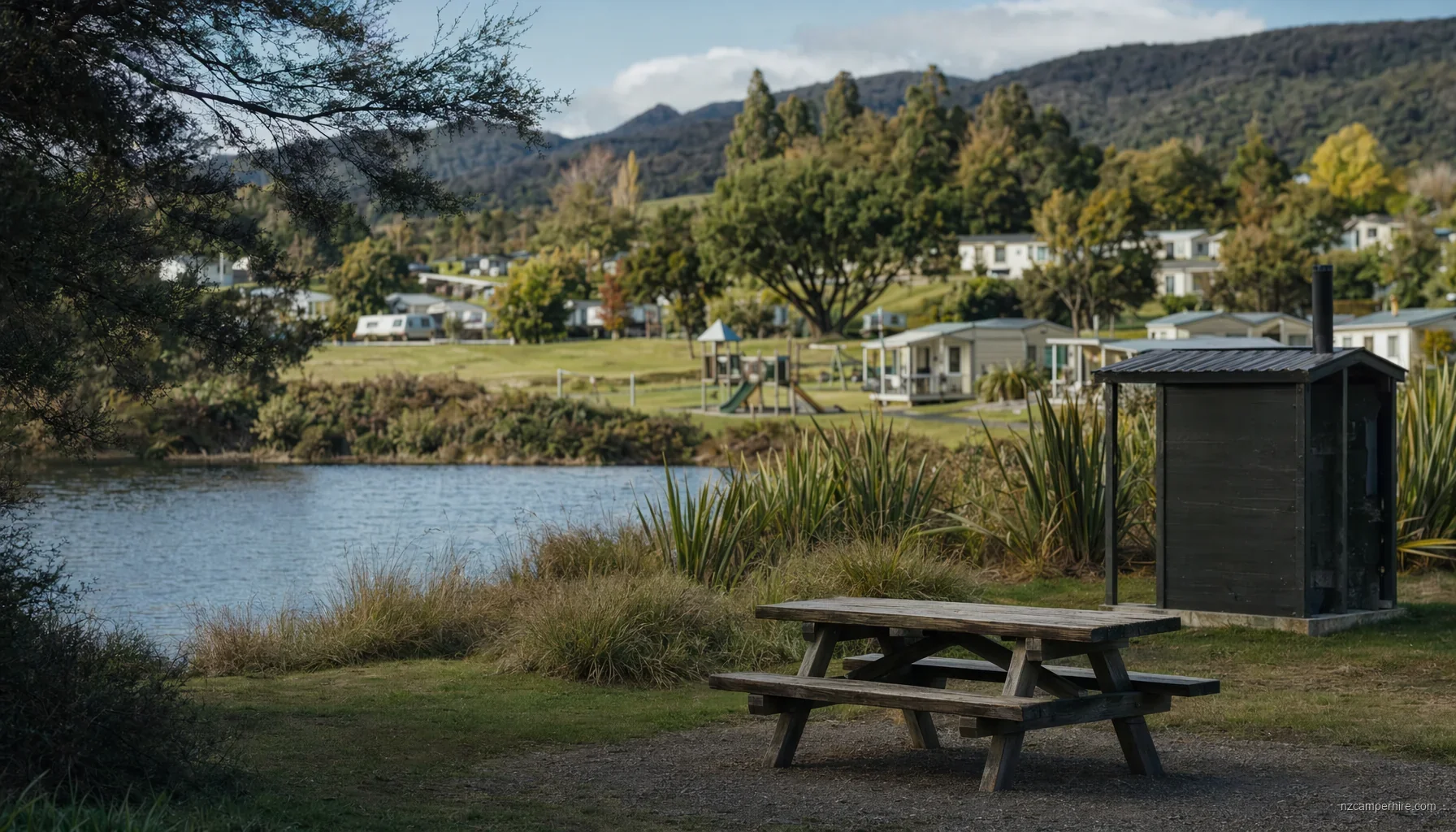
Holiday parks vs DOC campsites in New Zealand
Powered vs unpowered, facilities, booking, costs, and when each makes sense.
- wet-weather-plan
- family-friendly
- busy-summer
- bring-warm-layers
- book-ahead
On a clear campsite morning, the kettle sounds louder than the road, and the first decision is often simple: do you want a hot shower tonight or a view that makes you stand outside in socks?
New Zealand has two very different overnight systems for motorhomes. Holiday parks are private, serviced places with power, showers, kitchens and dump stations. DOC campsites are public conservation camps, often in better scenery, usually with simpler facilities.
The right mix depends on your route, vehicle size, season and tolerance for cold showers. A 2-berth on a calm summer night at Mavora Lakes feels different from a 6-berth needing laundry, battery charge and level parking after SH94 to Milford Sound.
Get the planning checklist — and reply with your dates if you'd like a planner to flag the holiday-park-and-DOC-site-specific gotchas for your route.
The basic difference travellers notice first
A holiday park is the safer default when you need services. Expect powered and unpowered sites, hot showers, toilets, communal kitchens, laundry, potable water, rubbish disposal and usually a dump station. Good examples by location include North South Holiday Park near Christchurch Airport, Creeksyde Queenstown, Rotorua Thermal Holiday Park, Russell Top 10, Akaroa Top 10, Oamaru Top 10, Hokitika Holiday Park and Tasman Holiday Park Waihi Beach.
A DOC campsite is run by the Department of Conservation. It is about access to public conservation land, not hotel-style facilities. Vehicle-accessible DOC sites range from serviced to basic. Some have flush toilets and cooking shelters. Others have long-drop toilets, untreated water, no rubbish collection and no power. White Horse Hill near Aoraki/Mount Cook, Cascade Creek on the Milford Road, Mavora Lakes and Lake Lyndon are the kind of places visitors have in mind when they say they want quiet NZ camping.
Powered sites, batteries and the cold-night test
Powered sites matter more than many first-timers expect. Motorhome house batteries run lights, water pumps, fridge controls and USB charging, but they are not endless. A heater, hair dryer, toaster or microwave usually needs mains power. After two unpowered nights in rain, many travellers need a reset night at a holiday park.
You can feel the whole van relax on a powered site when wet jackets finally steam gently in the corner and every little battery light turns green.
In summer, a small self-contained camper can manage several simple DOC nights if you drive most days. In winter or spring, shorter daylight, cold interiors and wet gear change the calculation. Around Queenstown, Lake Tekapo and Mount Cook, overnight temperatures can drop sharply even in March or April.
For the South Island in 14 days route, a practical rhythm is two scenic simple nights, then one serviced night. For example, Christchurch to Lake Tekapo is about 225 km and 3 to 3.5 hours via SH1 and SH8. Tekapo to White Horse Hill is about 105 km and 1.5 hours via SH80. A powered night before or after that leg makes the trip easier.
Bookings: January is not the time to improvise
Holiday parks in busy places should be booked well ahead for late December, January and early February. Queenstown, Rotorua, Bay of Islands and beach towns fill first. If your route includes New Year in Russell, Waihi Beach or Queenstown, think months ahead, not a few days ahead.
January gives long evenings and busy campgrounds; if one exact campsite matters, book it and leave spontaneity for lunch stops.
DOC bookings vary by campsite. Some are bookable online at doc.govt.nz. Some are first-come, first-served. Some accept the DOC Campsite Pass, while others are excluded or require a separate booking. Always check the specific site page, not a screenshot from a forum.
Arrival time matters. At first-come DOC sites, aim to arrive by mid-afternoon in peak season. Turning up at 7 pm with a 7.2 m motorhome is stressful. NZ roads also take longer than map apps suggest: Queenstown to Te Anau is about 170 km and 2.25 hours, and Te Anau to Cascade Creek is about 76 km and 1 hour 10 minutes on SH94 before any photo stops or roadworks.
Vehicle size changes the overnight plan
A 2-berth or compact 4-berth gives you more flexibility at simple camps. It is easier to park, easier to level, and less awkward on gravel access roads. A larger 6-berth is better for families inside, but it needs more space and is less fun on narrow campground loops or windy alpine roads.
Check three things before choosing a DOC night: vehicle length limits, road surface and turning space. Gravel is common. After rain, unsealed access can be corrugated, dusty or muddy. If you are new to left-side driving, do not combine your first full driving day with a late arrival at a remote campsite.
Self-contained certification is useful, but it does not give you permission to ignore campsite rules. New Zealand’s freedom camping system is separate. The Freedom Camping Act 2011 and 2023 self-containment changes use the NZS 5465:2022 green warrant card system. Councils can be stricter locally, especially Queenstown Lakes, Tasman and Auckland. Our freedom camping guide is the better read before you plan free nights outside formal camps.
A sensible mix for a first NZ motorhome trip
Most international visitors are happiest with a mixed plan. Use holiday parks at the start, in cities, before early activities, and after wet or cold nights. Use DOC campsites where the location is the point: Mount Cook, Fiordland, lakes, forests and quieter coastal stops.
- First night: choose a holiday park near your pick-up city. North South Holiday Park is practical after a Christchurch arrival.
- Big driving days: book a powered site, especially after SH6 on the West Coast or SH94 toward Milford Sound.
- Scenery nights: use DOC sites when you can arrive early and do not need power.
- Final night: use a serviced park so tanks are empty, rubbish is sorted and the vehicle is clean for return.
For region planning, read the Queenstown region guide before assuming you can stay cheaply near town in January. Space, bylaws and road access all tighten there.
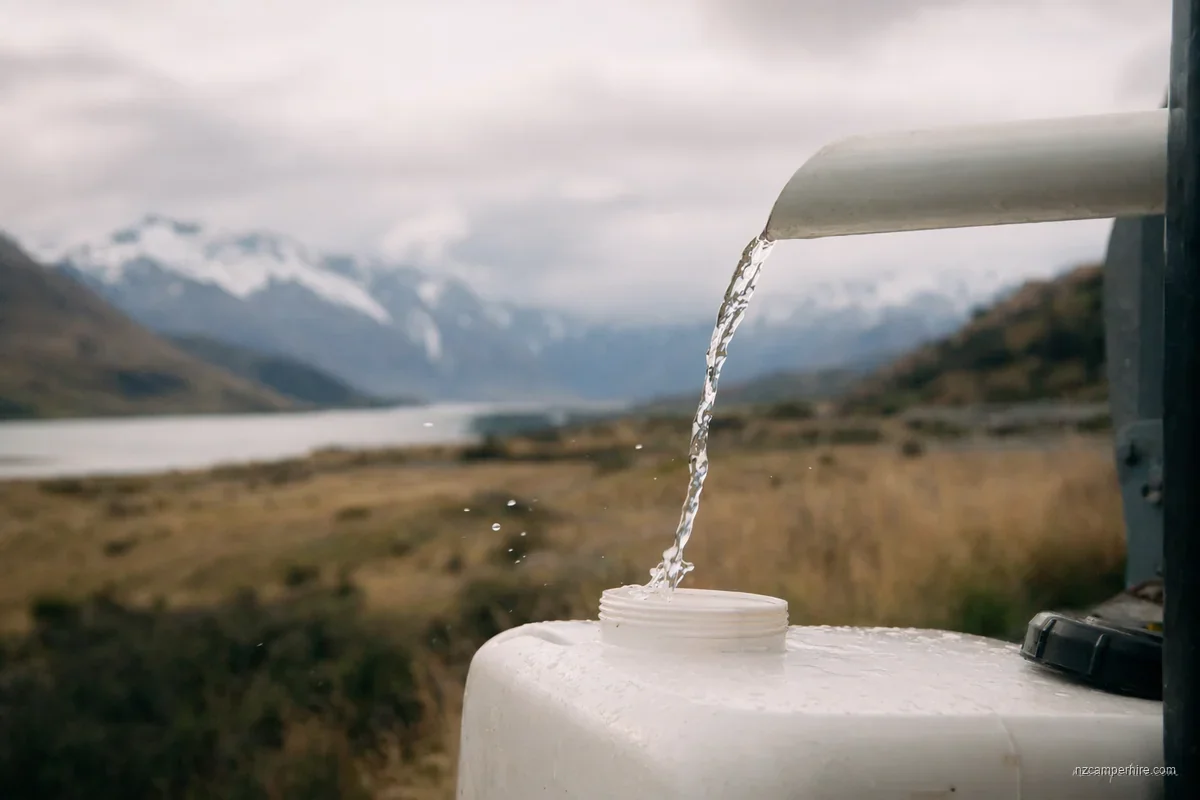
Rules and practicalities are easier to remember when you've felt them — the cold of a wet boot at a freedom camp, the relief of an early ferry slot. This guide is written from those moments, not from a checklist.
Related reading
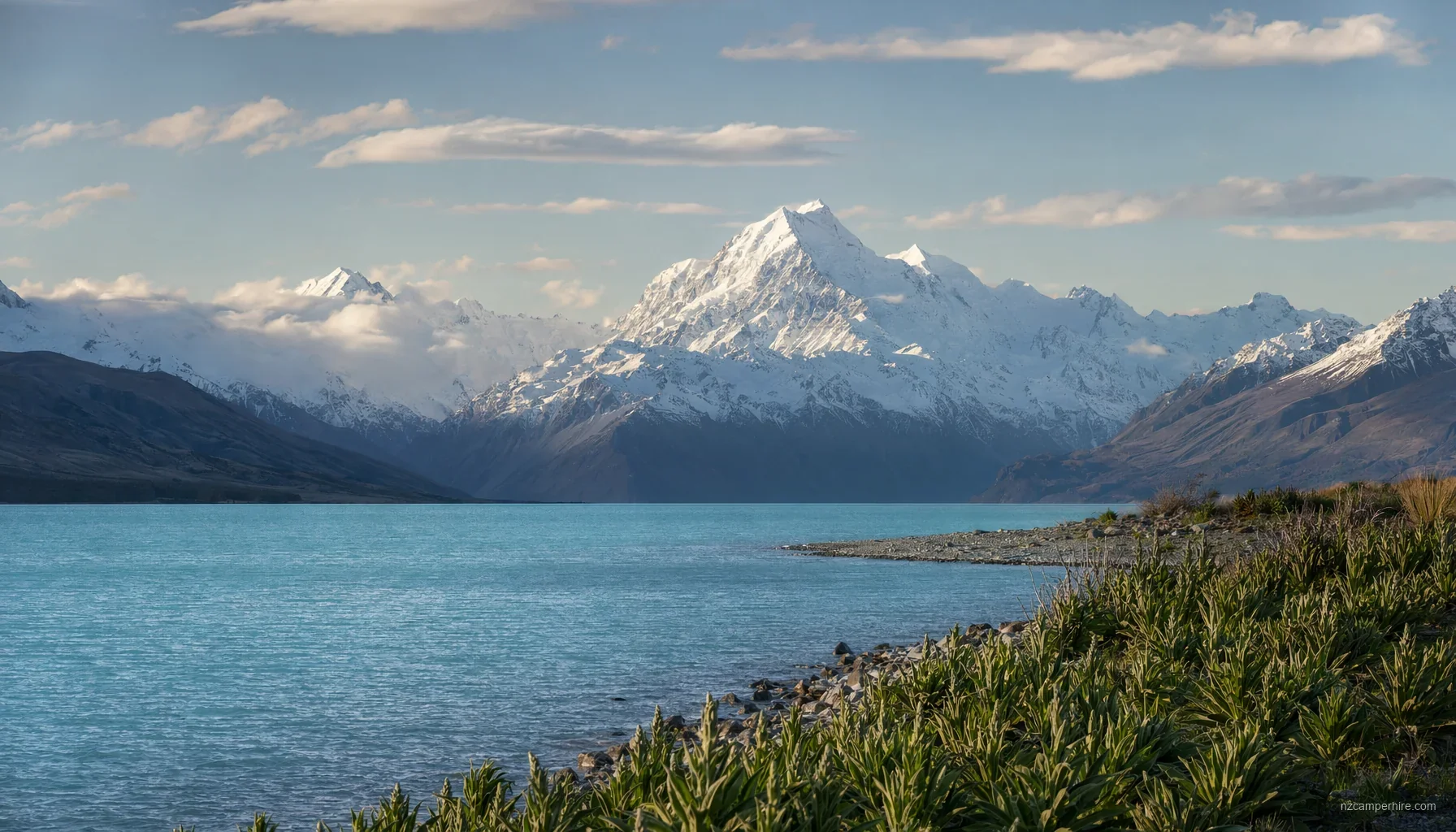 ROUTE
ROUTE South Island in 14 days
Classic clockwise South Island loop — Kaikoura, Nelson, West Coast glaciers, Wanaka, Queenstown, Milford Sound, Tekapo, back to Christchurch.
See the route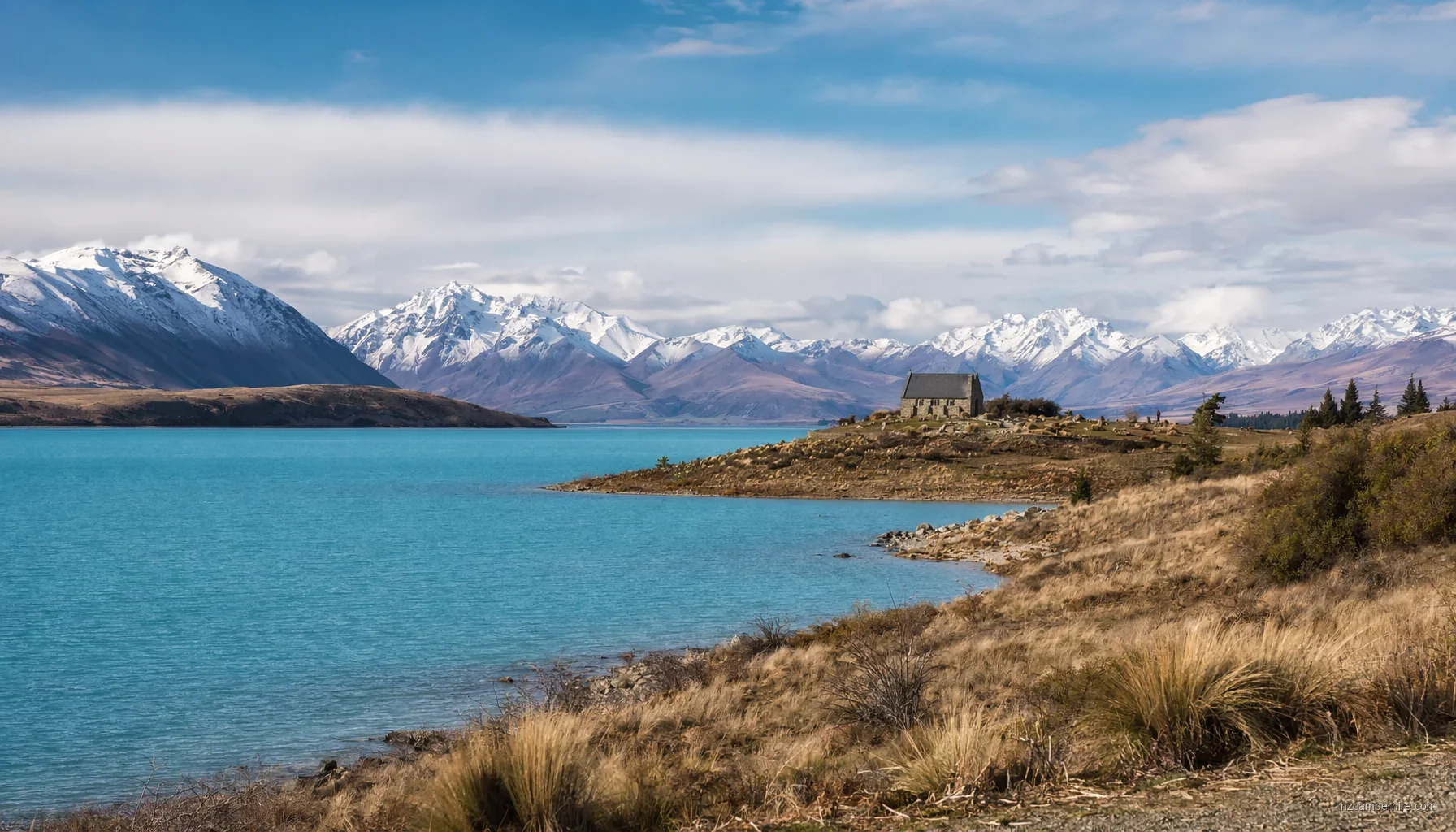 REGION
 Lake Tekapo
Turquoise alpine lake under a dark sky reserve. Mid-South Island stargazing.
See the region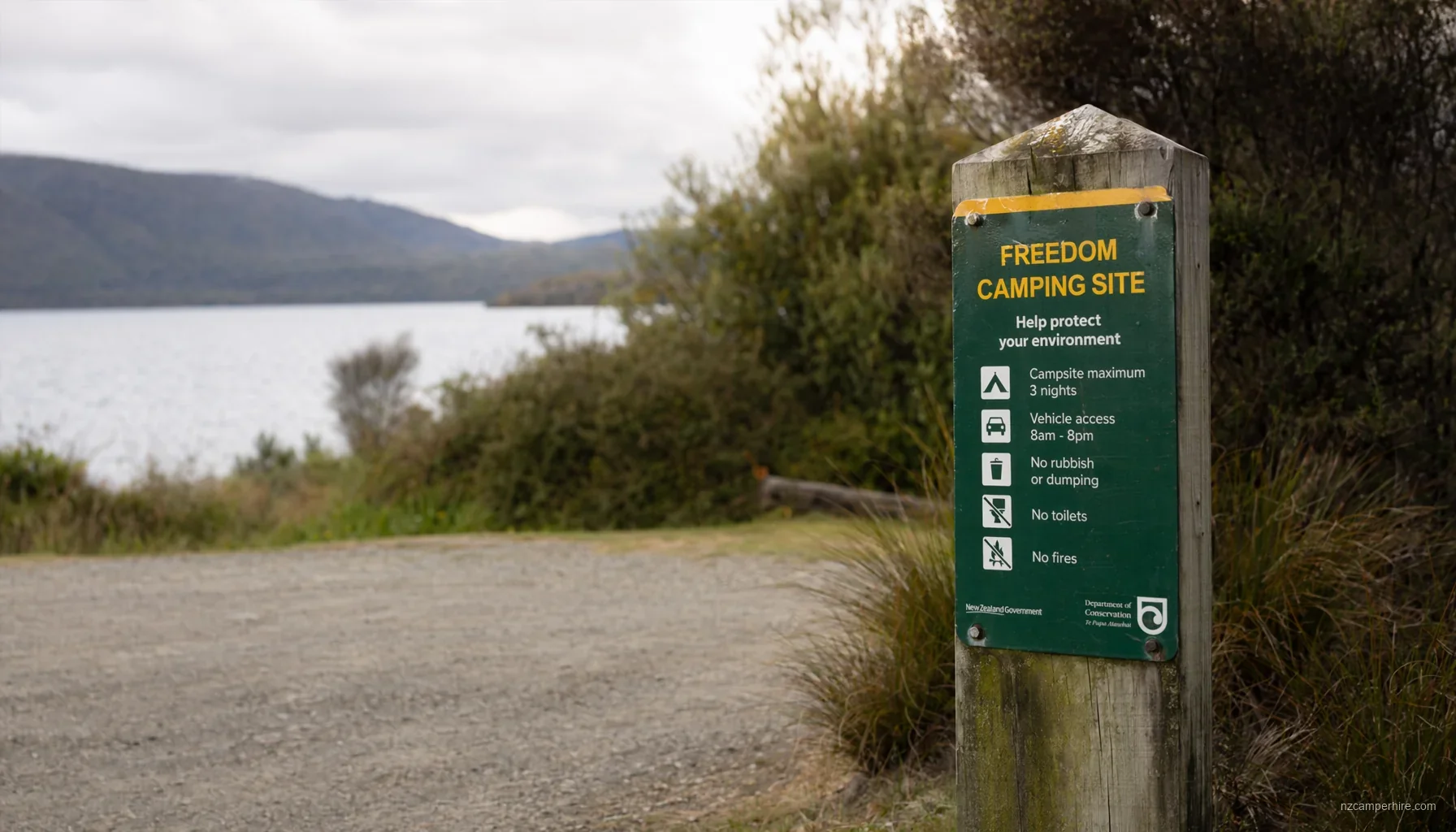 PRACTICAL GUIDE
 Freedom camping in NZ
Where you can legally freedom-camp in a self-contained vehicle, and where you'll get fined.
Read the guideHoliday parks vs DOC campsites FAQ
Are DOC campsites cheaper than holiday parks?
Do I need a self-contained motorhome for DOC campsites?
Can I dump grey water at a holiday park if I am not staying there?
Is it risky to arrive at a DOC campsite without booking?
Which is better for the first night after picking up a motorhome?
Have a planner answer this for your specific trip
Rules and practicalities depend on dates, party size, and route. Send us your outline and we'll come back with answers tailored to your trip.