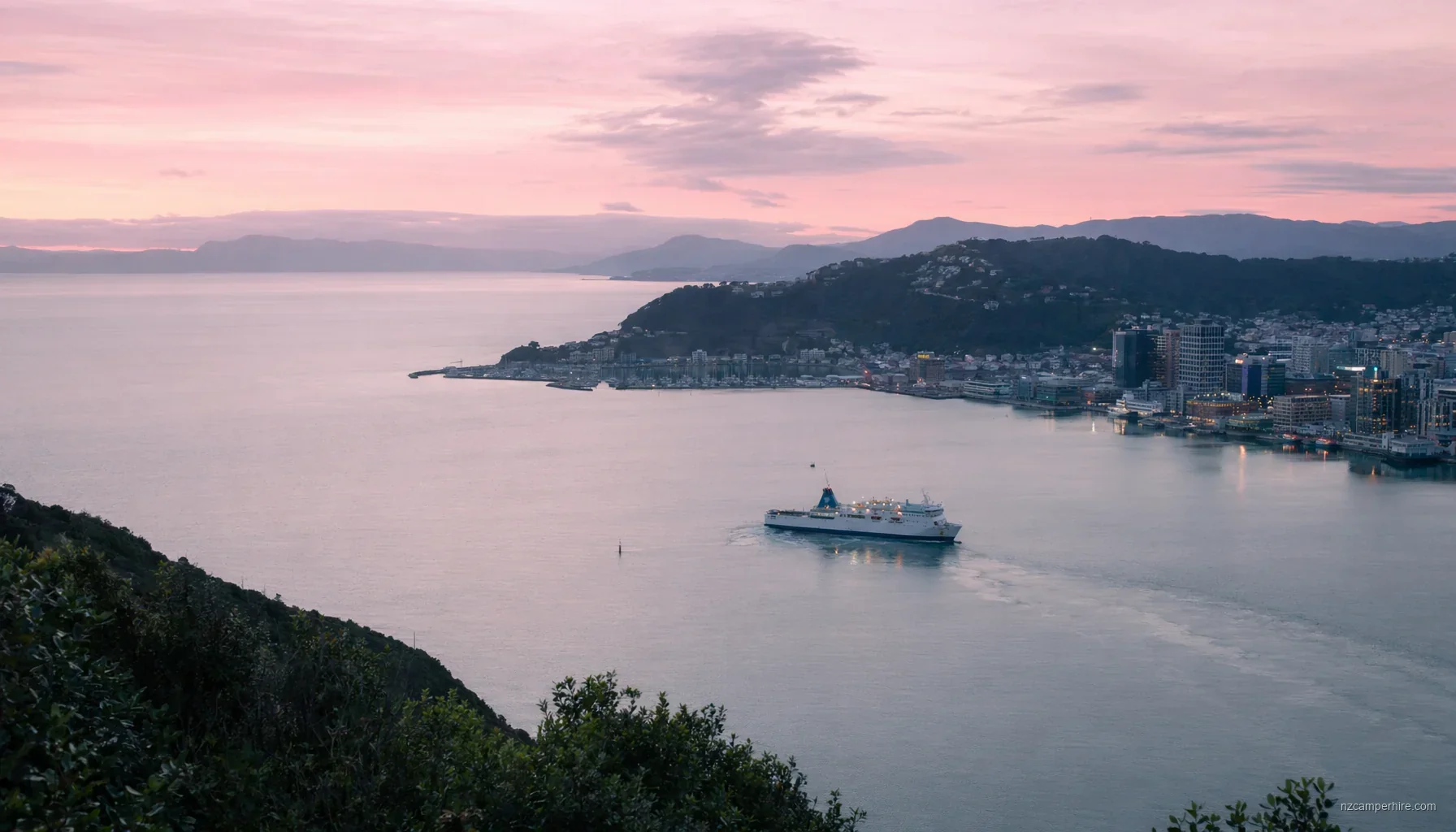
Cook Strait ferry with a campervan
Interislander vs Bluebridge, booking tips, what to expect, height/length limits.
- ferry-stage
- wet-weather-plan
- book-ahead
- bring-warm-layers
- pack-snacks
On a clear Wellington morning, the harbour can look almost still from the terminal, with coffee steam in the cab and gulls working the wind above the lanes. Then the ramp drops, and the day's plan becomes very practical.
The Cook Strait ferry is the moving bridge between Wellington in the North Island and Picton in the South Island. If your motorhome route crosses both islands, this is the one transport leg you need to plan rather than improvise.
There are two ferry operators, Interislander and Bluebridge. The crossing takes about 3 hours 20 minutes on the water, but with check-in, loading and unloading you should treat it as a half-day travel move.
Get the planning checklist — and reply with your dates if you'd like a planner to flag the Cook Strait ferry-specific gotchas for your route.
The crossing in plain numbers
The Cook Strait ferry runs between Wellington and Picton. The sailing time is usually about 3 hours 20 minutes. With campervan check-in, loading, parking on the vehicle deck and unloading, allow at least 3.5 to 4.5 hours from arriving at the terminal to driving away at the other end.
From Picton, realistic onward driving times are 140 km to Nelson in about 2 hours via SH6, or 340 km to Christchurch in about 5 to 5.5 hours via SH1 and Kaikoura. That Christchurch drive is too long after an evening sailing for most first-time visitors. North South Holiday Park in Christchurch works well as a practical first or last night when you are positioning for a South Island route.
From Wellington, Auckland is about 650 km away and normally needs two driving days in a motorhome. Rotorua to Wellington is about 450 km and 6 to 7 hours via SH1, depending on stops, roadworks and weather.
Interislander or Bluebridge, and what actually differs
Both Interislander and Bluebridge carry campervans, cars, caravans, commercial vehicles and foot passengers. Both use the same basic route across Cook Strait and through the Marlborough Sounds. The choice usually comes down to sailing time, vehicle space, terminal location and how well the schedule fits your route.
Interislander uses the Wellington terminal at Aotea Quay and the Picton terminal close to town. Bluebridge uses its own Wellington terminal near the railway station and also arrives in Picton. Check the current terminal instructions before travel, because road layouts around Wellington port can change with works and traffic controls.
For official safety guidance, use Maritime NZ at maritimenz.govt.nz. For road rules and licence requirements, use NZ Transport Agency Waka Kotahi at nzta.govt.nz. A foreign licence in English is generally valid for up to 12 months in New Zealand. If it is not in English, carry an International Driving Permit or an approved translation.
Campervan measurements, LPG and check-in
When you arrange a ferry space, the vehicle length matters more than the number of travellers. A compact 2-berth may sit around 5 to 6 metres. A family 4-berth or 6-berth can be closer to 7 metres or more. Height also matters, especially for high-roof vehicles, bike racks and roof boxes. Give the actual length including tow bars, rear storage boxes and bike racks.
Vehicle check-in commonly closes around 60 minutes before departure. In peak summer, arrive 90 minutes early. You may queue, show identification, receive a lane number, then drive onto the ship when directed. Staff will tell you where to park. Leave the vehicle in gear or park, apply the handbrake, turn off alarms if instructed and take everything you need upstairs.
You feel the crossing become real when the van is handbraked, the keys are in your pocket and the harbour starts sliding past the window upstairs.
You normally cannot return to the vehicle deck during the crossing. Turn off LPG gas bottles before loading. Do not leave fridges running on gas. If you need medication, passports, warm layers, phone chargers or food for children, take them with you before you lock the vehicle.
How far ahead to plan the sailing
For January, February, Easter and the late-December holiday period, plan the ferry about 3 to 4 months out if your route depends on a specific day. Picton ferry space in peak season is not something to leave until two weeks before travel, especially with a longer motorhome.
Shoulder months such as March, April, October and November are easier, but weekend sailings and daylight crossings still fill first. Winter has more space, though weather disruptions are more likely. If you are connecting to a tight flight, avoid putting the ferry on the same day as your international departure.
This is where route shape matters. A South Island in 14 days route starting in Christchurch may avoid the ferry completely. A full two-island plan from Auckland to Queenstown or Christchurch usually needs one Cook Strait crossing, and the date of that sailing becomes the hinge point for the whole itinerary.
Where to place it in your itinerary
Southbound travellers often drive Wellington to Picton, then continue to Nelson, Kaikoura, Blenheim or Christchurch. If you are tired after left-side driving in Wellington traffic, stay near Picton rather than forcing a late run down SH1. Picton to Kaikoura is about 155 km and 2.5 hours in good conditions, but the coast road has slower corners and roadworks can appear.
Northbound travellers often come from Christchurch, Kaikoura, Nelson or the West Coast. If your last South Island night is in Christchurch, allow 5 to 5.5 hours to Picton and add a buffer for fuel, lunch and SH1 delays. Do not plan a morning sailing from Picton if you are leaving Christchurch that same morning.
Pushing on after an evening sailing can save a night on paper, but it often costs you the calm start you wanted the next morning.
Use the Christchurch region guide if your hire starts or ends there, and read the vehicle-size guide before choosing a 6-berth for a two-island trip. The larger vehicle can suit a family, but it gives you less flexibility in ferry spaces, city parking and tight holiday park manoeuvres.
If wind, swell or mechanical delays change the day
Cook Strait is open water. Strong wind, swell and port issues can delay or cancel sailings. It does not happen every week, but it happens often enough that sensible itineraries leave slack on either side of the crossing.
Build in one flexible night around Wellington, Picton, Nelson or Blenheim if your overall plan is tight. This is especially important before flights, paid activities or long drives to Queenstown, Rotorua or the Bay of Islands. Keep snacks, water and warm clothing accessible in the campervan queue, because a delayed loading time can turn into a long wait.
If a sailing is cancelled, follow the operator's rebooking instructions first. Then adjust the road plan. It is usually safer to shorten a side trip than to compensate with an 8-hour motorhome driving day on unfamiliar roads.
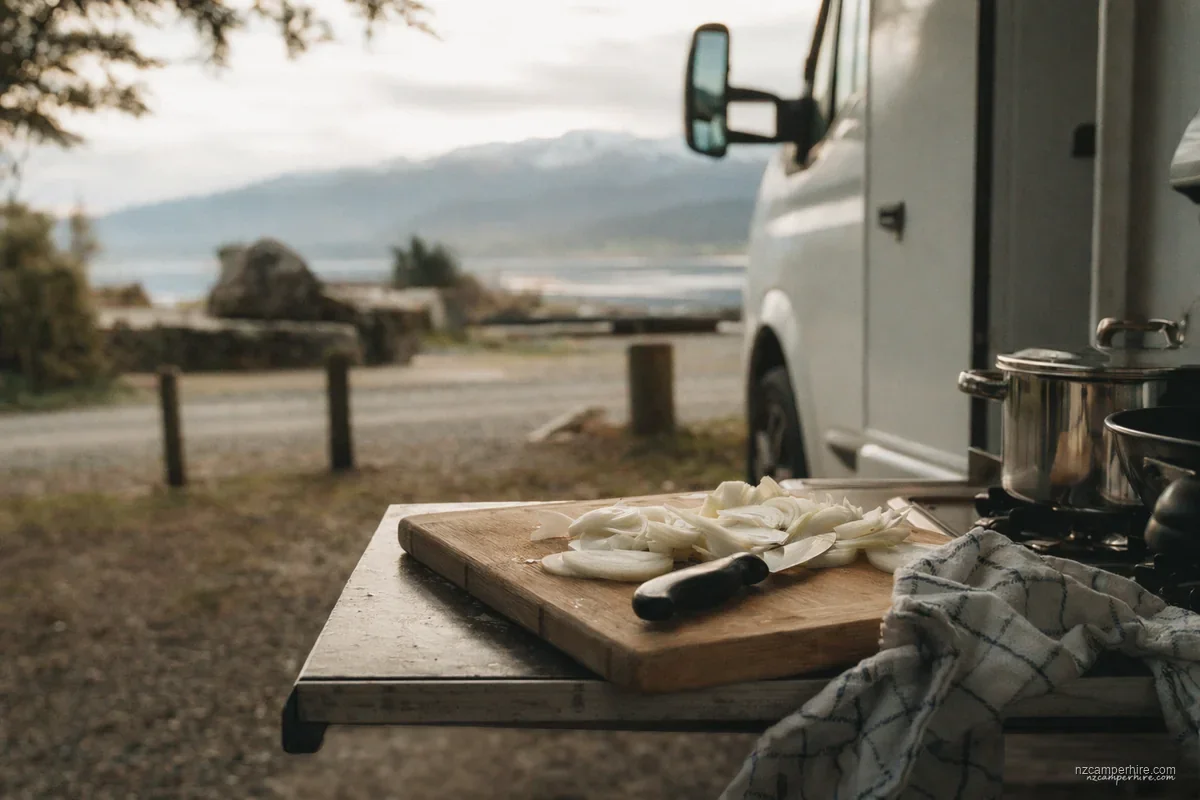
Rules and practicalities are easier to remember when you've felt them — the cold of a wet boot at a freedom camp, the relief of an early ferry slot. This guide is written from those moments, not from a checklist.
Related reading
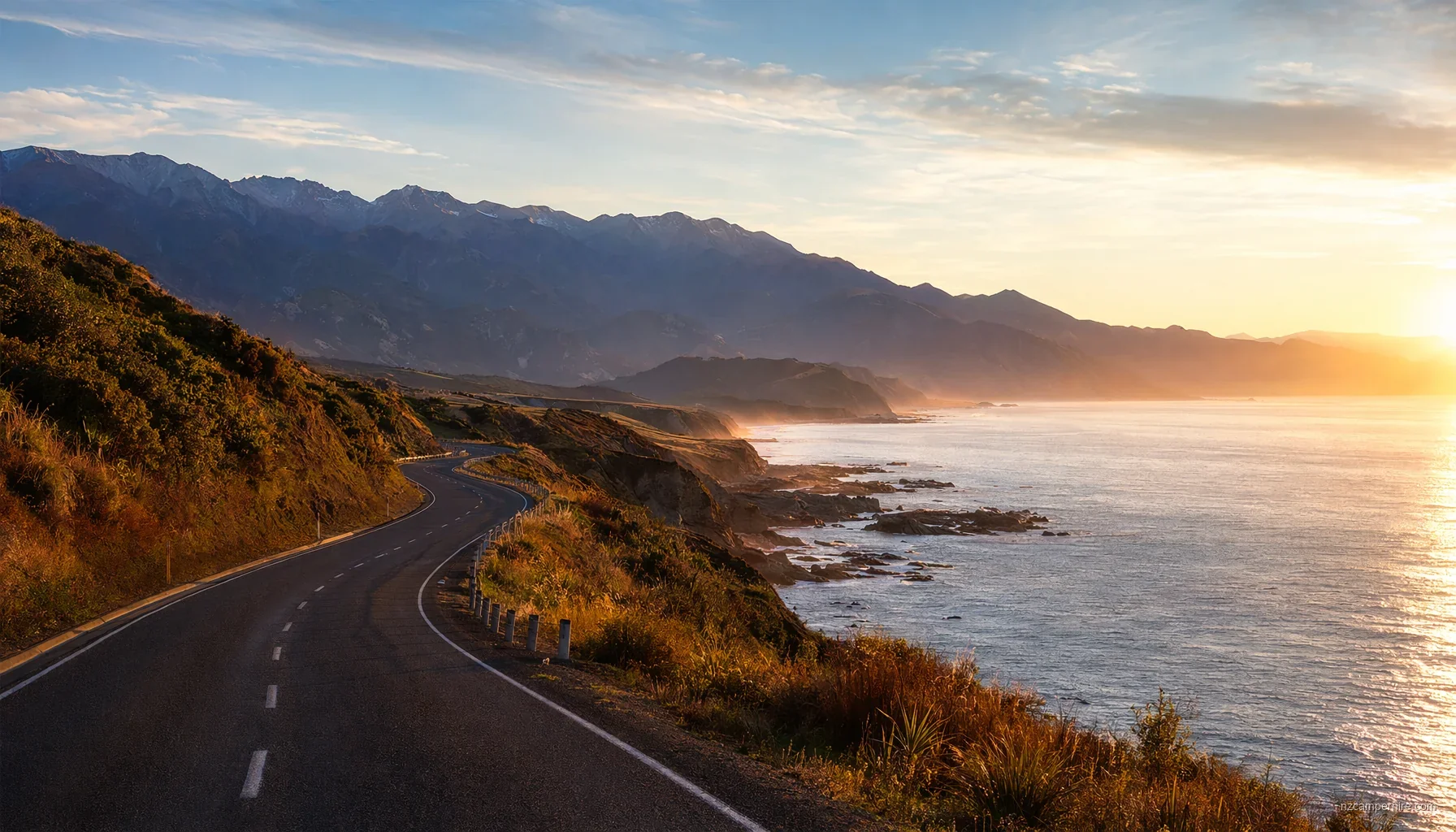 ROUTE
ROUTE North to South in 14 days
Two-week full-NZ — fast-paced but covers North Island highlights, ferry, and South Island core.
See the route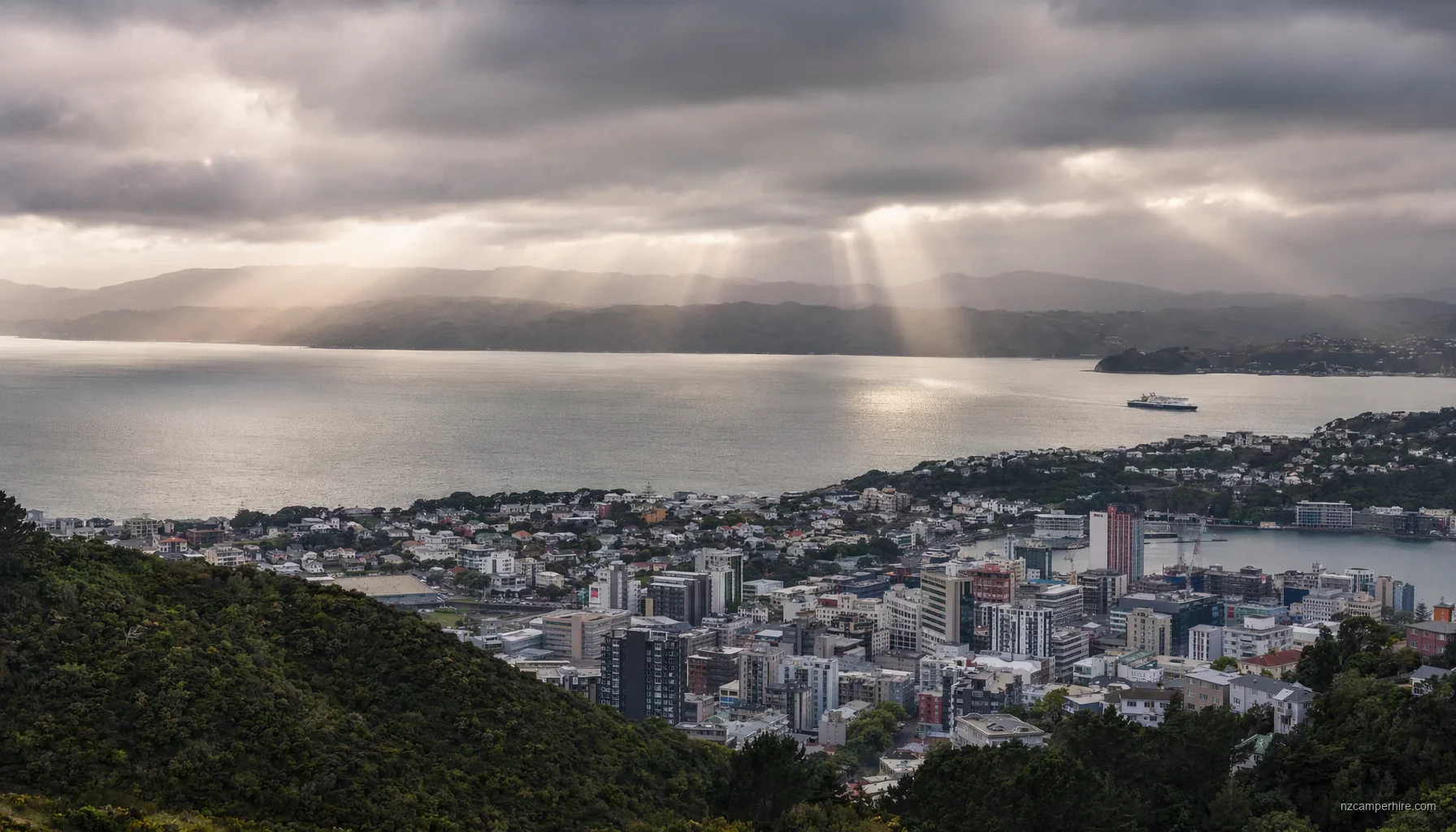 REGION
 Wellington
Capital city and Cook Strait ferry port. The pivot point between islands.
See the region PRACTICAL GUIDE
 Driving in NZ on a foreign license
Which licenses are accepted, the IDP question, NZ road rules that surprise visitors.
Read the guideCook Strait ferry with a campervan FAQ
Can I stay in my campervan during the Cook Strait crossing?
How early should I arrive with a motorhome?
Will a 6-berth campervan fit on the ferry?
Is it safe to drive from Christchurch to Picton and sail the same day?
Which direction is better, Wellington to Picton or Picton to Wellington?
Have a planner answer this for your specific trip
Rules and practicalities depend on dates, party size, and route. Send us your outline and we'll come back with answers tailored to your trip.