Freedom Camping in NZ: What Is Legal in 2026
Where you can legally freedom-camp in a self-contained vehicle, and where you'll get fined.
- slow-morning
- busy-summer
- bring-warm-layers
- pack-snacks
- book-ahead
There is a particular hush in a campground-sized car park before sunrise: kettle clicking on, windows misting, someone padding across gravel in socks they regret wearing outside.
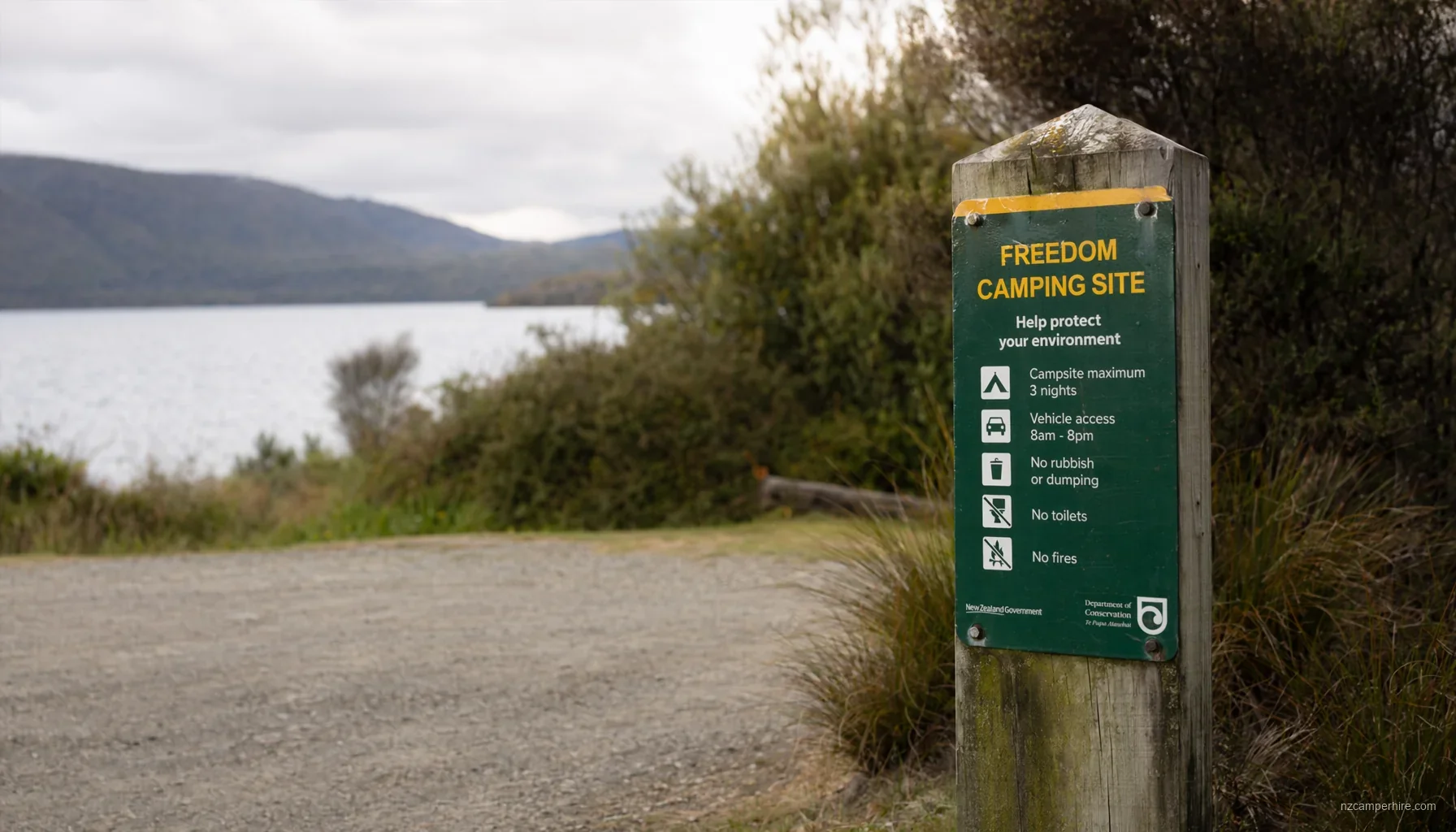
Freedom camping in New Zealand does not mean pulling up anywhere scenic and sleeping. It means camping on public land only where the national law and the local council rules both allow it, usually in a certified self-contained motorhome.
This matters on a South Island in 14 days route because places like Queenstown, Rotorua and Auckland check overnight parking heavily in summer. The rules are manageable, but you need to know them before the first supermarket stop.
Get the planning checklist — and reply with your dates if you'd like a planner to flag the freedom-camping-specific gotchas for your route.
The law: national permission, local restrictions
The Freedom Camping Act 2011 is the base law. The 2023 self-containment amendment tightened how vehicles qualify. In plain English: camping is allowed only where it has not been restricted or prohibited, and councils can set local bylaws for their own roads, reserves and car parks.
That local layer is what catches visitors. Queenstown Lakes, Tasman and Auckland are among the most restrictive areas. A legal overnight spot near Christchurch does not make a similar-looking lakefront car park in Queenstown legal. Always check the council map or signs on site. If a sign says no overnight camping, the Act will not save you.
Self-containment: the green card matters
For freedom camping on most public land in 2026, your rental motorhome needs current self-contained certification. Look for the green warrant card on the windscreen and check the expiry date. The standard to know is NZS 5465:2022, with older NZS 5465:2001 certification largely phased out for freedom camping purposes.
The phrase “self-contained” means the vehicle can hold fresh water, grey water and toilet waste without discharging it onto the ground. In practice, the certification card on the vehicle is more important than a line in a rental listing. If the card is missing, expired or unclear, do not assume a ranger will accept your explanation. A non-certified van can still be a lovely way to travel, but it moves you into paid camps and managed sites rather than roadside freedom camping.
Legal places that beat random car parks
Freedom camping sounds cheaper, but a planned low-cost stop often saves stress. DOC campsites are the useful middle ground. Look at Mavora Lakes between Queenstown and Te Anau, Cascade Creek on SH94 toward Milford Sound, White Horse Hill at Aoraki/Mount Cook, and Lake Lyndon near SH73. Check current rules and facilities at doc.govt.nz before you drive in.
At a DOC camp beside a cold lake, the best sound is often the zip of a jacket and the first kettle starting before the road wakes up.
Holiday parks are still the right answer every few nights, especially for laundry, showers, power and dumping waste. Creeksyde Queenstown, Rotorua Thermal Holiday Park, North South Holiday Park in Christchurch and Russell Top 10 in the Bay of Islands are practical route anchors. They are not freedom camping, but they keep the trip working.
Fines, grey water and ranger red flags
The standard instant fine for illegal freedom camping is $400. Illegal dumping is treated more seriously. Grey water dumped onto land or into a drain can be fined at up to $200 per litre, and serious cases can reach $10,000.
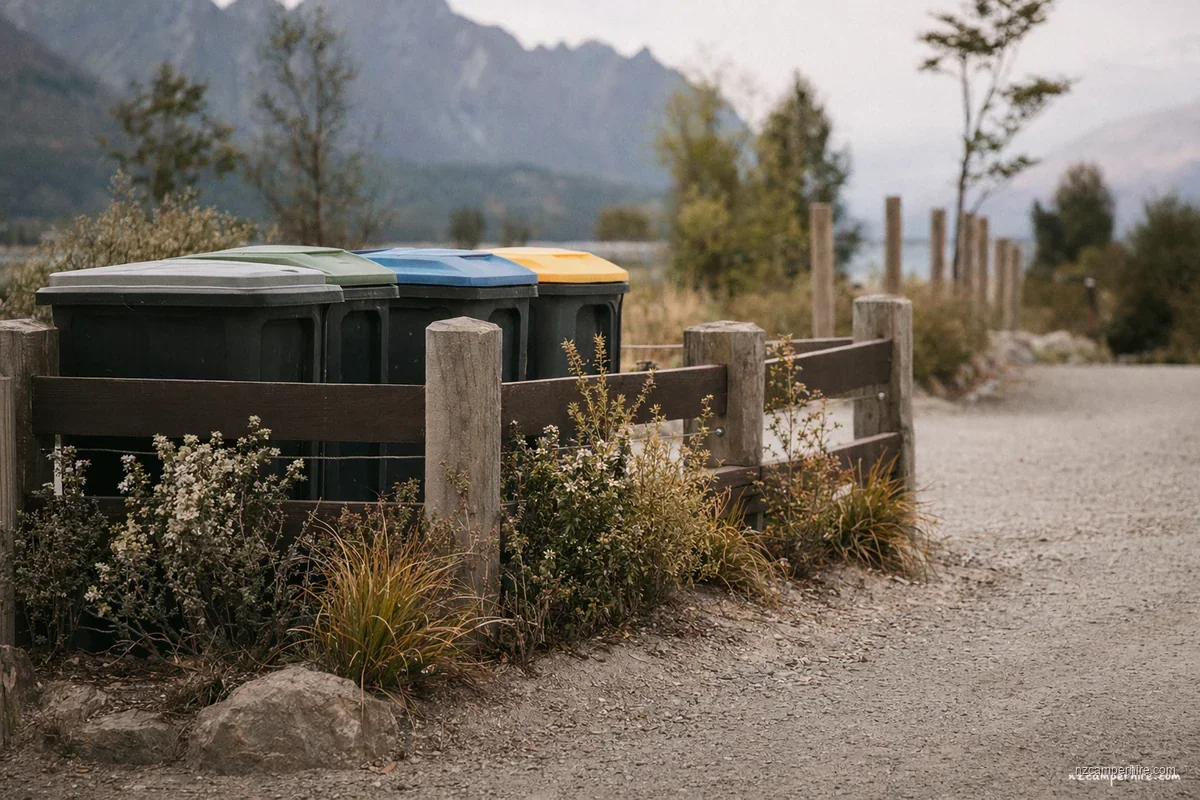
Rangers notice the simple things: sleeping in a prohibited area, staying longer than the posted limit, putting chairs and tables out where camping is restricted, leaving rubbish, or draining grey water beside the road. Dump stations are the only proper place for wastewater. Many towns have public dump stations, and most holiday parks will point you to the nearest one if you are staying there.
How to check a spot before you sleep
Use apps for ideas, not as the legal authority. The final check is the council bylaw map, the sign on site, and the land manager. For DOC campsites, use doc.govt.nz. For the freedom camping law, use the MBIE pages at mbie.govt.nz. For licence rules, Waka Kotahi NZ Transport Agency publishes visitor driving guidance at nzta.govt.nz. Tourism New Zealand has general visitor information at newzealand.com.
Do the check before dark. New Zealand drives on the left, rural roads are often unlit, and turning a 6-berth around on a narrow lake road after 9 pm is not a good first-night lesson.
Rules and practicalities are easier to remember when you've felt them — the cold of a wet boot at a freedom camp, the relief of an early ferry slot. This guide is written from those moments, not from a checklist.
Related reading
 ROUTE
ROUTE South Island in 14 days
Classic clockwise South Island loop — Kaikoura, Nelson, West Coast glaciers, Wanaka, Queenstown, Milford Sound, Tekapo, back to Christchurch.
See the route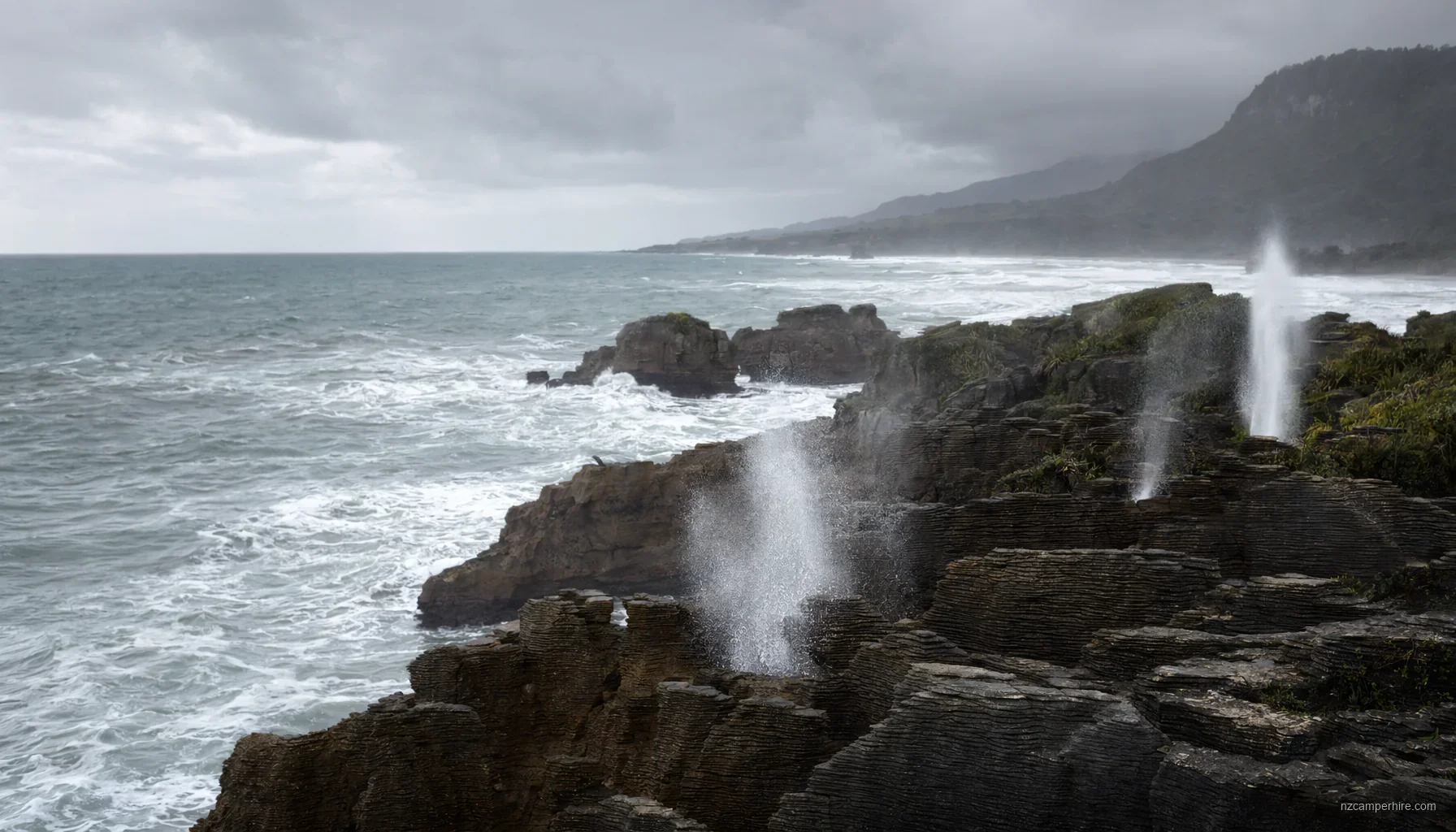 REGION
 West Coast
Wild glaciers, rainforest, and pancake rocks. Franz Josef, Fox Glacier, Punakaiki.
See the region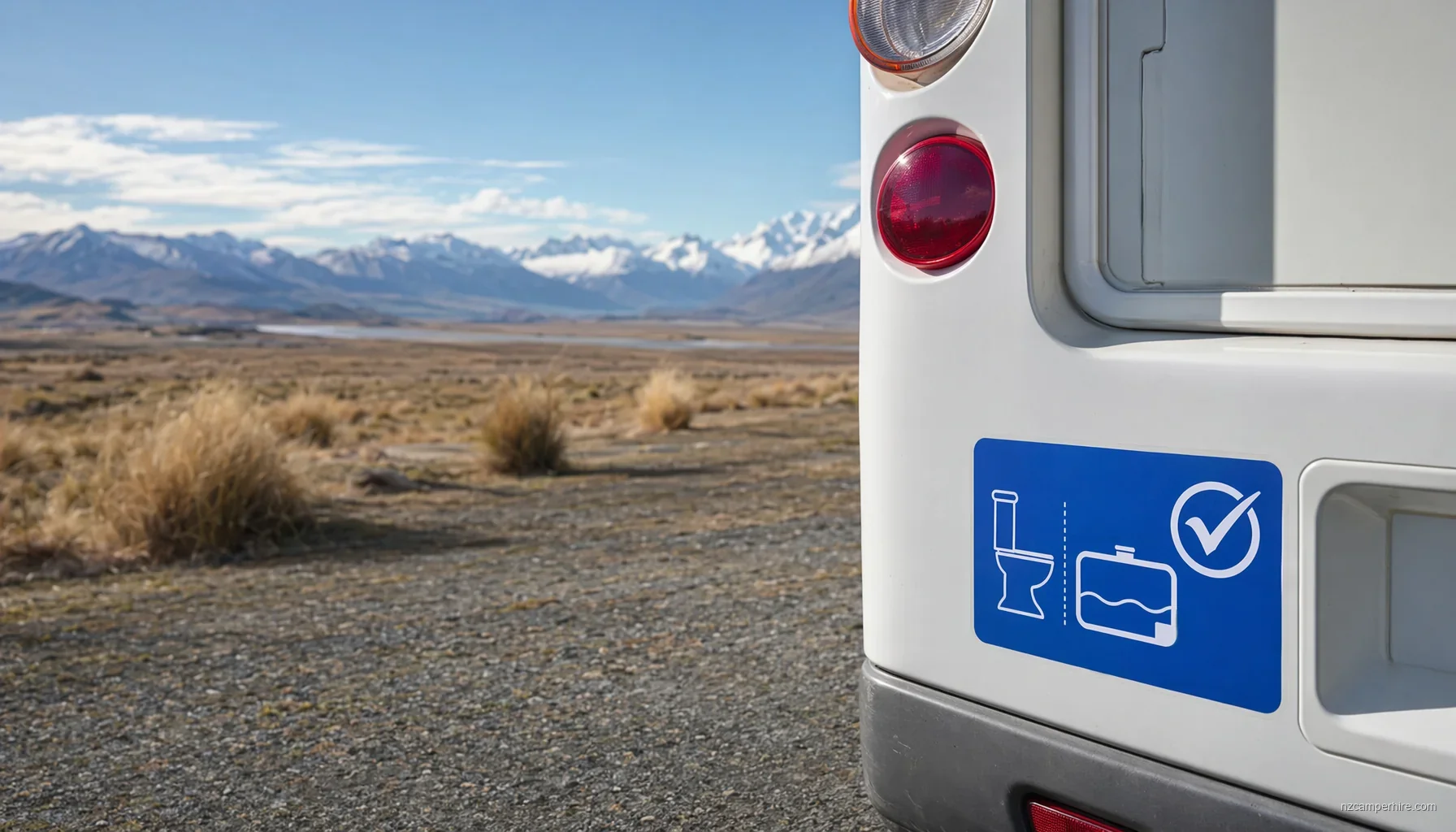 PRACTICAL GUIDE
 Self-contained certification explained
What the NZ self-containment standard means, why it matters, and how to check whether the motorhome you're looking at is certified.
Read the guideFreedom camping in NZ FAQ
Is it illegal to sleep at a rest area in New Zealand?
Can I freedom camp in a van without self-contained certification?
Can I dump grey water at a petrol station?
How many nights can I stay in one freedom camping spot?
Are Queenstown and Auckland bad places for freedom camping?
Have a planner answer this for your specific trip
Rules and practicalities depend on dates, party size, and route. Send us your outline and we'll come back with answers tailored to your trip.