Dump Stations and Water Fills in New Zealand
Where to find them, etiquette, and the apps that map them.
- wet-weather-plan
- family-friendly
- busy-summer
- pack-snacks
- book-ahead
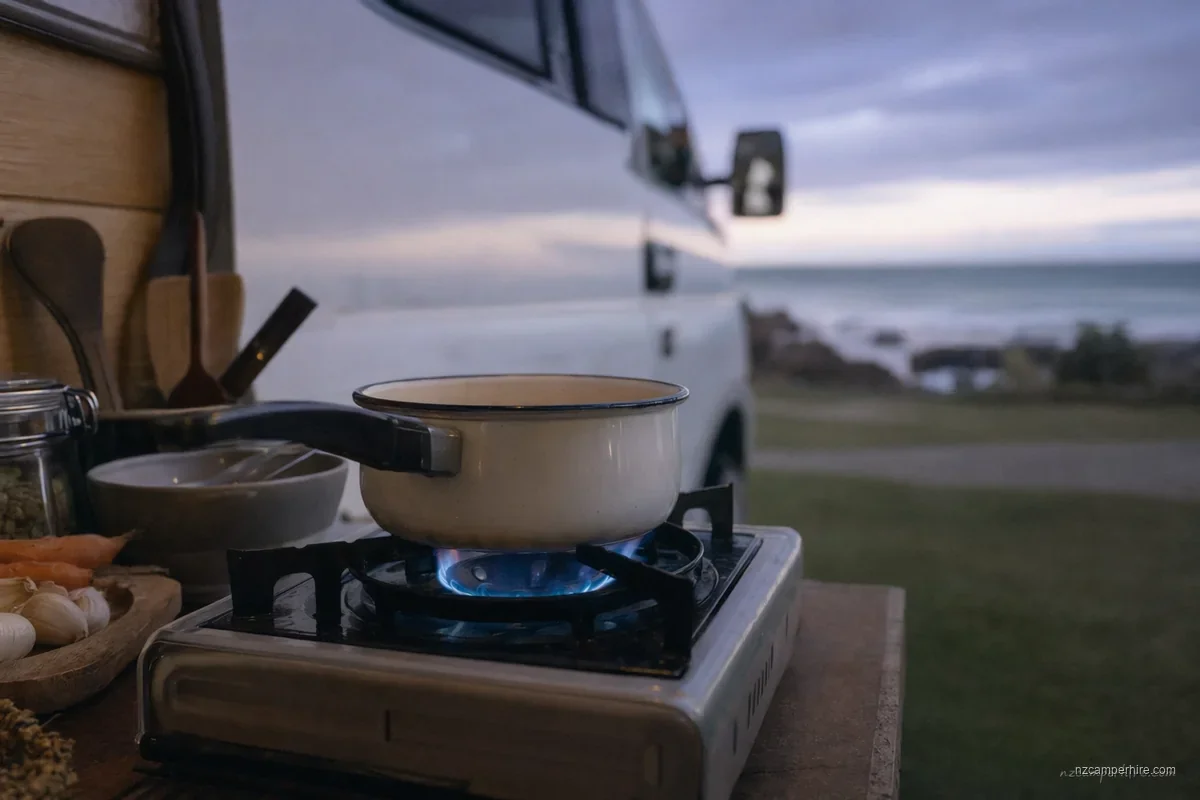
There is a small New Zealand morning ritual to it: kettle cooling on the bench, gulls or magpies outside, and someone checking tank levels before the road gets interesting. It is not the postcard part of the day, but it is the part that keeps the postcard clean.
Dump stations are not glamorous, but they shape a New Zealand motorhome trip more than most first-time visitors expect. Your toilet cassette, grey-water tank, and fresh-water tank all have limits, and the next legal disposal point may be 120 km away on the West Coast or in Fiordland.
Most rental motorhomes are simple to empty once someone has shown you the process. The problems come from assuming every petrol station, DOC campsite, or public toilet has a dump point. They do not.
Get the planning checklist — and reply with your dates if you'd like a planner to flag the dump-station-specific gotchas for your route.
What a dump station is, and what goes where
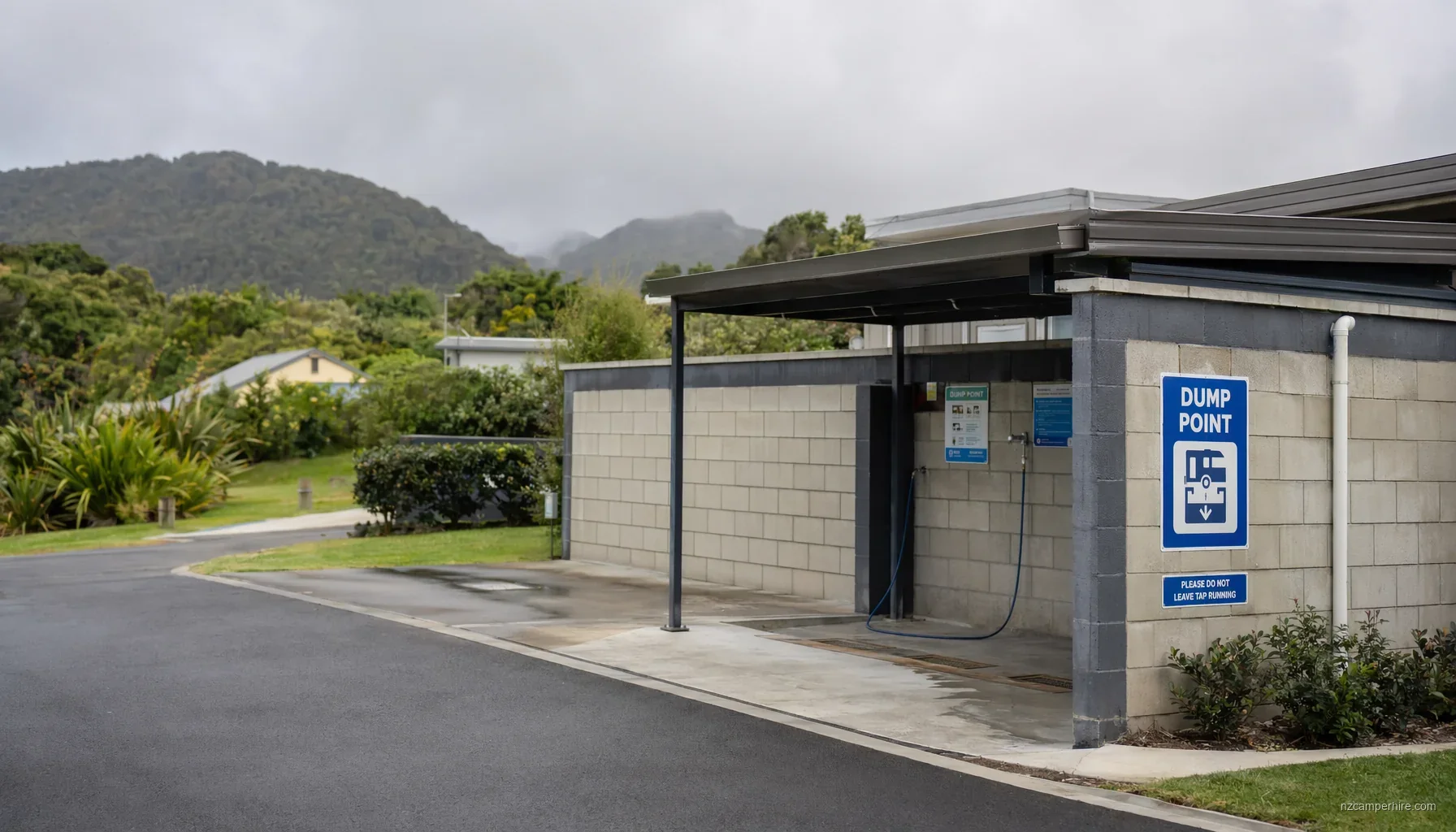
A New Zealand dump station is a legal disposal point for motorhome wastewater. It usually has a round or hinged inlet set into concrete, a rinse hose for cleaning the area, and sometimes a separate tap marked as drinking water. Do not assume the rinse hose is safe to drink from.
You will be dealing with three separate systems:
- Toilet cassette or black water: emptied only into the dump station inlet. Add toilet chemical after rinsing and before reuse.
- Grey water: sink and shower water. It also goes into the dump station, not onto gravel, grass, roadside drains, or beach car parks.
- Fresh water: refilled from a tap specifically marked potable, drinking water, or treated water.
On a two-person trip, many vehicles need a toilet empty every 2 to 3 days. Grey-water timing depends on shower use. Fresh water is best topped up whenever you see a reliable potable tap, especially before DOC-style camping.
Where to find legal dump points
Good sources are the official council website for the district you are in, the public dump station symbols on camping apps, and the site information pages for holiday parks. The Department of Conservation campsite pages are useful because DOC is clear about which facilities are on site and which are not.
Holiday parks usually have dump points for guests. Good practical examples are North South Holiday Park near Christchurch Airport, Creeksyde Queenstown, Rotorua Thermal Holiday Park, and Russell Top 10 in the Bay of Islands. Some councils provide public dump stations near i-SITE buildings, transfer stations, or sports grounds. Some fuel stops have them, but many do not, and the staff may not want motorhomes blocking pumps while tanks are emptied.
The tradeoff is simple: the prettiest campsites often have the fewest services, so do the dull town stop before chasing the lake view.
If you are following the South Island in 14 days route, plan the boring stops before the scenic ones. Empty and fill around Christchurch, Tekapo or Twizel, Wanaka, Queenstown, Te Anau, Hokitika, and Picton. That sounds excessive, but it prevents the classic mistake: arriving at White Horse Hill, Cascade Creek, or Mavora Lakes and discovering there is no dump station waiting for you.
Fresh water taps are not all drinking water
Look for the words potable water, drinking water, or treated water. If a tap is beside a dump station and unlabelled, treat it as a rinse tap only. The hose used to wash down a dump bay may have touched cassette waste. Do not put it into your fresh-water filler.
Carry a food-grade hose, a few common tap adaptors, and hand sanitiser. Many rental vehicles include a hose, but check it at pick-up. In New Zealand, taps may be threaded, push-fit, or awkwardly short. Fill slowly so the tank can vent. Stop when water spits back from the filler rather than forcing more in.
In summer, a couple can use a 90 to 120 litre tank quickly if they shower inside the vehicle. In cooler months, water lasts longer, but some alpine taps may be turned off or hard to access after frost. Around Queenstown, Wanaka, and the Mackenzie Country, top up before driving into quieter camping areas.
Etiquette that keeps dump stations open
Most public dump stations are free or low-cost because councils and local clubs want waste kept out of rivers, stormwater drains, and reserves. Bad behaviour gets sites closed.
- Wait clear of the road and do not block other vehicles.
- Put gloves on before handling the cassette.
- Empty toilet waste first, then grey water if the layout allows.
- Use the rinse hose to clean the dump area, not your fresh tank.
- Take wipes, gloves, and chemical bottles away with you.
- Move off before reorganising cupboards or making lunch.
Never use public toilets for cassette emptying unless a sign specifically says it is allowed. A cassette can splash, block plumbing, and overwhelm small septic systems. This matters in places like the Coromandel, Bay of Islands, and rural South Island towns where infrastructure is built for small resident populations, not a queue of summer motorhomes.
Fines, grey water, and the freedom-camping link
Illegal wastewater dumping is treated seriously. Under New Zealand freedom camping law and local enforcement powers, instant infringement fines can reach $400. Dumping grey water illegally can be penalised at up to $200 per litre, with serious cases reaching a maximum of $10,000. The legal background sits in the Freedom Camping Act 2011, including the 2023 self-containment changes.
Self-contained certification does not give you permission to dump waste anywhere. It means the vehicle can contain waste for a set period and must still use lawful disposal points. Council bylaws also matter. Queenstown Lakes, Auckland, and Tasman are especially strict about where certified vehicles may stay overnight.
Read this guide alongside the freedom camping rules guide and the vehicle size guide. A large motorhome has more tank capacity, but it is also harder to manoeuvre into older dump points in tight towns. The Christchurch region guide is also useful because many travellers collect a vehicle there and need a practical first-night plan before heading for Lake Tekapo or the West Coast.
The apps are useful, but verify the last 24 hours
Camping and map apps are good for finding dump stations, water taps, paid campsites, and recent user comments. Treat them as a starting point, not the final authority. A tap can be removed, a dump point can be closed for maintenance, or a council can change access after misuse.
Before you rely on a remote stop, check three things: the latest app comments, the council or holiday park page, and the distance to the next legal option. On SH6 down the West Coast, SH8 through the Mackenzie Basin, and SH94 to Milford Sound, gaps feel longer than they look on a map because driving is slower and pull-offs are limited.
You know the rhythm is working when a grey morning on SH6 begins with a full water tank, an empty cassette, and the kettle behaving like the most important appliance in the van.
A simple rhythm works well: dump before remote roads, fill before DOC campsites, and reset everything before a ferry, mountain pass, or long weather day. It is not romantic planning, but it makes the rest of the trip easier.
Rules and practicalities are easier to remember when you've felt them — the cold of a wet boot at a freedom camp, the relief of an early ferry slot. This guide is written from those moments, not from a checklist.
Related reading
 ROUTE
ROUTE South Island in 14 days
Classic clockwise South Island loop — Kaikoura, Nelson, West Coast glaciers, Wanaka, Queenstown, Milford Sound, Tekapo, back to Christchurch.
See the route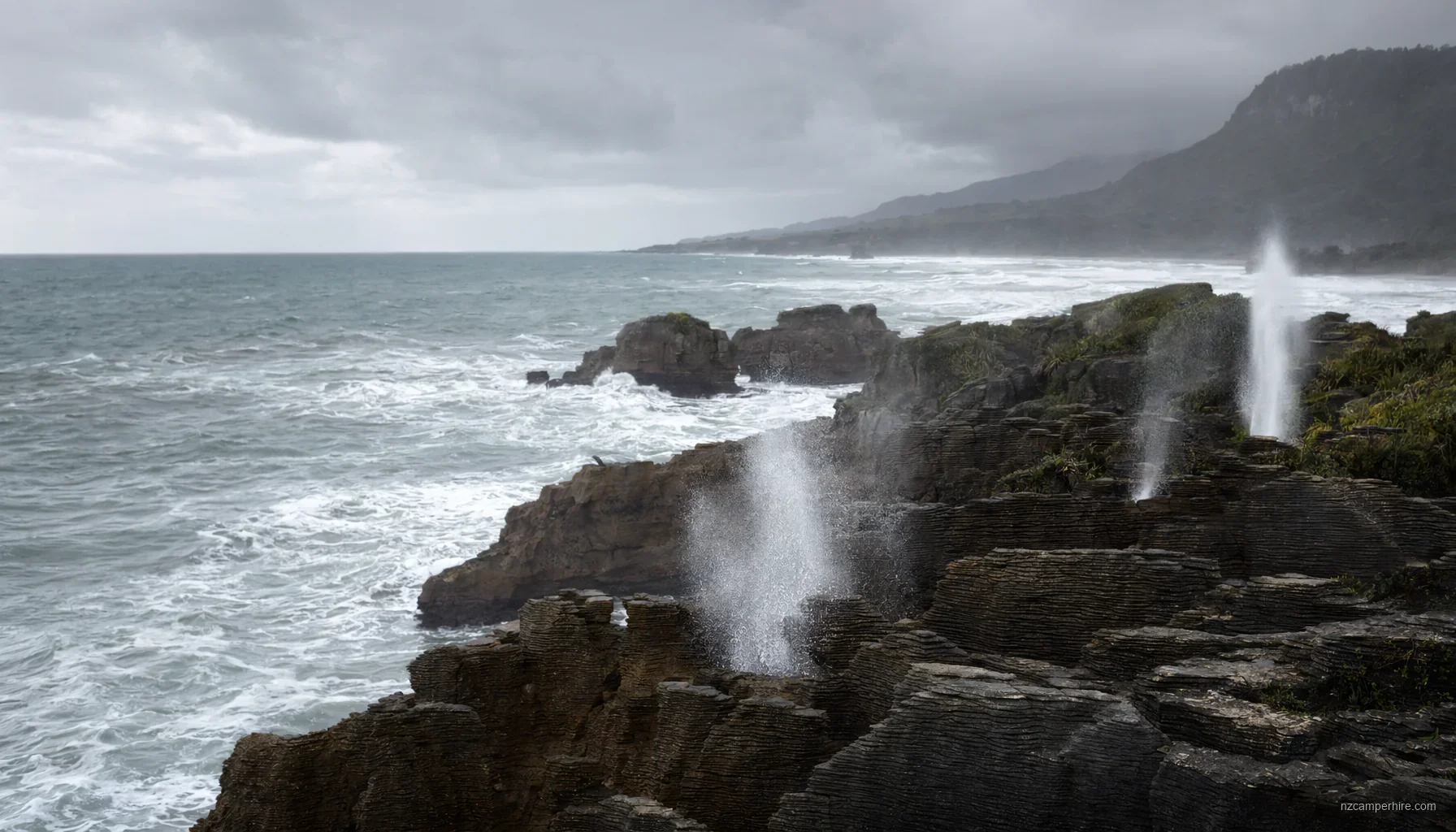 REGION
 West Coast
Wild glaciers, rainforest, and pancake rocks. Franz Josef, Fox Glacier, Punakaiki.
See the region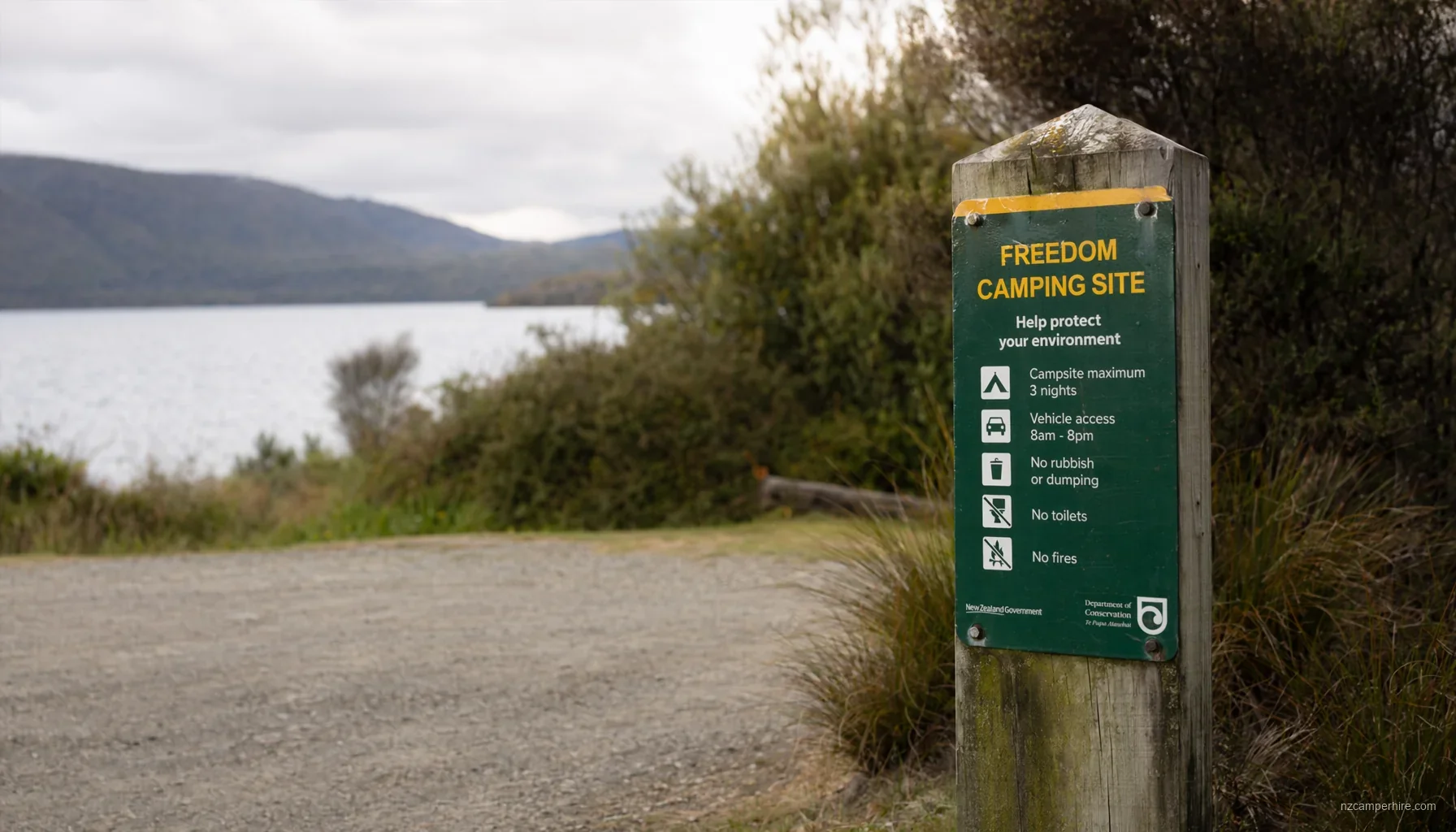 PRACTICAL GUIDE
 Freedom camping in NZ
Where you can legally freedom-camp in a self-contained vehicle, and where you'll get fined.
Read the guideDump stations and water fills FAQ
Can I dump grey water down a roadside drain?
Can I empty a toilet cassette at a public toilet?
Do petrol stations in New Zealand have dump stations?
How often should we empty and refill on a motorhome trip?
Are DOC campsites likely to have dump stations and drinking water?
Have a planner answer this for your specific trip
Rules and practicalities depend on dates, party size, and route. Send us your outline and we'll come back with answers tailored to your trip.