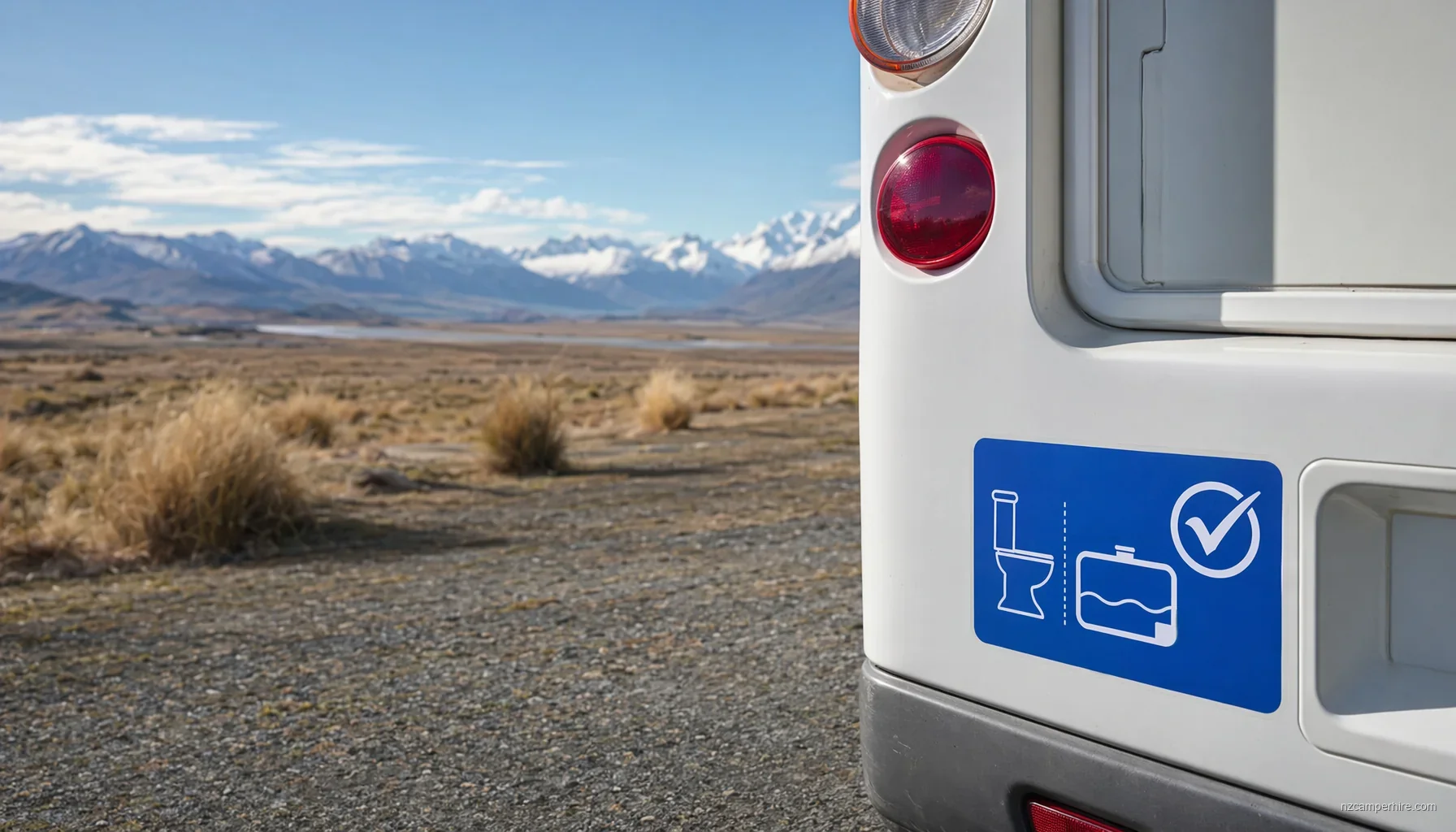
Self-contained certification in New Zealand
What the NZ self-containment standard means, why it matters, and how to check whether the motorhome you're looking at is certified.
- wet-weather-plan
- family-friendly
- busy-summer
- book-ahead
A New Zealand camping morning can be very ordinary in the best way: kettle ticking, damp grass under the door mat, and a ranger's ute rolling slowly past the row of vans. That little card on the windscreen can matter before the toast is even done.
Self-contained certification is the bit of New Zealand campervan law that catches many visitors. It decides where you may legally freedom-camp, not whether the bed is comfortable or the fridge is big enough.
For a first trip, especially on routes like South Island in 14 days or around Queenstown, the small windscreen card matters. Councils check it. Rangers check it. Some places still say no overnight camping even if your vehicle is certified.
Get the planning checklist — and reply with your dates if you'd like a planner to flag the self-contained-certification-specific gotchas for your route.
What self-contained actually means in New Zealand
A certified self-contained motorhome is meant to let you camp without leaving toilet waste, grey water, or rubbish behind. It is not just a private toilet. The vehicle needs approved water storage, wastewater storage, a sink, rubbish storage, and a toilet setup that meets the standard for the number of people the vehicle is certified to carry.
The legal frame starts with the Freedom Camping Act 2011. The 2023 self-containment amendment tightened the system after years of small vans carrying portable toilets that were rarely practical at 2 am in rain.
For 2026 trip planning, treat certification as a legal feature of the vehicle. It affects where you can stay on free or low-cost council land. It does not guarantee access to DOC campsites, private holiday parks, or every beachfront car park.
The green warrant card and the standard behind it
Look for a green self-containment warrant card on the windscreen, plus the matching certificate inside the vehicle. The card should show the registration number, expiry date, number of occupants, and the certifying authority details. If the registration on the card does not match the number plate, ask questions before you rely on it.
The older system used NZS 5465:2001. The newer system is based on NZS 5465:2022 and is tied to the 2023 law change. In plain language, the newer rules are stricter about toilets being fixed, usable inside the vehicle, and suitable for the certified number of people.
- Check the warrant expiry date before the first night, not at the roadside.
- Check the certified occupant number. A 2-person certificate does not cover four sleepers.
- Keep the certificate accessible. Rangers may ask to see more than the windscreen card.
- Do not assume every camper listed as self-contained online has the newer green warrant.
Where certification helps, and where it does not
Certification helps most on council-managed freedom camping areas. These are the places where signs often say certified self-contained vehicles only. In Queenstown Lakes, Tasman, and Auckland, local bylaws are especially restrictive. Council bylaws override the general freedom camping permission locally, so a legal vehicle can still be banned from a particular reserve, road end, or beach car park.
The trade-off is simple: the freer a lakeside or beachfront spot feels, the more likely the local sign matters more than the map pin.
DOC is different. Many DOC campsites welcome non-certified vehicles because toilets are provided, but some basic locations have limited facilities and rules vary by site. Check DOC campsite pages before you bank on a late arrival. Named South Island sites such as Mavora Lakes, White Horse Hill near Aoraki/Mount Cook, Lake Pukaki, and Cascade Creek each have their own capacity, season, and payment setup.
Holiday parks remove the legal stress. North South Holiday Park near Christchurch, Creeksyde Queenstown, Rotorua Thermal Holiday Park, and Russell Top 10 are practical first-night or laundry-night choices, especially after a long international flight or before an early activity day.
Fines, grey water, and the mistakes rangers notice
The common instant infringement for illegal freedom camping is $400. Dumping grey water illegally can cost up to $200 per litre, and serious cases can reach a maximum of $10,000. These are not theoretical numbers. Councils use patrols in busy summer areas, and some car parks are checked early in the morning.
At 6 a.m., a quiet car park feels much nicer when the kettle is on and the windscreen card is doing its small green job.
The mistakes are usually simple. People sleep in a rest area with no overnight sign. They park outside the marked spaces. They use a vehicle certified for two when four people are sleeping inside. They wash dishes on the ground, drain grey water into a gutter, or assume a public toilet nearby makes an uncertified van legal.
Dump stations are the answer, not petrol station forecourts. Many towns list public dump points, and holiday parks usually have them for guests. Empty before remote sections such as SH6 on the West Coast or SH94 toward Milford Sound, where services are sparse and weather can slow the day.
How to check a motorhome before you plan nights
Do the certification check before you build the camping plan. A smaller 2-berth can be easier on SH6, SH73, and the Crown Range Road at 1,121 m, but only if it has the certificate your overnight plan needs. A larger family motorhome may be certified for more people, yet it will be slower through narrow towns and windier alpine roads.
- Ask for the vehicle registration number and current self-containment status.
- Confirm it has the green windscreen warrant for your travel dates.
- Match the certified occupant number to the people sleeping in the vehicle.
- Check whether your route uses restrictive council areas, especially Queenstown Lakes, Auckland, or Tasman.
- Keep a paid-campsite fallback every few nights for showers, laundry, charging, and weather delays.
Also check the standard driving basics with NZ Transport Agency Waka Kotahi. New Zealand drives on the left. Foreign licences in English are generally valid for 12 months, and an International Driving Permit is needed if your licence is not in English. Minimum hire age varies from about 18 to 25 depending on operator and vehicle class.

Rules and practicalities are easier to remember when you've felt them — the cold of a wet boot at a freedom camp, the relief of an early ferry slot. This guide is written from those moments, not from a checklist.
Related reading
 ROUTE
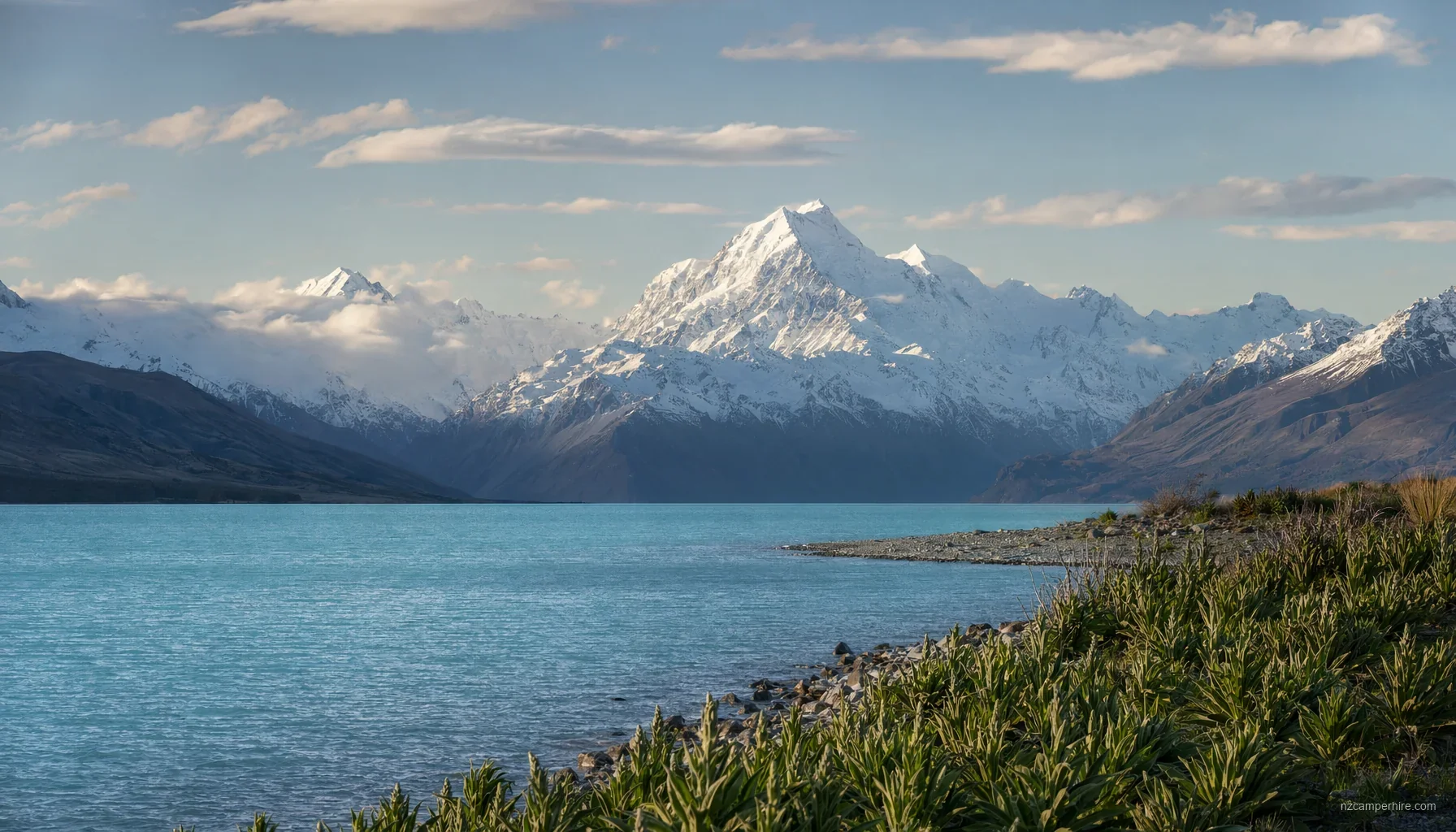
ROUTE South Island in 14 days
Classic clockwise South Island loop — Kaikoura, Nelson, West Coast glaciers, Wanaka, Queenstown, Milford Sound, Tekapo, back to Christchurch.
See the route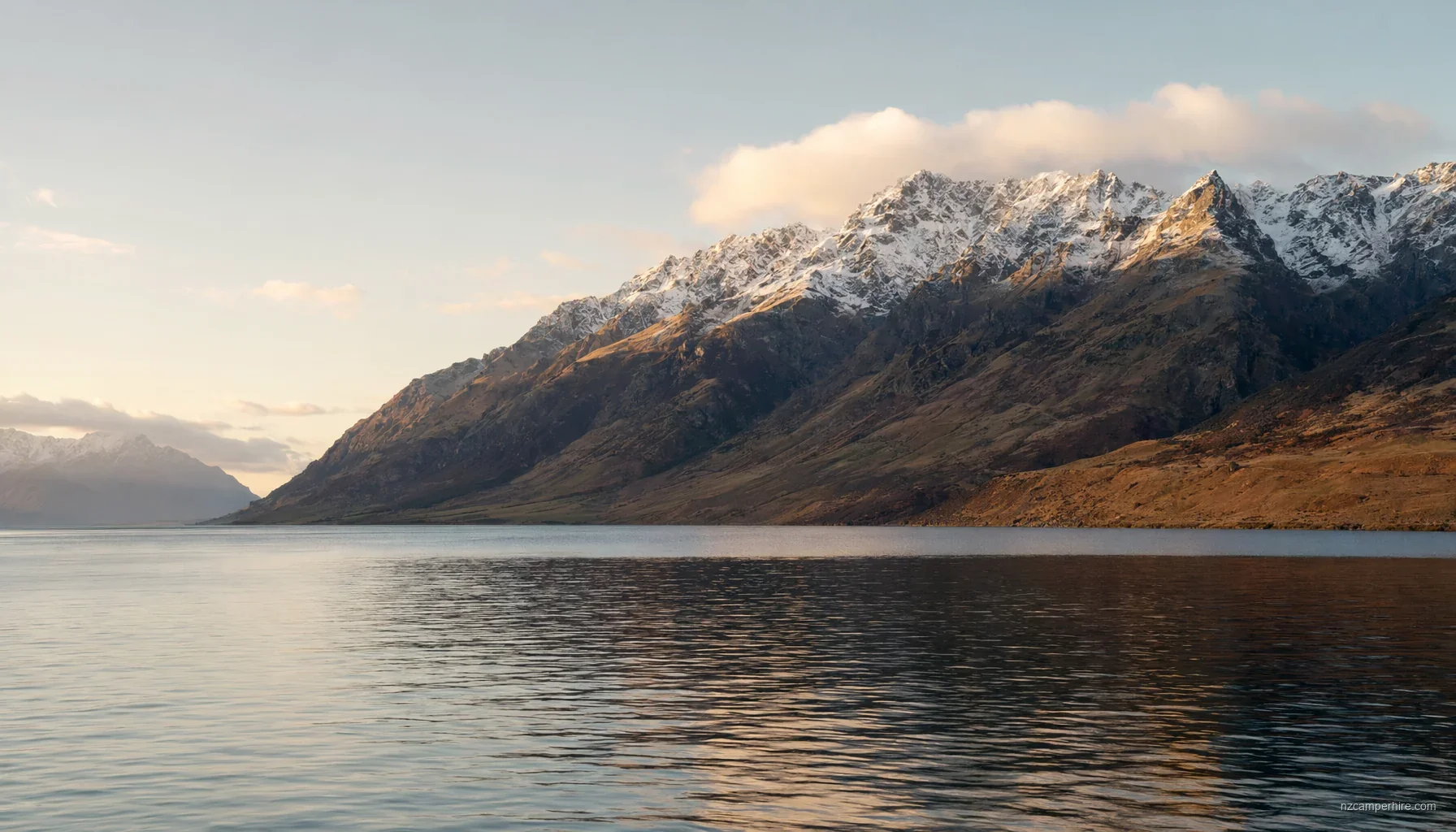 REGION
 Queenstown
Southern Lakes depot. Closest pickup for Milford Sound, Wanaka, Glenorchy, and the Southern Scenic Route.
See the region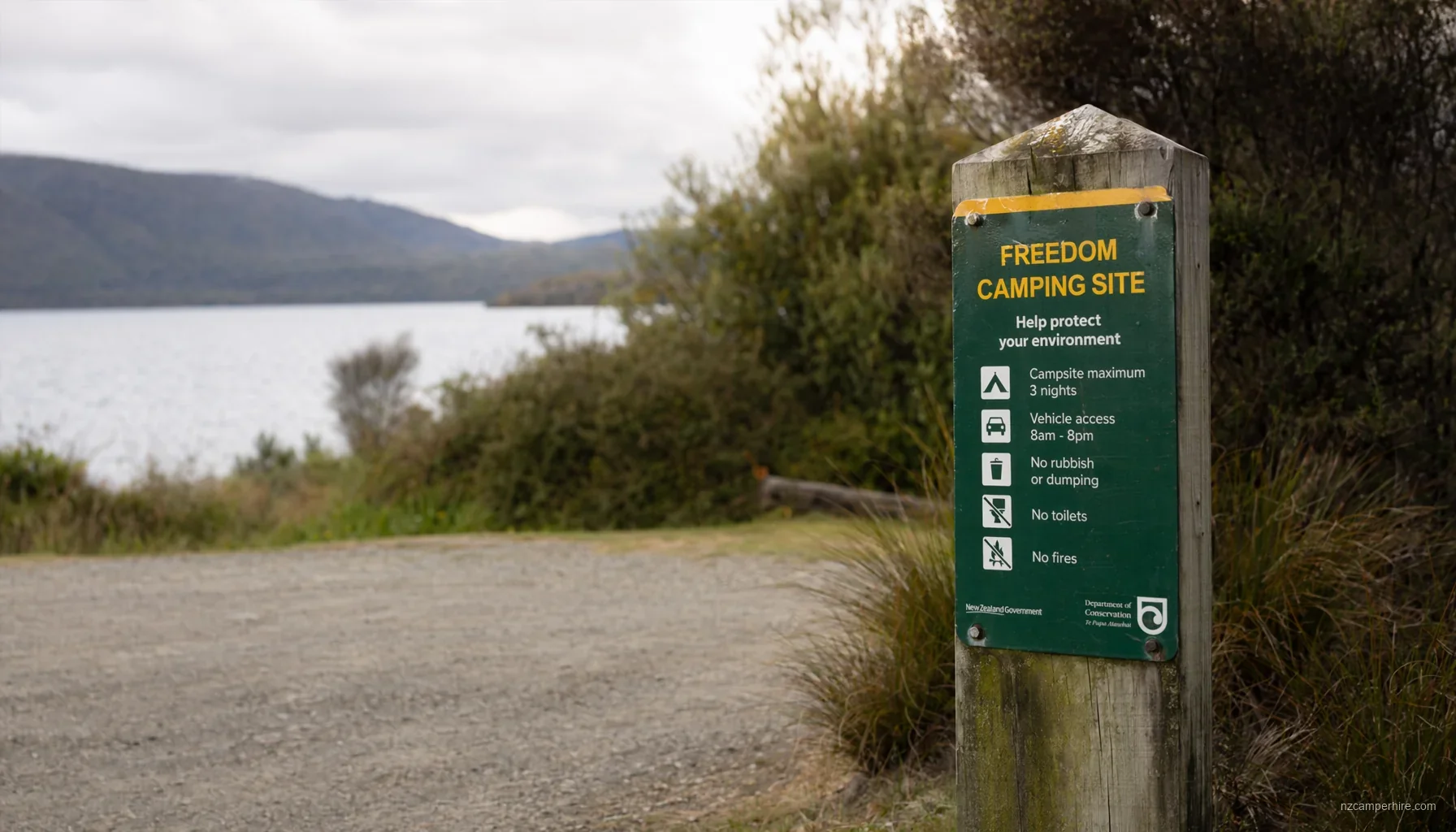 PRACTICAL GUIDE
 Freedom camping in NZ
Where you can legally freedom-camp in a self-contained vehicle, and where you'll get fined.
Read the guideSelf-contained certification explained FAQ
Can I freedom-camp anywhere if the camper is certified self-contained?
Is an old blue self-contained sticker still enough?
Can I sleep at a rest area for a few hours?
Can I dump grey water at a petrol station?
Do DOC campsites require self-contained certification?
Have a planner answer this for your specific trip
Rules and practicalities depend on dates, party size, and route. Send us your outline and we'll come back with answers tailored to your trip.