Queenstown Motorhome Region Guide for First Trips
South Island · depot pickup region
- lake-stage
- busy-summer
- book-ahead
- gravel-road
- bring-warm-layers
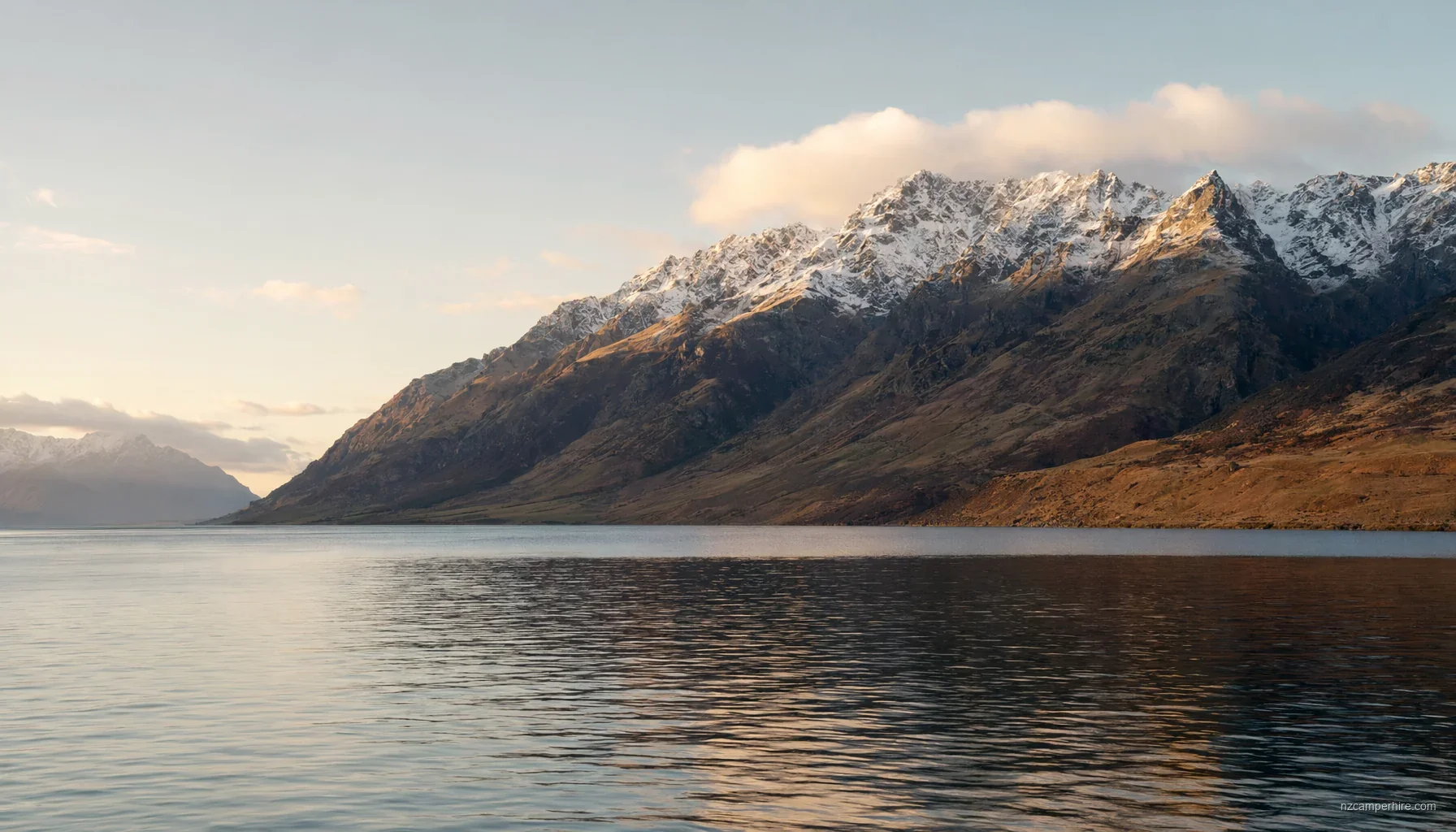
Morning in Queenstown often starts with lake light on the windscreen, a kettle murmuring in the van, and the quiet realisation that every road out of town seems to climb, curve or tempt you to stop. Give yourself a moment before the map comes out.
Queenstown is not just a place to collect a campervan. It is the South Island’s most compressed road-trip hub: lake roads, alpine passes, short drives that take longer than expected, and several day trips that can quietly eat a whole itinerary.
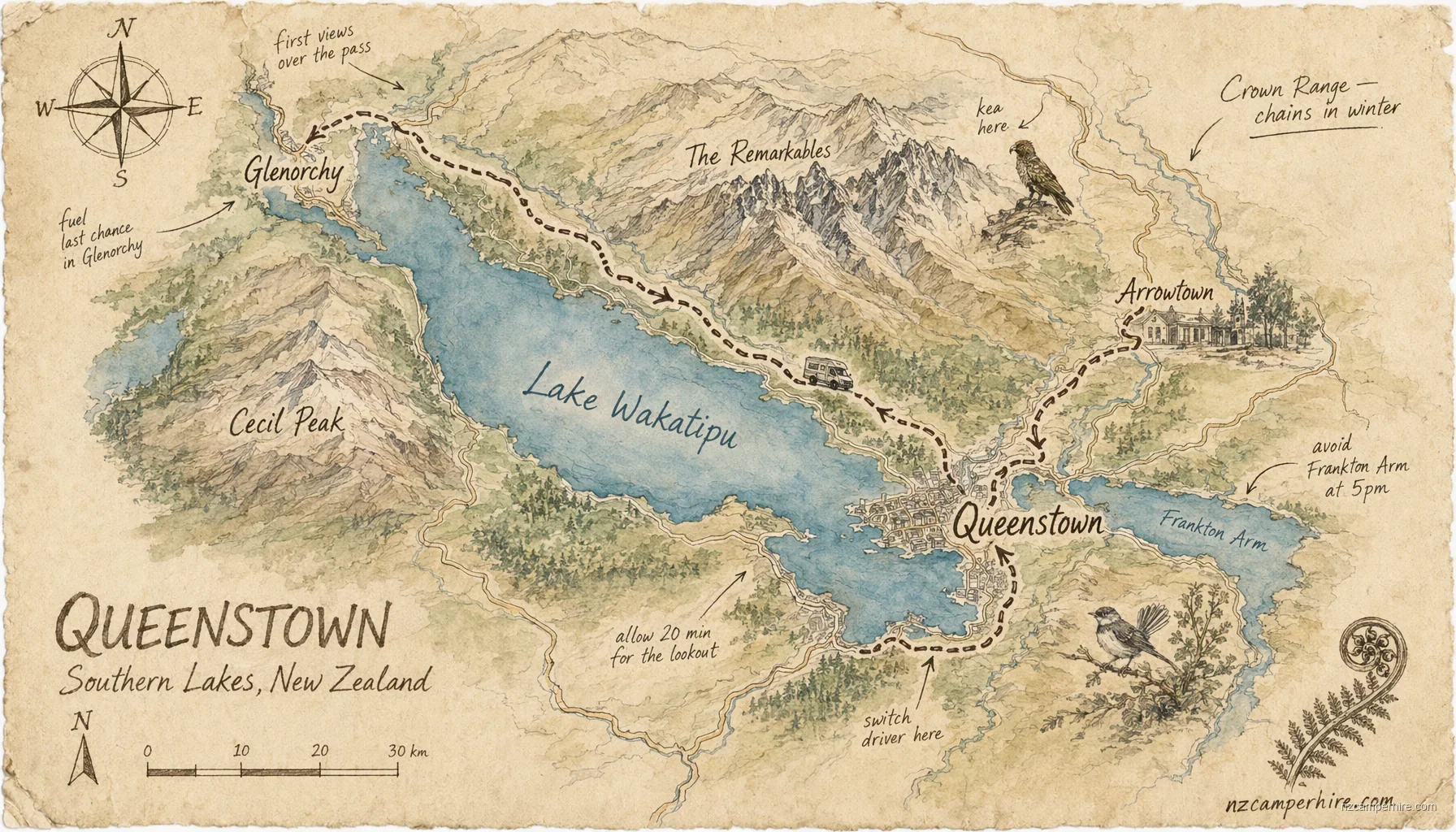
Use it for Glenorchy, Arrowtown, Wanaka, Te Anau and the start of a Milford Sound plan. Treat the town centre with care in a motorhome. Parking is tight, hills are real, and a 6-berth is easier at Frankton or Arthurs Point than on the lakefront streets.
See route guides that pass through Queenstown — and reply with your dates if you’d like a planner to suggest the right number of nights here.
What Queenstown is for, in a motorhome
Queenstown works best as a base, not a quick photo stop. The lakefront is small. The region around it is large. A sensible first visit gives Queenstown 2 to 4 nights, depending on whether Milford Sound, Glenorchy or Wanaka sit inside the same block.
The Christchurch to Queenstown route usually arrives via SH8 through Tekapo, Twizel and the Lindis Pass at 965 m. The Queenstown + Fiordland loop uses Queenstown as the turn point for Te Anau, SH94 and Milford Sound. The Southern Scenic Route can also start or finish here, linking Queenstown with Dunedin, the Catlins and Invercargill.
For vehicle choice, the sweet spot here is often a 2-berth or compact 4-berth. Families can manage a 6-berth, but they should plan parking before each town stop. Use the vehicle-size guide alongside the freedom camping guide, because Queenstown Lakes District is strict and the old idea of pulling up anywhere by the lake is long gone.
Driving in and out: SH6, SH94 and the Crown Range
Queenstown’s road distances look short on a map. The driving is slower because the roads are scenic, narrow in places, and busy in January, February and school holidays.
- Queenstown to Wanaka via the Crown Range: about 70 km, allow 1 hour 20 minutes to 1 hour 40 minutes. The Crown Range Road reaches 1,121 m. It is steep, exposed and not a road to rush in a large campervan.
- Queenstown to Wanaka via Cromwell: about 115 km, allow 1 hour 45 minutes. Longer, easier, and often better for nervous left-side drivers or larger vehicles.
- Queenstown to Te Anau: about 170 km, allow 2 hours 30 minutes without long stops. This is the practical staging town for Milford Sound.
- Queenstown to Milford Sound: about 288 km one way, allow 4 hours 15 minutes driving before photo stops, traffic and tunnel delays. A same-day return is a very long day.
- Queenstown to Glenorchy: 46 km, allow 45 to 60 minutes each way on the lake road. Easy distance, but pull-outs fill early in summer.
The Crown Range is memorable and also exposed; if wind, ice or nerves are in the mix, the Cromwell route is the kinder choice.
New Zealand drives on the left. Foreign licences in English are valid for up to 12 months. If your licence is not in English, carry an International Driving Permit or approved translation. Minimum hire age varies from 18 to 25 depending on operator and vehicle class.
Where to stay overnight
Queenstown accommodation books early. For January, Christmas and New Year, treat 4 months ahead as sensible for holiday parks. Freedom camping is limited and enforcement is active, so assume you need a legal site unless your vehicle is self-contained certified and you have checked the local rules for that exact place.
At Moke Lake, the morning can feel held in place by cold air, kettle steam and one small duck taking the whole lake very seriously.
- Creeksyde Queenstown Holiday Park: powered and unpowered sites, family and couple-friendly, about 700 m from central Queenstown, with an easy walk to town and fewer parking headaches.
- Queenstown Lakeview Holiday Park: powered and unpowered sites, busy mixed traveller feel, about 500 m uphill from the lakefront, useful if you want to park once and walk to restaurants.
- Queenstown Top 10 Holiday Park, Arthurs Point: powered sites, strong family setup, about 6 km from town, handy for the Shotover River side and a calmer base away from the lakefront squeeze.
- Driftaway Queenstown: powered and unpowered sites, modern family feel, about 8 km away at Frankton, with the lakeside trail, airport area and major supermarkets close by.
- DOC Moke Lake Campsite: no power, quiet outdoors feel, about 12 km from town but allow 25 minutes due to the gravel access road, with walking and dark skies as the draw.
- DOC Twelve Mile Delta Campsite: no power, relaxed lake-and-bush setting, about 12 km along the Glenorchy Road, useful for Bob’s Cove and a cheaper night if you do not need facilities.
What to see, and what to skip
Good Queenstown days are simple. Walk or cycle part of the Frankton Track, drive to Glenorchy early, spend half a day in Arrowtown, or use the Skyline area if you are staying close enough to walk. If your route continues to Wanaka, save some lake-and-mountain time for that region rather than trying to do everything from Queenstown.
Milford Sound is the big decision. It is in Fiordland, not just down the road. If it matters to you, read the Milford Sound region guide before deciding between a day coach, a night in Te Anau, or a campsite such as Cascade Creek DOC on SH94. Driving a motorhome from Queenstown to Milford and back in one day is legal, but tiring.
Skip Skippers Canyon Road in a campervan. Most rental agreements exclude it, and the road is narrow, unsealed and exposed. Also skip the idea of circling Queenstown town centre looking for easy parking in a 6-berth. Park at your holiday park, Frankton, or a signed larger-vehicle area, then bus, walk or taxi in.
Best time of year for Queenstown
January is the peak month. Expect full holiday parks, busy roads to Glenorchy and Wanaka, and higher pressure on any legal freedom camping areas. February is still warm but slightly less frantic. March and April are excellent for motorhomes because the weather is more settled than many visitors expect, the autumn colour starts around Arrowtown, and the evenings are still usable.
Winter is beautiful but not the easiest first motorhome season. Snow and ice can affect the Crown Range Road, and chains may be required. Some travellers do it well, but they drive shorter days and avoid late arrivals. Spring brings longer light and lower crowds, with changeable weather. If you are 3 to 12 months out, match your dates to the when-to-go month guide before fixing the rest of the South Island.
Common first-trip mistakes here
- Underestimating Milford Sound: it is not a casual half-day from Queenstown. Build the Queenstown + Fiordland loop around it if it is a priority.
- Choosing too large a vehicle for the plan: a 6-berth can be right for a family, but it makes Queenstown parking, the Crown Range and small lakefront stops harder.
- Arriving without an overnight plan: Queenstown Lakes District is not a forgiving freedom camping area. Self-containment certification helps only where local rules allow it.
- Driving tired after a flight: Queenstown roads demand attention. If you have just arrived from Australia, the USA, Europe or Singapore, keep the first day short.
Practical notes
Frankton is the practical service zone. You will find major supermarkets, fuel, LPG, hardware and easier parking than central Queenstown. Central Queenstown is better treated as a walk-in area once the motorhome is parked.
Mobile coverage is fine around Queenstown, Frankton, Arrowtown and most of the Wanaka road. It becomes patchier toward Glenorchy, Moke Lake and parts of SH94 beyond Te Anau. Download maps before mountain roads. For fresh water and wastewater, use your holiday park facilities where possible and check the current council or dump station app listing before relying on a public dump point.
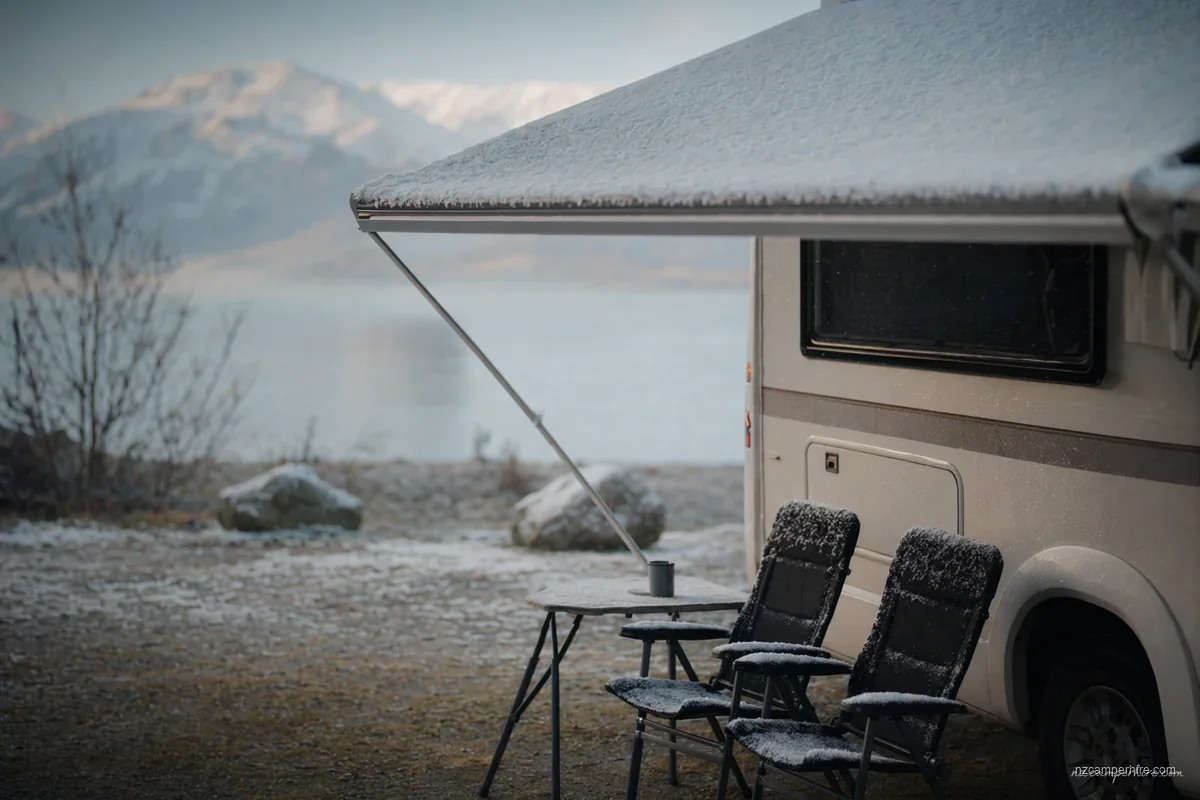
Queenstown rewards travellers who linger. Build in one slow morning — coffee on the camp table, the kettle whistling, the day not yet decided.
Tāhuna — known internationally as Queenstown
Ngāi Tahu are the iwi whose rohe covers most of Te Waipounamu (the South Island). The Whakatipu basin was a seasonal route for pounamu (greenstone) gatherers travelling to the West Coast. Ngāi Tahu's mana whenua over the Queenstown-Lakes district is acknowledged in the formal place-naming and visitor signage you'll see throughout the area.
Lake Whakatipu (the long S-shaped lake Queenstown sits on) is Whakatipu-wai-māori in full. The pūrākau (traditional story) tells that the lake's shape is the hollow left by a sleeping giant, Matau; the rise-and-fall of the lake level (a real seiche, about 10 cm every 25 minutes) is described as his heartbeat.
- Te Atamira — Queenstown's contemporary arts centre — Māori and Pasifika exhibitions, public ticketed.
- Frankton Beach pou (Kā Pātaka Whakairo) — Public carvings beside the lake — viewable any time, do not touch.
- Glenorchy / head of the lake — Traditional pounamu trail start — interpretive signage along the Routeburn road.
Aoraki Routes acknowledges the mana whenua of Ngāi Tahu. We recommend visiting cultural sites with respect and following the tikanga (protocol) of the host iwi.
Related reading
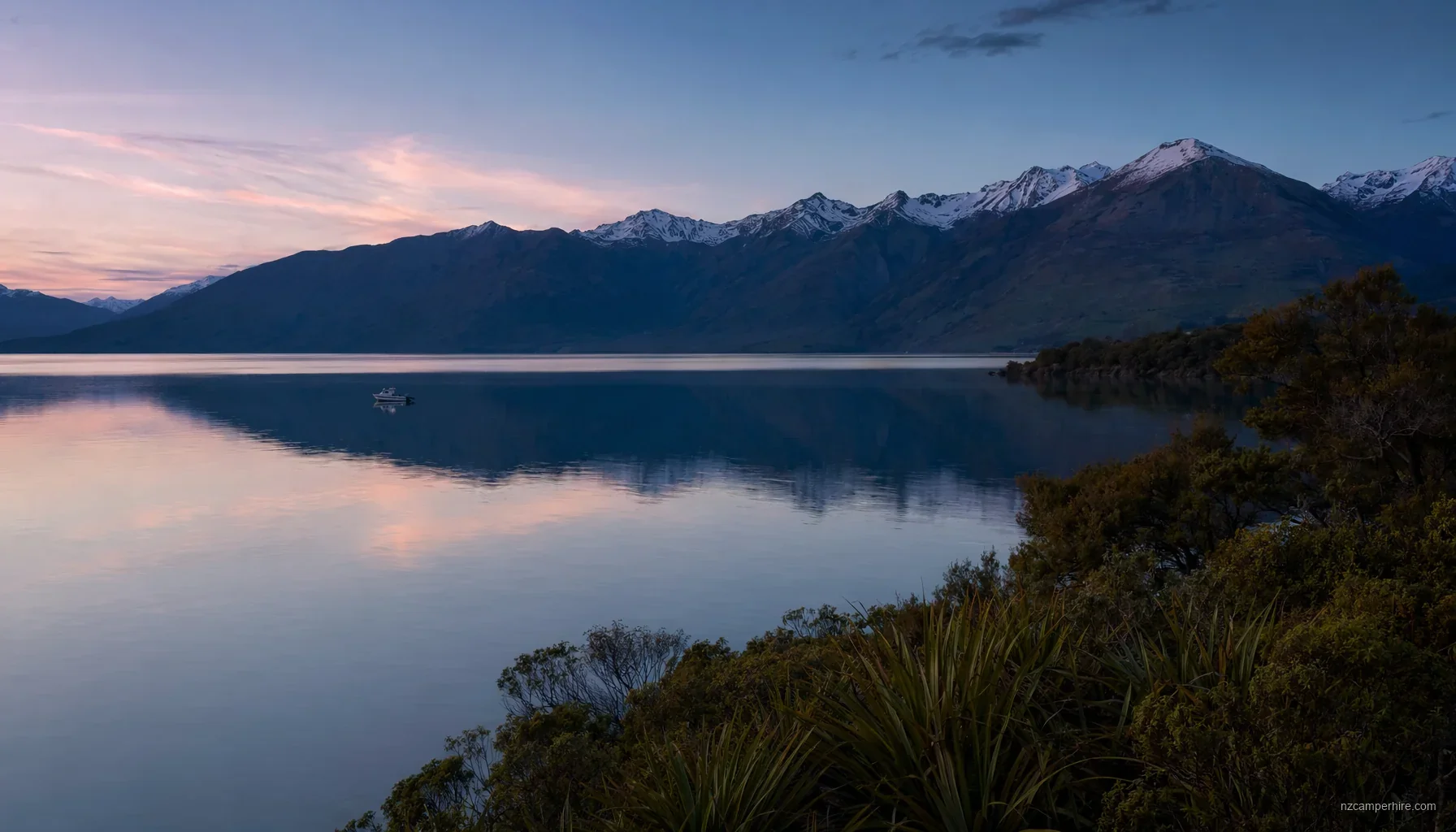 ROUTE
ROUTE Queenstown + Fiordland loop
Round-trip from Queenstown — Te Anau, Milford Sound, Doubtful Sound, Wanaka.
See the route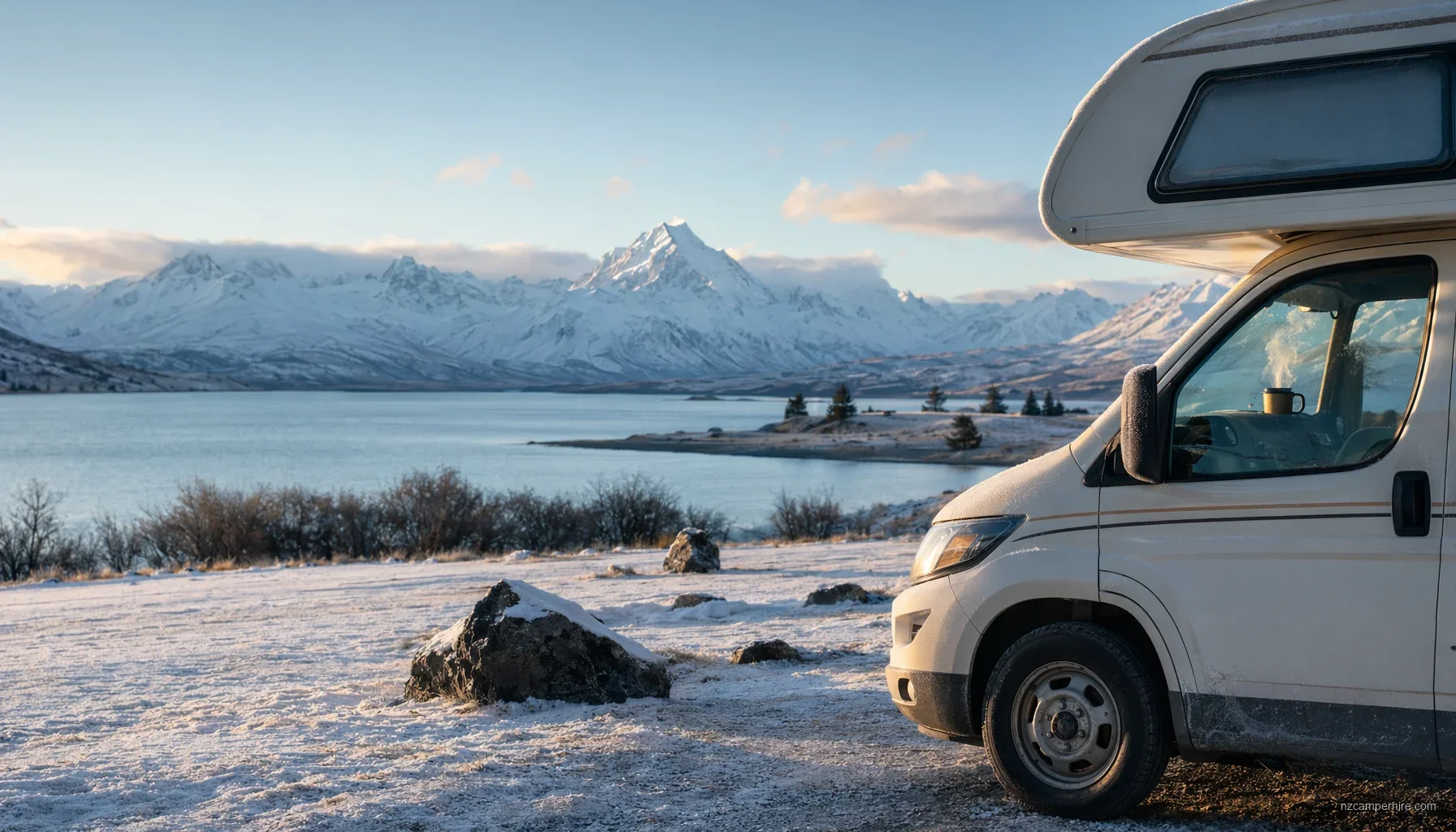 WHEN TO GO
 Winter (June-August)
Snow chains, lower rates, heater realities — winter campervan travel in NZ.
Read the timing notes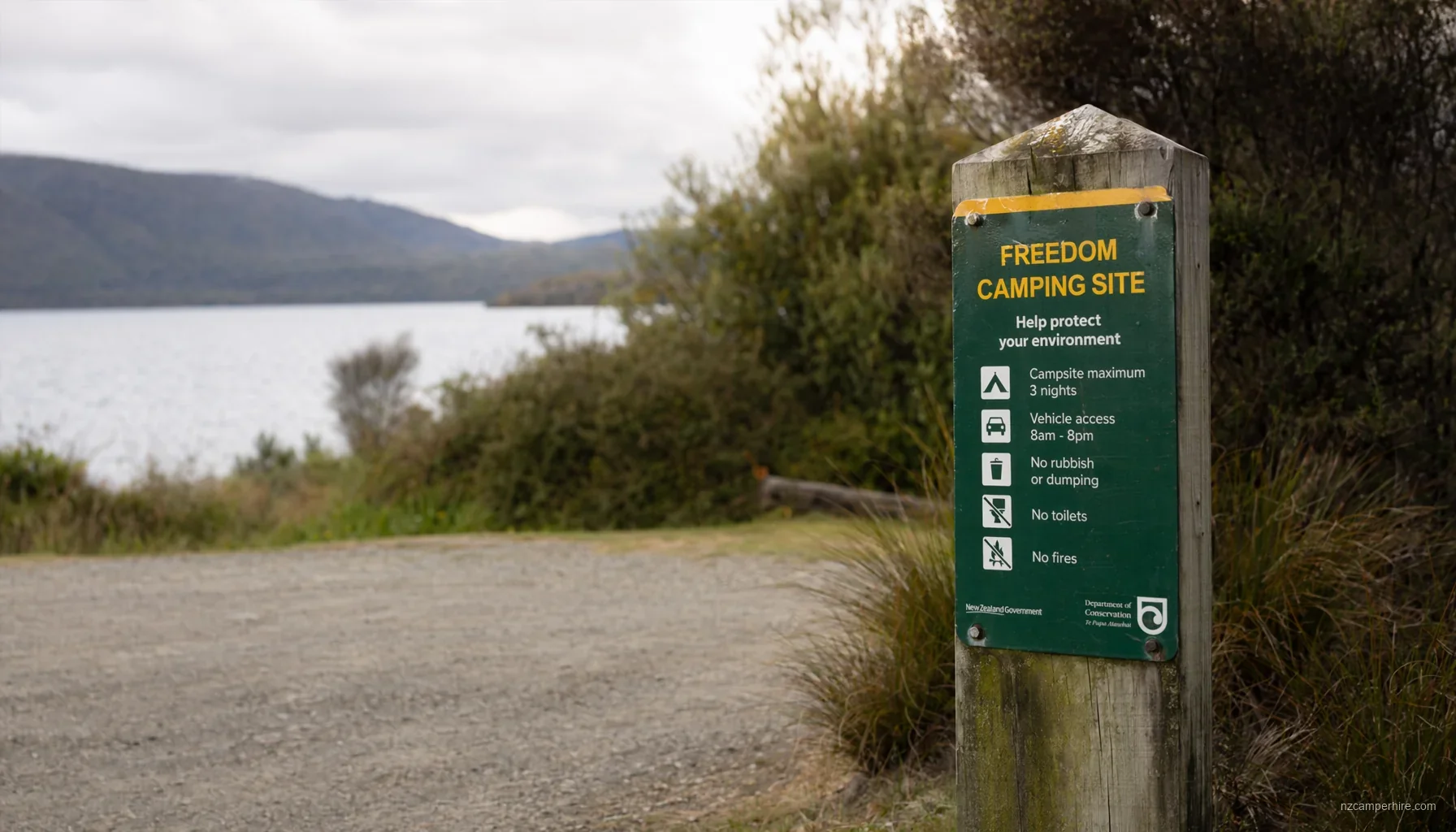 PRACTICAL GUIDE
 Freedom camping in NZ
Where you can legally freedom-camp in a self-contained vehicle, and where you'll get fined.
Read the guideQueenstown FAQ
How many nights should I stay in Queenstown with a motorhome?
When is the best time to visit Queenstown by campervan?
Where are the main supermarkets for a campervan stock-up?
Where can I dump grey water and toilet waste in Queenstown?
Have a planner shape a trip around this region
Tell us roughly when you're coming and how long you have. We'll come back with a route that gives this region the time it deserves.