
Driving on the left in NZ for first-timers
Roundabouts, narrow bridges, one-lane bridges, give-way rules that surprise tourists. Honest, granular how-to — written from on-the-ground k...
- logistics
- driving
Driving on the left in NZ is not hard once your brain settles, but the first day in a motorhome is a poor time to learn every road habit at once. The surprises are usually roundabouts, single-lane bridges, narrow rural roads, and the way locals expect you to use slow-vehicle bays.
This is the drill-down from First time driving a motorhome and Driving in NZ on a foreign licence. It matters most on routes such as Queenstown to Milford Sound and Christchurch to Queenstown, especially in July when winter light, frost, and snow-chain rules can add pressure around Queenstown.
Get the planning checklist that pairs this with the route-level gotchas for your trip, or reply with your dates if you'd like a planner to flag the left-side-driving-specific traps on your week.
Your first 30 minutes after pickup
Do not leave the depot and aim straight for a mountain road. Spend 20 to 30 minutes on quiet streets, then a supermarket car park, then a low-speed suburban loop. In Auckland and Christchurch, that may mean avoiding the motorway until you know the vehicle width, mirror view, braking distance, and rear overhang.
New Zealand drives on the left. The driver sits near the centre line, not the kerb. Say that aloud before every turn on day one. The common tourist mistake is turning into the wrong lane after a fuel stop, viewpoint, or empty rural junction.
Licences are simple but strict. A foreign licence in English is valid for up to 12 months. If it is not in English, carry an International Driving Permit or an approved translation. See the NZTA / Waka Kotahi rule before you travel. Minimum hire age varies, usually 18 to 25 depending on the operator and vehicle class.
Roundabouts, give-way corners, and the centre line
At a roundabout, give way to traffic already in the roundabout and to traffic coming from your right. Signal left when you exit. On small town roundabouts, locals often move quickly, so slow early and choose your lane before the entry line.
The centre line is your anchor. Keep it on the driver’s side. In a wide motorhome, the passenger will often feel close to the verge, but that is better than drifting across the centre line on SH6, SH8, SH73, or SH94.
- Turning left: stay tight, but watch the rear wheels and roadside drains.
- Turning right: cross into the left lane of the new road, not the lane nearest you.
- Uncontrolled intersections: slow right down. Some rural side roads are gravel and have poor sight lines.
One-lane bridges and slow-vehicle etiquette
One-lane bridges are common on the West Coast, in Northland, and around smaller rivers in the South Island. The sign shows which direction has priority. A large white arrow in your direction means you go first if the bridge is clear. A small red arrow means wait.
Never bully a bridge because your vehicle is bigger. Stop well back, look through the bridge, then go steadily. Some bridges are followed by a bend, so you may not see a car until late.
If traffic builds behind you, use a slow-vehicle bay or safe pull-off. This is not just polite. It stops locals taking risks to pass. On SH94 between Te Anau and Milford Sound, the 118 km drive takes about 2.5 hours without long stops, but narrow sections, buses, rain, and photo traffic can stretch it. Build that into the Queenstown to Milford Sound route plan.
Where the left-side habit gets tested hardest
The hardest roads are not always the fastest roads. They are the roads where scenery, bends, weather, and vehicle size arrive together.
- Crown Range Road: between Wanaka and Queenstown, topping out at 1,121 m. It is sealed, steep, and tight in places. A smaller vehicle feels easier here than a long 6-berth.
- Lindis Pass: on SH8 between Omarama and Cromwell, 965 m. Open country, strong wind, winter ice risk, and few services.
- Arthur’s Pass: SH73 reaches about 920 m. Expect steeper sections, viaducts, and alpine weather between Christchurch and the West Coast.
- Haast Pass: SH6, 564 m. Lower altitude, but wet, shaded, and twisty between Wanaka and the West Coast.
For July travel, read the Winter (June-August) guide and the Snow chains in NZ guide before choosing a vehicle size. Queenstown is the region where small mistakes feel largest, partly because the roads are scenic and busy at the same time.
Safer fallbacks if the road feels too much
There is no shame in changing the plan. If the first day feels rough, stay near the pickup city. From Christchurch, North South Holiday Park gives you an easy first night before SH73 or SH8. From Queenstown, Creeksyde Queenstown keeps you off the open road until you are rested. From Auckland, avoid a late run north on SH1 if you are jet-lagged.
Choose daylight arrivals. Avoid collecting a motorhome after a long-haul flight and driving 250 km the same afternoon. If you are nervous about alpine roads, use the lower-pressure route: Queenstown to Te Anau on SH6 and SH94 is about 171 km and 2.5 to 3 hours, then Te Anau to Milford the next morning.
For a first NZ trip, a compact self-contained vehicle is easier than a long family motorhome on tight passes and city parking. Pair this page with Campervan insurance options, because single-vehicle scrapes often happen in car parks, fuel stations, and narrow campsite access lanes rather than on the open highway.

Rules and practicalities are easier to remember when you've felt them — the cold of a wet boot at a freedom camp, the relief of an early ferry slot. This guide is written from those moments, not from a checklist.
Related reading
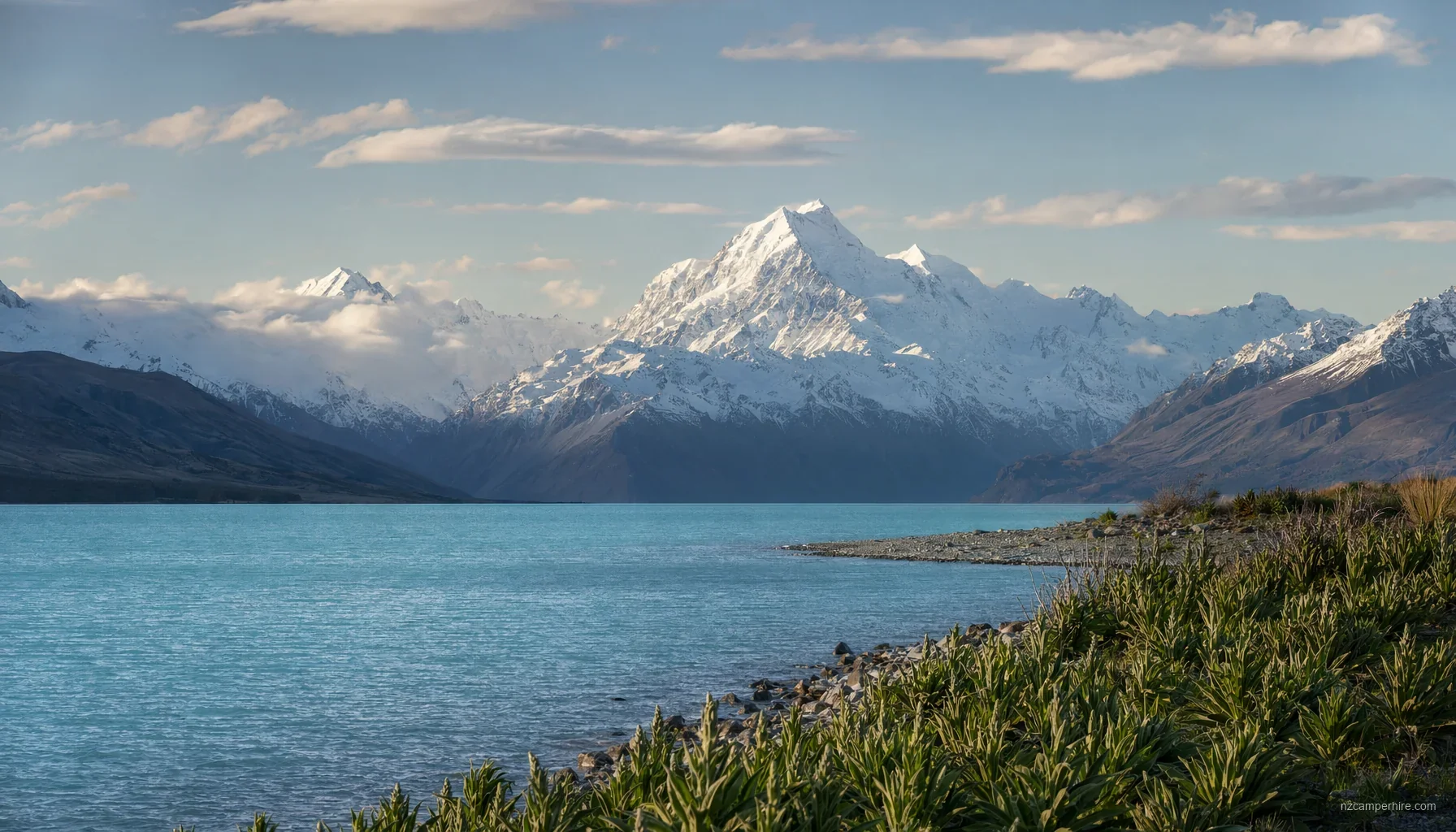 ROUTE
ROUTE South Island in 14 days
Classic clockwise South Island loop — Kaikoura, Nelson, West Coast glaciers, Wanaka, Queenstown, Milford Sound, Tekapo, back to Christchurch.
See the route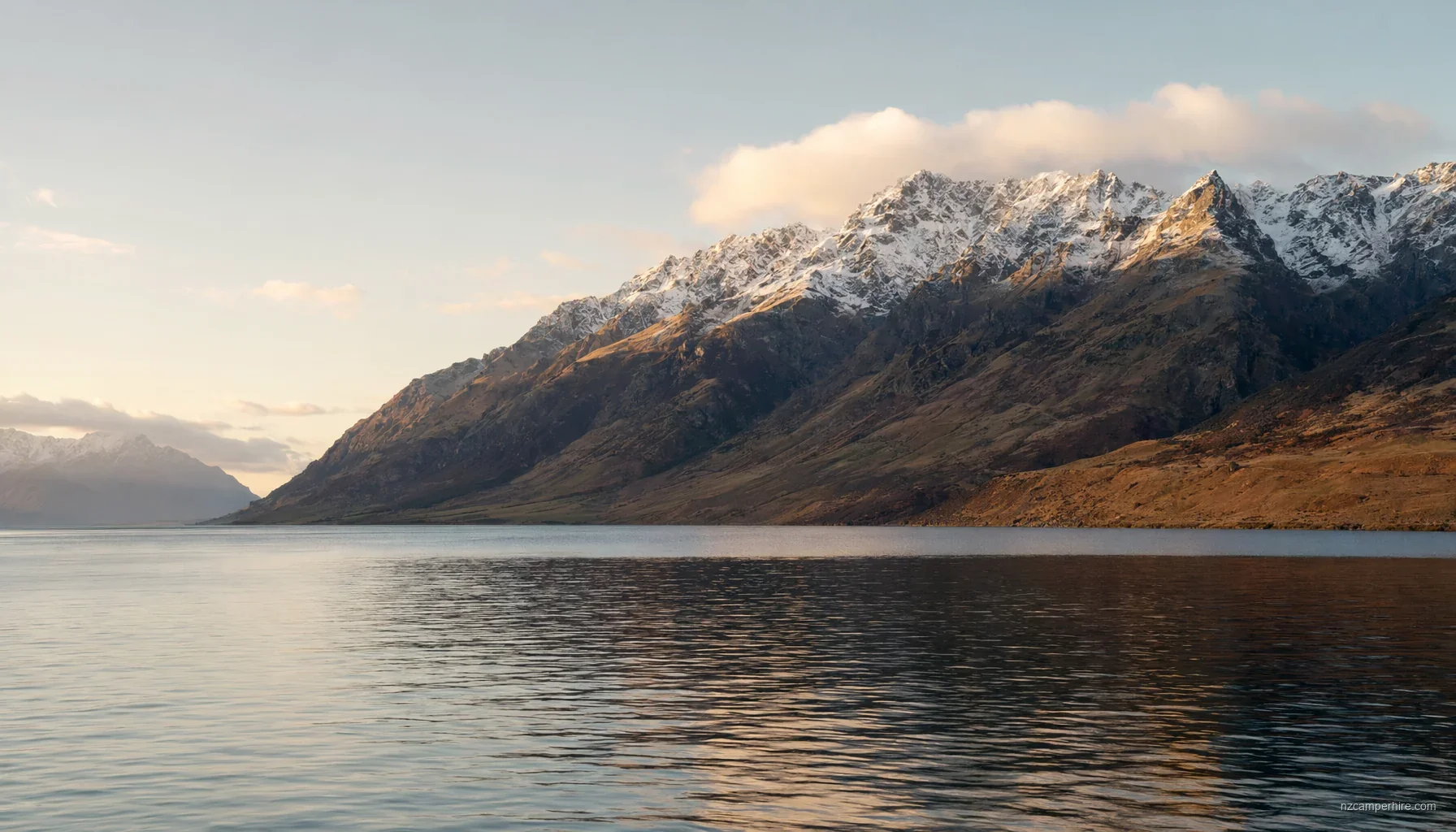 REGION
 Queenstown
Southern Lakes depot. Closest pickup for Milford Sound, Wanaka, Glenorchy, and the Southern Scenic Route.
See the region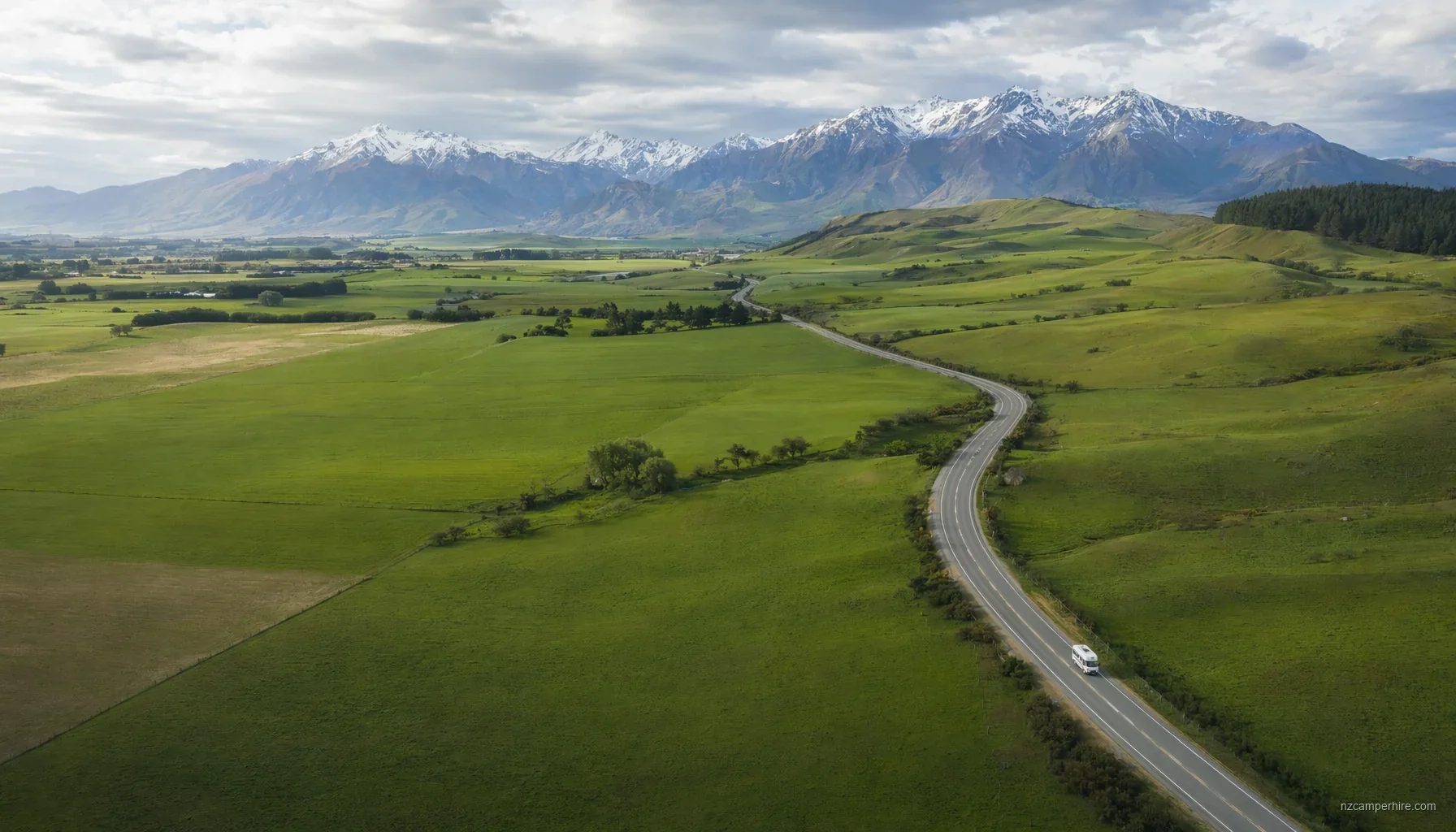 PRACTICAL GUIDE
 Best time of year for a NZ campervan trip
Month-by-month — weather, demand, school holidays, peak ferry windows.
Read the guideDriving on the left in NZ — survival guide for first-timers FAQ
Can tourists drive in New Zealand on their home licence?
What is the biggest left-side driving mistake in NZ?
Are New Zealand roundabouts hard for first-time visitors?
Should I avoid the Crown Range in a motorhome?
Have a planner answer this for your specific trip
Rules and practicalities depend on dates, party size, and route. Send us your outline and we'll come back with answers tailored to your trip.