
Dump stations North Island map for motorhomes
North Island dump-station map, supermarket and DOC dump access. Honest, granular how-to — written from on-the-ground knowledge, not competit...
- logistics
North Island dump stations are not evenly spaced. Auckland has plenty, Northland and the Coromandel thin out quickly, and the Central Plateau can catch out travellers who assume every DOC campground has a waste point.
This is the narrow, practical companion to Dump stations and water fills. It matters most on the North Island in 10 days, the Auckland to Wellington drive, and January trips when campsites are full and queues form after breakfast.
Get the planning checklist that pairs this with the route-level gotchas for your trip, or reply with your dates if you'd like a planner to flag the dump-station-specific traps on your week.
Where the North Island dump map gets thin
The easy band is Auckland, Hamilton, Rotorua, Taupo and Wellington. You will usually find council or holiday-park dump stations within a short detour. The gaps appear on peninsulas and dead-end touring roads.
- Northland: Auckland to Paihia is about 230 km and 3.5 to 4.5 hours on SH1, longer on summer Fridays. Empty before you leave Auckland if you are going past Whangarei toward Russell, Matauri Bay or Cape Reinga.
- Coromandel: SH25 is slow, narrow and busy in January. Thames, Whitianga and Waihi are better service towns than small beach settlements.
- Tongariro: Rotorua to Tongariro via SH5, SH1 and SH47 is about 185 km and 2.5 to 3 hours. Do not arrive at Whakapapa or National Park Village with a full toilet cassette.
- East Cape: Longer gaps, fewer holiday parks, and limited public services. Plan fuel, water and waste together.
Use a live app for the exact pin, then check the council page if the dump point is public. Local works, locked gates and vandalism are the boring reasons a pin can be wrong.
Supermarkets, service towns and the no-drain rule
A supermarket stop is useful for groceries, drinking water, rubbish bags and toilet chemicals. It is not a dump station unless there is a signed motorhome waste point. A stormwater drain in a car park is never okay for grey water.
Build your service routine around proper towns. On a Rotorua plus Tongariro loop, use Rotorua, Taupo or Turangi rather than hoping for a roadside option near the national park. On an Auckland to Bay of Islands run, treat Whangarei as the sensible midway service stop. On the Auckland to Wellington drive, Taupo and Levin are easier than trying to do everything in inner Wellington.
Illegal dumping can be expensive. Under council enforcement, a $400 instant fine is common. Grey water dumped illegally can be fined up to $200 per litre, and serious cases can reach $10,000. That is not a scare line. It is why you use signed dump stations only.
DOC campsites are not service centres
DOC campsites are for camping first. Some have flush toilets and water. Many have long-drop toilets only. Most do not provide a motorhome dump station. Check each campsite listing before relying on it, see doc.govt.nz.
North Island examples that often confuse first-time visitors include Uretiti Beach in Northland, Puriri Bay in the Bay of Islands, Waikawau Bay on the Coromandel and sites around Tongariro National Park. They are great locations, but they are not a replacement for a town service stop unless the current DOC listing says so.
If you are freedom camping between paid sites, the legal side matters too. The Freedom Camping Act 2011 still sets the national frame, and the 2023 self-containment amendment tightened certification. Vehicles are moving from the old NZS 5465:2001 system to the NZS 5465:2022 green-warrant standard. Council bylaws override the national Act locally. Auckland is one of the stricter North Island regions, while Queenstown Lakes and Tasman are strict South Island examples.
Timing your empty-and-fill days
Do the job in daylight, before you need it, and before a long drive. That sounds obvious until you are leaving Rotorua at 8 am with kids in the back and a queue at the only dump point you had saved.
For January and February, assume holiday-park dump stations are busiest from 8 am to 10 am and again late afternoon. Midday is often easier. If you are catching the Cook Strait ferry from Wellington to Picton, empty the cassette and grey tank before you reach the terminal. The crossing is 3 hours 20 minutes, closer to 3.5 hours with loading, and the ferry queue is not the place to discover a full tank. For ferry rules, read Cook Strait ferry with a campervan and check Maritime NZ for the ferry side.
Driving in New Zealand is on the left. Service stops take longer when you are also adjusting to road position, roundabouts and tight forecourts. Give a 6 m plus motorhome more room than you think it needs.
Safer fallbacks when the dump point is closed
Have a second option saved before you arrive. A closed dump station is annoying. A full toilet cassette in a small beach settlement is worse.
- Use a paid holiday park for one night and ask about dump access before check-in. Reliable North Island examples include Rotorua Thermal Holiday Park, Russell Top 10, Miranda Holiday Park and Tasman Holiday Park Waihi Beach.
- Move to the nearest service town rather than pushing deeper into a peninsula or national park road.
- Pay a small dump fee if requested. It is normal at some private sites.
- If your tank is nearly full, stop freedom camping for the night. Use a powered or non-powered site with proper facilities.
- If water is the problem, fill only from taps signed as potable. Do not assume a beach tap or cemetery tap is drinking water.
The conservative plan is simple: dump every second day for two people, daily for a family, and always before Northland, Coromandel, Tongariro or Wellington city sections.
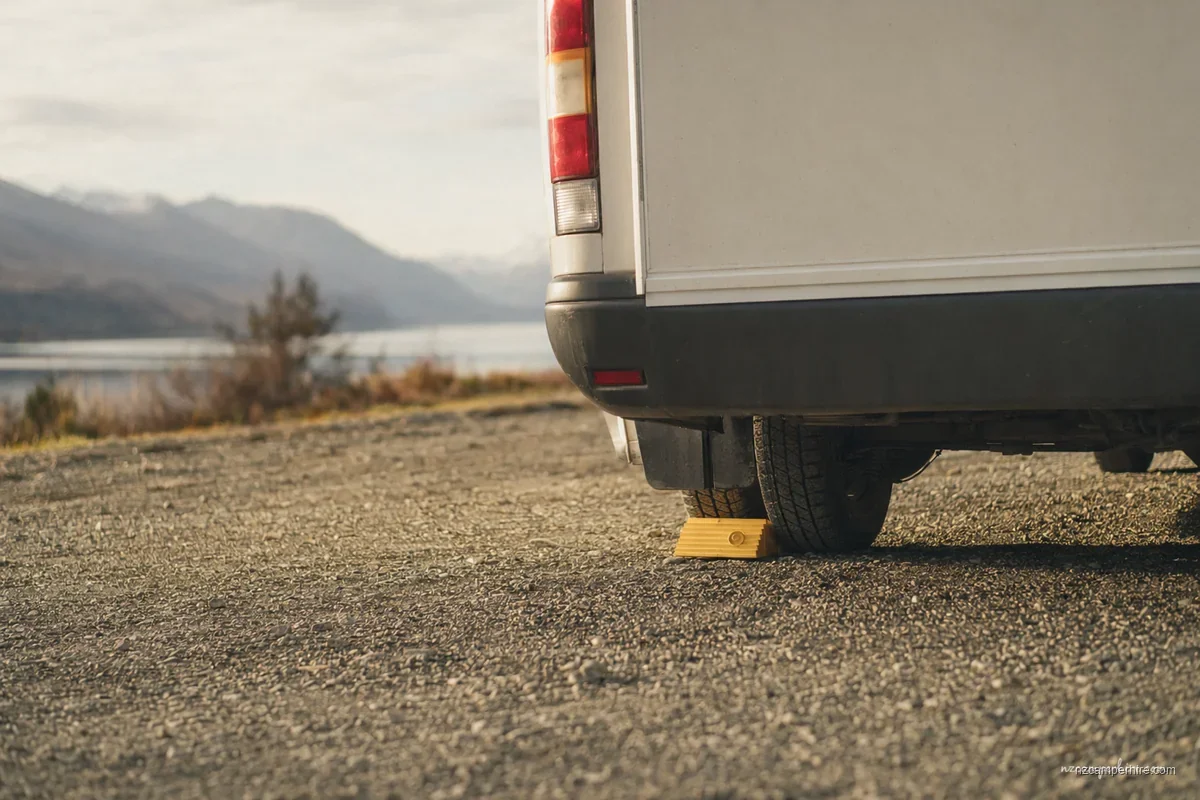
Rules and practicalities are easier to remember when you've felt them — the cold of a wet boot at a freedom camp, the relief of an early ferry slot. This guide is written from those moments, not from a checklist.
Related reading
 ROUTE
ROUTE South Island in 14 days
Classic clockwise South Island loop — Kaikoura, Nelson, West Coast glaciers, Wanaka, Queenstown, Milford Sound, Tekapo, back to Christchurch.
See the route REGION
 Queenstown
Southern Lakes depot. Closest pickup for Milford Sound, Wanaka, Glenorchy, and the Southern Scenic Route.
See the region PRACTICAL GUIDE
 Best time of year for a NZ campervan trip
Month-by-month — weather, demand, school holidays, peak ferry windows.
Read the guideDump stations North Island map FAQ
Are North Island dump stations free to use?
Can I empty grey water at a supermarket or public toilet?
Do DOC campsites in the North Island have dump stations?
How often should a motorhome use a dump station?
Have a planner answer this for your specific trip
Rules and practicalities depend on dates, party size, and route. Send us your outline and we'll come back with answers tailored to your trip.