West Coast motorhome guide for first-timers
South Island · destination region
- wet-weather-plan
- glacier-stage
- coastal-stage
- bring-warm-layers
- book-ahead
On a grey West Coast morning, the bush smells clean, the kettle seems to work overtime, and SH6 hums quietly somewhere beyond the flax. It is a place that asks you to loosen your grip on the timetable before the day has properly begun.
The West Coast is the long, wet, forested side of the South Island. It runs from Karamea and Punakaiki in the north down through Hokitika, Franz Josef, Fox Glacier and Haast. In a motorhome, the rhythm is simple: drive SH6, stop often, and do not rush the weather.
This region works well inside a South Island in 14 days route or a Christchurch to Queenstown route, especially if you have enough time to sleep near both Punakaiki and the glacier country.
See route guides that pass through West Coast — and reply with your dates if you'd like a planner to suggest the right number of nights here.
What this coast is for, in a motorhome
The West Coast is not a place for ticking off ten sights in one day. It is for short walks, rain breaks, glacier views when the cloud lifts, and slow coastal driving. SH6 carries most of the trip. The road is sealed and scenic, but it is narrower and more tiring than many visitors expect.
A 2-berth or compact 4-berth is the easiest fit here. A 6-berth can do the West Coast, but you will work harder in small supermarket car parks, at glacier village parking areas, and on wet roadside pull-outs. If your wider itinerary includes Queenstown, Wanaka and the Crown Range, read the vehicle-size guide before choosing a large van.
Peak month is January. February is often better for slightly calmer travel, though it is still busy. In both months, book powered sites in Franz Josef, Fox Glacier and Punakaiki well ahead if you need electricity every night.
Driving in and out: SH6, SH73 and Haast Pass
From Christchurch to Hokitika via Arthur's Pass, allow 260 km and about 4.5 to 5.5 hours in a motorhome, not counting walks or lunch. SH73 climbs to Arthur's Pass at 920 m, then drops through Otira. It is sealed, steep in places, and can carry snow or ice in winter.
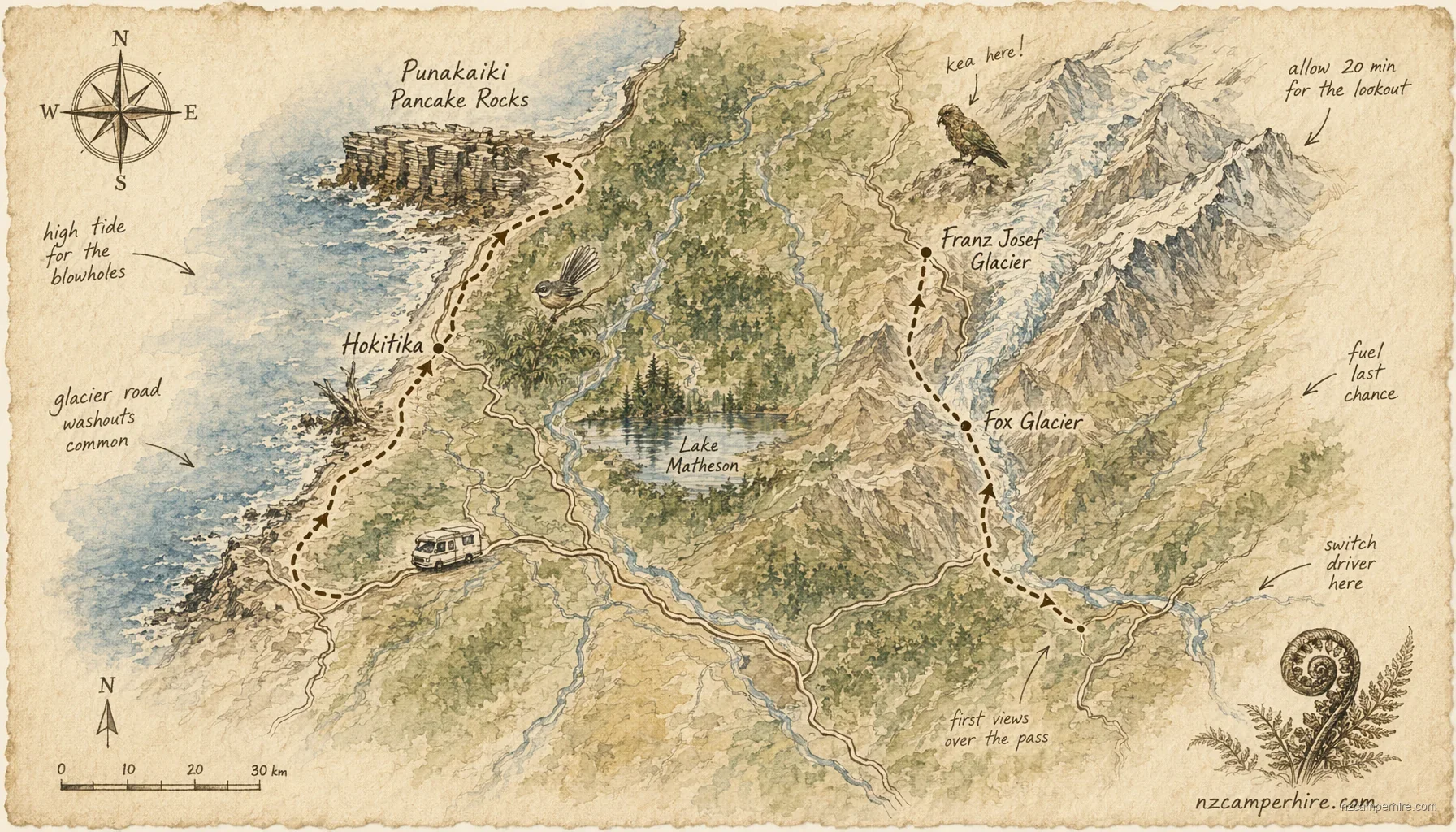
From Wanaka to Fox Glacier via Haast Pass, allow 265 km and about 4.5 to 5 hours. Haast Pass is lower at 564 m, but the road has tight bends, waterfalls, one-lane bridges and heavy rain at times. Fuel before you leave Wanaka or Haast, as there are long gaps.
North of Hokitika, SH6 runs through Greymouth and Punakaiki. Hokitika to Punakaiki is 82 km and around 1 hour 20 minutes. South of the glaciers, Fox Glacier to Haast is 122 km and around 2 hours, but it often takes longer because drivers stop at Lake Matheson, Bruce Bay and beach pull-outs.
What to see, and what to skip
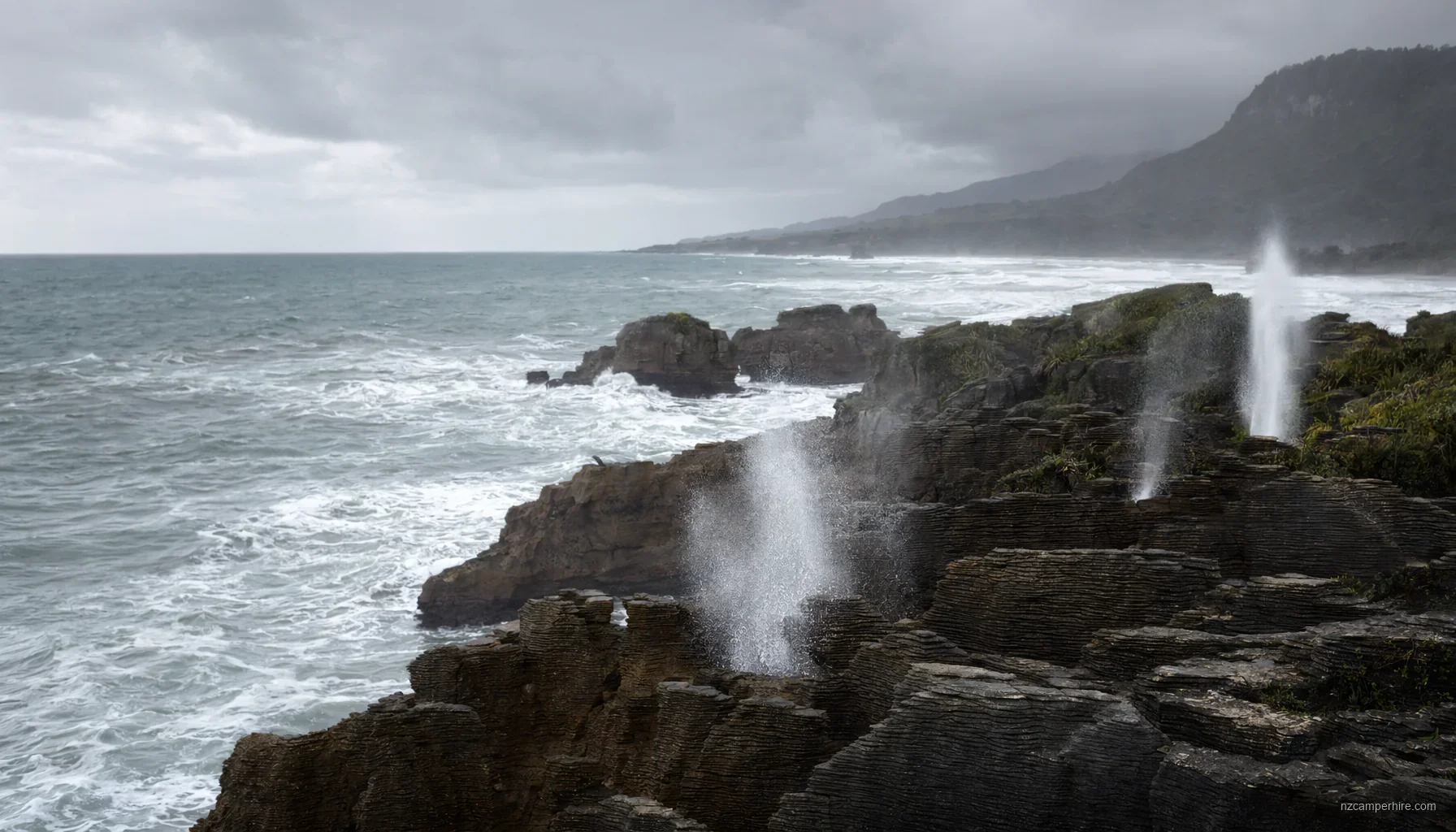
Punakaiki is worth a proper stop for the Pancake Rocks and blowholes, especially near high tide with a westerly swell. The main loop is short, about 20 minutes, but parking a motorhome can take patience in summer.
Hokitika is the easiest town for a reset. Use it for groceries, laundry, a beach walk, and the Hokitika Gorge side trip if the weather is clear. The gorge is inland, about 33 km each way from town. Allow 1.5 to 2 hours return including the walk.
Franz Josef and Fox Glacier are not interchangeable, but you do not need long in both if time is tight. Franz Josef has more services and activity operators. Fox is smaller and quieter, with Lake Matheson nearby. Glacier access changes after slips and weather events, so check current track status before promising yourself a specific walk.
Skip long gravel detours if the forecast is heavy rain. The Coast changes fast. A short, dry forest walk is usually better than pushing a motorhome down a narrow side road because it looked fine on a map.
Where to stay overnight
The West Coast is long, so choose overnight stops by driving distance rather than by the prettiest photo. These are practical bases that work for first motorhome trips:
- Greymouth Seaside Top 10 Holiday Park: powered and unpowered sites, family-friendly, about 2 km south of central Greymouth; good for laundry, beach access and a reset after Arthur's Pass.
- Hokitika Holiday Park: powered and unpowered sites, relaxed family vibe, roughly 3 km north of Hokitika town centre; useful for the beach, glow-worm dell and supermarket run.
- Punakaiki Beach Camp: powered and non-powered sites, small coastal feel, walking distance to the Pancake Rocks track; book early in January because there are limited places nearby.
- Franz Josef Top 10 Holiday Park: powered and unpowered sites, family-oriented, about 2 km from Franz Josef village; a sensible base for glacier walks, weather checks and shuttles.
- Fox Glacier Top 10 Holiday Park: powered and unpowered sites, quieter than Franz Josef, about 1 km from Fox Glacier village; handy for Lake Matheson at dawn or evening.
- DOC Gillespies Beach Campsite: no power, basic DOC setting, about 21 km from Fox Glacier on a narrow access road; better for compact vans in dry conditions, with wild beach walking as the draw.
Freedom camping rules vary by district. A certified self-contained vehicle does not mean you can stop anywhere. Read the freedom camping guide before relying on free overnight spots.
How long to stay
The honest minimum is two nights: one around Punakaiki or Hokitika, and one in Franz Josef or Fox Glacier. That works if the Coast is a link between Christchurch and Queenstown, but it leaves no weather buffer. Two nights saves time, but it also means one wet afternoon can hide the very views you came across for.
A realistic first trip uses three nights. For example: Greymouth or Punakaiki, Hokitika, then Franz Josef or Fox. This gives you one proper town night, one glacier-country night, and enough slack for rain.
Four nights is better if you want to walk, not just drive. Add a second glacier-country night, or slow down between Hokitika and Punakaiki. The South Island in 14 days route has room for this. The Christchurch to Queenstown route can include it too, but only if you do not overload the inland section through Lake Tekapo, Mount Cook and Wanaka.
Practical notes for rain, fuel and reception
Rain is part of the West Coast, not a failure of planning. Bring a real rain jacket and leave wet gear outside the sleeping area where possible. Condensation builds quickly in motorhomes when four people and wet coats are inside. Wet socks have a talent for appearing in places no one remembers putting them, so give them one official corner early.
You will know the Coast has set the pace when the kettle fogs the window and the rain sounds like someone softly brushing the roof.
Fuel is straightforward in Greymouth, Hokitika, Franz Josef, Fox Glacier and Haast, but do not run the tank low south of the glaciers. Supermarkets are larger in Greymouth and Hokitika. Franz Josef and Fox have smaller stores with fewer choices and higher shelf prices.
Mobile reception is patchy between settlements, especially south of Fox Glacier and around Haast. Download maps before leaving town. New Zealand drives on the left. Foreign licences in English are valid for up to 12 months; if your licence is not in English, bring an International Driving Permit or certified translation.
Common first-trip mistakes here
The first mistake is trusting a clear morning too much. Weather on the Coast can change by lunchtime. If you get a clear view of the Southern Alps, take the walk or photo then.
The second mistake is making the glacier stop too tight. Helicopter flights, guided ice trips and some valley walks are weather-dependent. If they matter to you, allow two nights in glacier country.
The third mistake is driving too late. SH6 is beautiful, but in rain and dusk it becomes tiring. Plan to arrive by mid-afternoon, plug in, dry the van, and walk after that. It is a calmer way to travel, especially with children or anyone still adjusting to left-side driving.
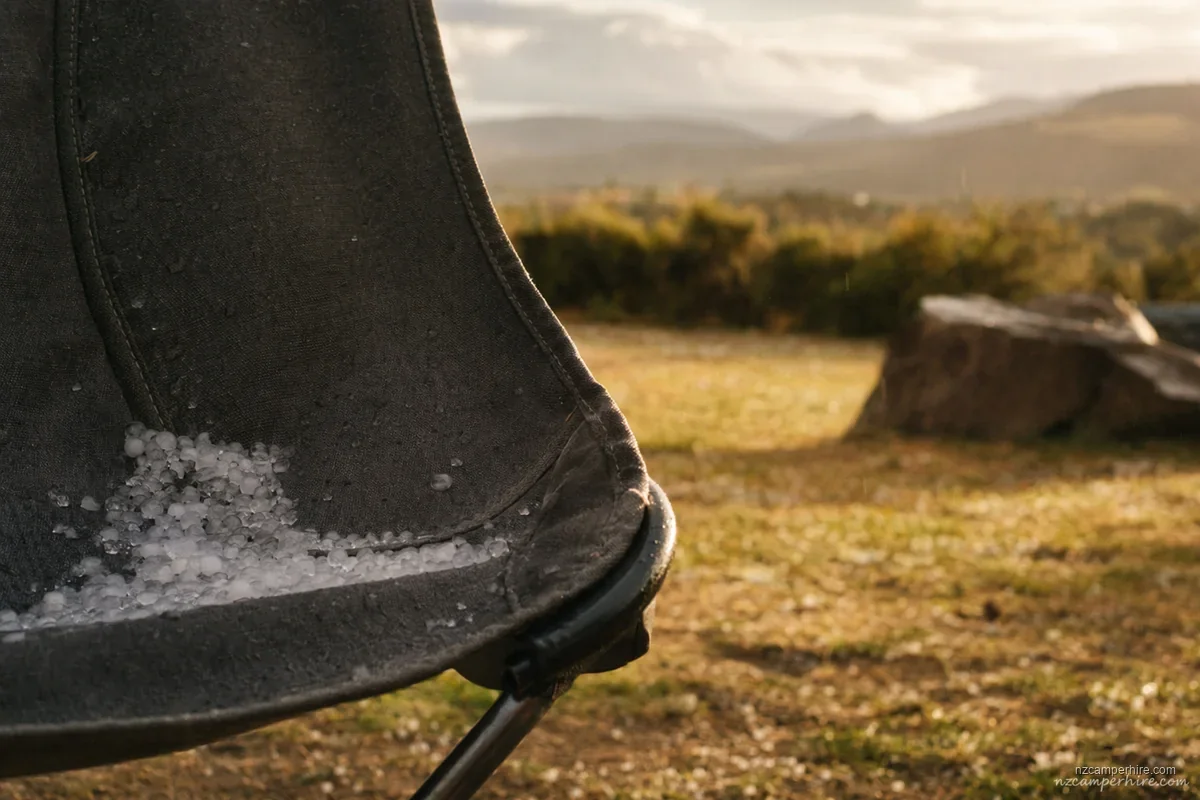
West Coast rewards travellers who linger. Build in one slow morning — coffee on the camp table, the kettle whistling, the day not yet decided.
Te Tai Poutini — known internationally as West Coast
Te Tai Poutini is the source of nearly all of Aotearoa's pounamu (greenstone / nephrite jade). Poutini Ngāi Tahu have customary authority over the entire coast from Kahurangi Point in the north to Awarua/Big Bay in the south. Under the Ngāi Tahu (Pounamu Vesting) Act 1997 all naturally-occurring pounamu in Te Waipounamu is owned by Ngāi Tahu — taking pounamu from rivers and beaches is unlawful.
The Arahura River, north of Hokitika, is the most sacred pounamu river. The pūrākau tells that Poutini fled from the taniwha Whātipu carrying the woman Waitaiki, and where she finally rested she was transformed into pounamu in the Arahura riverbed.
- Te Koroka pounamu trail signage, Hokitika — Public bilingual interpretive panels along the Hokitika foreshore.
- Authorised pounamu carvers in Hokitika and Greymouth — Buying pounamu from a registered carver is the right way to take a piece home — they source legally through Ngāi Tahu's authentication scheme.
- Franz Josef / Kā Roimata o Hine Hukatere — 'The tears of Hine Hukatere' — the pūrākau says the glacier formed from the tears of a woman whose lover Wawe fell from the mountains; her tears froze into ice.
Aoraki Routes acknowledges the mana whenua of Ngāi Tahu (Poutini Ngāi Tahu hapū). We recommend visiting cultural sites with respect and following the tikanga (protocol) of the host iwi.
Related reading
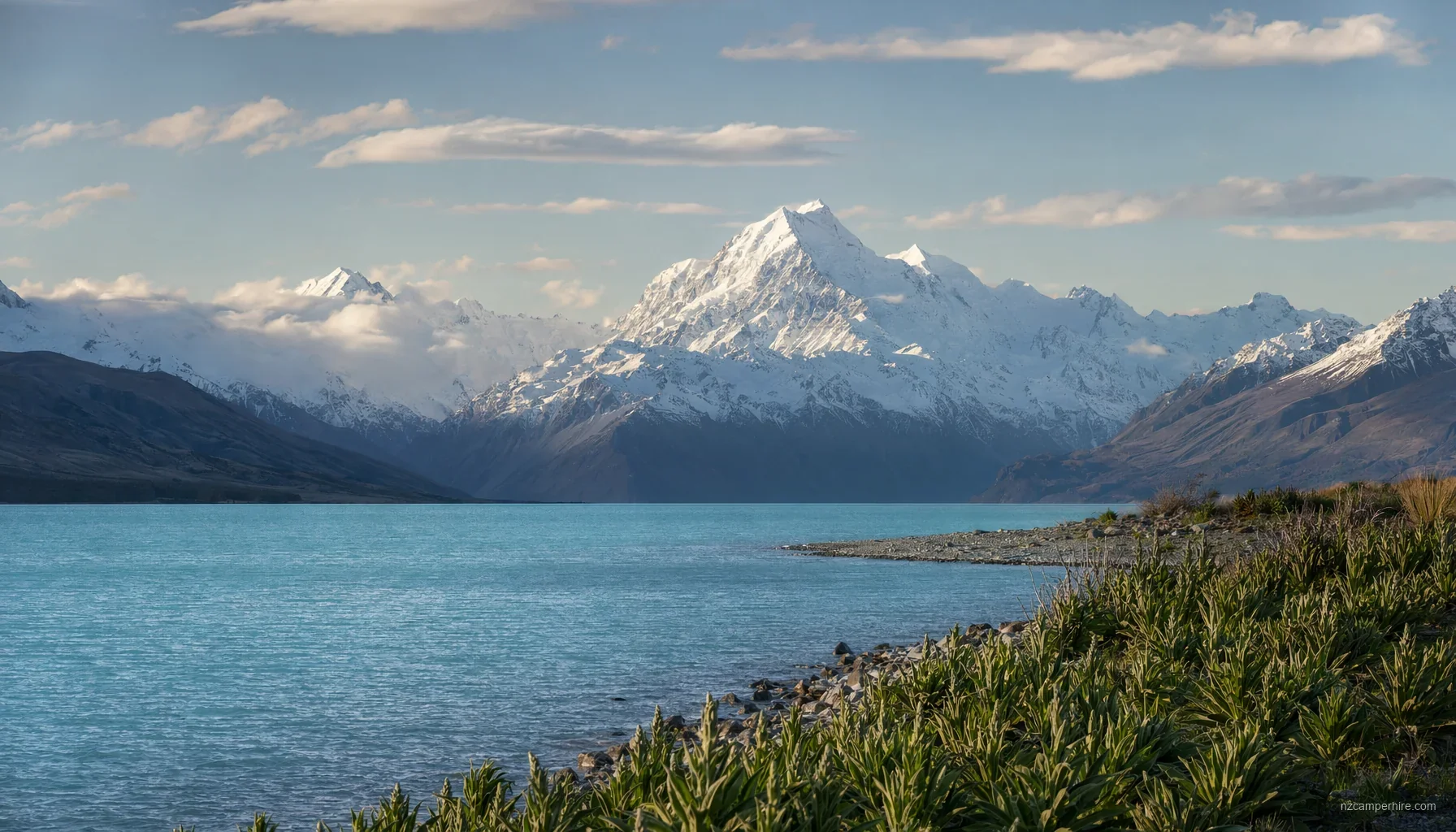 ROUTE
ROUTE South Island in 14 days
Classic clockwise South Island loop — Kaikoura, Nelson, West Coast glaciers, Wanaka, Queenstown, Milford Sound, Tekapo, back to Christchurch.
See the route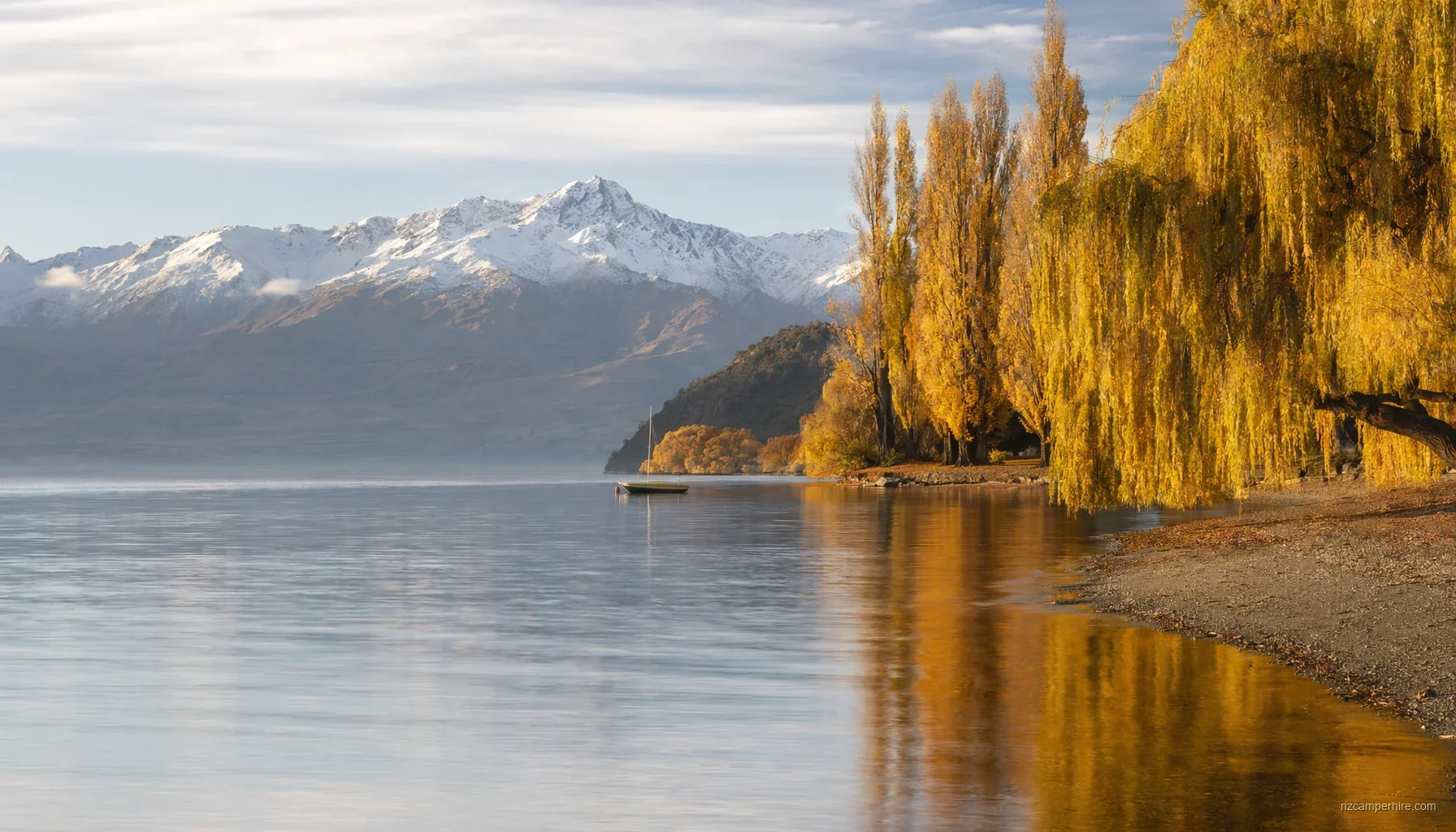 WHEN TO GO
 Shoulder seasons (March-May, September-November)
Sweet spot for many — better availability, lower rates, still good weather.
Read the timing notes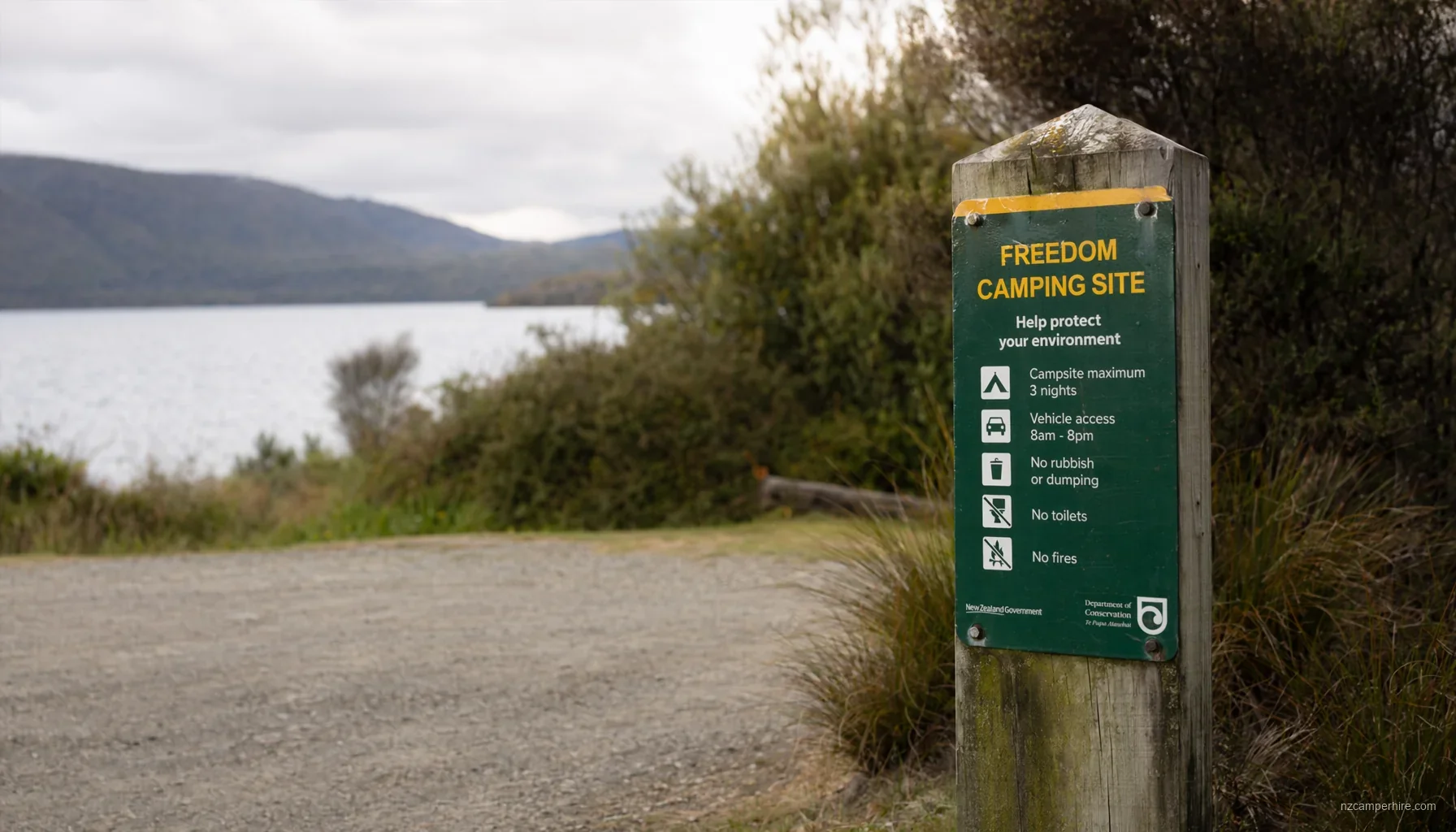 PRACTICAL GUIDE
 Freedom camping in NZ
Where you can legally freedom-camp in a self-contained vehicle, and where you'll get fined.
Read the guideWest Coast FAQ
How many nights do I need on the West Coast by motorhome?
When is the best month to visit the West Coast?
Where are the main supermarkets on the West Coast?
Where can I dump waste tanks on the West Coast?
Have a planner shape a trip around this region
Tell us roughly when you're coming and how long you have. We'll come back with a route that gives this region the time it deserves.