
First pickup-day checklist for a NZ motorhome
Walk-around inspection, gas check, dump-station tutorial, where to buy what before driving off. Honest, granular how-to — written from on-th...
- logistics
Your first hour with a New Zealand motorhome is not admin. It is when you find the cracked mirror, learn the grey-water tap, check the gas bottle, and stop the first day turning into a car-park argument.
This campervan pickup checklist pairs well with First time driving a motorhome, Driving on the left in NZ, and Dump stations and water fills, especially before a Christchurch to Queenstown drive in February or any first night near Queenstown. Get the planning checklist that pairs this with the route-level gotchas for your trip, or reply with your dates if you'd like a planner to flag the pickup-day-specific traps on your week.
Before you sign: drivers, documents and limits
Have every named driver at the depot with passport, licence, and card used for the bond. New Zealand drives on the left. Foreign licences in English are valid for up to 12 months. If your licence is not in English, carry an International Driving Permit or an approved translation. See the NZTA / Waka Kotahi rule before you fly.
Minimum hire age varies, usually 18 to 25 depending on operator and vehicle class. Ask before pickup if a young driver is in the group. Also ask what happens on gravel roads, ski-field roads, beach access roads, and unsealed DOC approaches. Some are excluded by insurance.
Do not plan a hard first day. Christchurch airport to Lake Tekapo is 225 km and usually 3 to 3.5 hours via SH1, SH79 and SH8 after you are already tired. Auckland airport to Rotorua is about 230 km and 3 to 3.5 hours via SH1, SH27 and SH5. On pickup day, shorter is safer.
The walk-around inspection you record on your phone
Video the whole vehicle before luggage goes in. Start with the odometer and fuel gauge. Then walk clockwise. Say the date out loud. Film every panel, windscreen chip, mirror, bumper corner, wheel, tyre sidewall, roof edge you can see, bike rack if fitted, awning case, external lockers, and reversing camera.
Inside, photograph stains, broken latches, flyscreens, table legs, window catches, curtain tracks, seatbelts, child-seat anchor points if relevant, and the shower tray. Check the inventory against what you were promised: bedding, towels, kettle, pans, hose, power lead, levelling blocks, toilet chemicals, and spare fuses.
Ask where the jack and spare wheel are, if supplied. Many newer vehicles carry a repair kit instead. That is fine, but you need to know before SH6 on the West Coast, not after a puncture near Haast Pass at 564 m.
Gas, toilet, water and power: make them demonstrate it
Do not accept a verbal explanation from across the counter. Stand beside the vehicle and make the handover person show you the LPG bottle, shut-off valve, stove ignition, fridge mode, heater, hot water, 240-volt power lead, battery monitor, and solar display if fitted. Ask how long the house battery usually lasts without plugging in.
For the bathroom, ask for a cassette removal demonstration. Learn which cap is for fresh water and which outlet is grey water. They are not interchangeable. A legal dump station takes toilet waste and grey water. A roadside drain does not.
If you plan to freedom camp, check the self-containment certificate before leaving. The Freedom Camping Act 2011 and the 2023 amendment tightened the rules, with certification moving toward NZS 5465:2022. Older NZS 5465:2001 certificates may appear during transition, but council bylaws still control local parking. Queenstown Lakes, Tasman and Auckland are among the stricter areas. Fines can be $400 instantly, up to $200 per litre for illegal grey-water dumping, and up to $10,000 in serious cases. See doc.govt.nz and the local council page for the place you are sleeping.
Where to buy the unglamorous things before driving off
Shop before the scenic road. You need drinking water, easy first-night food, dish liquid, rubbish bags, paper towels, toilet paper approved for cassette toilets, matches or a lighter, a torch, and a phone mount. Add laundry powder if your first two nights are in holiday parks.
Near Christchurch airport, North South Holiday Park is a practical first night and supermarkets are close in Bishopdale, Papanui and Hornby. In Auckland, many travellers stop near the airport supermarkets before heading north or south. In Queenstown, Creeksyde Queenstown is close to town but the streets are tight, so arrive in daylight if you are new to a 6 m plus vehicle.
For routes such as Auckland to Queenstown one-way or South Island in 14 days, the first grocery stop also sets up your rhythm. Buy less fresh food than you think. Small fridges struggle when six people load warm drinks into them at once.
Safer fallbacks if pickup day runs late
If the depot is slow, do not chase the original itinerary. Move the first night closer. That is better than learning a long, wide vehicle at dusk on SH73 to Arthur's Pass, SH8 through the Mackenzie Country, or the Queenstown approach on SH6.
- Christchurch pickup: sleep near Christchurch, or choose a simple first hop to Akaroa Top 10 only if you are comfortable with hills and bends.
- Auckland pickup: stay near Auckland, or make a short run to the Hibiscus Coast before tackling Northland traffic the next morning.
- Queenstown pickup: use Creeksyde Queenstown or another legal local site before driving to Te Anau, Wanaka or Milford Sound.
- Ferry connection: do not combine pickup, a long drive, and the Cook Strait ferry. Interislander and Bluebridge take about 3 hours 20 minutes Picton to Wellington, closer to 3.5 hours with loading. See Maritime NZ for the ferry side.
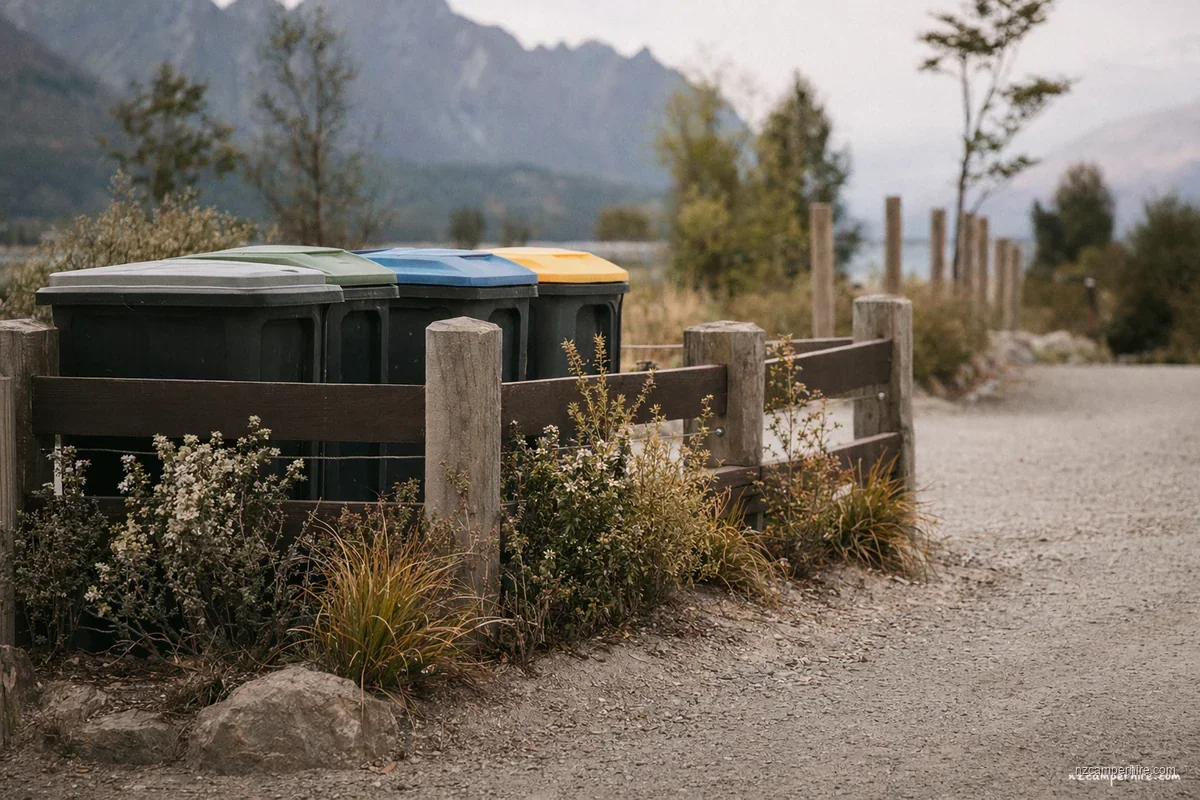
Rules and practicalities are easier to remember when you've felt them — the cold of a wet boot at a freedom camp, the relief of an early ferry slot. This guide is written from those moments, not from a checklist.
Related reading
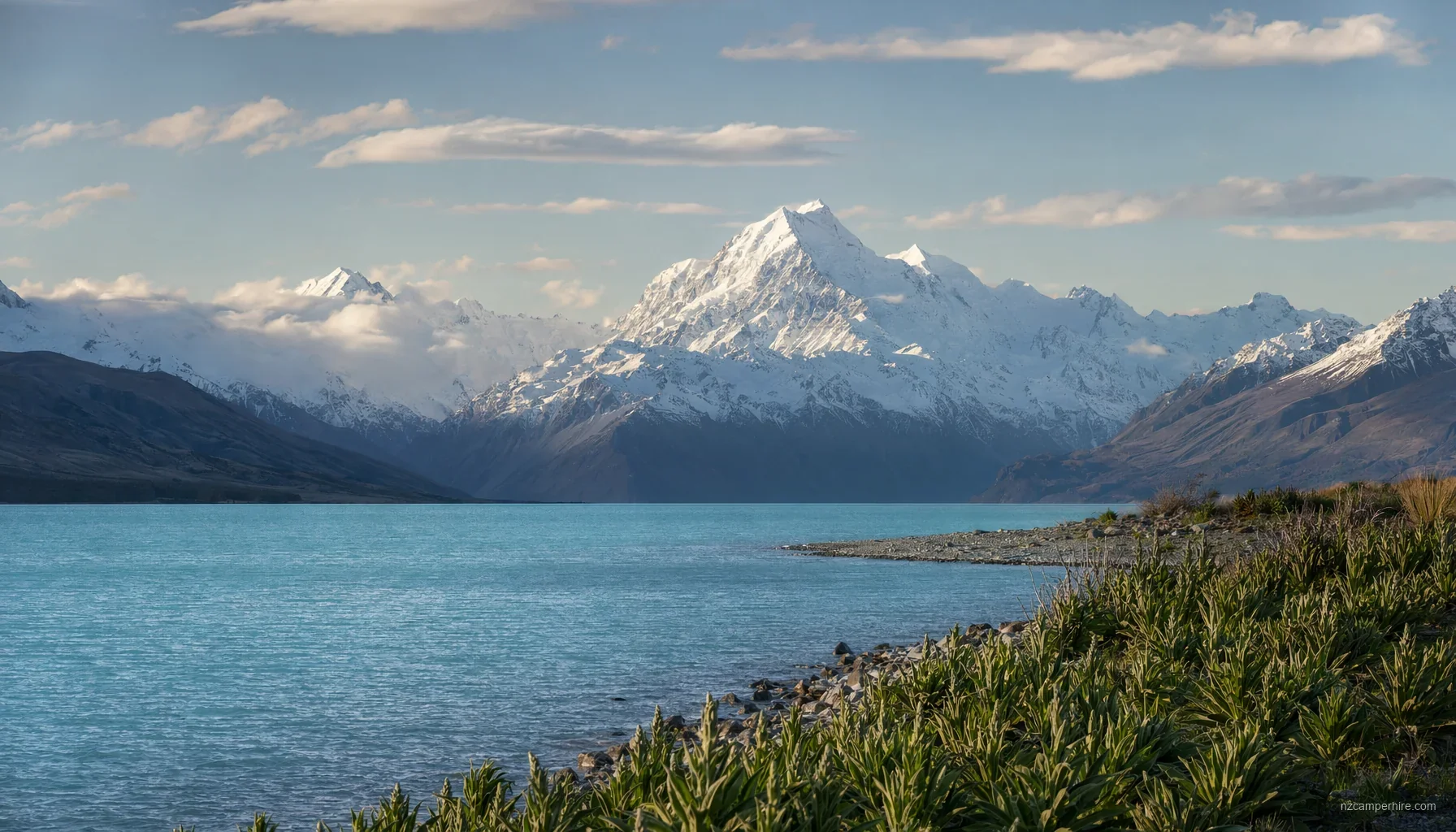 ROUTE
ROUTE South Island in 14 days
Classic clockwise South Island loop — Kaikoura, Nelson, West Coast glaciers, Wanaka, Queenstown, Milford Sound, Tekapo, back to Christchurch.
See the route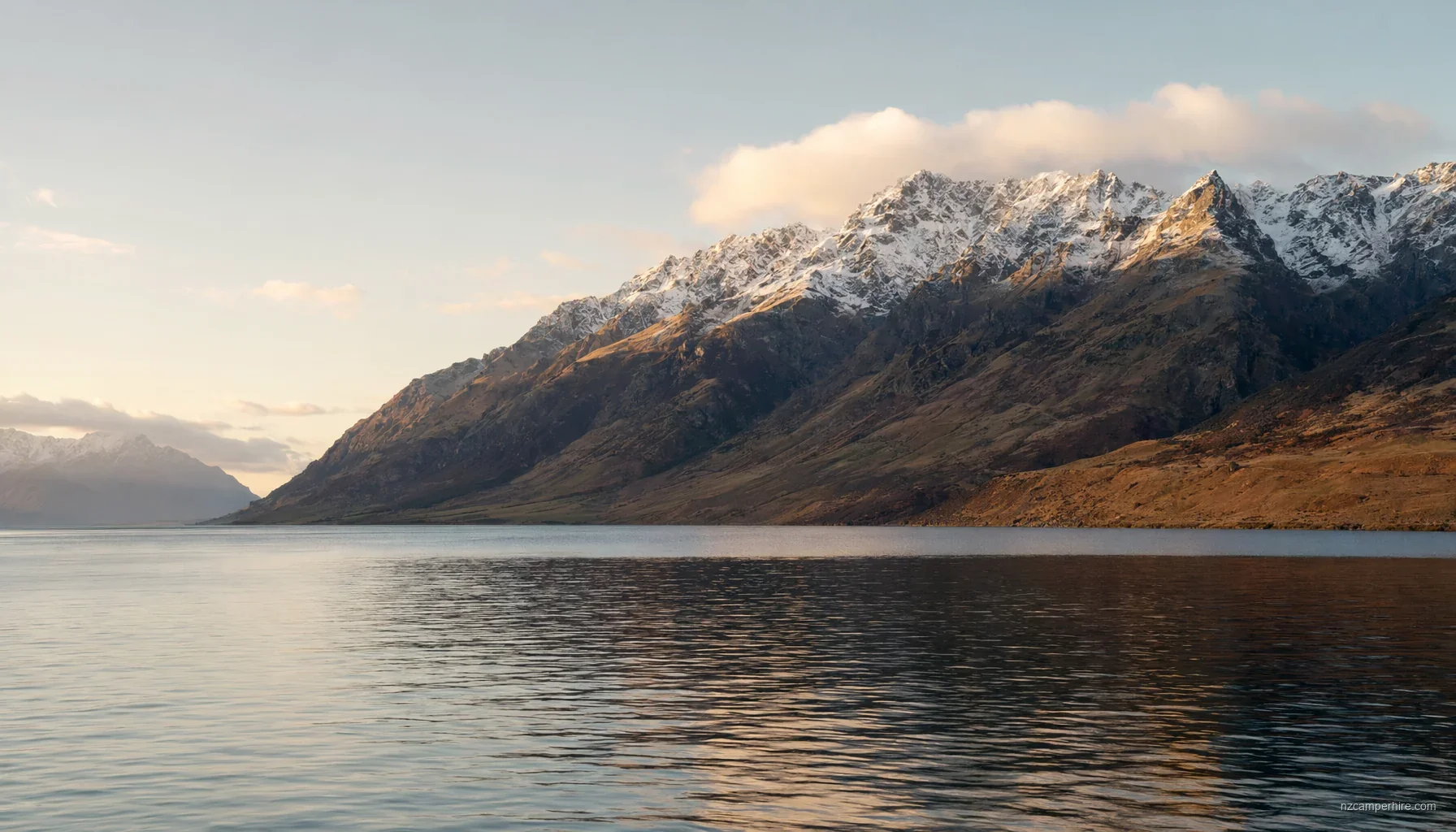 REGION
 Queenstown
Southern Lakes depot. Closest pickup for Milford Sound, Wanaka, Glenorchy, and the Southern Scenic Route.
See the region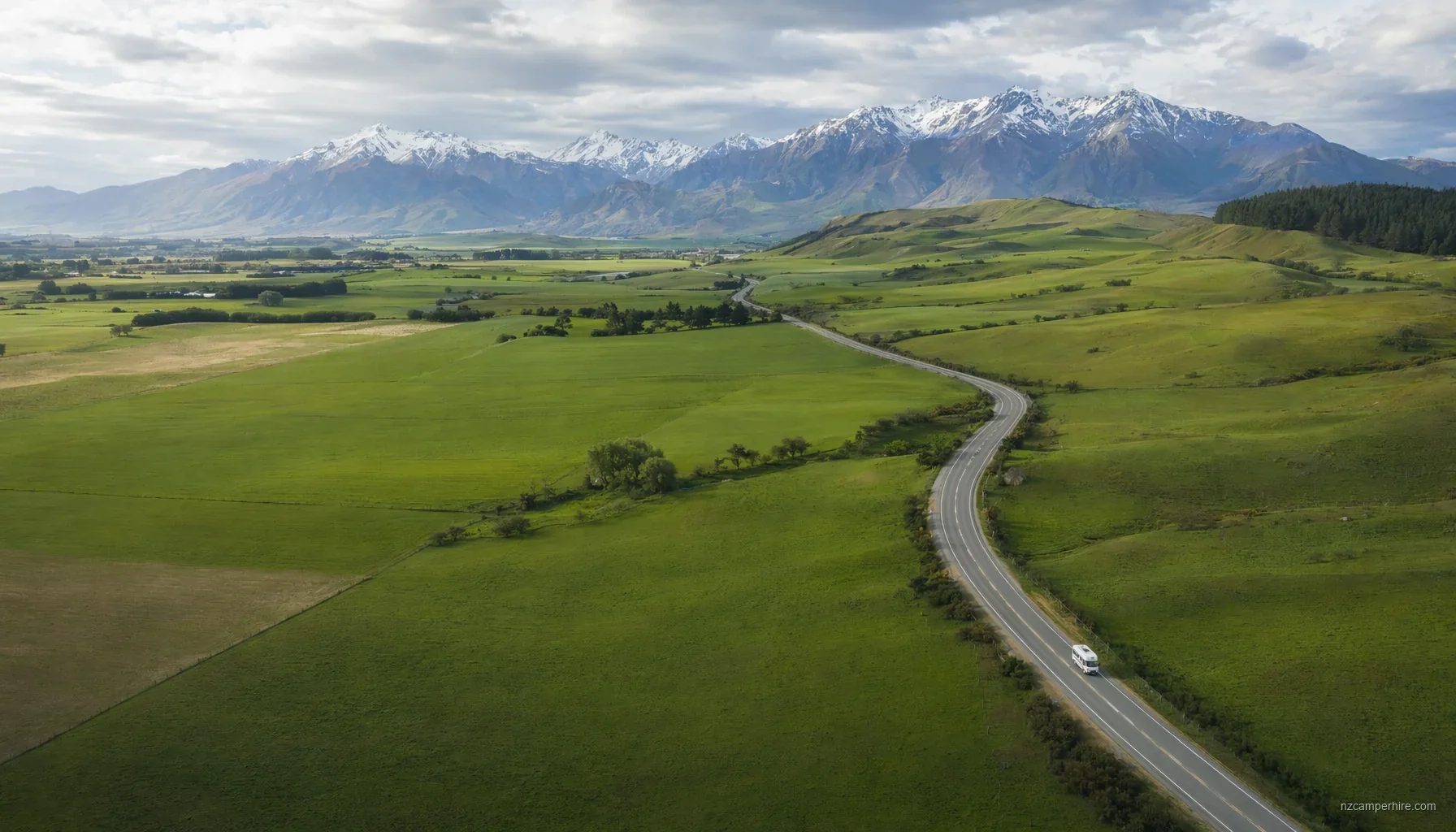 PRACTICAL GUIDE
 Best time of year for a NZ campervan trip
Month-by-month — weather, demand, school holidays, peak ferry windows.
Read the guideFirst pickup-day checklist for a NZ motorhome FAQ
How long should motorhome pickup take in New Zealand?
Should I fill fresh water before leaving the depot?
What damage matters most on pickup day?
Can I drive straight to Milford Sound after Queenstown pickup?
Have a planner answer this for your specific trip
Rules and practicalities depend on dates, party size, and route. Send us your outline and we'll come back with answers tailored to your trip.