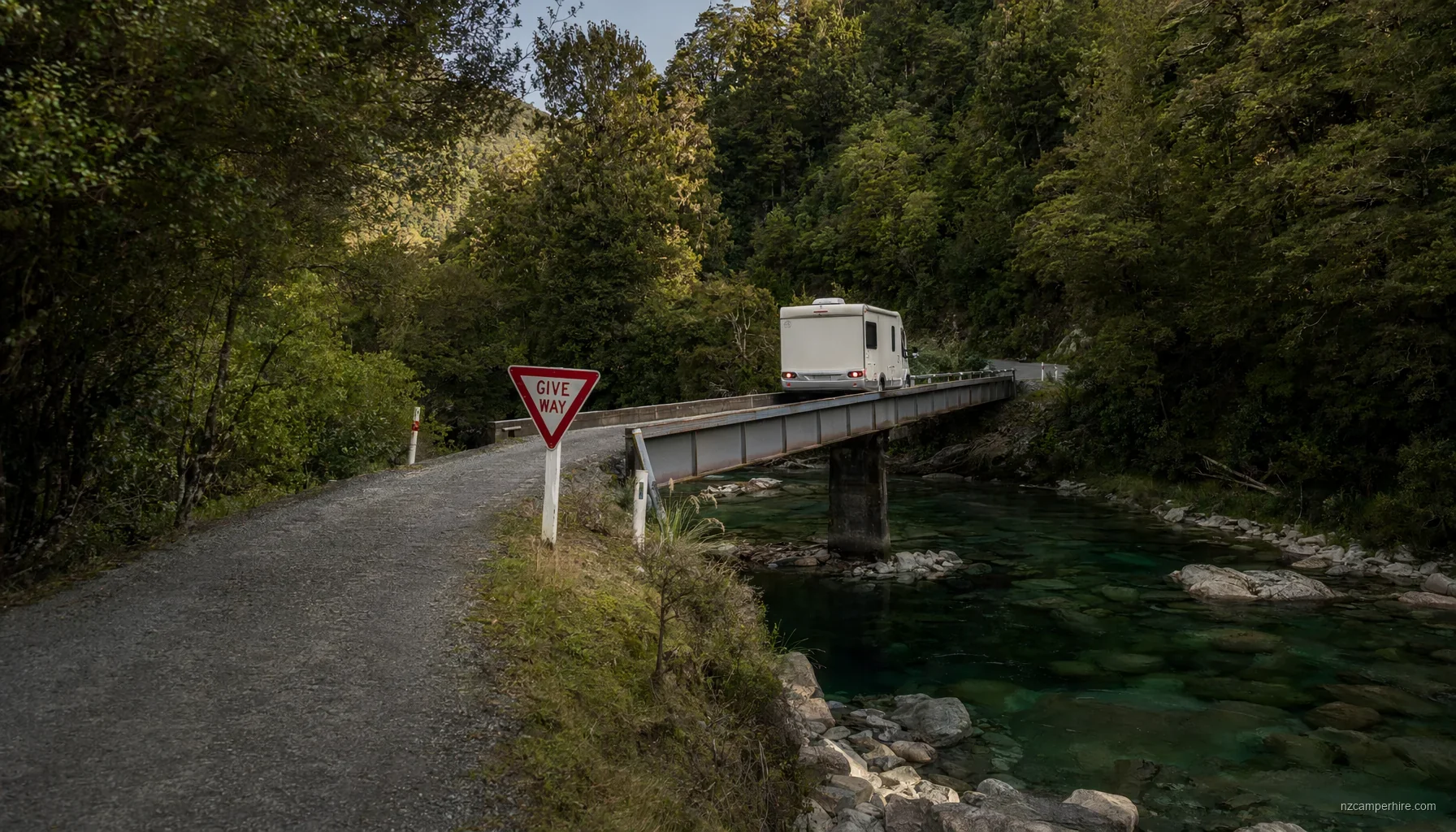
First time driving a motorhome in New Zealand
Height awareness, swing on turns, parking, reversing — short briefing before pickup.
- slow-morning
- family-friendly
- busy-summer
- bring-warm-layers
- book-ahead
The first morning can feel wonderfully ordinary: kettle clicking on, mirrors fogged at the edges, and the depot gate opening onto traffic that seems to be arriving from the wrong direction.
A New Zealand motorhome is not difficult to drive, but it is different. You sit higher, the vehicle is wider than a car, and rural roads can go from smooth highway to narrow bridge in one bend.
The first 24 hours matter. If you collect in Auckland, Christchurch, or Queenstown, plan a short first day, not a heroic drive over a pass after a long flight.
Get the planning checklist — and reply with your dates if you'd like a planner to flag the first-time-driving-specific gotchas for your route.
Before pickup: licence, size, and the first ten minutes
New Zealand drives on the left. The steering wheel is on the right. At roundabouts, give way to traffic already on the roundabout and indicate when you leave.
According to NZ Transport Agency (Waka Kotahi), an overseas licence in English is valid for up to 12 months from arrival. If your licence is not in English, carry an International Driving Permit or an approved translation. Minimum hire age is usually 18 to 25, depending on the operator and vehicle class.
Before you leave the depot, write down the vehicle height, width, length, fuel type, and where the reversing camera view appears. Take two minutes to adjust both mirrors. You should see the side of the vehicle and the lane behind, not just sky.
Height, width, and rear swing are the three big surprises
Most first-time scrapes happen above eye level or behind the rear wheels. A 2-berth van may feel car-like. A 6-berth motorhome can be over 7 m long and close to 3.4 m high. That changes petrol stations, motel driveways, tree branches, and supermarket car parks.
- Height: avoid low car-park buildings and watch service-station canopies.
- Width: keep left, but do not hug the shoulder on rural roads. Soft edges can drop away.
- Rear swing: the back of the vehicle cuts wider than you expect when you turn sharply.
- Braking: allow more space than you would in a car, especially on wet chip-seal roads.
The 6-berth is cheaper per person for families or friends, but it is harder in Queenstown streets, on the Crown Range road, and in older holiday park lanes.
How New Zealand roads feel from the driver's seat
Distances are short on the map and slower on the road. Christchurch to Lake Tekapo is about 230 km and usually 3 hours in a motorhome with a comfort stop. Queenstown to Milford Sound on SH94 is about 288 km one way and can take 4.5 to 5.5 hours before photo stops, weather, or traffic.
Milford is worth the early alarm, but SH94 is a long return day for a new driver, so book nearby or add a buffer if the forecast looks unsettled.
Key South Island passes are not extreme by alpine standards, but they need respect. Arthur's Pass on SH73 reaches 920 m. Lindis Pass on SH8 reaches 965 m. Haast Pass on SH6 is 564 m. The Crown Range Road between Queenstown and Wanaka reaches 1,121 m and is steep, narrow, and exposed in winter.
If you are following the South Island in 14 days route from Christchurch, keep the first day simple. North South Holiday Park is close to the airport, while Lake Tekapo or Geraldine makes a calmer first touring night than pushing to Queenstown.
Parking, reversing, and turning without drama
Use a spotter when reversing. Agree on hand signals before you start. If you cannot see the person in your mirror, stop. Reversing cameras help, but they do not show low posts, roof branches, or the full rear corner.
At supermarkets, park at the far edge of the car park and walk an extra minute. In towns such as Rotorua, Wanaka, and Queenstown, use signed long-vehicle parks where available. Do not take a tight underground car park to save time.
You will know you have found the right park when the van is straight, the mirrors are still attached, and the walk to the shop feels pleasantly earned.
For turns, go slow and square them off. Let the front wheels travel a little further before you steer, so the rear wheels do not mount the kerb. On narrow roads, pull into passing bays and let faster traffic go. New Zealand drivers expect this from motorhomes.
Campgrounds, DOC sites, and the evening routine
Arrive in daylight for your first two nights. Plugging into power, filling fresh water, levelling the vehicle, and finding the dump station are all easier when you can see. Good first-night holiday parks include North South Holiday Park in Christchurch, Rotorua Thermal Holiday Park, and Creeksyde Queenstown.
DOC campsites can be simple and beautiful, but not all suit nervous first-time drivers after dark. White Horse Hill near Aoraki/Mount Cook has sealed access and big scenery. Mavora Lakes has gravel-road access and fewer services. Check DOC campsite information before you commit.
Dump grey water only at approved dump stations. Petrol stations sometimes have them, but many do not. If you plan to sleep away from holiday parks, read the freedom camping rules guide as well as the vehicle-size guide. Self-contained certification matters, and local council bylaws can be stricter than travellers expect.
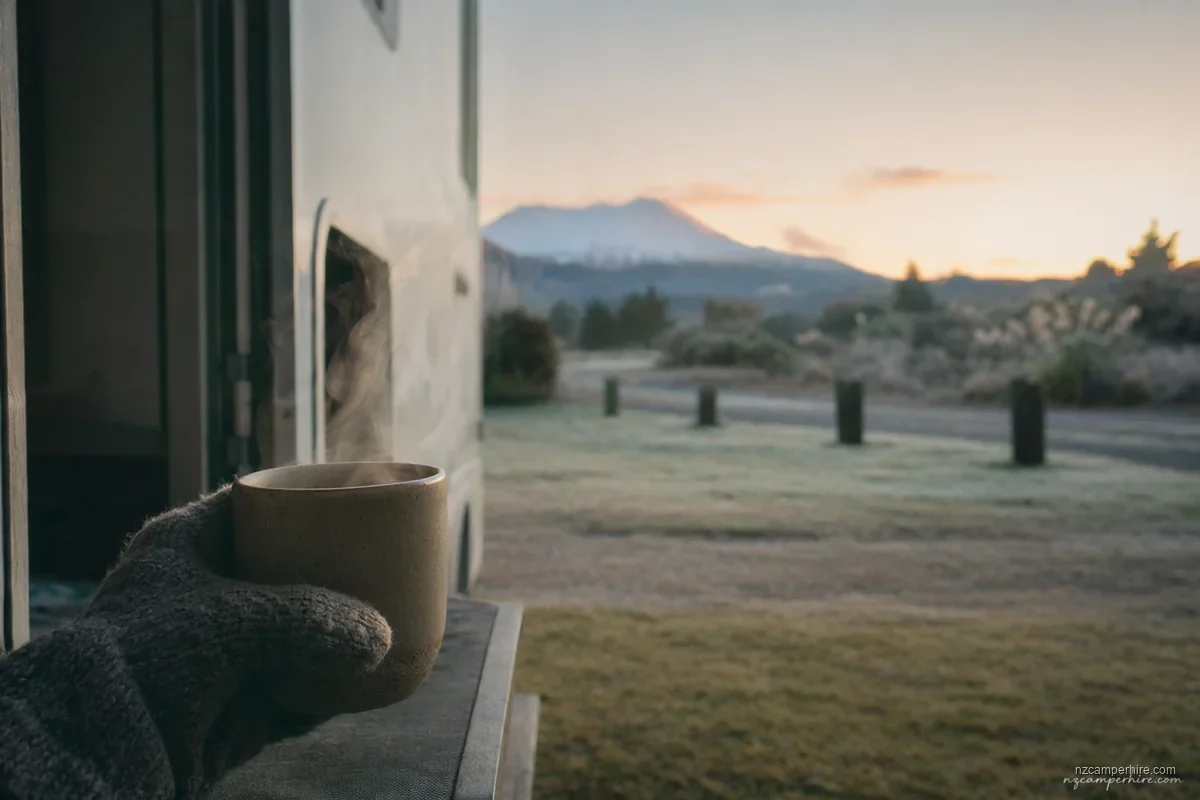
Rules and practicalities are easier to remember when you've felt them — the cold of a wet boot at a freedom camp, the relief of an early ferry slot. This guide is written from those moments, not from a checklist.
Related reading
 ROUTE
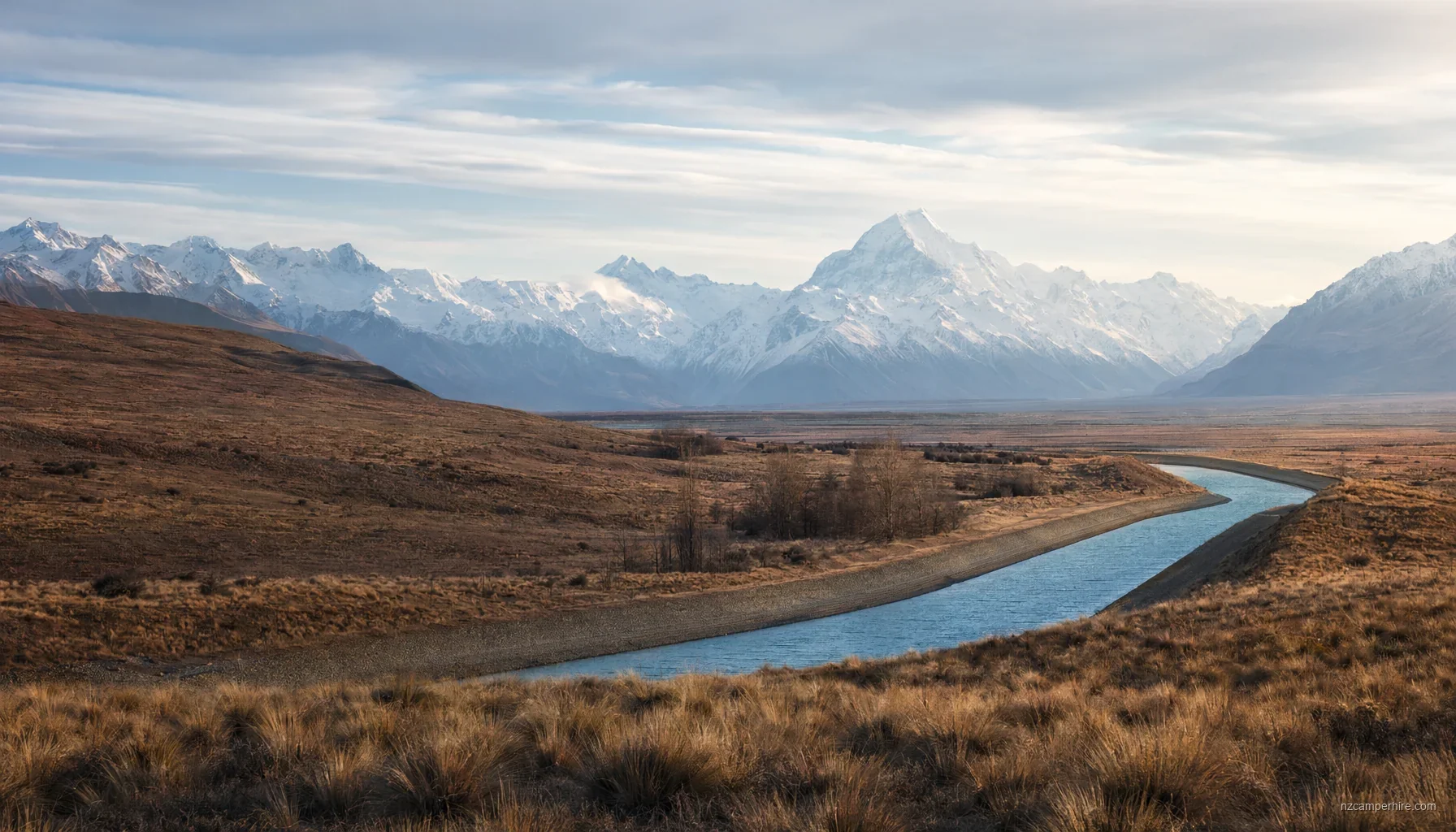
ROUTE Christchurch to Queenstown
Short scenic transfer — Tekapo, Mount Cook, Wanaka, into Queenstown over the Crown Range.
See the route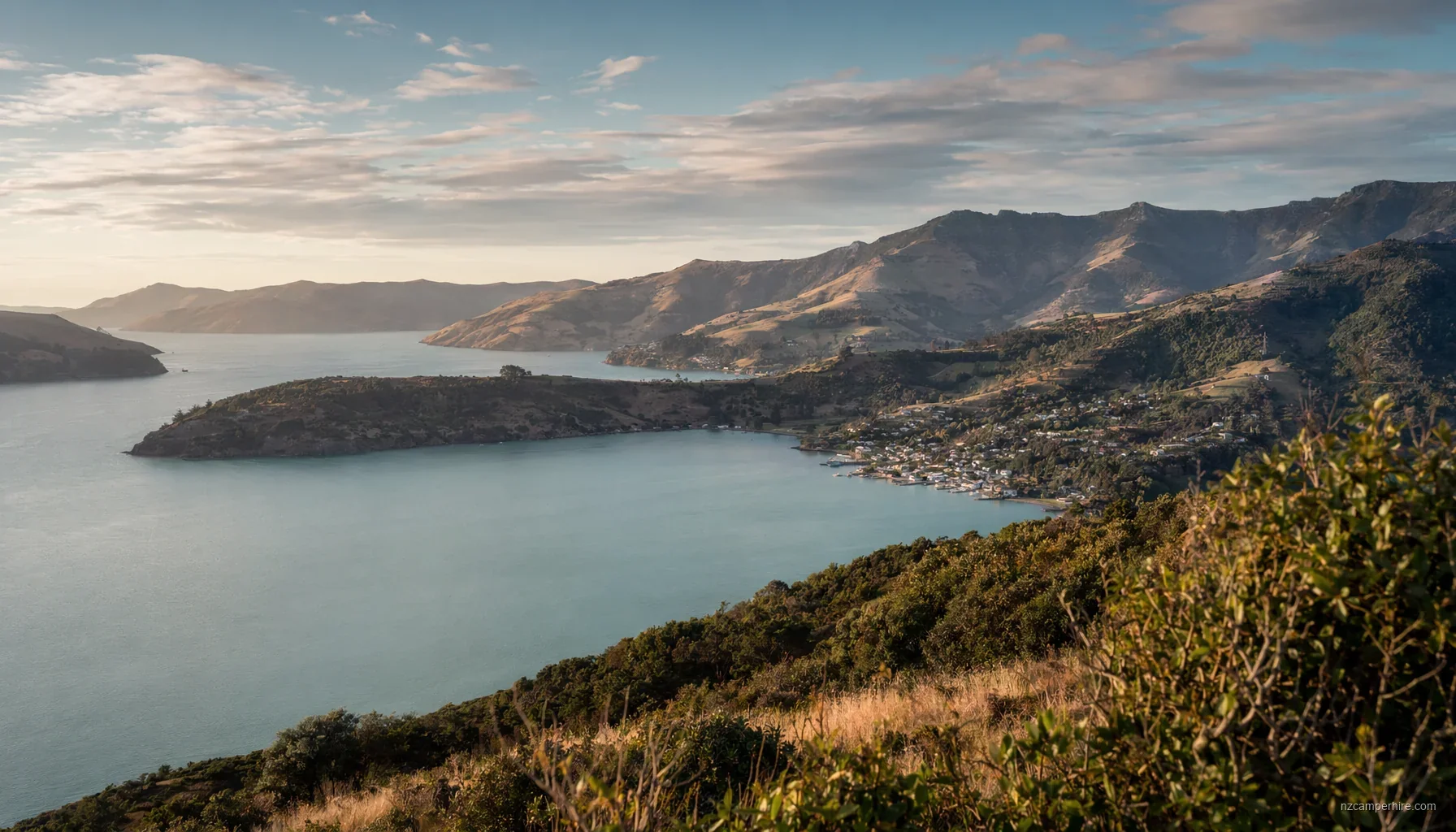 REGION
 Christchurch
Largest South Island depot. Best base for Banks Peninsula, Arthur's Pass, Lake Tekapo, and the West Coast.
See the region PRACTICAL GUIDE
 Driving on the left in NZ
Roundabouts, give-way rules, narrow bridges, and the one-lane bridge etiquette.
Read the guideFirst time driving a motorhome FAQ
Can I drive a motorhome in New Zealand with my overseas licence?
Is a 6-berth motorhome too large for a first-time driver?
Are New Zealand roads safe for motorhomes?
Can I sleep in a roadside rest area on my first night?
What happens if I hit a branch, mirror, or roof edge?
Have a planner answer this for your specific trip
Rules and practicalities depend on dates, party size, and route. Send us your outline and we'll come back with answers tailored to your trip.