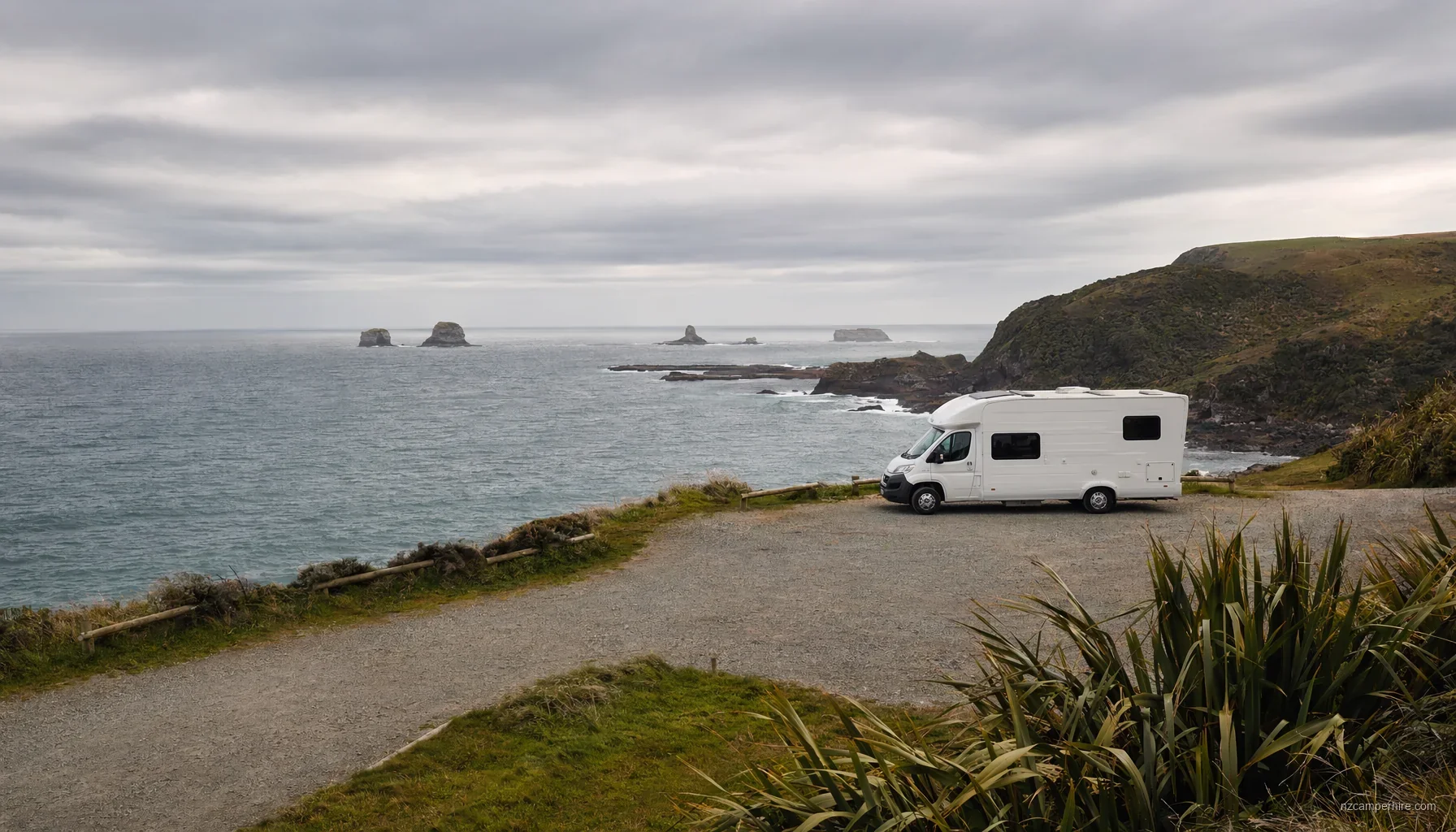
Freedom Camping South Island: Where It Is Legal
Where you can legally freedom-camp on the South Island in a self-contained vehicle — region by region. Honest, granular how-to — written fro...
- logistics
- free-stays
Freedom camping on the South Island is not a simple yes-or-no question. The answer changes by council boundary, vehicle certificate, nearby toilets, signage, and sometimes the exact side of the road you park on.
This guide sits under our parent guide, Freedom camping in NZ, but goes tighter: Queenstown Lakes, Tasman, Christchurch, the West Coast, Fiordland, DOC land, and the places where January road trips get caught out.
Get the planning checklist that pairs this with the route-level gotchas for your trip, or reply with your dates if you'd like a planner to flag the freedom-camping-specific traps on your week.
What changed under the newer self-containment rules
Freedom camping is governed nationally by the Freedom Camping Act 2011, updated by the 2023 self-containment amendment. The practical change for visitors is this: a vehicle being called “self-contained” is no longer enough. Check the certificate and the warrant.
Older certification was under NZS 5465:2001. The newer green-warrant system uses NZS 5465:2022. Rental vehicles should show clear proof, usually a warrant card and window display. If the toilet is portable, or the paperwork looks vague, treat that as a warning sign.
Fines are real. Expect a $400 instant fine for illegal freedom camping. Illegal grey-water dumping can be up to $200 per litre, with serious cases reaching $10,000. See doc.govt.nz and the relevant council site before relying on an app pin.
South Island regions where the rules bite hardest
Queenstown Lakes is the strict one. Around Queenstown, Wanaka, Arrowtown and Glenorchy, most attractive lakeside pull-offs are controlled or banned overnight. This matters on the Queenstown to Milford Sound drive and the Queenstown + Fiordland loop, especially in January and February.
Tasman is also tight. Around Nelson, Motueka, Kaiteriteri and the Abel Tasman coast, freedom-camping sites are limited and heavily signed. Do not assume a beach car park is legal after dark.
Christchurch is mixed. You may find permitted areas on the city fringe, but central streets and beach suburbs are restricted. If you land late, North South Holiday Park near the airport is often the calmer first-night choice.
The West Coast is generally more forgiving, but not lawless. Hokitika, Franz Josef and Fox Glacier have local limits. DOC areas such as Lake Pukaki, Mavora Lakes, Lake Lyndon, White Horse Hill and Cascade Creek are useful, but each has its own camping status, fees, capacity and seasonal pressure.
How to check a site before you park
Use three checks, in this order. First, read the sign on the ground. It wins. Second, check the council freedom-camping bylaw map for that district. Third, cross-check DOC land on doc.govt.nz if the site is conservation land.
- Green or blue certificate: confirm the vehicle certificate is current and accepted for that land type.
- No camping sign: do not stay, even if an app says others have.
- Time limits: many legal sites allow one night only, or no return within a set period.
- Toilets nearby: nearby public toilets do not make a non-certified vehicle legal.
Council bylaws override the national Act locally. Queenstown Lakes, Tasman and Auckland are among the most restrictive councils, even though Auckland is a North Island example.
Routes where freedom-camping plans often fail
On South Island in 14 days, the pressure points are Lake Tekapo, Mount Cook, Wanaka, Queenstown and Fiordland. Distances look short, but SH6 and SH94 are slower than they appear. Te Anau to Milford Sound is 118 km and about 2 hours each way before stops, weather, tunnel delays and traffic.
On Christchurch to Queenstown, many travellers aim for a free lake night near Tekapo or Pukaki. That can work only if the site is legal for your exact vehicle and not full. In summer, have a paid fallback before 3 pm.
If you are new to left-side driving, do not hunt for a marginal site after dark. Foreign licences in English are valid for 12 months; if yours is not in English, carry an IDP or approved translation.
Safer fallbacks when you do not fit the rules
If your vehicle is not certified, your certificate is unclear, or you are travelling in peak month January, use paid or DOC options and sleep properly. The South Island has good fallbacks if you plan one town ahead.
- Queenstown and Wanaka: Creeksyde Queenstown, Wanaka holiday parks, or DOC sites farther out when legal and open.
- Fiordland: Te Anau holiday parks, Cascade Creek DOC Campsite when conditions allow.
- Christchurch and Banks Peninsula: North South Holiday Park, Akaroa Top 10.
- West Coast: Hokitika Holiday Park, plus legal DOC sites shown on doc.govt.nz.
- Waitaki and Otago coast: Oamaru Top 10 before or after Dunedin.
Our Holiday parks vs DOC campsites guide and Self-contained certification explained guide pair well with this page if you are still choosing vehicle size and camping style.
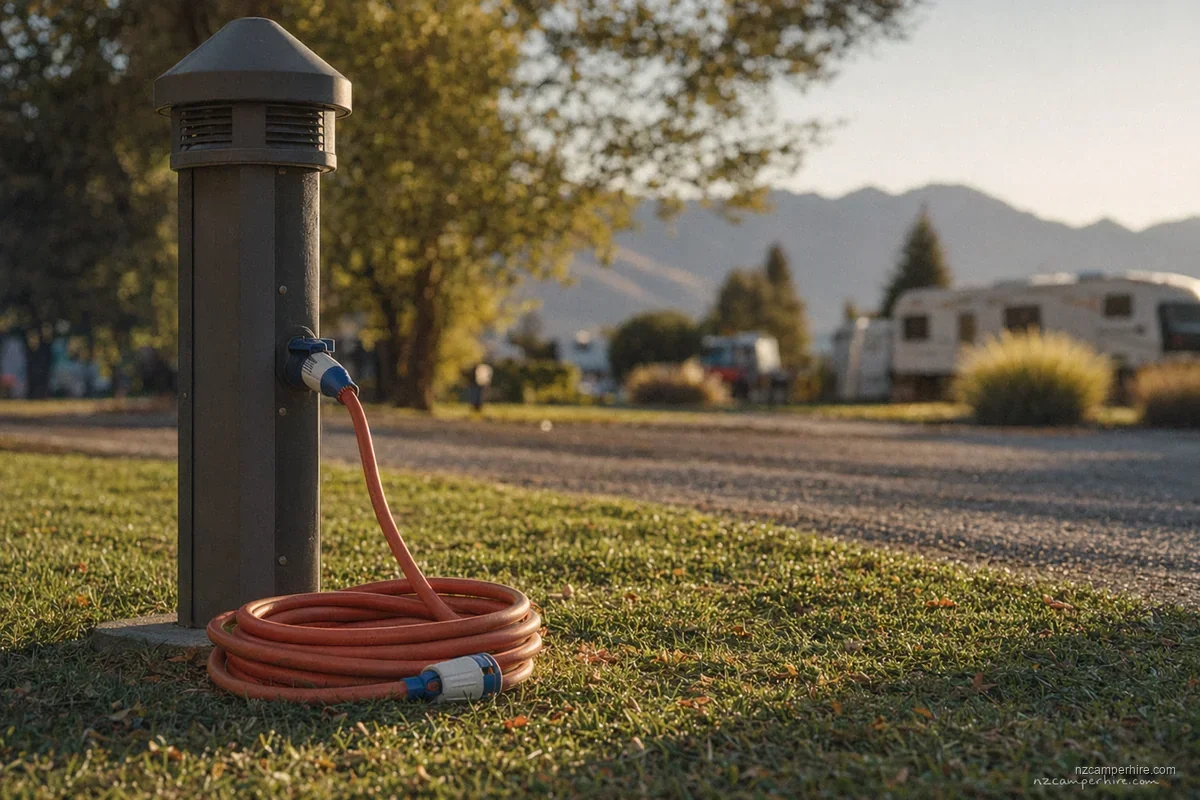
Rules and practicalities are easier to remember when you've felt them — the cold of a wet boot at a freedom camp, the relief of an early ferry slot. This guide is written from those moments, not from a checklist.
Related reading
 ROUTE
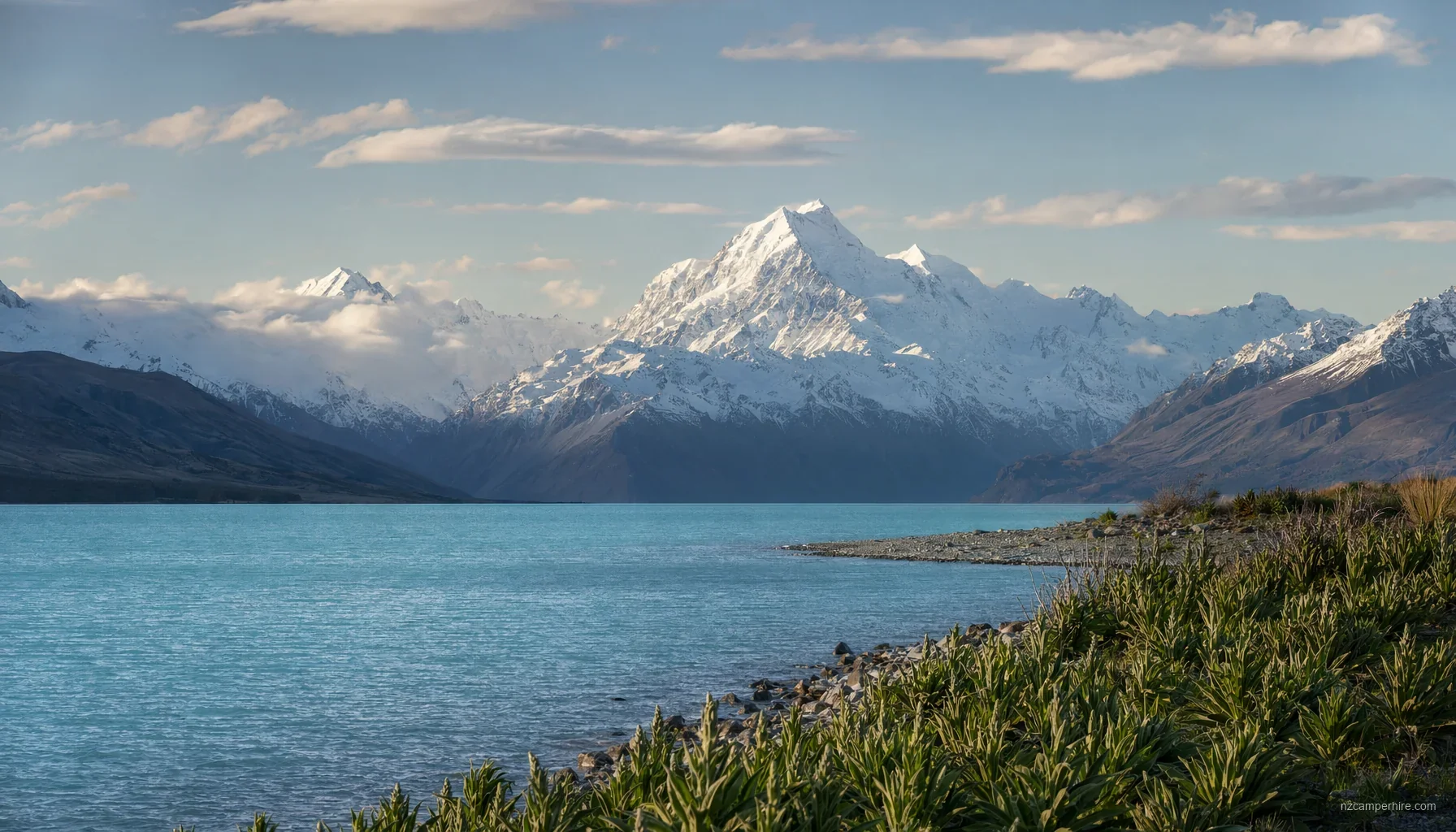
ROUTE South Island in 14 days
Classic clockwise South Island loop — Kaikoura, Nelson, West Coast glaciers, Wanaka, Queenstown, Milford Sound, Tekapo, back to Christchurch.
See the route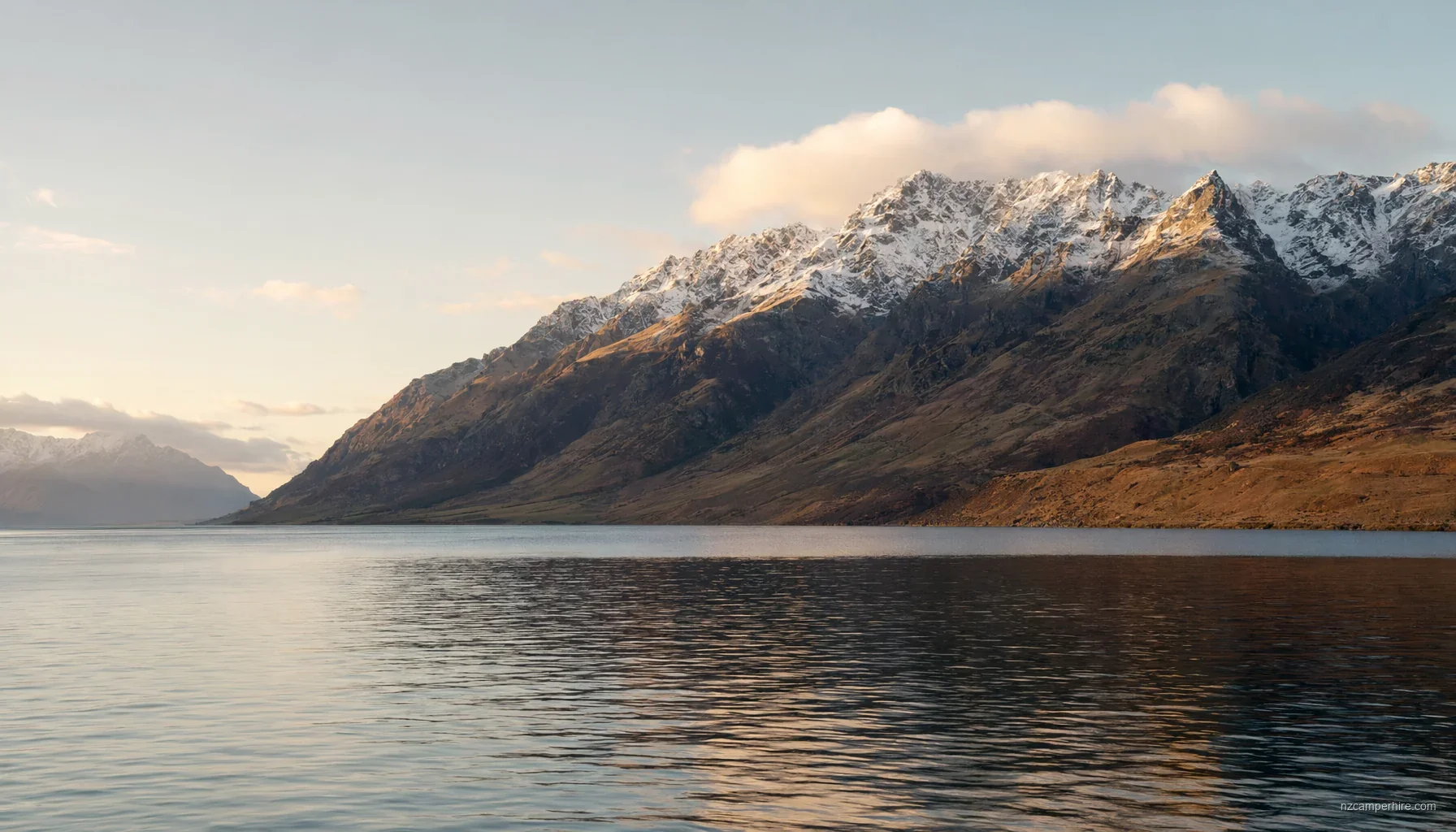 REGION
 Queenstown
Southern Lakes depot. Closest pickup for Milford Sound, Wanaka, Glenorchy, and the Southern Scenic Route.
See the region PRACTICAL GUIDE
 Best time of year for a NZ campervan trip
Month-by-month — weather, demand, school holidays, peak ferry windows.
Read the guideFreedom camping South Island FAQ
Can I freedom-camp anywhere in the South Island with a self-contained motorhome?
What certificate should my rental vehicle have for freedom camping?
Are DOC campsites the same as freedom camping?
What happens if I dump grey water beside the road?
Have a planner answer this for your specific trip
Rules and practicalities depend on dates, party size, and route. Send us your outline and we'll come back with answers tailored to your trip.