
Best NZ SIM card for motorhomers in 2026
Skinny, Spark, 2degrees, One.NZ — coverage by region, data caps, ferry/Milford black spots. Honest, granular how-to — written from on-the-gr...
- logistics
A NZ tourist SIM card is easy to buy. Picking the right one for a motorhome trip is the harder bit, because coverage changes fast once you leave Auckland, Christchurch, Queenstown, Rotorua or Wellington.
This is the narrow version of our Internet and mobile in a NZ campervan guide. It matters most on the Queenstown + Fiordland loop, the South Island in 14 days route, and any January trip through Milford Sound or the West Coast.
Get the planning checklist that pairs this with the route-level gotchas for your trip, or reply with your dates if you'd like a planner to flag the mobile-data-specific traps on your week.
The short answer: choose coverage before data size
If you only want one SIM, start with coverage. Spark and Skinny share the same broad network footprint and are usually the safer first pick for rural South Island driving. One NZ is strong in many towns and main corridors. 2degrees is fine for a city-heavy trip, and has improved, but I would be more careful if your route leans into Fiordland, the West Coast, Northland backroads or DOC campsites.
Skinny often suits visitors who want simple prepaid data without paying for extras. Spark is the same network family with more shop support. One NZ and 2degrees can still be perfectly good if your trip is Auckland, Rotorua, Wellington, Christchurch and Queenstown with holiday parks most nights.
For two adults using maps, park apps, messaging, photo backup and light browsing, allow roughly 15-30 GB for a 10-14 day trip. If you plan video calls, laptop hotspotting or cloud photo backup every night, think in 50-100 GB terms or carry a second SIM/eSIM. Do not build the whole plan around campsite Wi-Fi. It is often slow, capped or strongest beside the reception building.
Where the signal disappears first
The phone usually works in towns. The problem is the 90 minutes between towns, which is exactly when a motorhome traveller wants maps, weather and campsite instructions.
- Milford Road, SH94: Te Anau to Milford Sound is 118 km and usually 2 to 2.5 hours in a motorhome, longer with photo stops. Coverage becomes unreliable after Te Anau Downs and is poor around Cascade Creek, the Homer Tunnel and parts of Milford Sound. Download maps before leaving Te Anau.
- Queenstown to Milford Sound: 288 km, usually 4.5 to 5.5 hours driving. Do not assume you can change bookings or check weather on the road. The Milford Sound region is the least forgiving place in NZ for casual mobile planning.
- West Coast, SH6: Hokitika to Franz Josef is 134 km and about 2 hours. Fox Glacier to Wanaka over Haast Pass, 564 m, is 262 km and 3.75 to 4.5 hours. There are long quiet patches south of Fox and around Haast.
- Cook Strait: Interislander and Bluebridge take about 3 hours 20 minutes Picton to Wellington, or closer to 3.5 hours with loading. Mobile signal fades mid-crossing. For ferry weather and safety context, see Maritime NZ, and keep boarding details offline.
Buying, setting up and avoiding silly first-day problems
Buy before you leave the arrival city. Auckland, Christchurch and Queenstown airports have SIM options, but supermarkets and phone shops in town often give you more time to choose. A modern unlocked phone is the key. If your phone is locked to a home-country carrier, a NZ SIM will not fix that.
eSIM is the cleanest option if your phone supports it. Keep your home number active for banking codes if needed, then run the NZ data line for maps and hotspotting. If you are travelling as a couple, put different networks on two phones when the cost is still sensible. One phone on Spark or Skinny and the other on One NZ gives better odds than two identical SIMs.
Download Google Maps or Apple Maps offline for each driving block. Add the NZTA / Waka Kotahi Journey Planner to your browser before you start, because road closures on SH6, SH73 and SH94 matter more than phone brand. Save campground confirmations, ferry bookings and your rental depot details as screenshots.
Data habits that suit a motorhome trip
Navigation does not use much data. Uploading photos, streaming sport and running a laptop do. The common mistake is buying a small tourist pack, then burning half of it on the first wet evening in a holiday park.
Use campsite Wi-Fi for software updates only if it is stable. Turn off automatic photo backup while driving. Download music, podcasts, maps and translation packs before rural legs. If you use a freedom camping app, open the campsite page while you still have signal, then screenshot the rules and arrival notes. This pairs with Freedom camping in NZ and Holiday parks vs DOC campsites, because the right legal campsite is not much help if you cannot load the details at dusk.
For February and March South Island trips, I am stricter about this. More visitors are moving at the same time, holiday parks are busier, and small towns can feel stretched. Our Best time of year for a NZ campervan trip guide covers those seasonal pressure points in more detail.
Safer fallbacks if you need reliable connection
If mobile data is mission-critical, do not rely on one prepaid SIM. Use these fallbacks instead:
- Carry two networks across two phones, not two plans on the same network.
- Sleep in holiday parks on work nights, such as Creeksyde Queenstown, Hokitika Holiday Park or North South Holiday Park in Christchurch.
- Do admin in towns before the rural leg: Te Anau before Milford, Wanaka before Haast Pass, Picton or Wellington before the ferry.
- Tell family that silence for half a day can be normal on SH94, SH6 and parts of SH73 over Arthur's Pass, 920 m.
- Use a satellite messenger if you are hiking away from roads. Mobile coverage maps do not apply in valleys, bush or alpine terrain. For DOC track and campsite information, see doc.govt.nz before you lose reception.
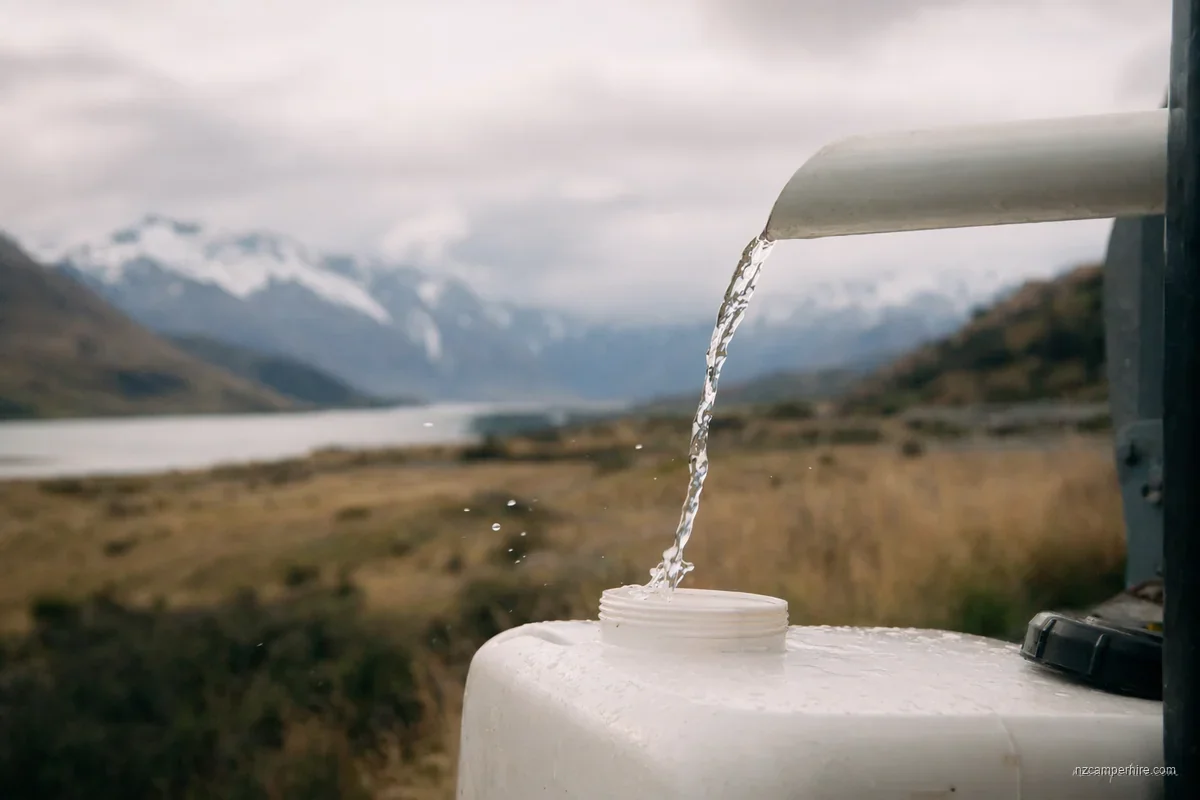
Rules and practicalities are easier to remember when you've felt them — the cold of a wet boot at a freedom camp, the relief of an early ferry slot. This guide is written from those moments, not from a checklist.
Related reading
 ROUTE
ROUTE South Island in 14 days
Classic clockwise South Island loop — Kaikoura, Nelson, West Coast glaciers, Wanaka, Queenstown, Milford Sound, Tekapo, back to Christchurch.
See the route REGION
 Queenstown
Southern Lakes depot. Closest pickup for Milford Sound, Wanaka, Glenorchy, and the Southern Scenic Route.
See the region PRACTICAL GUIDE
 Best time of year for a NZ campervan trip
Month-by-month — weather, demand, school holidays, peak ferry windows.
Read the guideBest NZ SIM card for motorhomers (2026) FAQ
Which NZ mobile network has the best rural coverage for a campervan trip?
Can I buy a NZ tourist SIM card at the airport?
Will I have mobile coverage on the Cook Strait ferry?
Is campground Wi-Fi enough instead of buying a SIM?
Have a planner answer this for your specific trip
Rules and practicalities depend on dates, party size, and route. Send us your outline and we'll come back with answers tailored to your trip.