NZ motorhome insurance explained: excess and traps
Standard cover, excess-reduction options, when to buy more, single-vehicle accident reality. Honest, granular how-to — written from on-the-g...
- logistics
Campervan insurance in NZ is not hard, but the small print matters. The headline daily rate rarely tells you what happens if you clip a mirror in Queenstown, scrape an awning at a holiday park, or hit a roadside marker on SH94 to Milford Sound.
This guide sits under our Campervan insurance options guide and pairs well with First time driving a motorhome, Driving on the left in NZ, and What a NZ campervan trip actually costs.
Get the planning checklist that pairs this with the route-level gotchas for your trip, or reply with your dates if you'd like a planner to flag the insurance-specific traps on your week.
The excess is the real insurance number
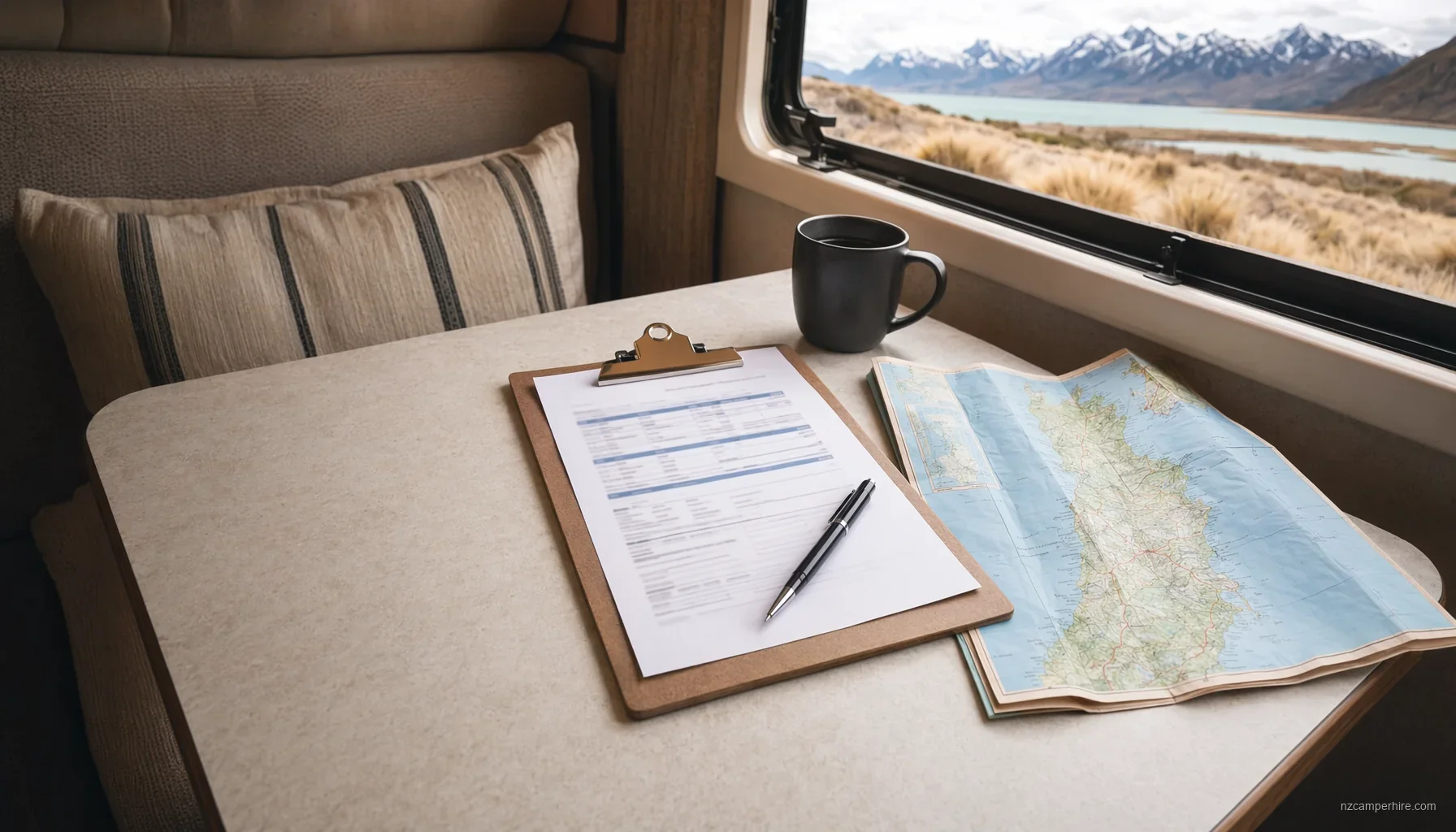
Most NZ motorhome rentals include standard vehicle cover, but that does not mean a small out-of-pocket cost. The important number is the excess, sometimes called liability. That is the amount held against your card or charged after damage, depending on the policy.
Read it per incident, not per trip. Two separate knocks can mean two separate excess events. A car park scrape in Auckland on day one and a branch strike in Fiordland on day six are not usually treated as one tidy problem.
Under-25 drivers can also face tighter rules. Minimum hire age sits roughly between 18 and 25 depending on operator and vehicle class. If your licence is not in English, carry an International Driving Permit. Foreign licences in English are generally valid for 12 months. For the road-rule side, see the NZTA / Waka Kotahi rule.
What standard cover usually leaves exposed
Standard cover often protects the vehicle for ordinary road accidents, subject to the excess. The exclusions are where travellers get caught.
- Overhead and underbody damage: tree branches, petrol-station canopies, kerbs, drains, ferry ramps, and steep campsite entries.
- Tyres, windscreen, mirrors, and awnings: sometimes covered only under a separate add-on.
- Wrong fuel: a diesel motorhome filled with petrol is usually treated as driver error.
- Unsealed or restricted roads: gravel access roads may be allowed in some places and banned in others. Beaches are normally out.
- Drivers not on the rental agreement: if they drive, cover can fail.
This is why campervan insurance NZ research should happen before pickup day, not at the depot counter after a long flight.
Single-vehicle damage is the New Zealand trap
International visitors often imagine insurance as a crash with another car. In NZ motorhome travel, many claims are single-vehicle events. A narrow bridge on the West Coast. A campground post at dusk. A mirror clipped on a parked ute. A rear corner nudged into a bollard while reversing.
The Queenstown + Fiordland loop is where this bites hardest. Queenstown to Milford Sound is about 287 km via SH6 and SH94, but it is a 4.5 to 5.5 hour motorhome day before stops. Add wet weather, buses, one-lane sections, and the Homer Tunnel approach, and fatigue becomes part of the insurance risk.
March is a good travel month, but it is still busy around Queenstown and Te Anau. The roads are easier than deep winter, yet car parks, holiday parks, and scenic pullouts are still tight.
When paying for lower excess makes sense
Extra cover is not always wasteful. It often makes sense if the excess would hurt your trip budget, if you are driving a 6 m-plus motorhome for the first time, or if your route includes alpine roads.
Think carefully on the Christchurch to Queenstown route. Christchurch to Queenstown is about 483 km via SH8, Tekapo, and the Lindis Pass at 965 m. It is a 6.5 to 7.5 hour driving day in a motorhome with real stops. The Crown Range between Wanaka and Queenstown reaches 1,121 m and is beautiful, but it is not where you want to learn how wide your vehicle feels.
Credit-card rental cover and travel-insurance excess cover can exclude motorhomes by weight, length, or commercial-use wording. Ask the insurer directly. Do not assume a car-rental benefit covers a toilet-and-shower motorhome.
Safer fallbacks if the policy feels too thin
If the insurance wording does not match your comfort level, change the plan before changing your nerve.
- Choose a smaller vehicle if you are new to left-side driving.
- Spend the first night close to pickup, such as North South Holiday Park in Christchurch or Creeksyde Queenstown.
- Avoid the Crown Range and drive Wanaka to Queenstown via SH6, Cromwell, and the Kawarau Gorge instead.
- Do Milford Sound as Te Anau to Milford Sound, about 118 km and 2 to 2.5 hours each way, rather than from Queenstown in one hit.
- Use holiday parks before tight DOC sites. Cascade Creek is useful, but it is easier once you already know the vehicle.
If your route includes the Cook Strait ferry, read Cook Strait ferry with a campervan as well. Interislander and Bluebridge crossings take about 3 hours 20 minutes, or around 3.5 hours with loading. For ferry rules and sea-side safety, see Maritime NZ.
Rules and practicalities are easier to remember when you've felt them — the cold of a wet boot at a freedom camp, the relief of an early ferry slot. This guide is written from those moments, not from a checklist.
Related reading
 ROUTE
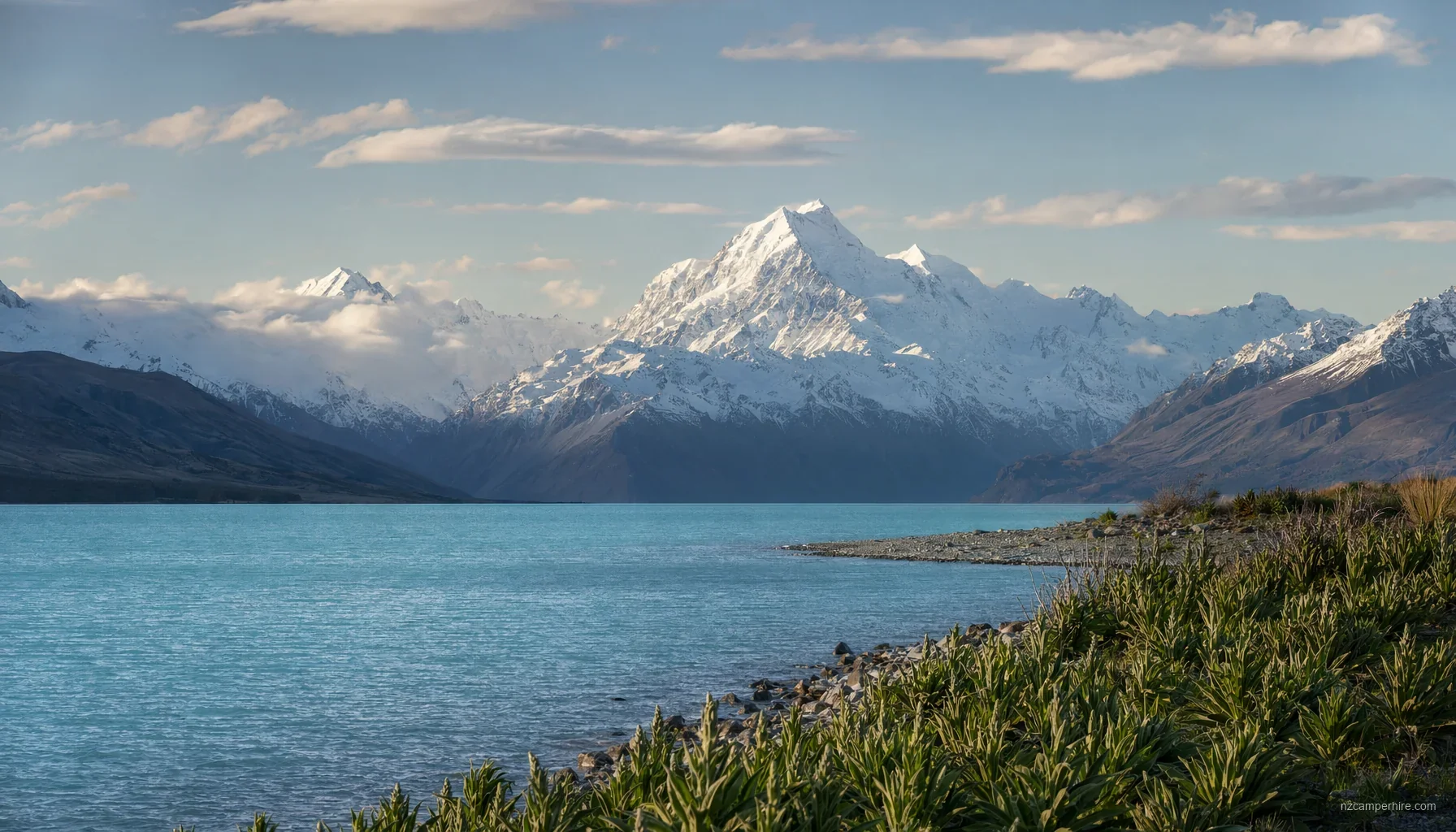
ROUTE South Island in 14 days
Classic clockwise South Island loop — Kaikoura, Nelson, West Coast glaciers, Wanaka, Queenstown, Milford Sound, Tekapo, back to Christchurch.
See the route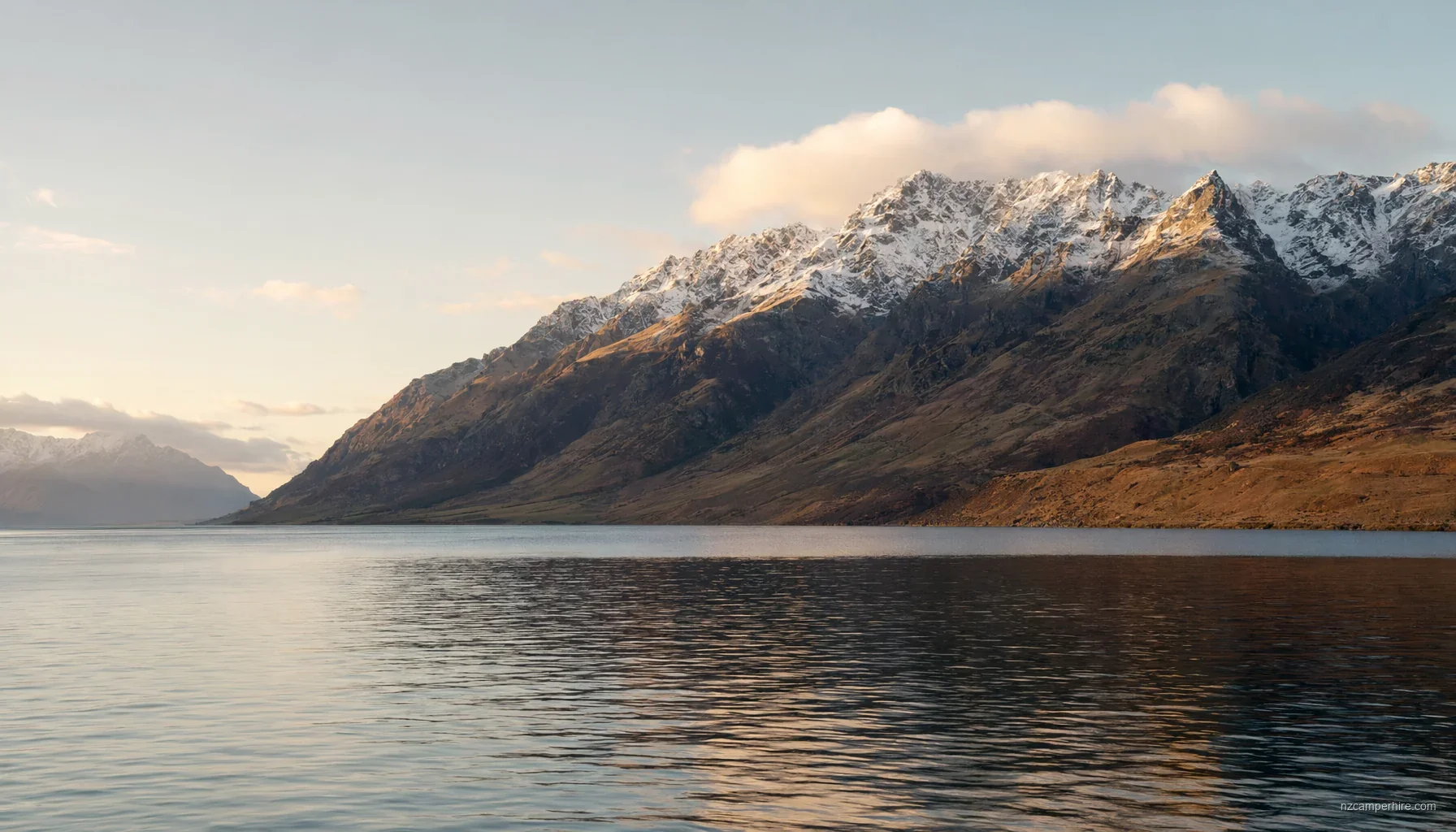 REGION
 Queenstown
Southern Lakes depot. Closest pickup for Milford Sound, Wanaka, Glenorchy, and the Southern Scenic Route.
See the region PRACTICAL GUIDE
 Best time of year for a NZ campervan trip
Month-by-month — weather, demand, school holidays, peak ferry windows.
Read the guideNZ motorhome insurance explained FAQ
Is basic campervan insurance included in NZ rentals?
Should I reduce the excess on a NZ motorhome?
Does travel insurance cover a campervan rental excess?
Are gravel roads covered by motorhome insurance in New Zealand?
Have a planner answer this for your specific trip
Rules and practicalities depend on dates, party size, and route. Send us your outline and we'll come back with answers tailored to your trip.