
What the blue self-containment sticker means
Post-2024 sticker scheme — what it certifies, what it doesn't, why operators charge a premium. Honest, granular how-to — written from on-the...
- logistics
The blue self-containment sticker used to be the quick sign that a New Zealand campervan could hold its own fresh water, grey water, and toilet waste for a short period. Since the 2023 law change, that old blue sticker is no longer the whole story.
Get the planning checklist that pairs this with the route-level gotchas for your trip, or reply with your dates if you'd like a planner to flag the blue-sticker-specific traps on your week.
The blue sticker is old shorthand, not the full rule
In plain English, a blue sticker usually points to the older self-containment system under NZS 5465:2001. It told councils and campsite wardens that the vehicle had a toilet, water storage, wastewater storage, and a sink arrangement that met the old standard at the time it was inspected.
The Freedom Camping Act 2011 still sits underneath the national rules, but the 2023 self-containment amendment changed how vehicles are certified. The newer system uses the NZS 5465:2022 green-warrant standard. By 2026, if a rental motorhome is relying only on an old blue sticker, I would treat that as a warning sign, not a pass.
This is why the parent guide, Self-contained certification explained, matters before you plan Freedom camping in NZ.
What a current certificate should prove
A compliant self-contained vehicle should be able to manage toilet waste, grey water, and fresh water without you using bushes, roadside drains, or public picnic sinks. The post-2024 rules put much more weight on the toilet setup, especially that it is usable inside the vehicle when the bed is made up.
- A fixed or properly installed toilet system, not just a loose emergency toilet in a cupboard.
- Fresh water and grey-water tanks sized for the certified number of people.
- A sealed wastewater system that can be emptied at a legal dump station.
- Paperwork or a warrant label that matches the registration plate.
At pickup, check the registration plate on the certificate. A sticker on the window is useful, but the paperwork is what stops arguments later.
Where councils can still say no
Self-contained does not mean you can sleep anywhere. Council bylaws override the national Act locally. Queenstown Lakes, Tasman, and Auckland are among the most restrictive areas for visitors who arrive with a loose plan and assume the sticker opens every car park.
This bites hardest on the Queenstown + Fiordland loop and the South Island in 14 days route, especially in January when lakeside spaces fill early. Queenstown to Te Anau is about 170 km and 2 hr 15 min in a motorhome without long stops. Te Anau to Milford Sound is 121 km and about 2 hr each way before photo stops, roadworks, or tunnel waits. A legal overnight plan matters there.
Fines are real: a $400 instant infringement is common for illegal freedom camping, illegal grey-water dumping can be up to $200 per litre, and serious cases can reach $10,000. Check local council pages, see doc.govt.nz for DOC land, and use mbie.govt.nz for the self-containment rule changes.
Why certified vehicles sit at a higher daily rate
Operators charge more for properly certified vehicles because the equipment costs more, the inspection regime costs money, and the layout loses storage space. A toilet that works inside the living area is not just a plastic box added at the depot. It changes the floor plan.
The trade-off is simple. A non-certified camper can be cheaper and easier to drive, but you will lean harder on holiday parks and DOC sites with toilets. A certified motorhome gives more legal options, though it still needs dump stations, water fills, and council-by-council checking.
Safer fallbacks if your van does not qualify
If your vehicle only has an old blue sticker, or no certificate at all, plan around paid or facility-based overnights. That is not a failed trip. It is often calmer, especially after a long day on SH6, SH94, or the Crown Range Road at 1,121 m.
- Use holiday parks in tight areas, such as Creeksyde Queenstown, Rotorua Thermal Holiday Park, or North South Holiday Park near Christchurch.
- Use DOC campsites with toilets where allowed, such as Mavora Lakes, Cascade Creek on the Milford Road, White Horse Hill near Aoraki/Mount Cook, and Lake Pukaki. Check doc.govt.nz before relying on them.
- Build dump-station stops into the day. The Dump stations and water fills guide pairs well with this page.
- If crossing islands, read Cook Strait ferry with a campervan too. The Interislander or Bluebridge crossing is about 3 hours 20 minutes Picton-Wellington, or around 3.5 hours with loading.

Rules and practicalities are easier to remember when you've felt them — the cold of a wet boot at a freedom camp, the relief of an early ferry slot. This guide is written from those moments, not from a checklist.
Related reading
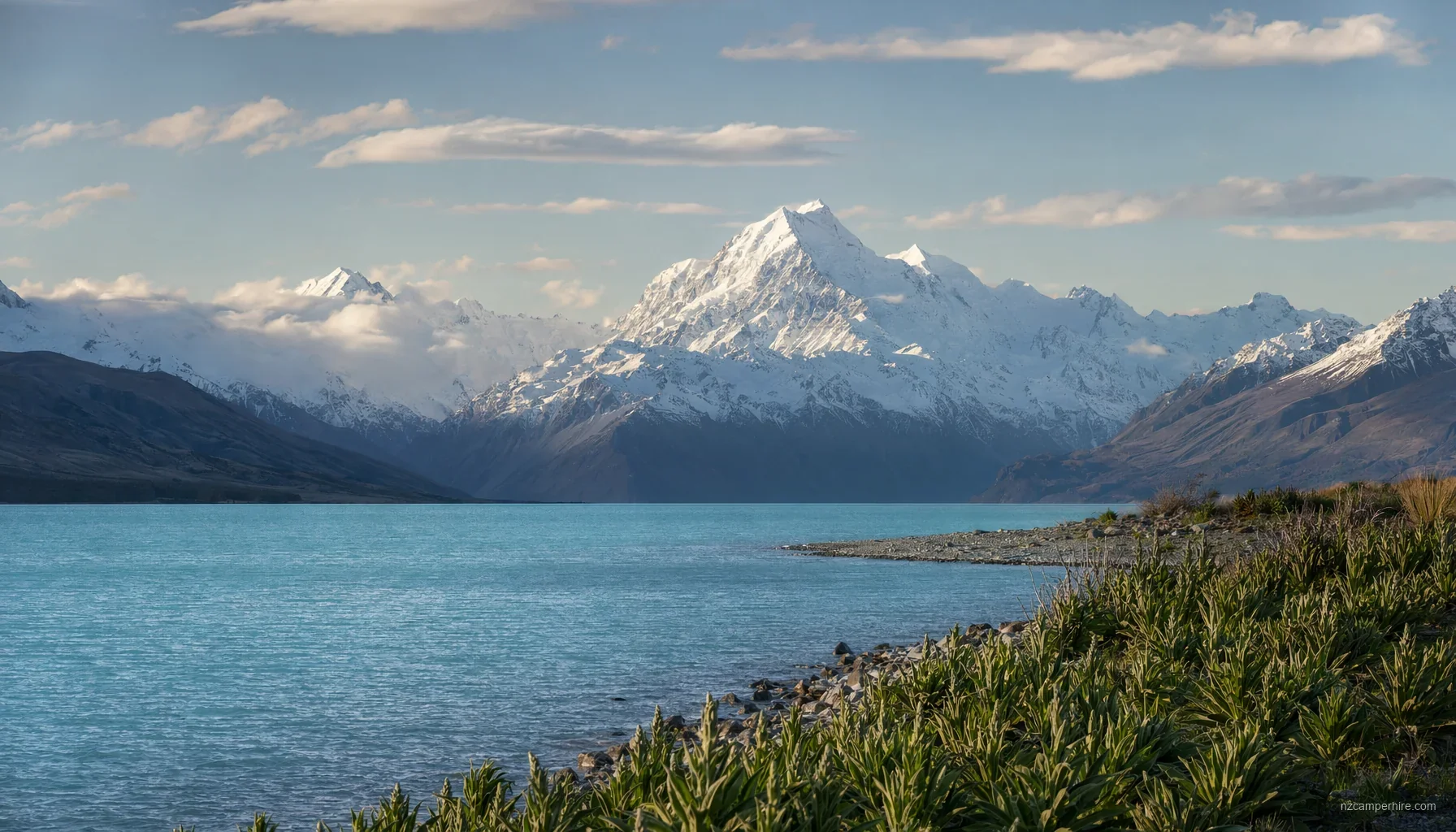 ROUTE
ROUTE South Island in 14 days
Classic clockwise South Island loop — Kaikoura, Nelson, West Coast glaciers, Wanaka, Queenstown, Milford Sound, Tekapo, back to Christchurch.
See the route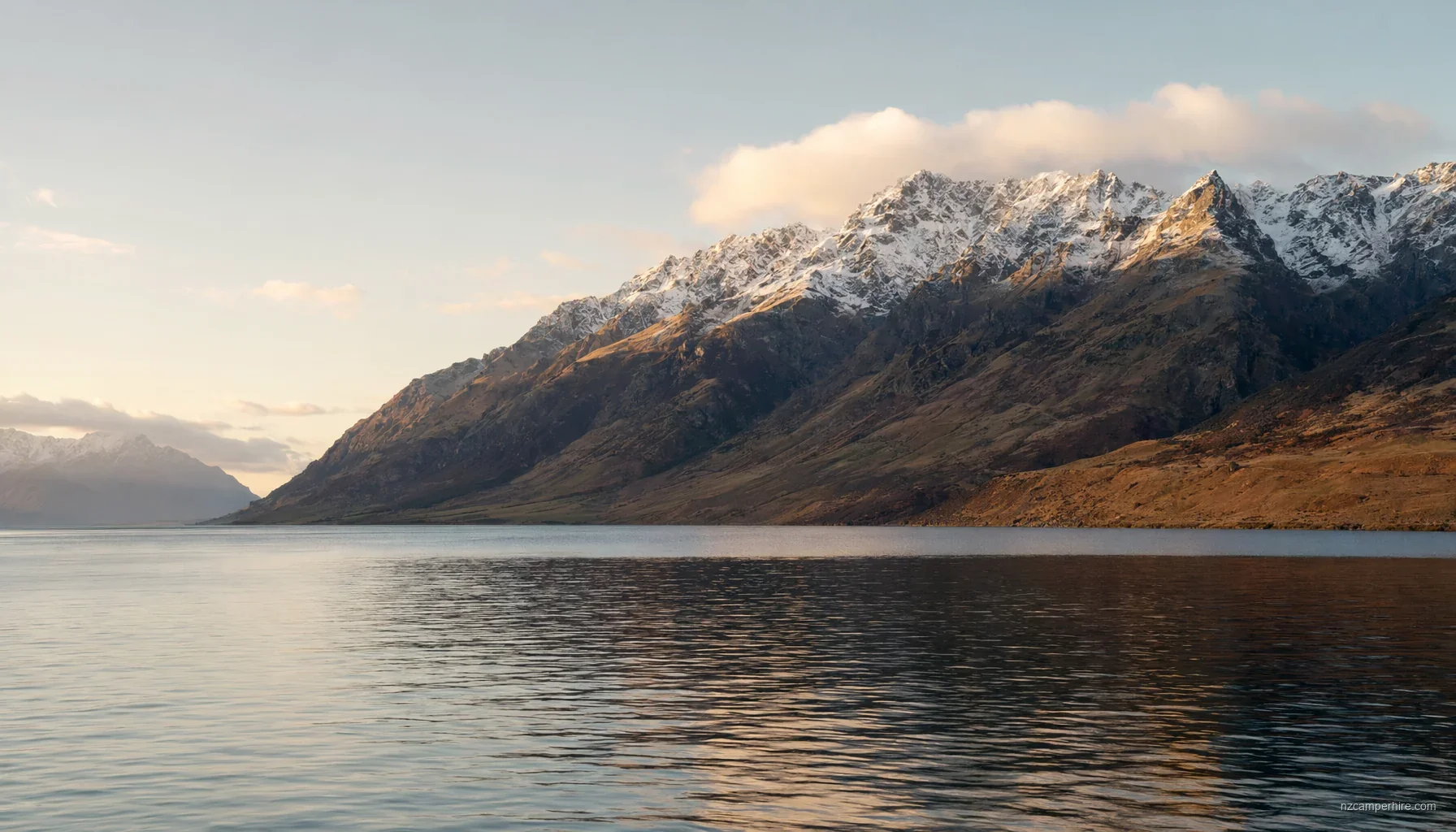 REGION
 Queenstown
Southern Lakes depot. Closest pickup for Milford Sound, Wanaka, Glenorchy, and the Southern Scenic Route.
See the region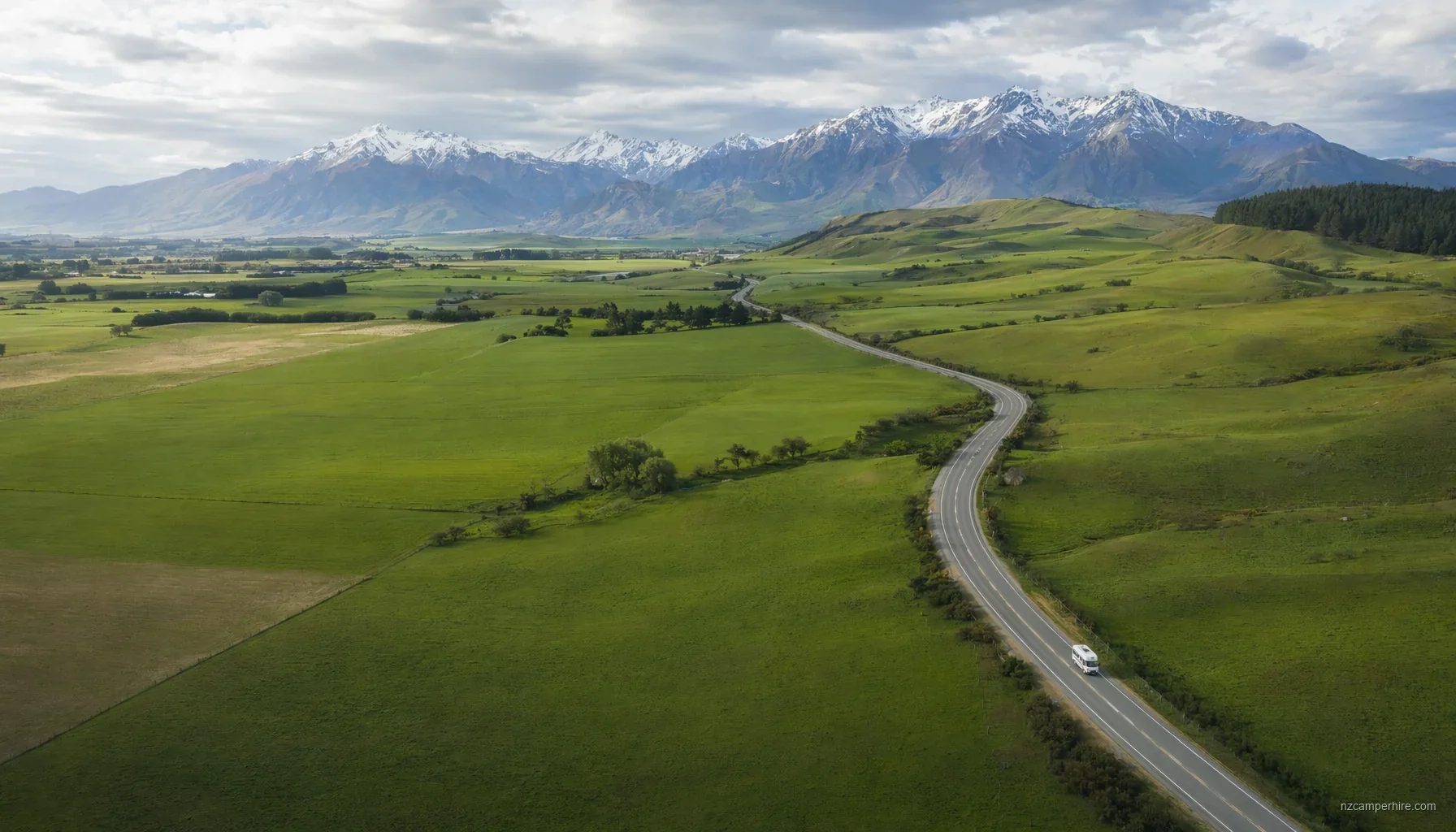 PRACTICAL GUIDE
 Best time of year for a NZ campervan trip
Month-by-month — weather, demand, school holidays, peak ferry windows.
Read the guideWhat the blue self-containment sticker means FAQ
Is a blue sticker still valid for freedom camping in NZ?
Does self-contained mean I can park overnight anywhere?
What should I check when I pick up the motorhome?
Can I still travel cheaply without a certified vehicle?
Have a planner answer this for your specific trip
Rules and practicalities depend on dates, party size, and route. Send us your outline and we'll come back with answers tailored to your trip.