
NZ supermarkets for motorhome travellers
PaknSave vs Countdown vs New World, fresh-meat reality, fuel-discount voucher mechanics. Honest, granular how-to — written from on-the-groun...
- logistics
NZ supermarkets are easy once you know the pattern. The hard part is not finding food. It is buying the right amount for a small motorhome fridge, then not discovering on SH94 to Milford Sound that Te Anau was your last proper supermarket.
Get the planning checklist that pairs this with the route-level gotchas for your trip, or reply with your dates if you'd like a planner to flag the NZ supermarket-specific traps on your week.
The supermarket names you will actually use
Most motorhome travellers use three chains: PAK'nSAVE, Woolworths and New World. Countdown is now Woolworths in New Zealand, but older signs, apps and traveller forums still use both names. That causes more confusion than it should.
PAK'nSAVE is usually the big stock-up stop. It is plain, warehouse-style, and often toward the lower end for grocery prices. You bag your own shopping. It suits pickup day in Auckland, Christchurch or Queenstown, when you need pasta, rice, cereal, oil, coffee, toilet paper and basic cleaning gear.
New World is common in smaller towns and holiday areas. It often has better deli food, bakery items and local produce, but you may pay more for the same basket. Woolworths sits in the middle for many travellers: predictable range, good opening hours, and useful when you are in a suburb rather than an industrial edge of town.
For the parent guide, read Food, groceries, and cooking. This page is the motorhome supermarket version: fridge space, meat choices, fuel dockets and the places where a missed shop changes your next 24 hours.
Do the big shop before the road gets scenic
New Zealand roads look short on a map. They do not shop short. Christchurch to Lake Tekapo is about 225 km and 3 hours 15 minutes in a motorhome. Queenstown to Te Anau is about 170 km and 2 hours 15 minutes. Te Anau to Milford Sound on SH94 is 118 km and roughly 2 hours without photo stops, and there is no supermarket at Milford.
On the Queenstown + Fiordland loop, shop properly in Queenstown or Te Anau. In January, shelves are busy from mid-morning, car parks are tight, and chilled foods disappear faster before long weekends. Queenstown is also the region where food planning matters because parking a 6 m to 7.5 m motorhome near a central supermarket can be slow.
- Pickup day: buy dry goods, breakfast food, tea and coffee, washing-up liquid, rubbish bags and a first dinner that does not need much prep.
- Every two days: top up bread, fruit, salad, milk and meat.
- Before remote legs: check gas, drinking water, fridge temperature and whether tomorrow's town has a real supermarket or only a small store.
Fresh meat is good, but your fridge is the limit
NZ supermarket meat is generally reliable. Beef, lamb, chicken and sausages are easy to find. The problem is not quality. It is pack size, fridge size and warm driving days.
A motorhome fridge is smaller than it looks once you add milk, beer, fruit, cheese and leftovers. Buy meat for one or two nights, not five. Choose flat packs that stack. Put raw meat in a sealed container on the lowest shelf so it cannot leak into salad or cheese. In summer, do the chilled shop last, then drive straight to your camp or holiday park.
Freezer compartments in many hire vehicles are small and slow. They are fine for ice blocks or one frozen meal. They are not a chest freezer. If you are doing South Island in 14 days and crossing the West Coast on SH6, treat towns like Hokitika, Franz Josef and Wanaka as top-up points, not places to carry a week's fresh food from Christchurch.
Vegetarians and gluten-free travellers are usually fine in the main centres. Small towns can be patchier. Buy special items in Auckland, Christchurch, Wellington, Nelson or Queenstown before you head into smaller regions.
Fuel vouchers: nice saving, not a route plan
Supermarket fuel vouchers are simple in theory. Spend over a set amount, often around the everyday grocery threshold, and a cents-per-litre discount prints on your receipt or loads to a loyalty card or app. The exact threshold, fuel partner, expiry time and litre cap change, so read the docket before you assume it works.
The saving is useful but not magic. A diesel motorhome may take 70 to 90 litres. A 10 cent discount is only a few dollars if the pump price is already higher than the station down the road. Also remember that diesel Road User Charges are not paid at the pump in the same way petrol tax is. Rental operators usually handle RUCs through the rental agreement, so read Fuel economy and prices in NZ and Petrol prices and Road User Charges explained before budgeting.
Do not detour 20 km for a voucher unless you already need fuel. On the Christchurch to Queenstown drive, SH8 has long stretches where fuel choice is limited. Fill when sensible. Do not wait for a supermarket docket to rescue the plan.
Safer fallbacks when a supermarket stop goes wrong
Plans slip. A flight arrives late. Pickup takes two hours. A child gets hungry before the big shop. Use fallbacks early rather than driving tired on the left while trying to reach a cheaper store across town.
- Small-town Four Square stores: dearer than big supermarkets, but good for milk, bread, eggs, fruit, pasta and basic meat.
- Holiday park kitchens: useful if your fridge is full or the weather makes cooking outside miserable. Creeksyde Queenstown, Oamaru Top 10 and Rotorua Thermal Holiday Park are examples where shared facilities can save a messy night.
- Cafes and bakeries: a pie, sandwich or filled roll is sometimes the safer dinner after a long SH6 or SH73 day.
- Simple pantry meals: carry one emergency meal that needs only boiling water or one pan.
Pair this with the First pickup-day checklist, especially if you land in Auckland or Christchurch and drive the same day. Food planning is not glamorous. It just stops a good route becoming a cold, hungry argument in a supermarket car park.
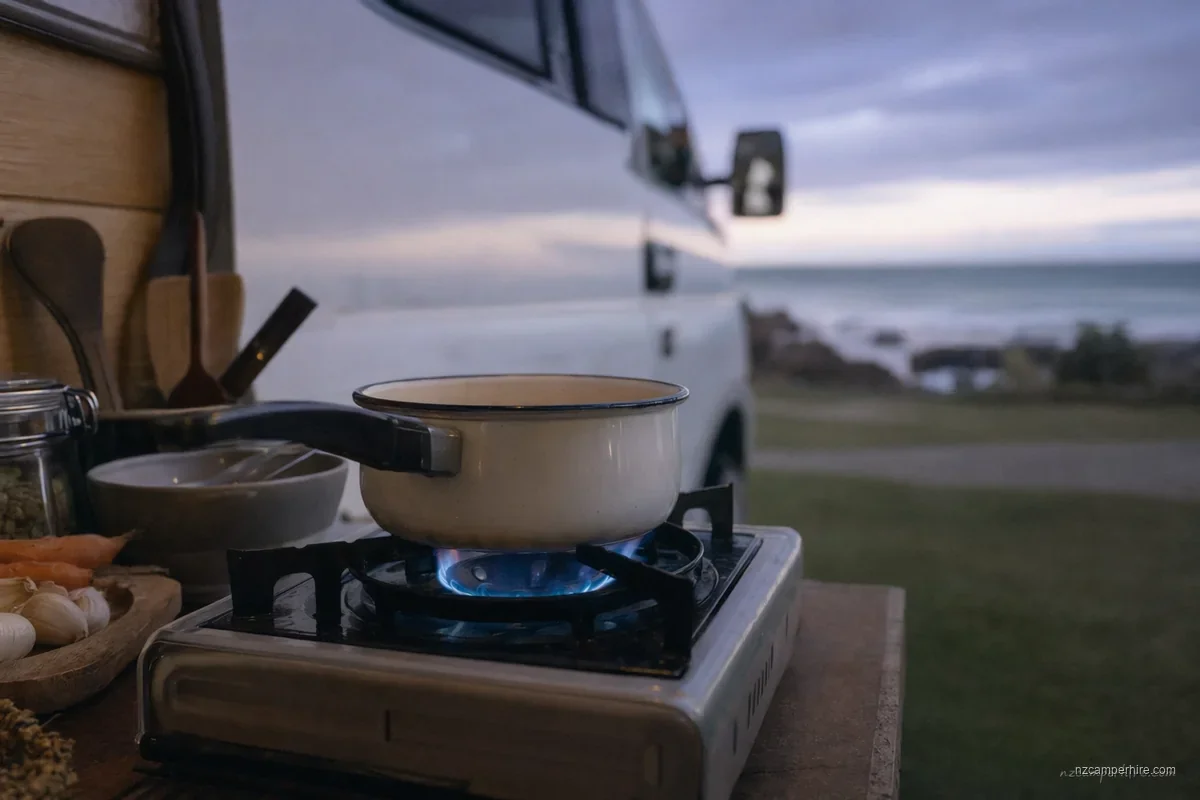
Rules and practicalities are easier to remember when you've felt them — the cold of a wet boot at a freedom camp, the relief of an early ferry slot. This guide is written from those moments, not from a checklist.
Related reading
 ROUTE
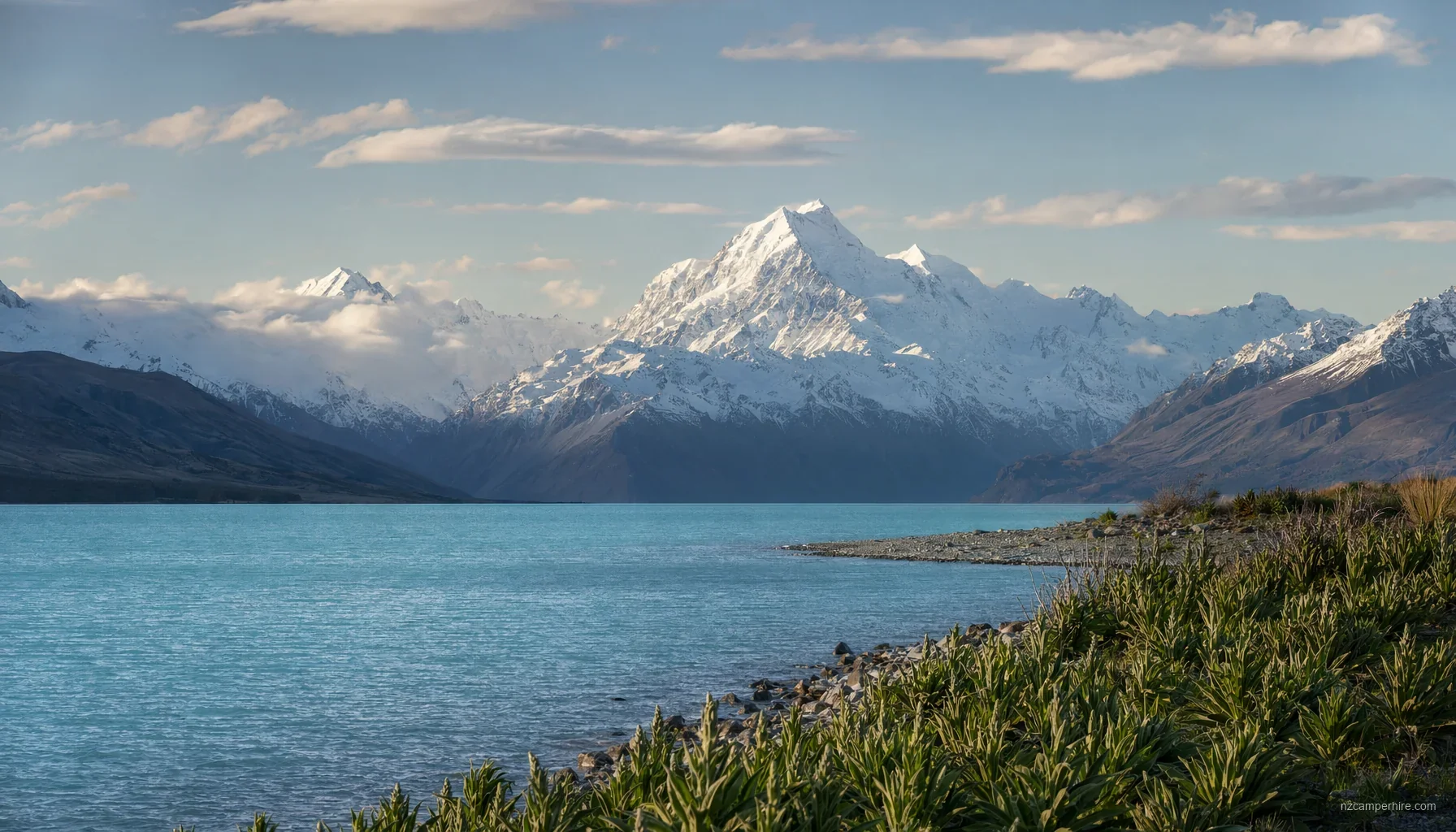
ROUTE South Island in 14 days
Classic clockwise South Island loop — Kaikoura, Nelson, West Coast glaciers, Wanaka, Queenstown, Milford Sound, Tekapo, back to Christchurch.
See the route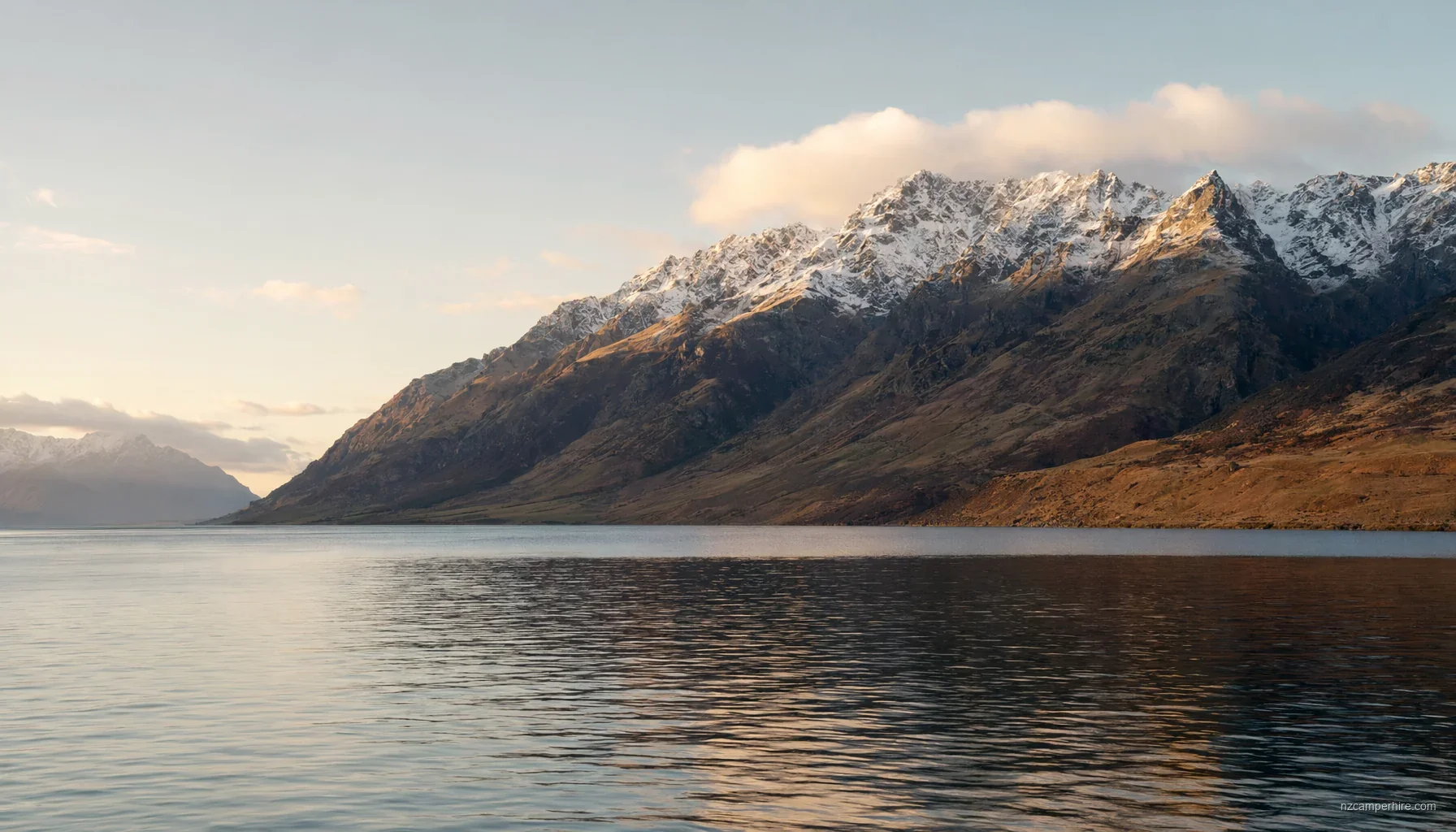 REGION
 Queenstown
Southern Lakes depot. Closest pickup for Milford Sound, Wanaka, Glenorchy, and the Southern Scenic Route.
See the region PRACTICAL GUIDE
 Best time of year for a NZ campervan trip
Month-by-month — weather, demand, school holidays, peak ferry windows.
Read the guideNZ supermarkets for motorhomers FAQ
Is PAK'nSAVE always cheaper than Woolworths or New World?
Can I rely on supermarkets in small South Island towns?
How much food should I buy on motorhome pickup day?
Are supermarket fuel vouchers worth using with a diesel motorhome?
Have a planner answer this for your specific trip
Rules and practicalities depend on dates, party size, and route. Send us your outline and we'll come back with answers tailored to your trip.