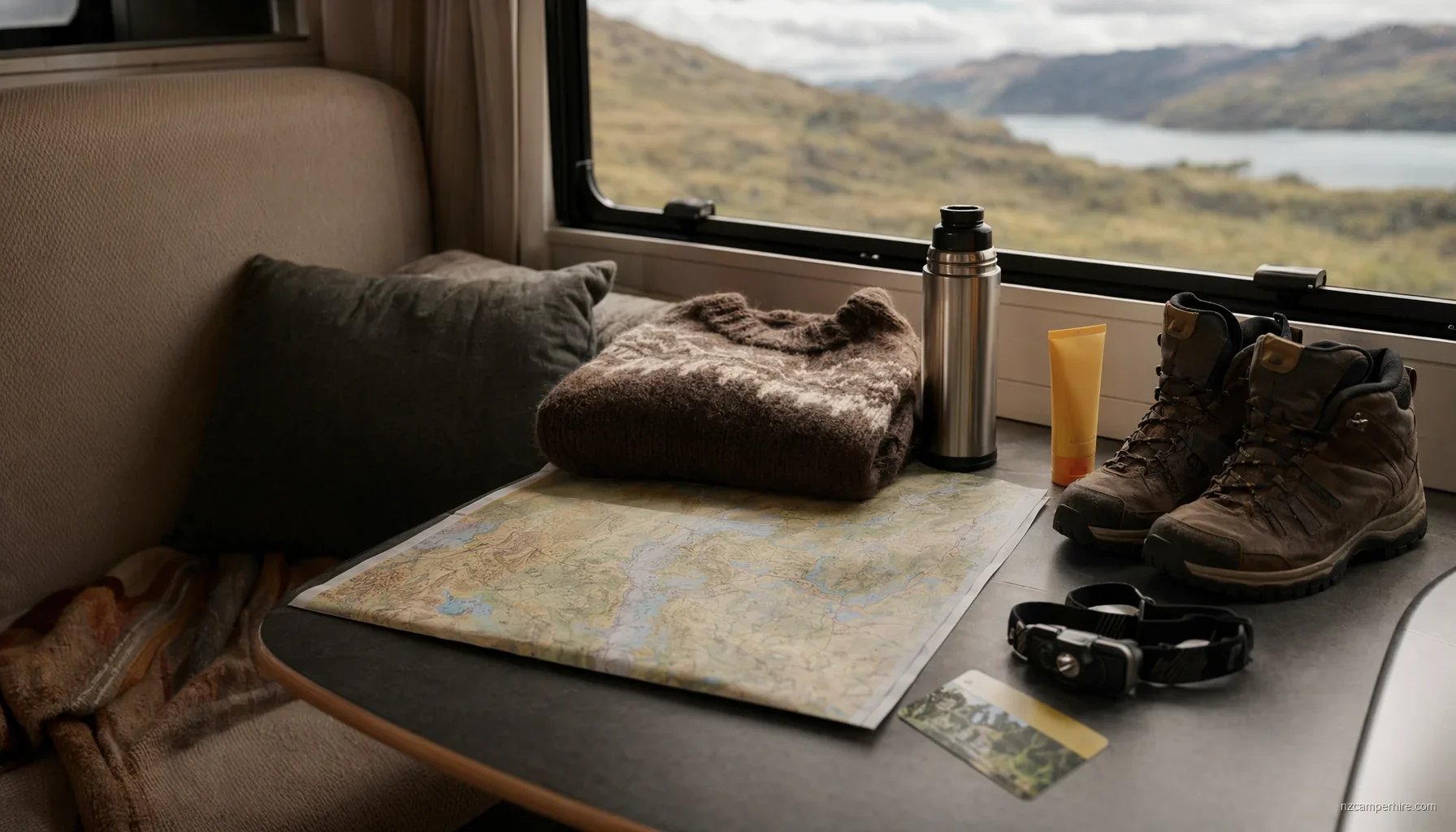
What to pack for a NZ campervan trip
What the rental operator typically provides, what you should bring from home, and what's easier to buy on arrival.
- wet-weather-plan
- family-friendly
- bring-warm-layers
- pack-snacks
- book-ahead
There is a particular sound to a campervan morning in New Zealand: the kettle clicking on, rain or birds on the roof, someone padding across gravel to the shower block. Then the map comes out, usually beside a half-zipped soft bag.
Packing for a New Zealand motorhome trip is not the same as packing for a hotel-and-car holiday. You will be driving on the left, moving most days, cooking in a small galley, and dealing with four seasons that can turn up in one week.
Most rental vans include the basics. The gaps are usually the small things: a warm layer for Lake Tekapo at night, a soft bag that fits under a bench seat, a phone cable that reaches the cab, and a licence document that matches NZ Transport Agency rules.
Get the planning checklist — and reply with your dates if you'd like a planner to flag the packing-specific gotchas for your route.
What the campervan normally includes
Rental inclusions vary by operator, vehicle age, and depot. Check your own vehicle sheet before you fly, but most NZ campervans include the core living kit:
- Sheets, duvet or sleeping bags, pillows, and towels.
- Plates, bowls, mugs, glasses, cutlery, pots, pans, chopping board, and basic utensils.
- Kettle, toaster, and sometimes a coffee plunger.
- Fresh-water hose, grey-water hose, 240V campground power lead, and toilet chemicals if the vehicle has a cassette toilet.
- Fire extinguisher, first-aid kit, and basic vehicle safety gear.
Do not assume outdoor chairs, a folding table, child seats, snow chains, or a fan heater are included. They are often separate add-ons or depot-stock items. A heater that runs off mains power only works when plugged into a powered site, such as Creeksyde Queenstown or North South Holiday Park near Christchurch Airport. Your 12V sockets and USB ports are useful while driving, but they will not run domestic appliances overnight.
Documents and cards to pack in your day bag
Keep documents in your carry-on, not buried in your checked luggage. NZ Transport Agency rules allow most foreign licences in English to be used for up to 12 months from arrival. If your licence is not in English, bring an International Driving Permit or an approved translation. Minimum hire age sits roughly between 18 and 25 depending on operator and vehicle class, so younger drivers should check before building the itinerary.
- Physical driving licence for every named driver.
- International Driving Permit if required.
- Passport and travel insurance details.
- Credit card in the main driver's name for the bond or security hold.
- Offline copies of ferry bookings, campground bookings, and roadside assistance details.
If your route includes the Cook Strait ferry, keep the booking reference handy at check-in. Interislander and Bluebridge both run the Picton-Wellington crossing in about 3 hours 20 minutes, closer to 3.5 hours once loading is included.
Clothing that works in New Zealand weather
Pack layers rather than one heavy coat. Summer in Queenstown can be 26°C in the afternoon and 7°C near Lake Pukaki after dark. Spring and autumn can put rain, sun, wind, and frost into the same South Island in 14 days route.
- Light merino or thermal base layer for cool mornings.
- Fleece or down mid-layer.
- Waterproof jacket with a hood, not just a soft shell.
- Comfortable walking shoes with grip for gravel, wet grass, and DOC tracks.
- Jandals or sandals for campground showers.
- Warm hat, sun hat, sunglasses, and high-SPF sunscreen.
- Swimwear for hot pools in Rotorua, Hanmer Springs, or holiday park pools.
The tradeoff is simple: light packing feels good at the airport, but cold, wet evenings around Lake Pukaki are much easier with one extra warm layer.
Sandflies are real on the West Coast, around Milford Sound, and at DOC sites such as Cascade Creek. Buy insect repellent after landing if you do not want to fly with liquids. The sun is stronger than many visitors expect, especially around water and snow. A cloudy day in Mount Cook can still burn you.
Small items that make van life easier
The most useful campervan items are small, dull, and easy to forget. They save arguments in the rain at a dump station or when you are trying to find a toilet block after dark.
You will feel very organised at 6 a.m. when the torch is where you thought it was and the kettle finds the first quiet minute of the campground.
- Head torch or small torch for night-time campground walks.
- Power bank and spare charging cable for each phone.
- 12V USB adapter for the cab if the vehicle has older sockets.
- Travel adapter for New Zealand Type I plugs, 230V.
- Compact laundry bag and a few clothes pegs.
- Reusable shopping bags. Supermarkets do not hand out free plastic bags.
- Small quick-dry towel for beach stops, even if bath towels are supplied.
- Zip bags or dry bags for wet togs, food leftovers, and muddy socks.
- Earplugs if you are staying near SH1, SH6, or busy holiday parks in January.
Download offline maps before leaving town. Mobile coverage is usually fine near Auckland, Christchurch, Rotorua, and Queenstown, then patchy in Fiordland, parts of the Catlins, Arthur's Pass, and long sections of the West Coast. Our mobile coverage guide pairs well with this packing list.
What to buy after landing, and what to leave out
Buy groceries after pickup, not before, because you need to see the fridge size first. Pak'nSave, New World, and Woolworths cover most towns. Smaller places cost more and close earlier. For a Christchurch start, many travellers stock up before heading to Lake Tekapo or Akaroa Top 10. For an Auckland start, buy before pushing north to the Bay of Islands or east to the Coromandel.
Do not pack fresh fruit, honey, meat, seeds, or dirty hiking boots without checking New Zealand biosecurity rules. Declare food and outdoor gear on arrival if asked. It is normal, and it is better than a fine.
Leave hard suitcases at home if you can. A soft duffel folds into a locker or under the rear bed. One large rigid case per person becomes dead weight in a 2-berth van. If you are still choosing a layout, read the vehicle-size guide before committing to a 6-berth for narrow roads like the Crown Range Road, which climbs to 1,121 m between Queenstown and Wanaka.
If you plan to freedom camp, check the freedom camping guide and confirm the vehicle has current self-contained certification. Look for the green warrant card on the windscreen. Even then, local council bylaws apply, and Queenstown Lakes, Tasman, and Auckland are among the stricter areas.
Rules and practicalities are easier to remember when you've felt them — the cold of a wet boot at a freedom camp, the relief of an early ferry slot. This guide is written from those moments, not from a checklist.
Related reading
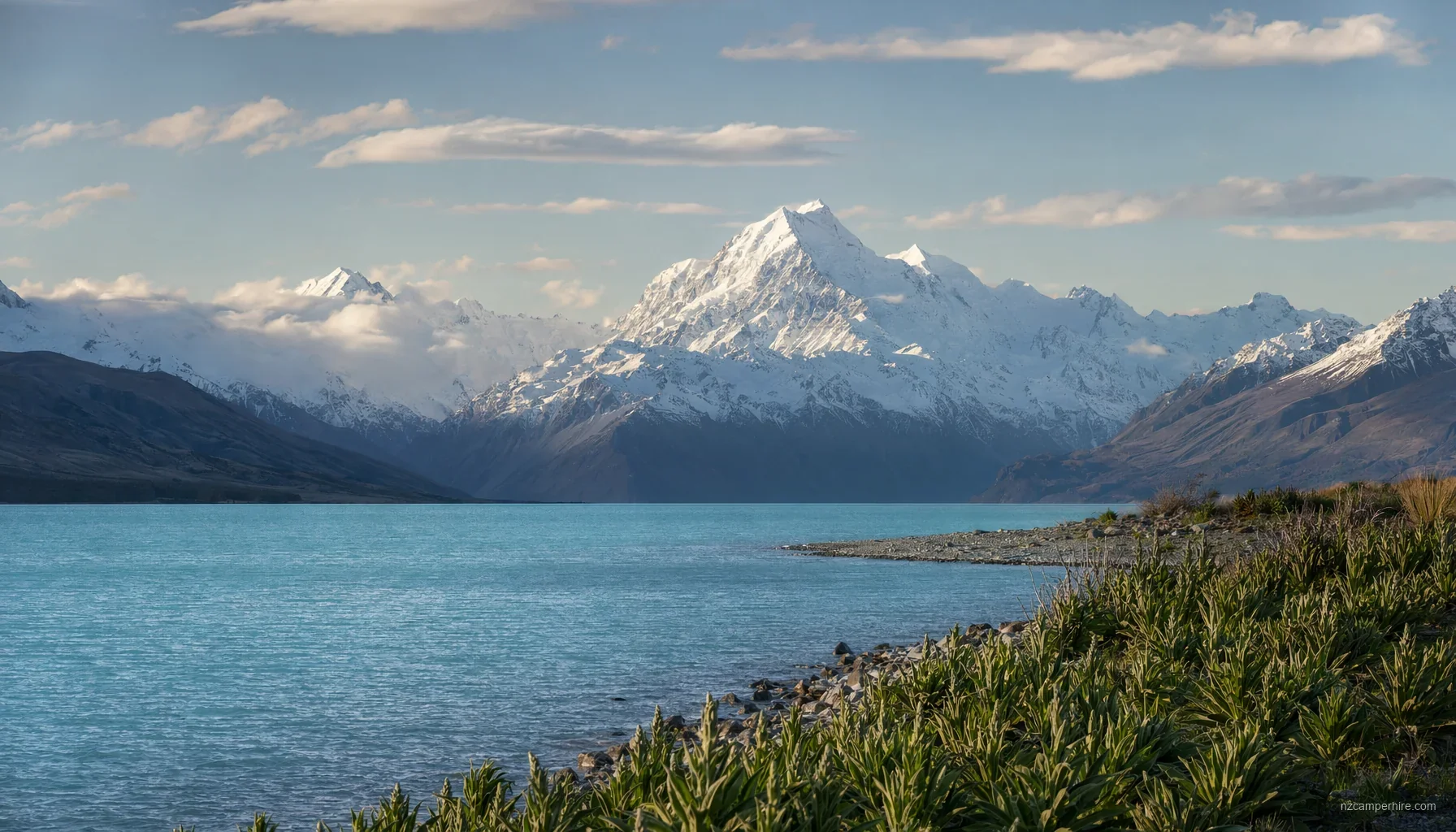 ROUTE
ROUTE South Island in 14 days
Classic clockwise South Island loop — Kaikoura, Nelson, West Coast glaciers, Wanaka, Queenstown, Milford Sound, Tekapo, back to Christchurch.
See the route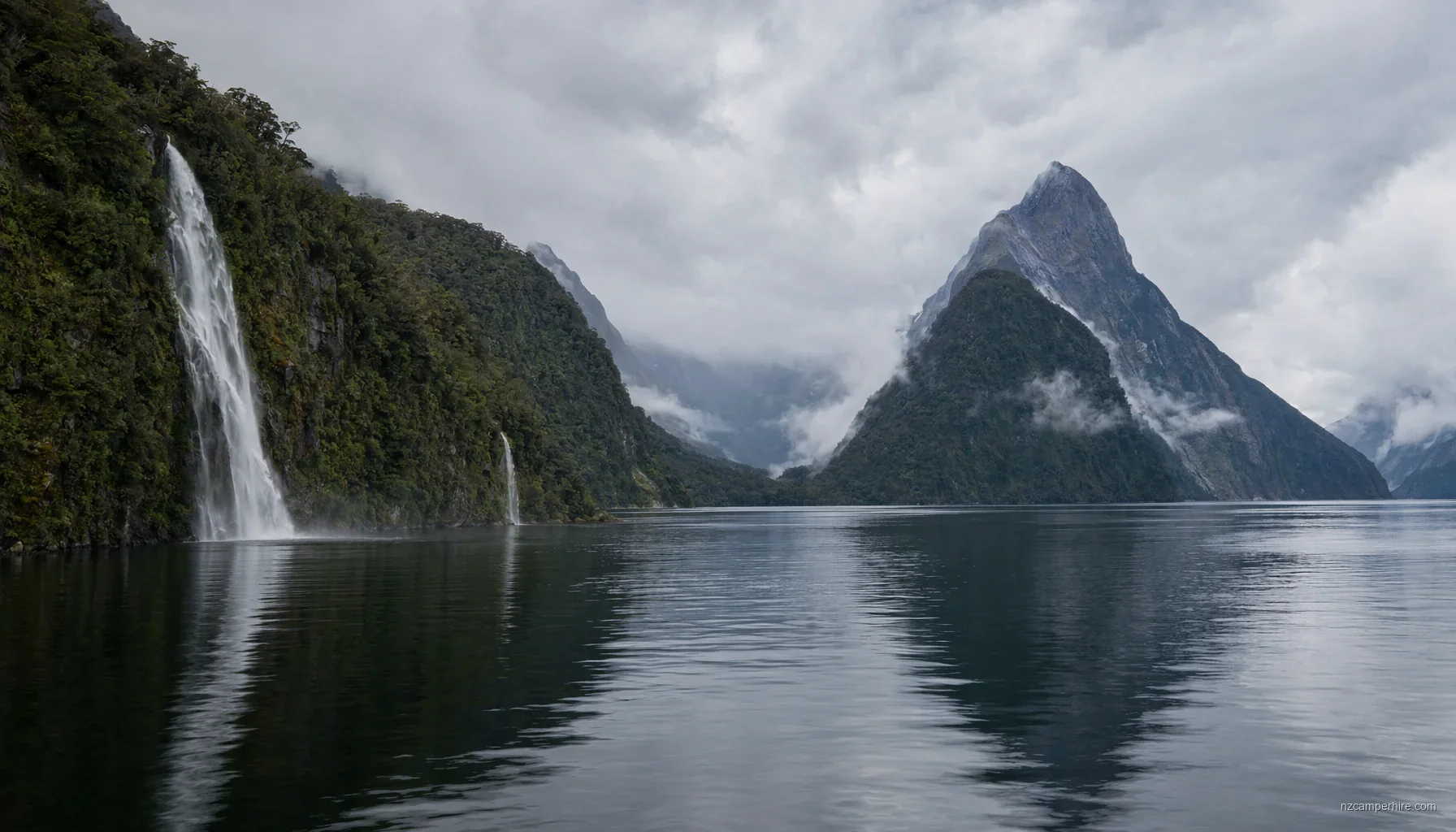 REGION
 Milford Sound
Fiordland's most-photographed fiord. Day cruise or overnight from Te Anau or Queenstown.
See the region PRACTICAL GUIDE
 First time driving a motorhome
Height awareness, swing on turns, parking, reversing — short briefing before pickup.
Read the guideWhat to pack for a NZ campervan trip FAQ
Do I need to bring bedding and towels for a NZ campervan?
Can I bring food into New Zealand for the campervan?
Should I pack a hard suitcase or a soft bag?
Do I need special gear for winter driving?
Can I buy gas, toilet chemicals, and cleaning supplies on the road?
Have a planner answer this for your specific trip
Rules and practicalities depend on dates, party size, and route. Send us your outline and we'll come back with answers tailored to your trip.