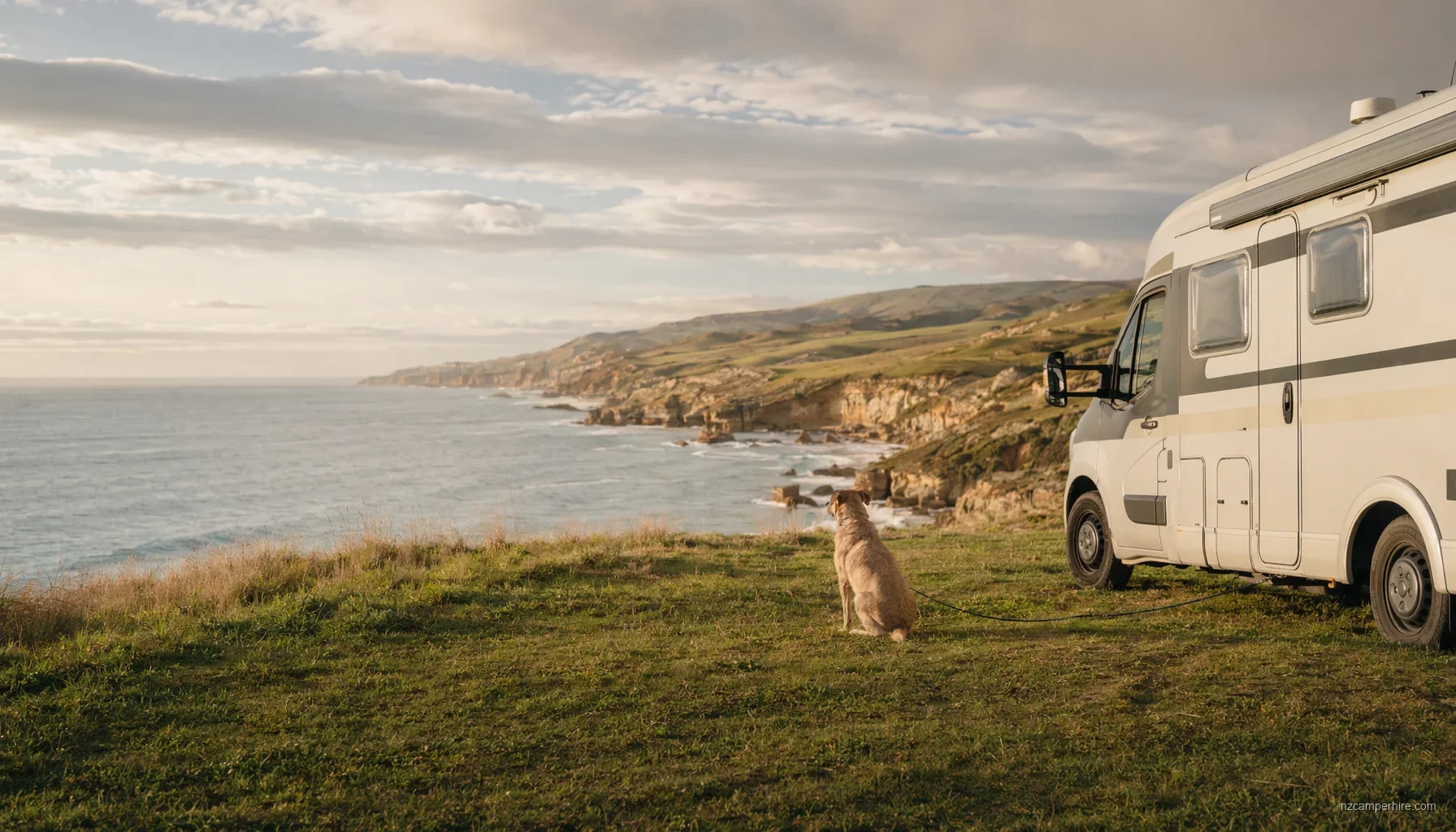
Travelling with a pet in a NZ campervan
The reality of rental-operator pet policies, dog-friendly stays, and where DOC site rules will catch you out.
- busy-summer
- book-ahead
- ferry-stage
- pack-snacks
On a quiet morning at a holiday park, the easy part is the kettle, the lead by the door, and a dog watching every movement as if breakfast is a legal right. The harder part is knowing where that lead is allowed to go next.
New Zealand is not an easy country for a casual pet-in-campervan holiday. Rental operators usually restrict animals, DOC land has tight dog rules, and bringing a pet from overseas is a serious biosecurity process, not an airport form.
If you are visiting friends in Auckland, moving between homes, or planning a longer North Island in 10 days route with a dog already in NZ, it can work. If you are flying in for two or three weeks, it often does not.
Get the planning checklist — and reply with your dates if you'd like a planner to flag the pet-specific gotchas for your route.
Start with import rules, not campsites
For international travellers, the first stop is the Ministry for Primary Industries, not a rental desk. NZ has strict animal import rules because it is rabies-free and protects native wildlife. Cats and dogs from many approved countries need permits, vet tests, parasite treatment, official documents, and time in an approved quarantine facility. For some origins the process starts months ahead. Australia has different conditions, but it is still paperwork-heavy.
For a short holiday, bringing a pet from the USA, UK, Europe, Canada, Singapore, Japan, or Korea is rarely practical. Use MPI's animal import pages at mpi.govt.nz. Do not rely on airline advice alone. Airline carriage, border clearance, and campervan permission are three separate decisions.
Rental approval must be in writing
Most NZ campervan rental agreements say no pets unless the operator has approved it before pickup. A casual email saying a dog is small is not enough. You want the permission attached to the booking record, with any cleaning fee, bond condition, upholstery rule, and exclusion written down.
Ask these questions before you choose a vehicle:
- Is the animal allowed inside the living area, or only transported in a crate?
- Are dogs allowed on fabric seats or beds?
- Is there an extra cleaning charge for hair, smell, or stains?
- Can the vehicle be used on gravel access roads to pet-friendly camps?
- What happens if a later inspection finds flea treatment or allergen cleaning is needed?
Certified disability assist dogs are treated differently from pets in many access situations in NZ. Emotional support animals do not automatically have the same standing. Tell the operator early, and carry documentation.
DOC land is where many plans fall over
Dogs are banned from most national parks, including places visitors often build a motorhome trip around. White Horse Hill at Aoraki/Mount Cook National Park is not a dog camp. Cascade Creek on the Milford Road, SH94, sits inside Fiordland National Park, so dogs are not part of that plan either. The Tongariro Alpine Crossing is also in a national park.
Some DOC campsites outside national parks allow dogs on a leash, but only where the individual DOC page says so. The rule is site-by-site. Check doc.govt.nz for the exact campsite, not just the region. Council reserves add another layer. Queenstown Lakes, Tasman, and Auckland councils are particularly firm in busy visitor areas.
If your route uses the South Island in 14 days, assume the scenic core around Mount Cook, Queenstown, Wanaka, and Milford Sound will reduce your dog-friendly camping choices. A practical freedom camping guide and a vehicle-size guide are worth reading beside this page, because pet rules and parking rules often collide.
Holiday parks can work, but summer is not casual
Holiday parks are usually the workable option for travellers with pets, especially powered sites with space to manage feeding, washing, and shade. Policies still vary by season, dog size, breed, and manager discretion. December and January are the hardest months. Some parks that accept dogs in May or September may say no during school holidays.
The tradeoff is simple: the parks most likely to help are often the ones that need the earliest phone call, especially in summer.
Check named parks directly before you build the night around them. Examples to investigate include Miranda Holiday Park near the Firth of Thames, Athenree Hot Springs and Holiday Park near Waihi Beach, Tasman Holiday Park Waihi Beach, Russell Top 10 in the Bay of Islands, Oamaru Top 10, and Creeksyde Queenstown. Do not assume the policy shown on an old forum post still applies.
Give the park your vehicle length, pet type, and dates. A 6-berth motorhome plus a large dog needs a different site from a compact 2-berth with one small dog.
Build shorter driving days with a pet
NZ roads are slower than many visitors expect. Auckland to Rotorua is about 230 km and often 3 hours without long stops. Auckland to Paihia in the Bay of Islands is 230 km and usually 3.5 to 4 hours on SH1 and SH11. Christchurch to Queenstown via SH1, SH8, and the Lindis Pass at 965 m is about 485 km and 6.5 to 7.5 hours in a campervan.
With a pet, those days need shade stops, water, and legal exercise areas. Do not leave an animal shut in a campervan on a warm day. Interiors heat quickly, even when the outside temperature feels mild.
The best pet travel days in NZ often sound very ordinary: a quiet tap filling the water bowl, a shady grass verge, and no one rushing the next corner.
Cook Strait ferries need planning too. Interislander and Bluebridge sail between Wellington and Picton in about 3 hours 20 minutes, closer to 3.5 hours with loading. Pets are normally kept in your vehicle or in booked kennel areas, and you may not be able to access the vehicle deck while sailing. Check the operator's current pet instructions and Maritime NZ safety advice before travel.

Rules and practicalities are easier to remember when you've felt them — the cold of a wet boot at a freedom camp, the relief of an early ferry slot. This guide is written from those moments, not from a checklist.
Related reading
 ROUTE
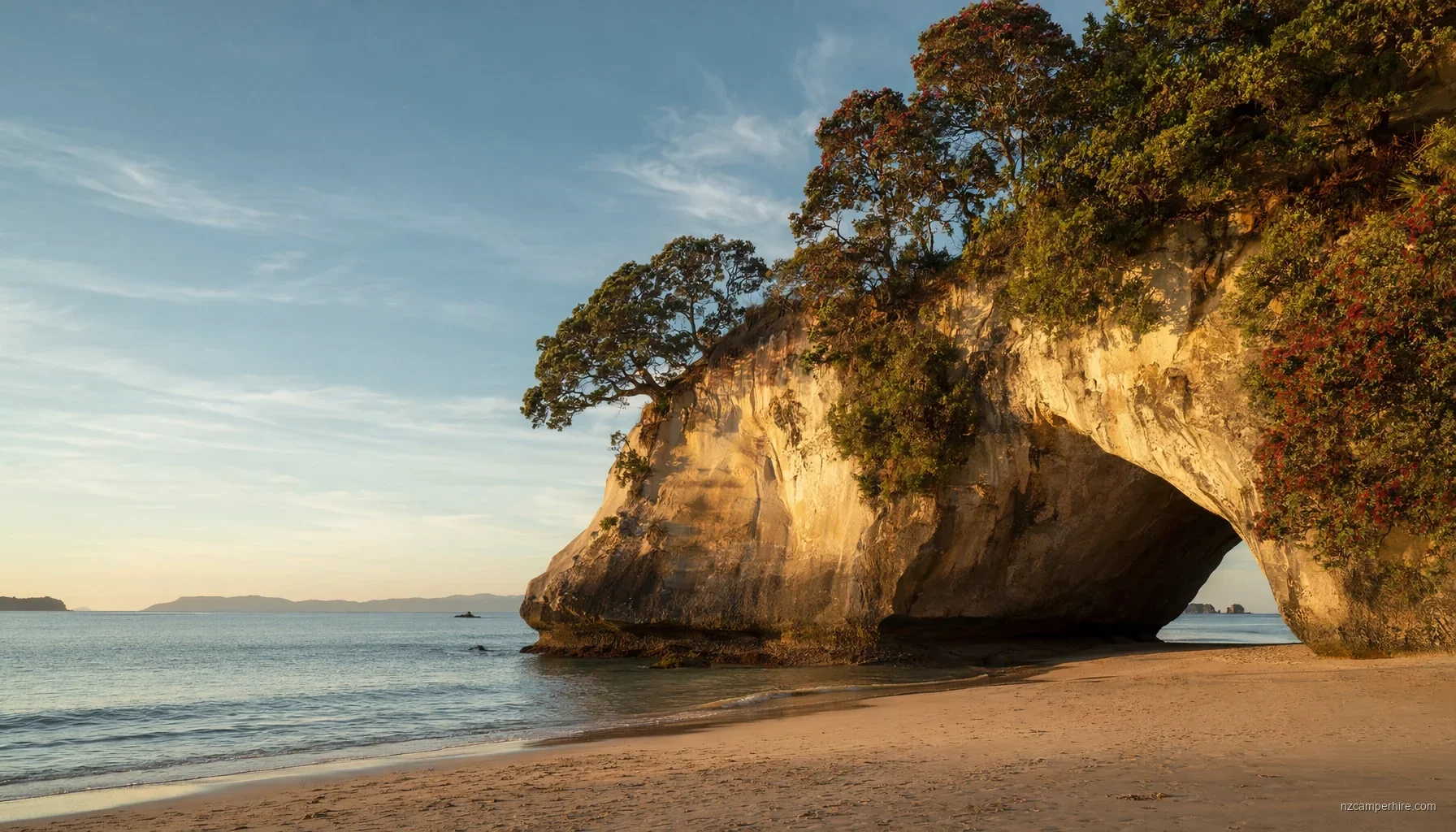
ROUTE Coromandel Peninsula loop
Short beach loop — Cathedral Cove, Hot Water Beach, 309 Road.
See the route REGION
 Auckland
Largest North Island depot. Start of every classic North Island loop (Bay of Islands, Coromandel, Rotorua, Hobbiton, Tongariro).
See the region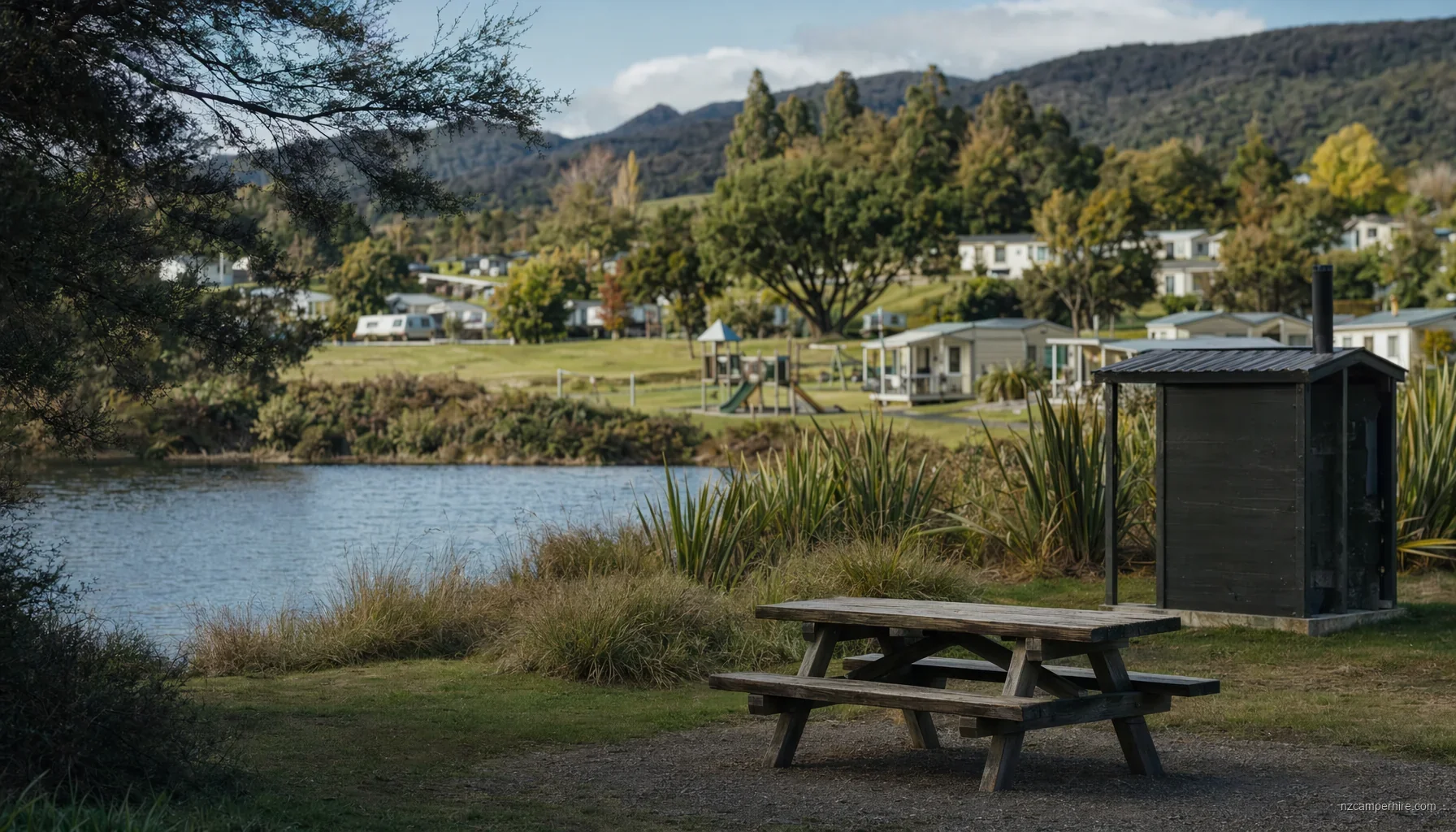 PRACTICAL GUIDE
 Holiday parks vs DOC campsites
Powered vs unpowered, facilities, booking, costs, and when each makes sense.
Read the guideTravelling with a pet in NZ FAQ
Can I bring my dog or cat to NZ for a three-week campervan trip?
Do campervan rental operators in NZ allow pets?
Can my dog stay at DOC campsites?
Will holiday parks accept dogs in peak summer?
Can I take a pet on the Cook Strait ferry?
Have a planner answer this for your specific trip
Rules and practicalities depend on dates, party size, and route. Send us your outline and we'll come back with answers tailored to your trip.