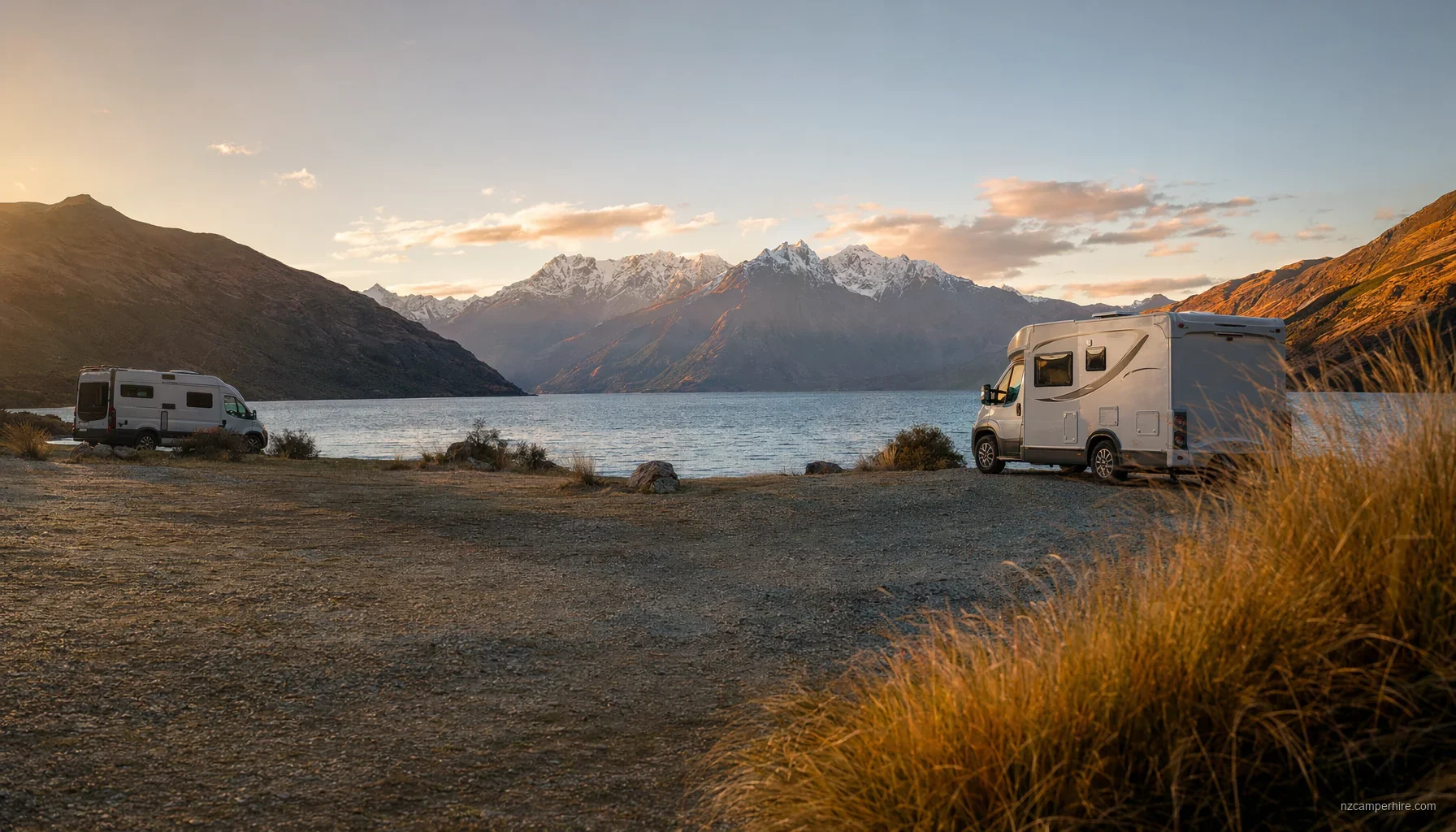
Summer Campervan Tips for New Zealand
Peak season — what to book early, where to escape the crowds, sunscreen reality.
- busy-summer
- book-ahead
- family-friendly
- pack-snacks
- lake-stage
On a good December morning the van door slides open to warm grass, sunscreen already in the air, and a kettle taking its time while the campground slowly wakes. Then the road starts filling, and summer shows its practical side.
Summer in New Zealand is not one season. Early December is fairly calm. Late December to late January is school holidays, public holidays, full campgrounds, busy ferry sailings, and slow beach-town traffic.
The good part is long daylight, warm sea swimming, open alpine roads, and plenty of DOC camping if you plan early. The hard part is that the obvious places, especially Queenstown, Bay of Islands, Rotorua, and the Coromandel, do not leave much room for late decisions.
Get the planning checklist — and reply with your dates if you'd like a planner to flag the summer-specific gotchas for your route.
The summer calendar that catches visitors out
The pressure point is not all of December to February. It is roughly 20 December to the end of January. New Zealand schools are off, many workplaces close over Christmas and New Year, and locals take their boats, tents, caravans, and children to the same coastal places visitors have circled on the map.
Christmas Day and New Year's Day are public holidays. Many supermarkets open limited hours or close, especially outside the main cities. Fuel is available on state highways, but do not let the tank run low in rural South Island.
February is still summer, but it is calmer. Sea temperatures are warmer than December. Campgrounds loosen up after Auckland Anniversary weekend in late January, except around major events. For a first motorhome trip, February often gives the better balance of weather, daylight, and space.
Bookings worth sorting before you fly
Peak summer is not the time to arrive with only a loose idea. You still do not need every lunch stop planned, but you should have the fixed points covered.
- Cook Strait ferry: for Picton to Wellington on Interislander or Bluebridge, aim around 4 months out in peak season. The sailing is about 3 hours 20 minutes, or about 3.5 hours once loading and unloading are allowed for.
- Holiday parks: book Queenstown, Wanaka, Rotorua, Paihia/Russell, and Christchurch arrival or departure nights early. Useful named stops include Creeksyde Queenstown, Russell Top 10, Rotorua Thermal Holiday Park, and North South Holiday Park near Christchurch Airport.
- DOC campsites: popular road-trip sites such as White Horse Hill near Aoraki/Mount Cook, Lake Pukaki, Cascade Creek on the Milford Road, and Mavora Lakes can fill or feel very busy in settled weather.
- Activities with tight capacity: boat trips, glowworm caves, small-group guided walks, and some Milford Sound departures need earlier decisions than a normal shoulder-season trip.
Routes that still work in December to February
A South Island in 14 days route works well in summer because it gives breathing room. Christchurch to Lake Tekapo is about 230 km and 3 hours 15 minutes in a campervan. Lake Tekapo to Queenstown via SH8 and the Lindis Pass is about 260 km and usually 3.5 to 4 hours, longer if every viewpoint has a queue. The Lindis Pass is 965 m, so it can still be windy and exposed even in January.
A South Island in 10 days trip is possible, but be careful adding Milford Sound. Queenstown to Milford Sound is 288 km each way on SH6 and SH94, and 4.5 to 5.5 hours one way in summer traffic. Cascade Creek is a practical DOC stop if you want to avoid a very long return day. Milford Sound is worth the early alarm, but the road is long and crowded in peak summer, so do not make an unmovable evening plan after the return drive.
For a North Island in 10 days route, Auckland to Paihia in the Bay of Islands is about 230 km but allow 4 hours, sometimes more on Friday afternoons. Rotorua to Taupo is only 80 km and about 1 hour 15 minutes, which makes it a sensible lighter day between geothermal stops and lake camping.
Sun, heat, insects, and swimming reality
New Zealand summer sun is harsher than many visitors expect. UV can reach 11 or higher. A cool breeze in Kaikoura or on Lake Tekapo does not mean you are safe. Use SPF 50+, a hat, sunglasses, and reapply sunscreen after swimming or every two hours. Children burn quickly here.
Campervans heat up fast when parked. Choose shade when you can, crack vents safely, and plan walks early or late. Daylight is long, with sunset around 9 pm in much of the South Island in late December, so you do not need to drive through the hottest part of the day.
The best summer evenings often start with damp towels on the mirror, bare feet on warm gravel, and dinner waiting while the light hangs around.
Sandflies are common on the West Coast, around lakes, and in Fiordland. They are not dangerous, just annoying; they also appear to run a very efficient sunset roster. Keep screens closed, use repellent before dusk, and do not leave the side door wide open while cooking beside water.
Swimming is not the same everywhere. Surf beaches can have rips. Alpine lakes are cold. Rivers rise quickly after rain. Swim between flags where surf lifeguards operate, and check local signs before entering water.
Vehicle size and road choices in peak season
Summer makes vehicle size more noticeable. A 6-berth can be good value per person for a family, but it is harder to park in Queenstown, tighter in older holiday parks, and slower on winding roads. A 2-berth or compact self-contained camper is easier around beach towns and supermarket car parks.
The Crown Range Road between Queenstown and Wanaka reaches 1,121 m. It is sealed and commonly driven, but it is steep and twisty. In a large motorhome, SH6 via Cromwell is longer in distance but often more relaxing. Haast Pass on SH6 is lower at 564 m, but it is narrow in places and busy with rental traffic in summer.
New Zealand drives on the left. If your licence is in English, it is generally valid for up to 12 months. If it is not in English, carry an International Driving Permit or approved translation. Minimum hire age varies, often from 18 to 25 depending on operator and vehicle class. Read the vehicle-size guide before choosing a van for South Island alpine roads.
Camping rules do not relax because it is summer
Freedom camping is more restricted in the places visitors most want in summer. Queenstown Lakes, Tasman, and Auckland councils are especially strict. Local bylaws can override the general right to camp, and signs at reserves, beaches, and car parks matter.
If you plan to camp outside holiday parks and DOC sites, read the freedom camping guide before you build the route. Self-contained certification is not just a toilet in the vehicle. The current system is moving to the NZS 5465:2022 standard, with a green warrant card on the windscreen for compliant vehicles.
For a simple summer pattern, mix paid holiday parks for laundry, showers, and power with DOC or council camps where legal. Good practical combinations include Akaroa Top 10 after a Christchurch arrival, Lake Pukaki or White Horse Hill in the Mackenzie Country, and a booked powered site in Queenstown before tackling Milford Sound.
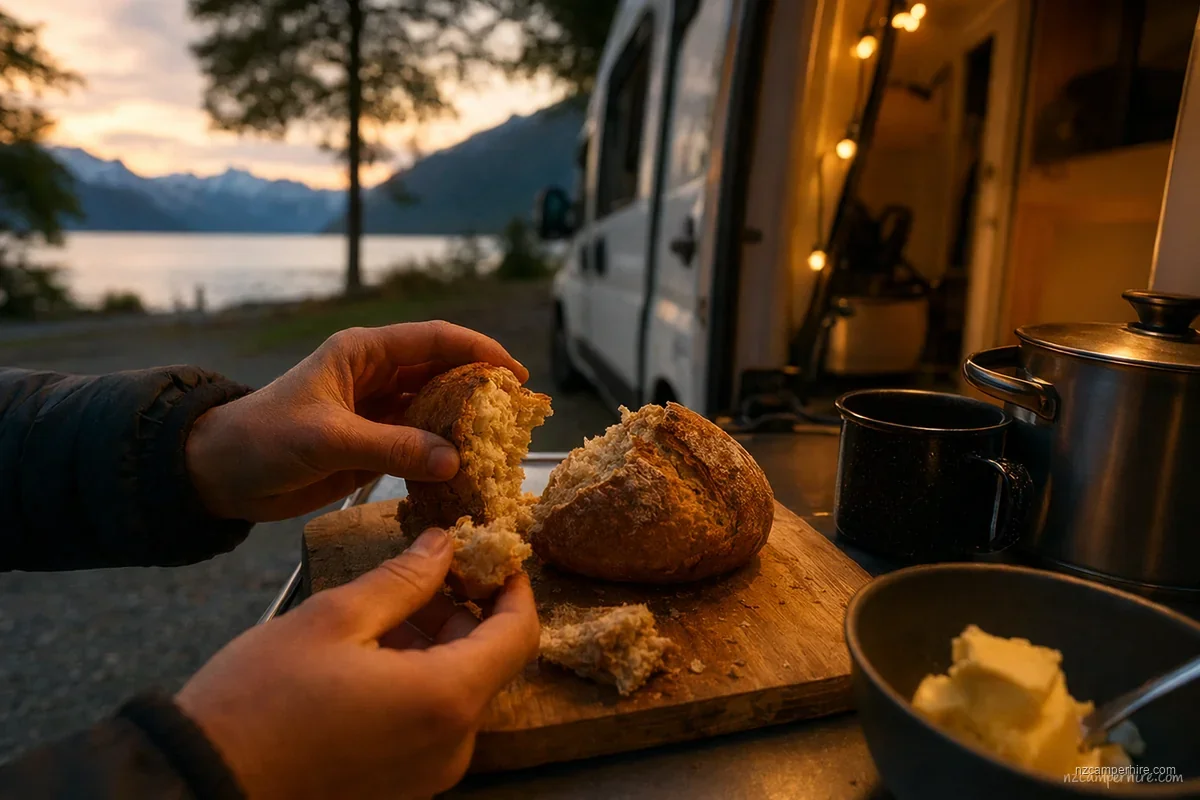
Rules and practicalities are easier to remember when you've felt them — the cold of a wet boot at a freedom camp, the relief of an early ferry slot. This guide is written from those moments, not from a checklist.
Related reading
 ROUTE
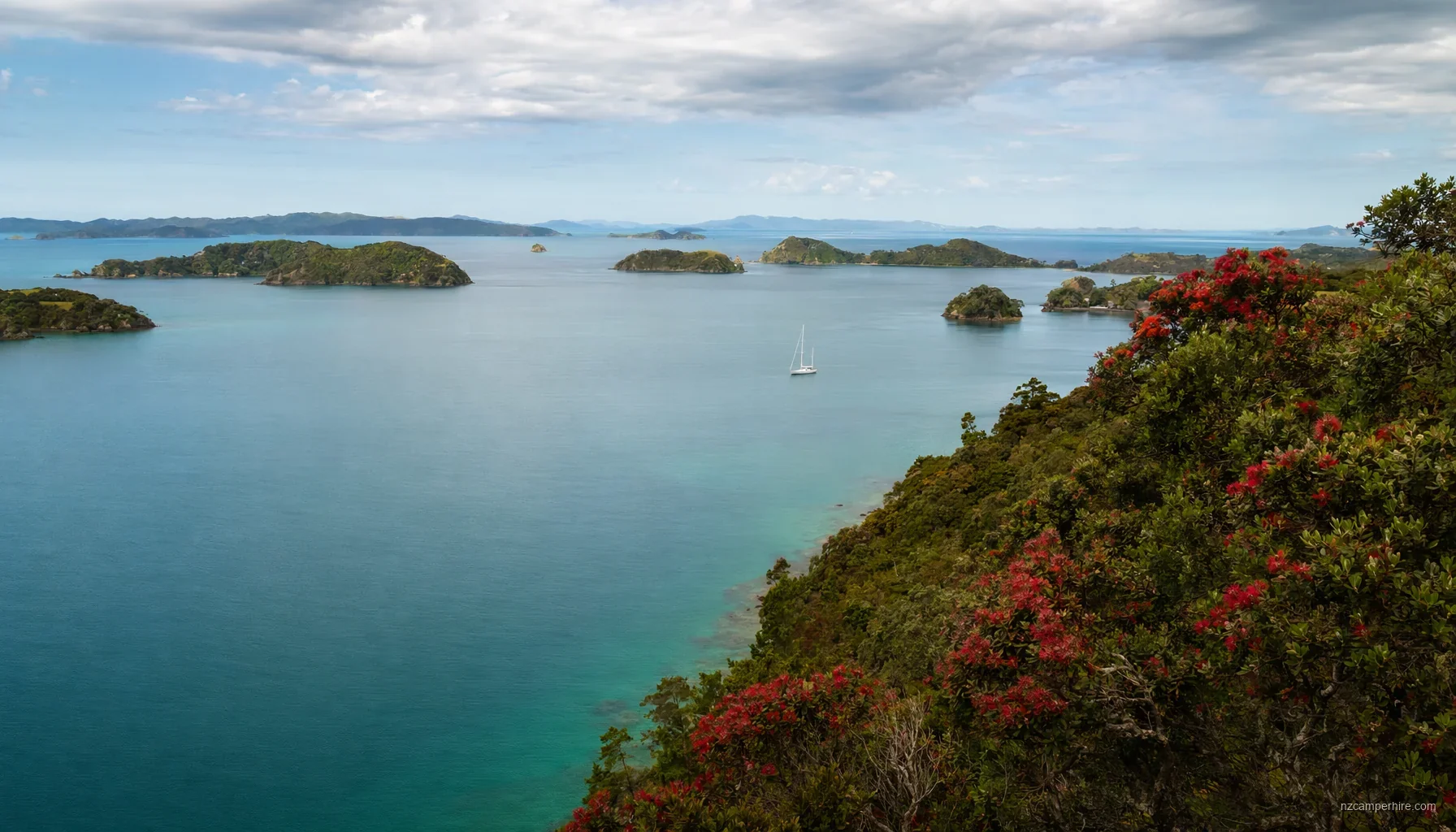
ROUTE Bay of Islands round-trip
Subtropical Northland — Paihia, Waitangi, dolphins, Russell, Ninety Mile Beach.
See the route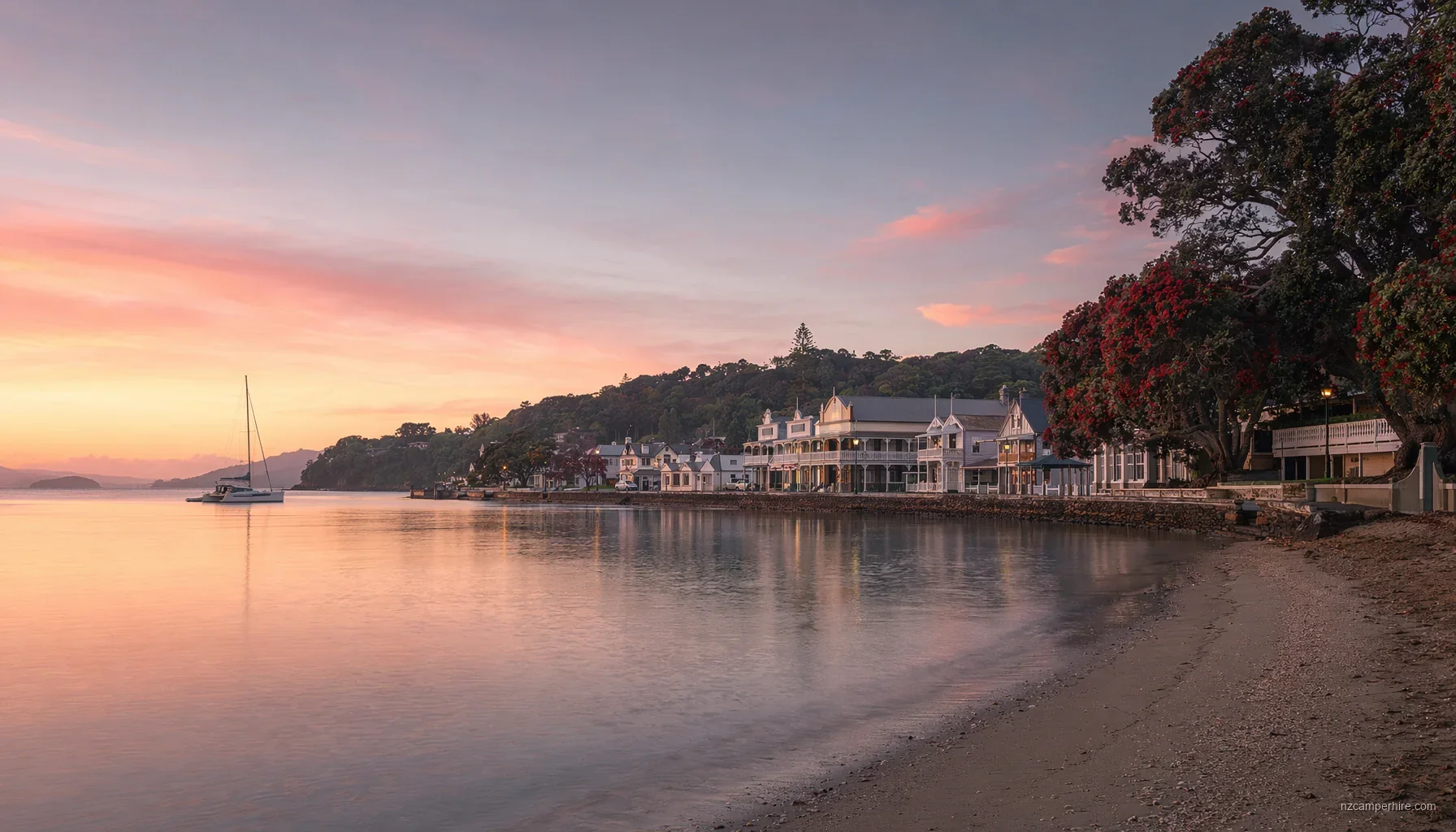 REGION
 Bay of Islands
Subtropical Northland — beaches, dolphins, Waitangi history. 3-4 hours north of Auckland.
See the region PRACTICAL GUIDE
 Best time of year for a NZ campervan trip
Month-by-month — weather, demand, school holidays, peak ferry windows.
Read the guideSummer (December-February) FAQ
Is December or February better for a campervan trip?
Do I need to book every campsite in summer?
Can I freedom camp at a beach car park in summer?
How early should I book the Cook Strait ferry for January?
Is summer too hot for sleeping in a campervan?
Have a planner answer this for your specific trip
Rules and practicalities depend on dates, party size, and route. Send us your outline and we'll come back with answers tailored to your trip.