Shoulder season motorhome tips for New Zealand
Sweet spot for many — better availability, lower rates, still good weather.
- wet-weather-plan
- quiet-roads
- bring-warm-layers
- book-ahead
- ferry-stage
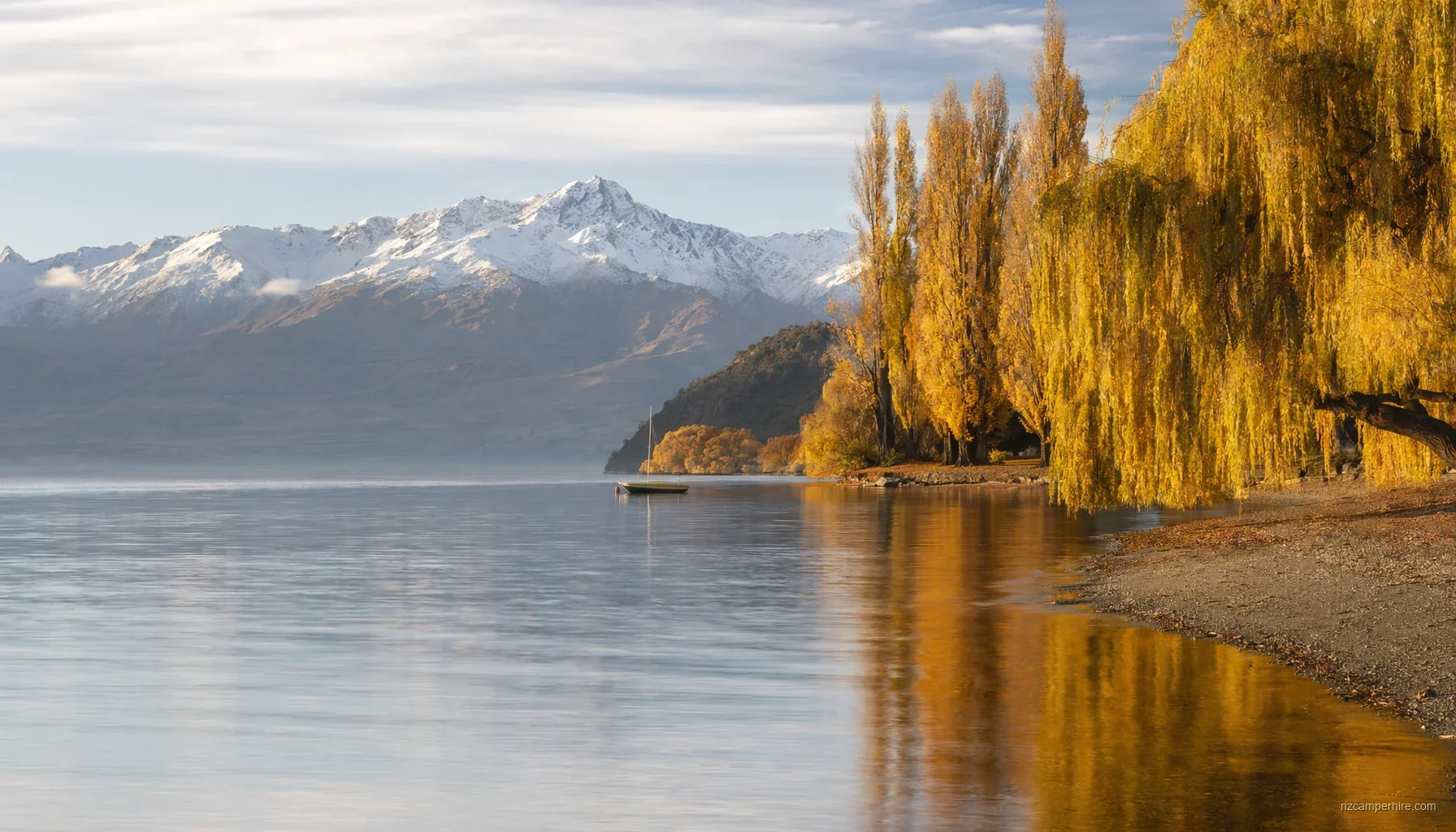
On a shoulder-season morning, the kettle can be humming while mist lifts off a paddock and the road outside is still quiet enough to hear a magpie arguing with itself.
March to May and September to November are strong months for a New Zealand motorhome trip. You get more breathing room than January, less pressure on campsites, and usually enough daylight to travel without rushing.
The catch is variability. A calm 18°C afternoon in Nelson can sit in the same week as snow warnings on the Crown Range, rain on the West Coast, and a cold southerly in Wellington.
Get the planning checklist — and reply with your dates if you'd like a planner to flag the shoulder-season-specific gotchas for your route.
Why March-May is not the same as September-November
Autumn and spring both sit outside the busiest summer window, but they behave differently on the road.
March and early April often feel like late summer. Sea temperatures are warmer, daylight is still generous, and routes such as South Island in 14 days or North Island in 10 days work well without heavy winter planning. Easter can still be busy, especially around Queenstown, Rotorua, Bay of Islands and Coromandel.
Late April and May bring cooler mornings, shorter days and more settled crowds. It is a good time for Christchurch starts, Lake Tekapo, Mount Cook (Aoraki), Wanaka and the West Coast, but you should expect single-digit nights inland.
September and October are spring, not summer. Ski fields may still be open near Queenstown and Wanaka. Alpine passes can get snow. Waterfalls are strong, lambs are in paddocks, and weather systems move fast. November is usually warmer and easier, though it can still be windy.
Weather patterns that matter when you drive
New Zealand is narrow and mountainous. That means the forecast changes by region, not just by island. Auckland may be humid and showery while Lake Tekapo is dry and clear. Rotorua can be mild but damp. Queenstown can start below freezing in May, then sit in sun by lunch.
The best shoulder-season mornings often start with a cold van step, a warm mug, and three different skies waiting over the next hill.
- West Coast: expect heavy rain at times in any shoulder month. SH6 from Hokitika to Haast is beautiful but slow in wet weather. Allow 4.5 to 5.5 hours for Franz Josef to Wanaka, not just the map estimate.
- Mackenzie Country: Lake Tekapo, Lake Pukaki and Mount Cook can have crisp, clear days and very cold nights. White Horse Hill campground near Aoraki/Mount Cook is exposed.
- Central Otago: Wanaka, Queenstown and Cromwell are dry compared with the coast, but mornings can be icy in May, September and October.
- North Island volcanic plateau: Tongariro can be wintry when Auckland feels mild. The Tongariro Alpine Crossing needs proper weather checks, not a casual dawn decision.
Use MetService for weather warnings, NZ Transport Agency Waka Kotahi for road conditions, and DOC for track and campsite alerts.
Roads and ferry timing in the in-between months
New Zealand drives on the left. International drivers often do well after the first day, but fatigue is the real issue. Build a gentle first leg from Auckland or Christchurch rather than collecting a motorhome and immediately taking on a mountain pass.
Several shoulder-season roads need respect. The Crown Range between Queenstown and Wanaka reaches 1,121 m and can be icy in cold mornings. Lindis Pass on SH8 reaches 965 m. Arthur's Pass on SH73 reaches about 920 m. Haast Pass on SH6 is lower at 564 m, but it carries heavy rain and slips more often than visitors expect. SH94 to Milford Sound is one of the most weather-affected tourist roads in the country.
The Milford road rewards patience, but it is also closed often enough that a buffer day is kinder than a tight booking chain.
The Cook Strait ferry between Wellington and Picton takes about 3 hours 20 minutes, or closer to 3.5 hours with loading and unloading. Interislander and Bluebridge both carry motorhomes. In shoulder season, book earlier if your route depends on a fixed island change. Two to six weeks ahead is often sensible, longer around Easter, school holidays, and late November.
Campsites, daylight and the freedom-camping trap
Shoulder season usually means better campsite choice, but not unlimited choice. Popular holiday parks still fill around Easter, long weekends and school holidays. Good practical stops include North South Holiday Park near Christchurch Airport, Creeksyde Queenstown, Rotorua Thermal Holiday Park, Russell Top 10 in the Bay of Islands, and Tasman Holiday Park Waihi Beach.
DOC campsites are excellent for quieter travel, but facilities vary. Mavora Lakes is scenic and remote. Lake Lyndon works well between Christchurch and Arthur's Pass. Lake Pukaki is a strong Mackenzie stop when conditions are settled. Cascade Creek is the classic DOC base before Milford Sound, but it is exposed and can be cold outside summer.
Freedom camping is not a seasonal loophole. The Freedom Camping Act 2011 still applies, with the 2023 self-containment changes tightening expectations. Local council bylaws matter, especially in Queenstown Lakes, Tasman and Auckland. If a sign says no camping, do not stay. Fines can start at $400.
Vehicle size, heating and packing choices
A shoulder-season motorhome should match the roads, not just the number of beds. A 6-berth can be cheaper per person for a family, but it is less pleasant on the Crown Range, in tight supermarket car parks, and on narrow holiday park lanes. A 2-berth or compact 4-berth is easier for couples and small families on South Island in 10 days.
A compact van also makes supermarket parking feel less like a slow public performance.
Ask about heating that works when you are not plugged into mains power. Nights at Lake Tekapo, Mount Cook, Tongariro and Central Otago can be cold. Check bedding, spare blankets, battery use, and how long the fridge and heater can run off-grid.
Pack layers rather than one heavy coat. Bring a waterproof shell, warm hat, gloves for September or May, sunglasses, and shoes you can get muddy. If your licence is in English, it is generally valid for up to 12 months. If it is not in English, carry an International Driving Permit or approved translation. Minimum hire age varies by operator and vehicle class, often from 18 to 25.

Rules and practicalities are easier to remember when you've felt them — the cold of a wet boot at a freedom camp, the relief of an early ferry slot. This guide is written from those moments, not from a checklist.
Related reading
 ROUTE
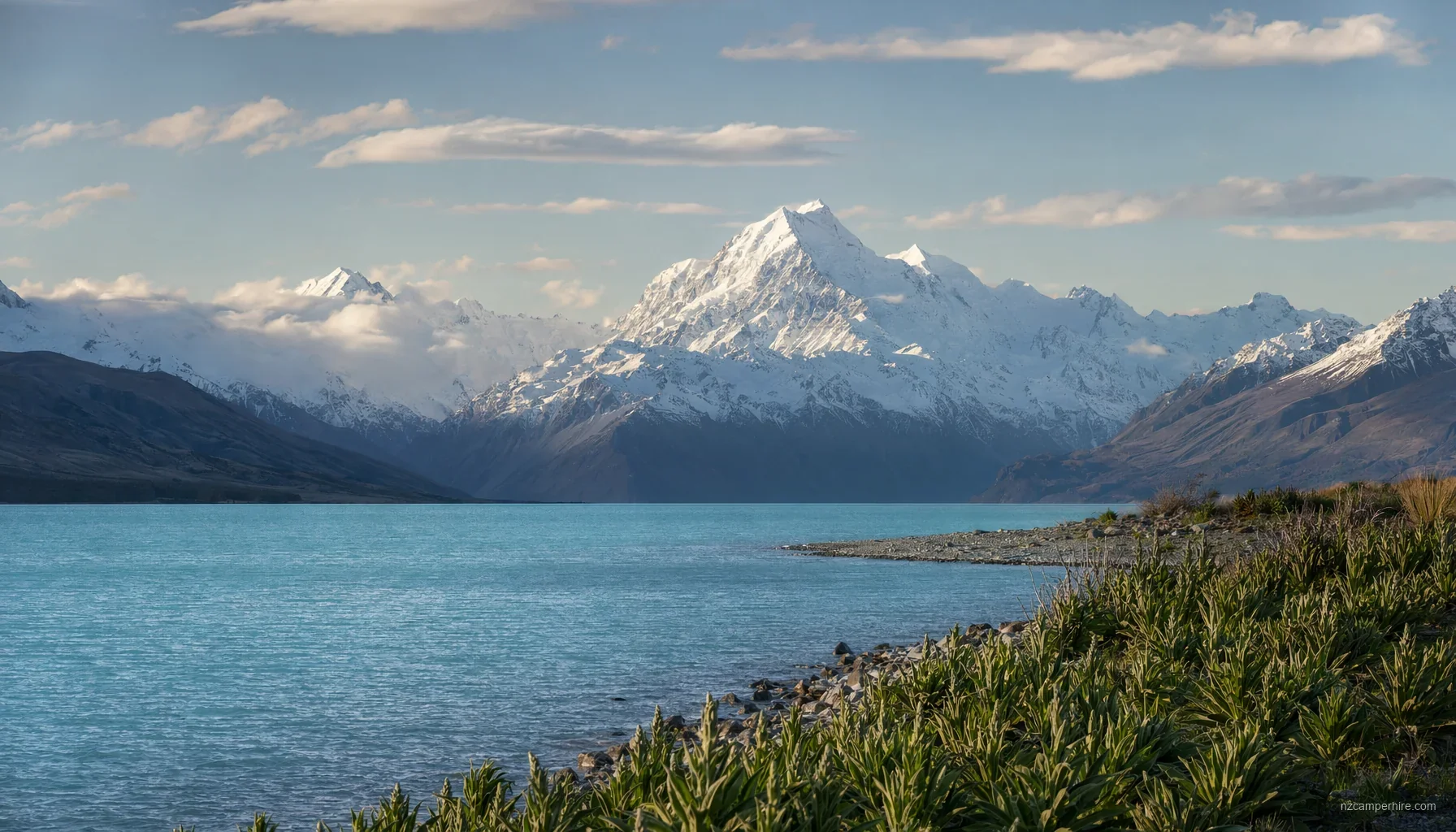
ROUTE South Island in 14 days
Classic clockwise South Island loop — Kaikoura, Nelson, West Coast glaciers, Wanaka, Queenstown, Milford Sound, Tekapo, back to Christchurch.
See the route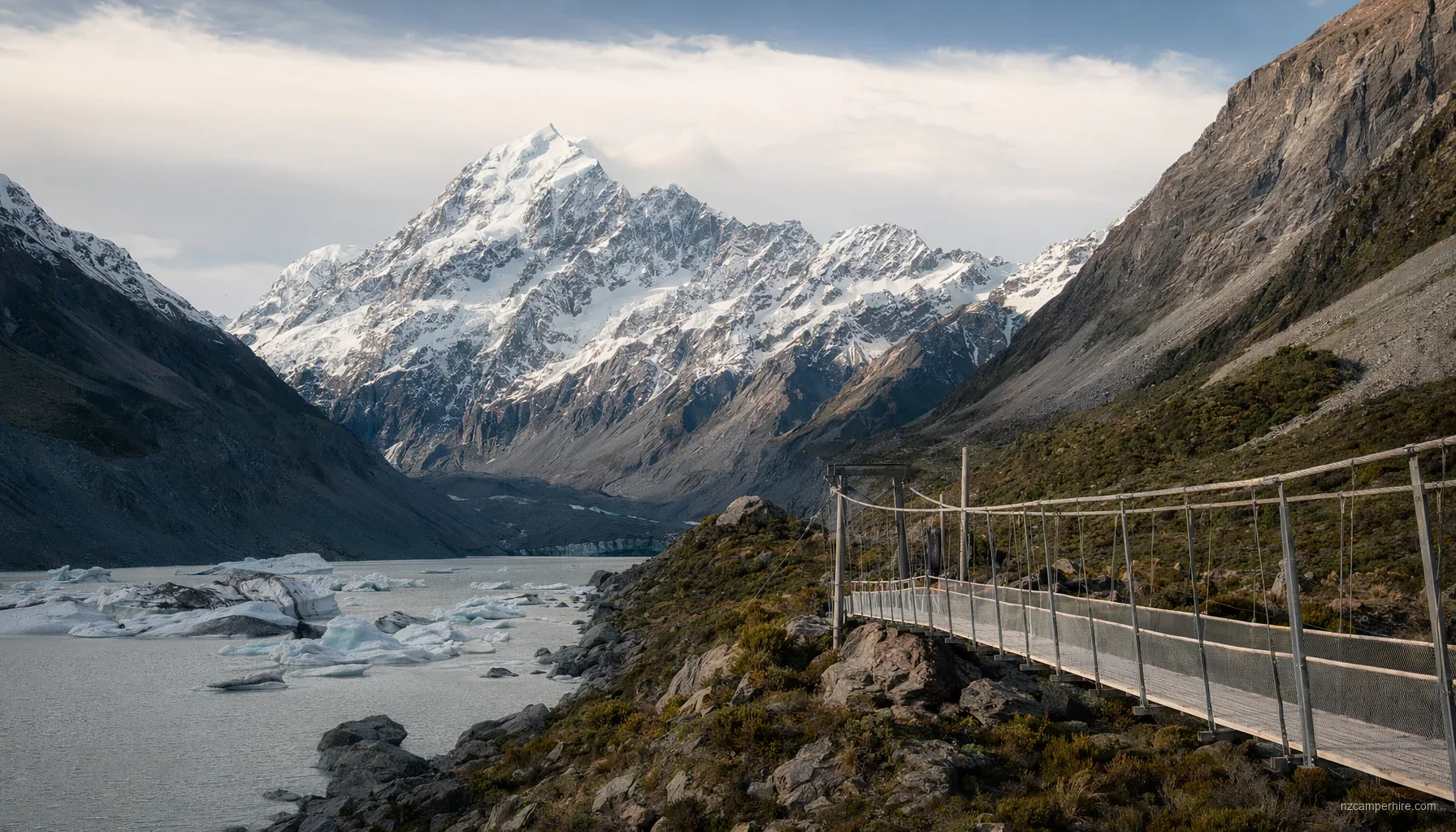 REGION
 Mount Cook / Aoraki
NZ's highest peak. Hooker Valley track and Tasman Glacier viewpoint.
See the region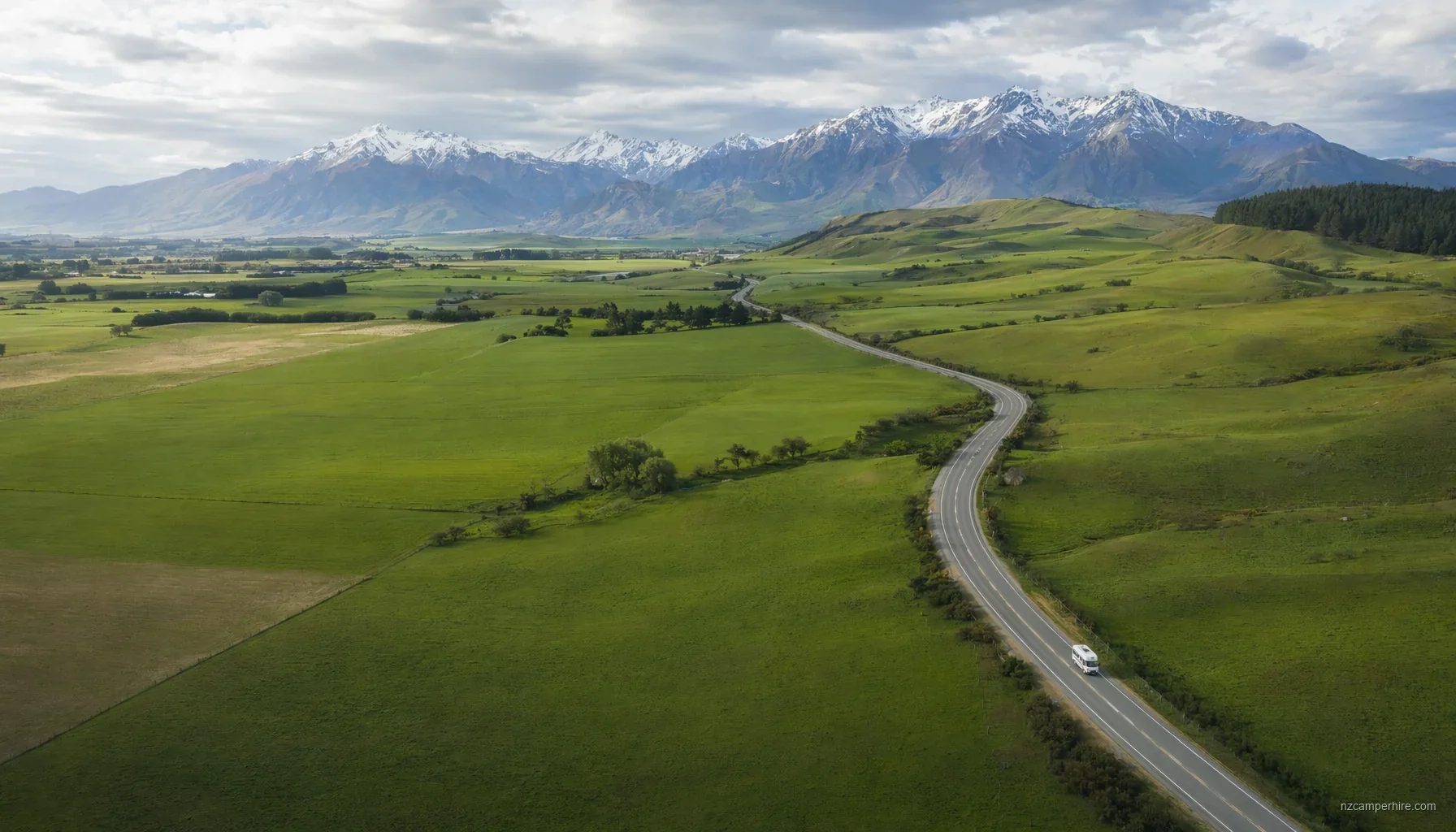 PRACTICAL GUIDE
 Best time of year for a NZ campervan trip
Month-by-month — weather, demand, school holidays, peak ferry windows.
Read the guideShoulder seasons (March-May, September-November) FAQ
Is shoulder season a good time for a first NZ motorhome trip?
Do I need snow chains in March-May or September-November?
Can I freedom camp more easily outside summer?
Should I still book campsites in shoulder season?
Is the Cook Strait ferry easier in March-May or September-November?
Have a planner answer this for your specific trip
Rules and practicalities depend on dates, party size, and route. Send us your outline and we'll come back with answers tailored to your trip.