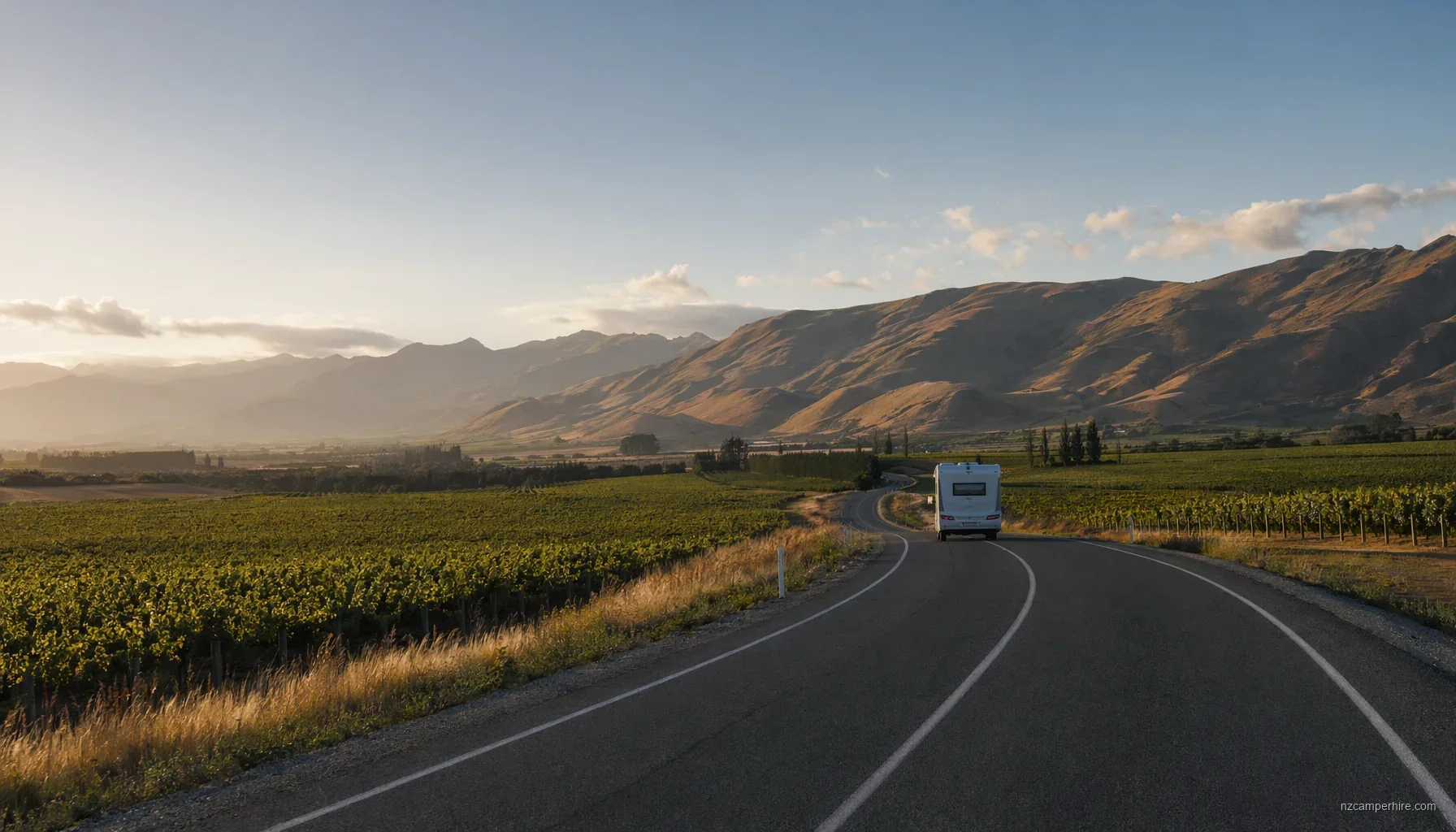
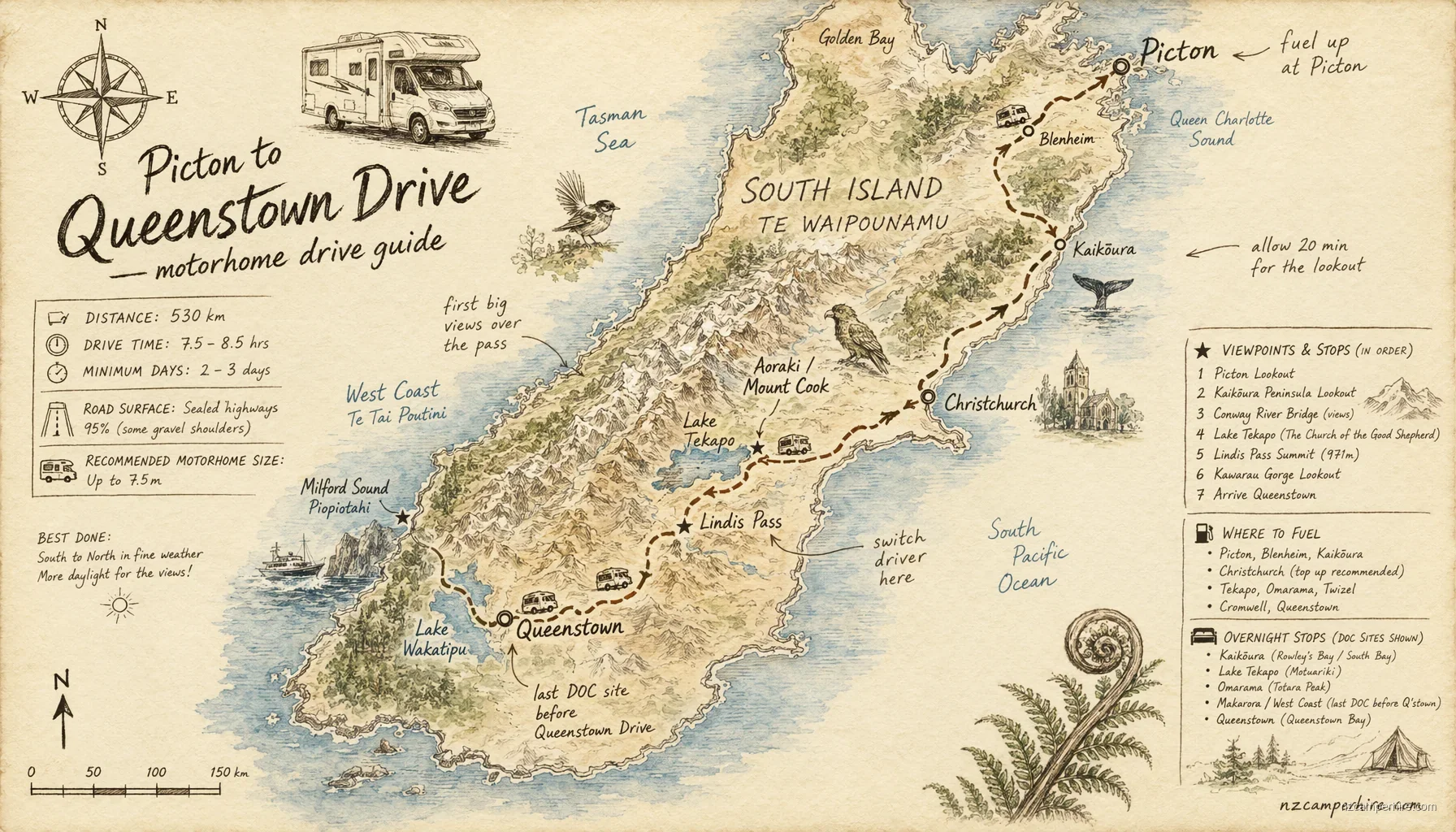
Picton to Queenstown motorhome drive guide
1 days · Picton → Queenstown Drive
- short-trip
- south-island
- southern-lakes
- one-way
- starts-picton
The Picton to Queenstown drive is not a normal city-to-city hop. It is nearly the full length of the South Island, usually 810 to 850 km by the faster east-coast route, and it crosses the Lindis Pass at 965 m before dropping into Central Otago.
In a motorhome, allow 11 to 12 hours of pure driving via SH1, SH79, SH8 and SH6. With fuel, food, photos and slower traffic, it is a 14 to 15 hour road day. That is too long for most visitors, especially after a Cook Strait ferry arrival from Wellington.
Get the printable drive note with the three stops timed out, or reply with your dates if you'd like a planner to fit this leg into the wider week.
The drive at a glance: distance, time, fuel
The usual motorhome route is Picton to Blenheim on SH1, down the Kaikoura coast to Christchurch, then inland via SH1, SH79 and SH8 through Geraldine, Fairlie, Lake Tekapo, Twizel, Omarama and the Lindis Pass. From Cromwell, SH6 takes you through the Kawarau Gorge into the Queenstown region.
- Fast east-coast route: about 810 to 850 km, 11 to 12 hours pure driving, 14 to 15 hours with sane stops.
- Scenic West Coast route: about 1,040 to 1,100 km via Nelson, Westport, Greymouth, Franz Josef, Haast Pass and Wanaka. Allow 15 to 16 hours pure driving over at least 3 days.
- Road surface: sealed state highway throughout, but with narrow coastal sections, alpine weather, one-lane bridges on the West Coast, and slow town approaches.
If you have just come off the Interislander or Bluebridge from Wellington, remember the Cook Strait sailing is 3 hours 20 minutes, closer to 3.5 hours with loading. A midday Picton landing is not a Queenstown-driving day.
The two recommended pace options
One night only: Picton to Lake Tekapo or Twizel, then Queenstown next day. This is still a big push. Picton to Tekapo is about 560 km and 7.5 to 8.5 hours pure driving in a motorhome. It works only with an early start, dry roads, and two confident drivers.
Two nights: Picton to Kaikoura or Christchurch, then Lake Tekapo or Twizel, then Queenstown. This is the version I would use for first-time visitors, larger vans, families, or anyone adjusting to driving on the left. North South Holiday Park in Christchurch is practical for a late arrival. Tekapo and Twizel both put you within an easier 3.5 to 4.5 hour final day to Queenstown.
This leg sits naturally inside South Island in 10 days, South Island in 14 days, and Auckland to Queenstown one-way. For timing, February gives long daylight and fewer ice worries than winter, but it is also busy around Kaikoura, Tekapo and Queenstown.
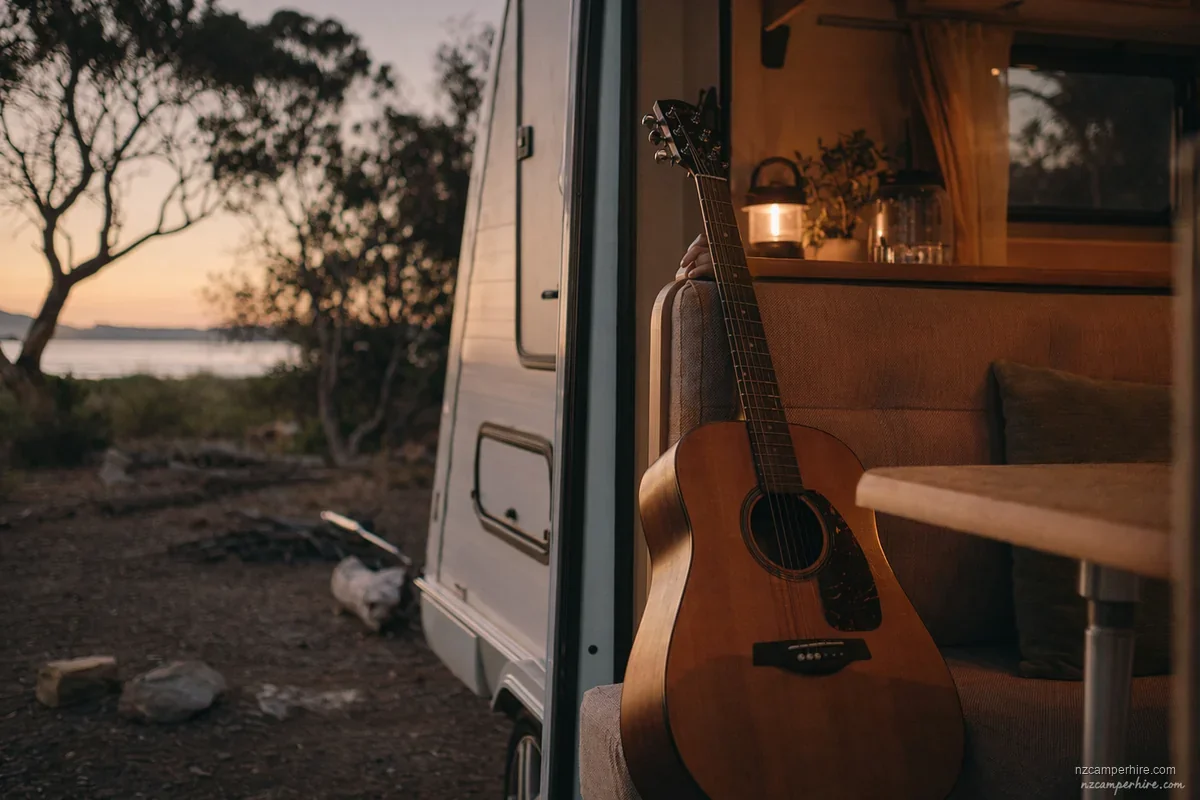
The slow part of this route is the part you'll remember. Build in at least one short evening where the kettle is the only sound — no driving, no plan, just the awning open and the day unwinding.
Three stops worth making
- Kaikoura coast: Stop for 30 to 45 minutes north or south of Kaikoura, not at every pull-off. The SH1 coast is the best break between Picton and Christchurch, but parking a long motorhome needs patience.
- Lake Tekapo or Lake Pukaki: Choose one proper lake stop. Tekapo is easy for food and toilets. Lake Pukaki has the cleaner Aoraki view on a clear day. White Horse Hill DOC campsite at Mount Cook is up SH80, but that adds about 104 km return from the Pukaki turn-off.
- Lindis Pass viewpoint: This is the high point of the main route at 965 m. The viewpoint car park is simple in summer and less friendly in snow, wind or ice. Take photos, then keep moving before the descent toward Tarras and Cromwell.
Fuel and food along the way
Start full in Picton or Blenheim. Z Energy and BP are easy to find in Blenheim, and Kaikoura has normal fuel and supermarket stops. Christchurch is the best place on this route for a proper grocery reset before the inland section.
After Geraldine and Fairlie, services become more spaced out. Tekapo has fuel, but I still prefer filling at Fairlie, Omarama, or Cromwell depending on your gauge. The key gap is Omarama to Cromwell over the Lindis Pass, about 112 km with no proper town services. Cromwell has BP and other fuel before the final SH6 run into Queenstown.
For costs and range, read Fuel economy and prices in NZ before you build the day. A 6-berth uses more fuel and takes longer to overtake, but the east route is manageable if you avoid night driving.
Full South Island length, 2-3 day drive minimum via Kaikoura/Christchurch or via West Coast.
When not to do this drive in one day
Do not plan Picton to Queenstown in one day after a ferry arrival, in July or August snow forecasts, or when you are still fresh to left-side driving. New Zealand drives on the left. A foreign licence in English is valid for up to 12 months, and you need an IDP or translation if your licence is not in English.
Winter matters on the Lindis Pass. Snow can close SH8, and police or road crews may require chains during alpine conditions. If the forecast is poor, break the journey at Christchurch, Tekapo, Twizel or Omarama and reassess in the morning.
Once in Queenstown, use Creeksyde Queenstown or another legal holiday park rather than assuming you can freedom camp near the lake. Queenstown council rules are tight. Pair this page with First time driving a motorhome and the Queenstown region guide before you finalise the wider week.
Related reading
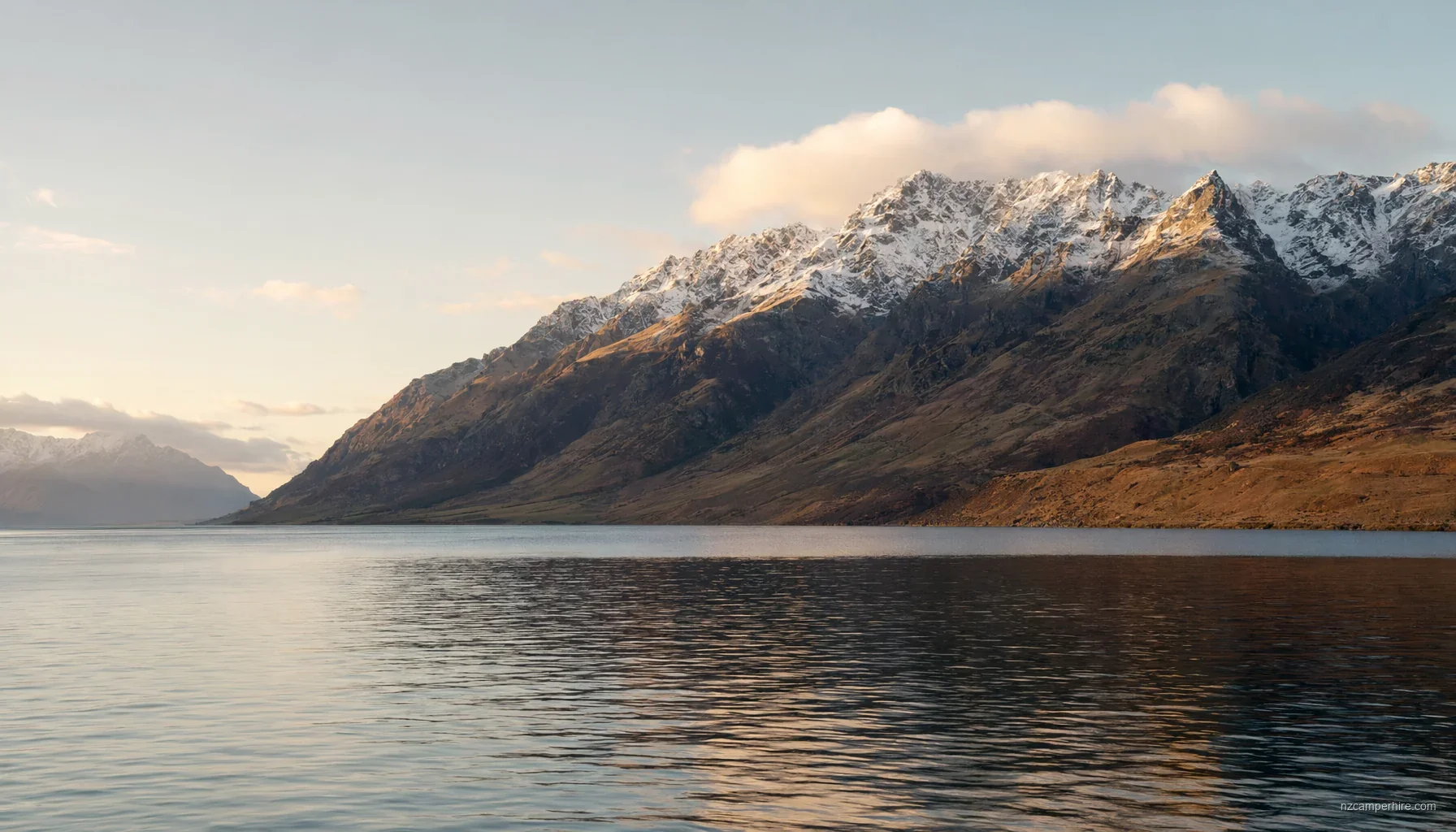 REGION
 Queenstown
Southern Lakes depot. Closest pickup for Milford Sound, Wanaka, Glenorchy, and the Southern Scenic Route.
See the region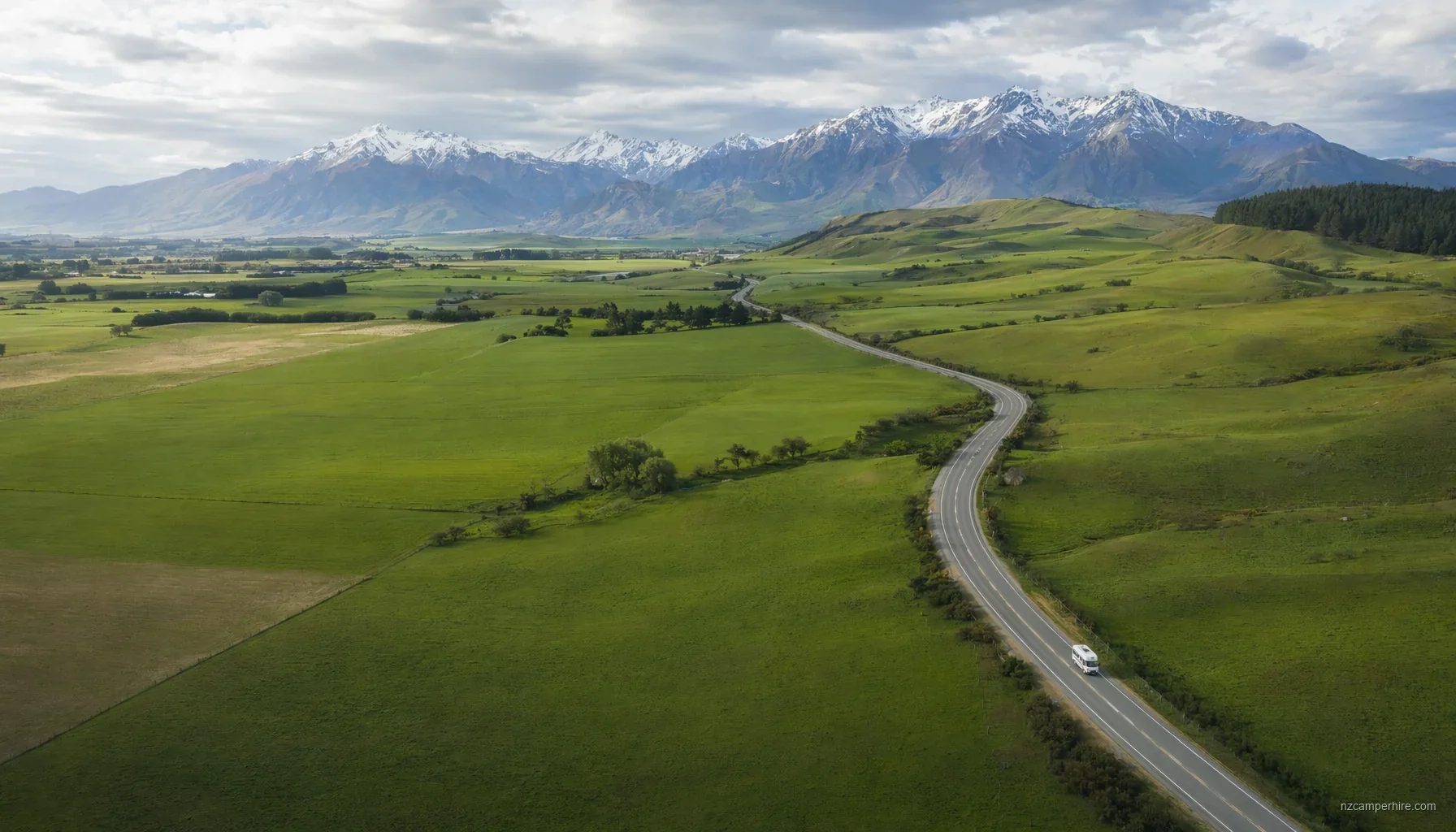 WHEN TO GO
 Best time of year for a NZ campervan trip
Month-by-month — weather, demand, school holidays, peak ferry windows.
Read the timing notes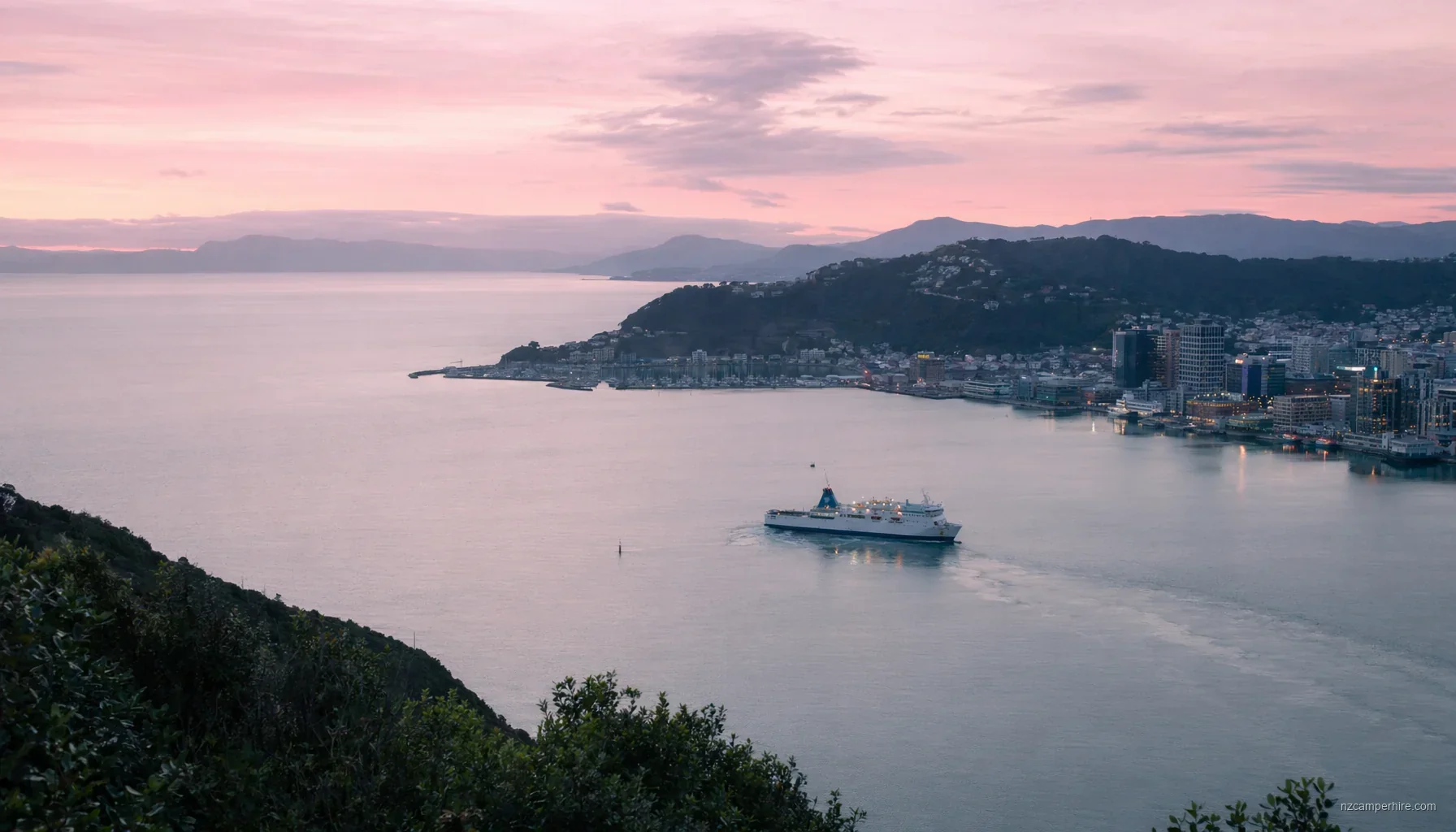 PRACTICAL GUIDE
 Cook Strait ferry with a campervan
Interislander vs Bluebridge, booking tips, what to expect, height/length limits.
Read the guidePicton to Queenstown — motorhome drive guide FAQ
Can a 6-berth do the Crown Range?
Should we overnight at Tekapo or push through?
Is fuel cheaper in Picton, Christchurch, or Queenstown?
Have a planner check this route for your dates
Send us a quick outline — dates, party size, must-sees. We come back with a vehicle recommendation and a paced route.