Wellington to Picton ferry crossing — motorhome guide
1 days · Wellington → Picton Ferry
- ferry-stage
- coastal-stage
- busy-summer
- book-ahead
- bring-warm-layers
On a still Wellington morning, the harbour can look deceptively ordinary: gulls over the wharf, a kettle hissing in the van, and the ferry lanes already shuffling awake. Then the ramp drops, the traffic inches forward, and the day becomes part travel plan, part sea crossing.
The Wellington to Picton crossing is not a drive in the normal sense. It is a 92 km Cook Strait ferry leg, usually 3 hours 20 minutes on the water, and about 4.5 to 5 hours terminal-to-terminal once check-in, loading, and unloading are included.
Both Interislander and Bluebridge carry motorhomes. The difference that matters most is sailing time, vehicle length rules, and how the arrival fits your South Island plan. This leg sits naturally inside North to South in 14 days, North to South in 21 days, and the top of a South Island in 14 days route through the Picton region.
Get the printable drive note with the three stops timed out, or reply with your dates if you'd like a planner to fit this leg into the wider week.
The drive at a glance — ferry time, distance, fuel
Wellington to Picton is about 92 km by sea. The pure sailing time is normally 3 hours 20 minutes. With a motorhome, allow 4.5 to 5 hours from arriving at the Wellington terminal to driving out in Picton.
- Road approach: SH1 into Wellington, then Aotea Quay for Interislander or Waterloo Quay for Bluebridge.
- Road out of Picton: SH1 south to Blenheim and Kaikoura, or SH6 west to Nelson.
- Surface: sealed city roads, terminal lanes, ferry ramp, then sealed highways out of Picton.
- Pass altitude: none on the crossing itself.
Fuel before the terminal if you can. Z Energy and BP options around central Wellington and the Hutt side are usually easier than trying to solve it in the ferry queue. In Picton, top up before SH1 or SH6 if your next leg is long.
Interislander or Bluebridge for a motorhome
Both ferries do the same job: Wellington Harbour, Cook Strait, Tory Channel, Queen Charlotte Sound, then Picton. The choice is usually about schedule, vehicle length, and how much buffer you need.
Motorhome fares are commonly based on length bands. A compact 2-berth may sit in a lower band than a 7 metre 6-berth. Check the exact vehicle length on your rental paperwork, including bike racks if fitted. Guessing by eye is a poor plan at the terminal.
In December, January, and February, treat the ferry like accommodation, not like a city bus. For peak dates, especially around Christmas, New Year, and late January, book roughly 4 months out. March is calmer, but the good sailing times still disappear first.
The slow part of this route is the part you'll remember. Build in at least one short evening where the kettle is the only sound — no driving, no plan, just the awning open and the day unwinding.
The two recommended pace options
Same-day crossing: This works if you start near Wellington, have a morning or early afternoon sailing, and only plan to reach Picton, Blenheim, or maybe Kaikoura after arrival. Add a supermarket stop and a slow first 20 minutes on the left if you have just landed in New Zealand.
One night in the middle: Stay in Wellington the night before if you are coming down from Taupo, Napier, or Rotorua. Stay in Picton after a late sailing if you are heading toward Nelson or the West Coast. Picton is not just a ferry ramp. It is the entry to Marlborough Sounds, and a sensible first South Island reset.
This is also where the First time driving a motorhome guide earns its keep. Tired arrivals make poor lane choices, particularly leaving ferry terminals in traffic.
Three stops worth making
- Wellington fuel and groceries: Fill the tank and fridge before check-in. Large supermarkets are easier before the terminal than after boarding stress has started.
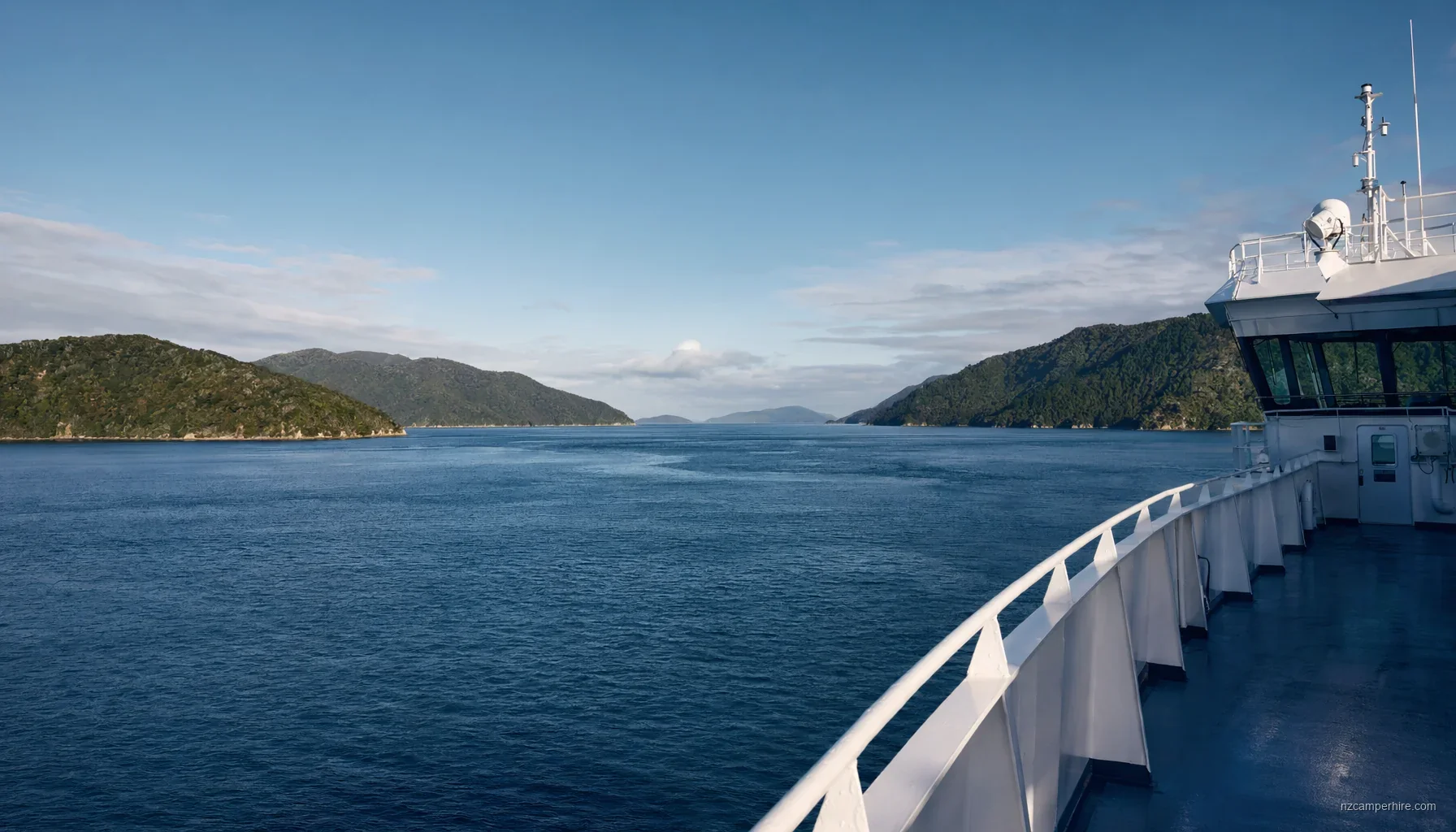
- Open deck through Wellington Harbour: Once parked and cleared to leave the vehicle deck, go upstairs early. You get the harbour exit, Pencarrow Head, and the first Cook Strait view.
- Tory Channel and Queen Charlotte Sound: Be on deck for the final hour into Picton. This is the part travellers remember. It is also a useful orientation for anyone continuing through Picton, Nelson, or the Kaikoura + Marlborough Sounds route.
The loveliest timing is when the van is parked, the sea wind finds your jacket, and the Sounds begin to fold around the ferry like green paper.
Do not plan a sightseeing detour between check-in and sailing. Vehicle check-in is not flexible. Aim to be at the terminal 60 to 90 minutes before departure, then follow the ferry operator's instructions.
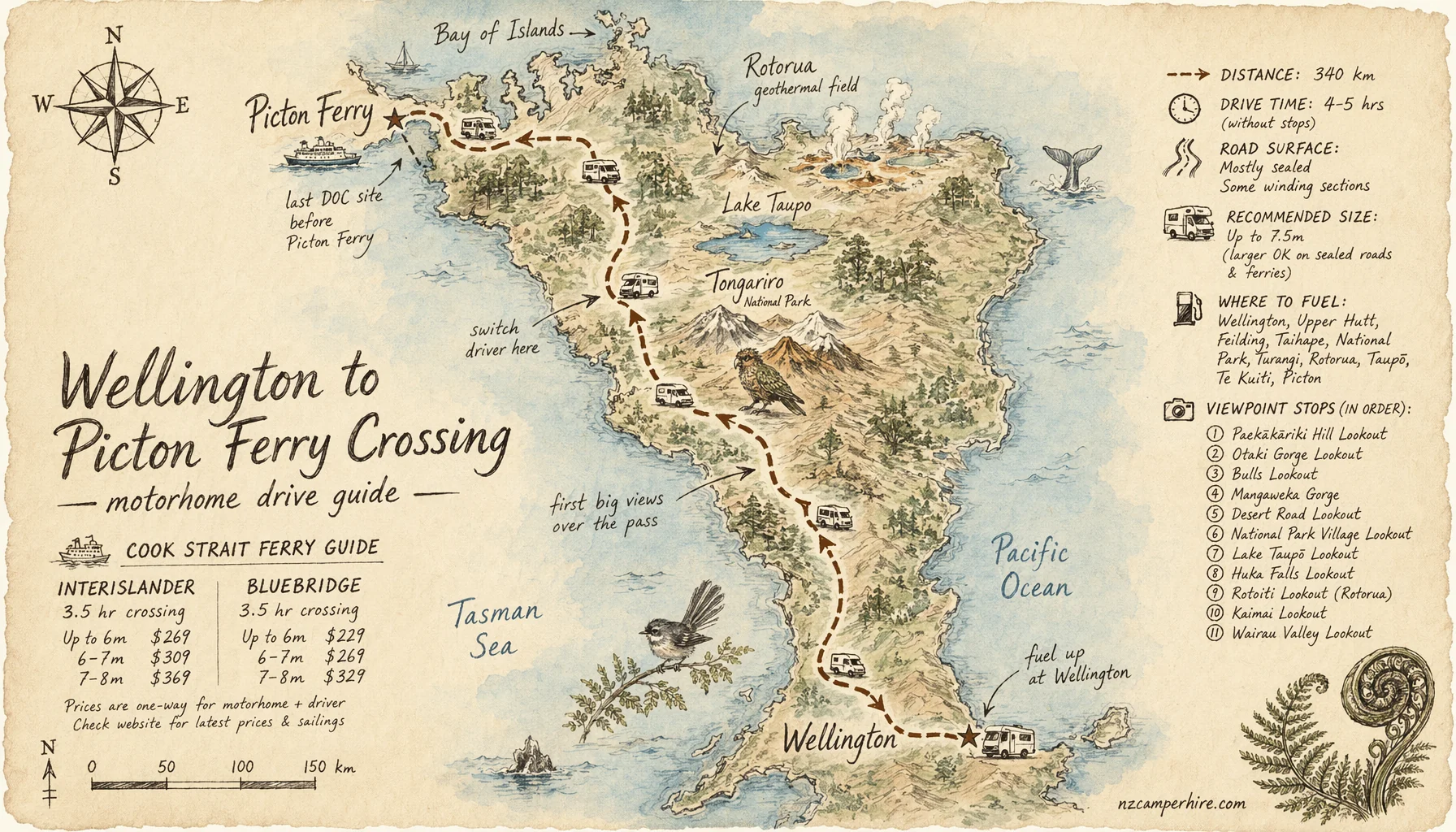
Cook Strait ferry guide — Interislander vs Bluebridge, 3.5 hr crossing, motorhome length pricing.
When not to treat this as a simple transfer
Cook Strait can be rough. Winter brings stronger southerlies, and summer can still bring cancellations if wind and swell line up badly. There are no snow-chain rules for the ferry, but delays can affect your onward alpine plans later on SH73, SH8, or SH94.
The ferry is beautiful transport, but it is still weather transport; leave a buffer if a fixed campground or tour depends on your arrival.
Do not book the last ferry of the day and then plan a long night drive. Picton to Christchurch is about 340 km via SH1 and usually 5 to 6 hours with a proper stop, more if roadworks are active near Kaikoura. Picton to Nelson is about 110 km via SH6 and takes around 2 hours with campervan pace.
If your route continues south, match this crossing with the Cook Strait ferry with a campervan guide and the February or March when-to-go notes. They explain where the ferry pinch points meet school holidays and South Island campsite demand.
Related reading
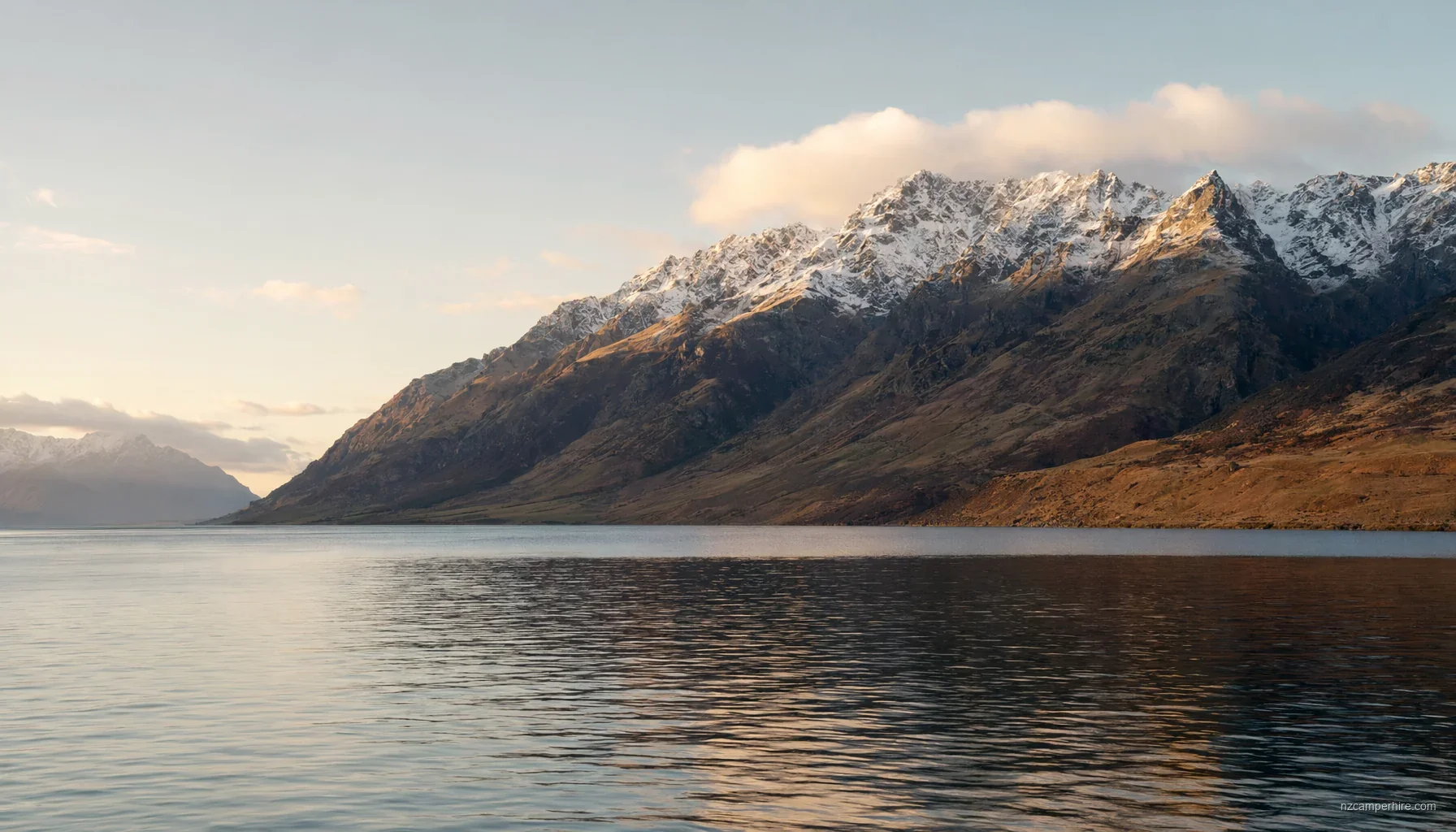 REGION
 Queenstown
Southern Lakes depot. Closest pickup for Milford Sound, Wanaka, Glenorchy, and the Southern Scenic Route.
See the region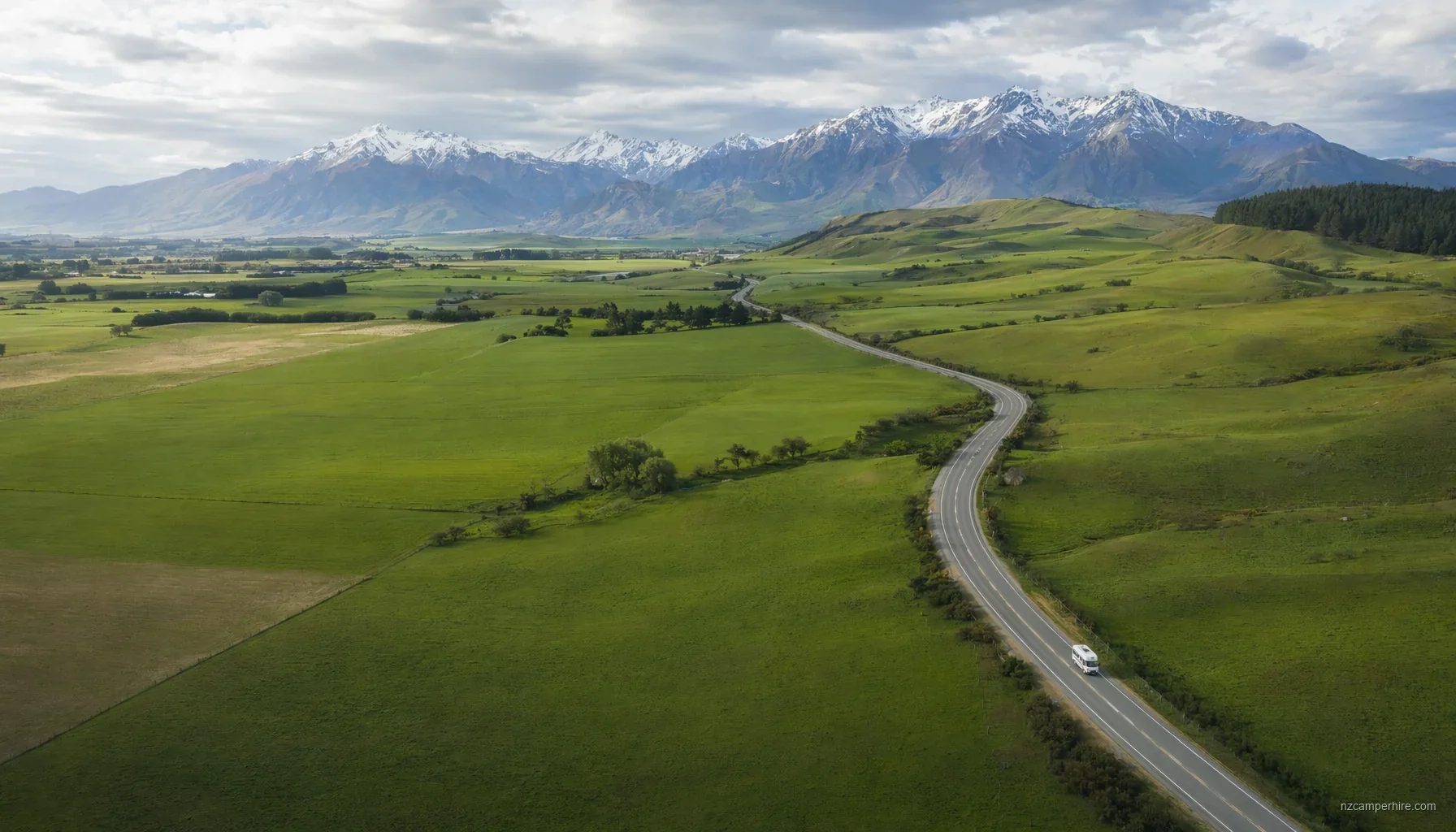 WHEN TO GO
 Best time of year for a NZ campervan trip
Month-by-month — weather, demand, school holidays, peak ferry windows.
Read the timing notes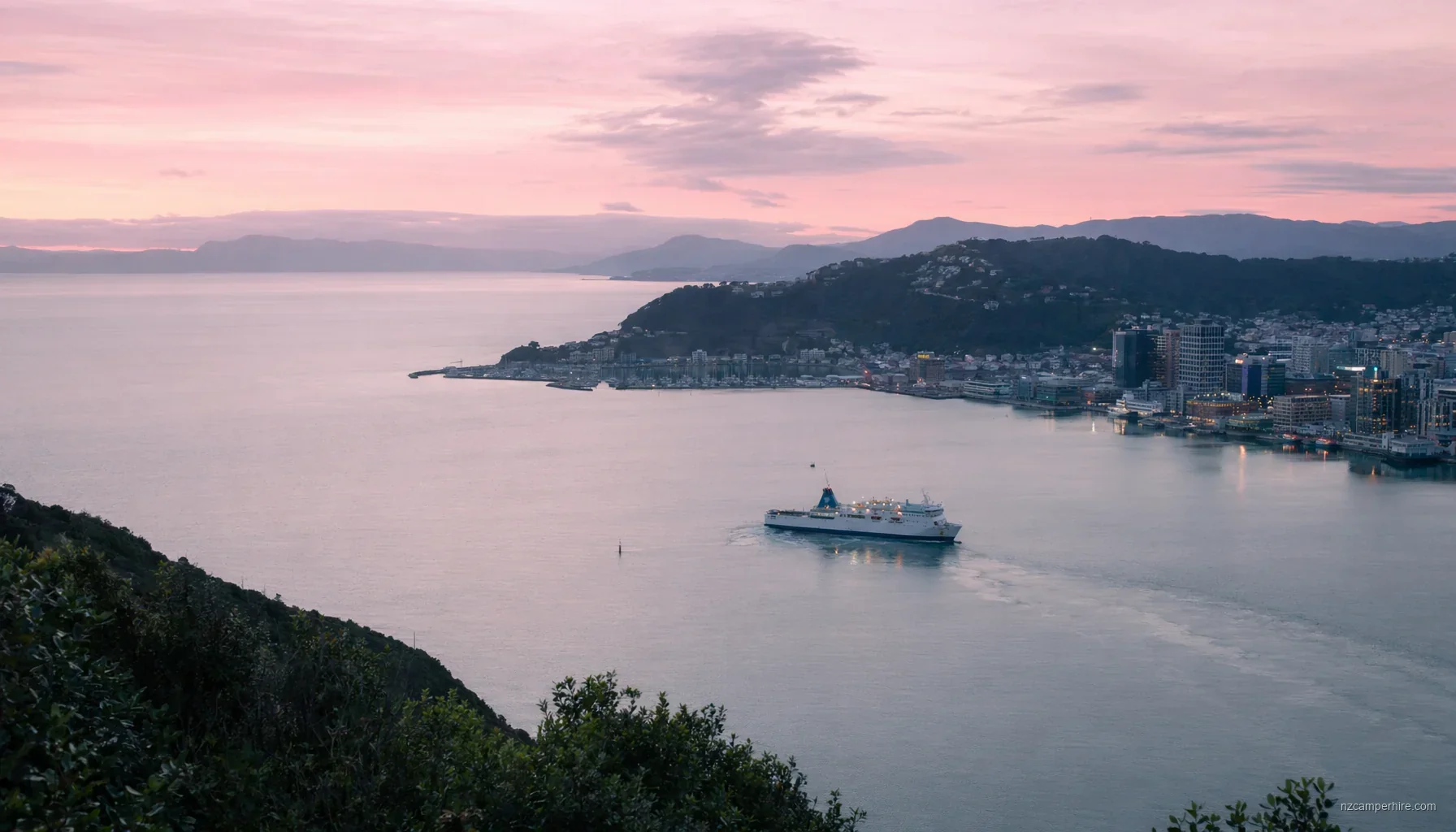 PRACTICAL GUIDE
 Cook Strait ferry with a campervan
Interislander vs Bluebridge, booking tips, what to expect, height/length limits.
Read the guideWellington to Picton ferry crossing — motorhome drive guide FAQ
Can a 6-berth motorhome go on the Wellington to Picton ferry?
Should we overnight in Wellington or Picton, or cross and keep driving?
Is fuel cheaper in Wellington or Picton?
Have a planner check this route for your dates
Send us a quick outline — dates, party size, must-sees. We come back with a vehicle recommendation and a paced route.