Bay of Islands motorhome guide
North Island · destination region
- slow-morning
- family-friendly
- busy-summer
- book-ahead
- coastal-stage
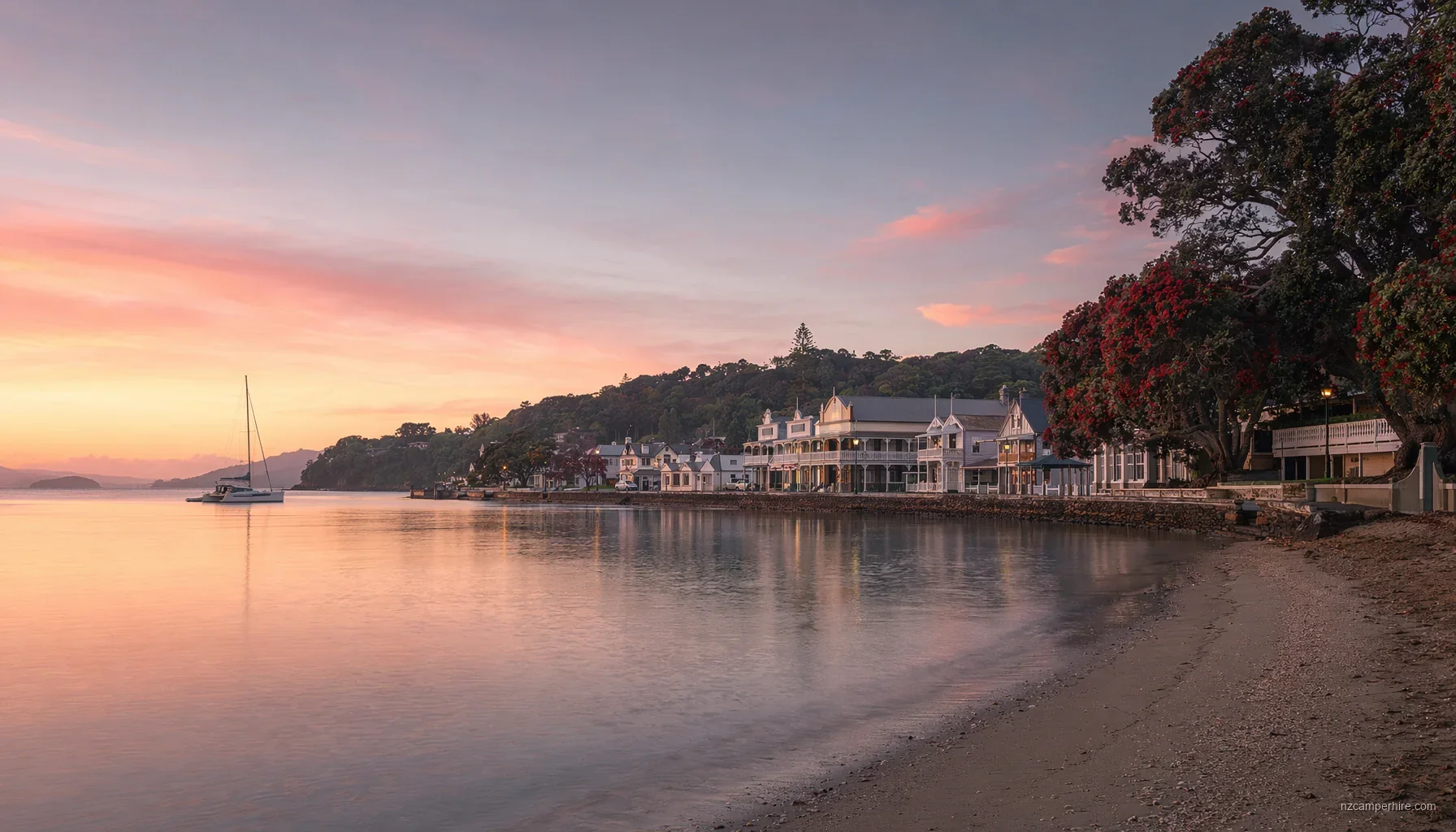
Mornings here often begin with a quiet clink of mugs, gulls arguing over the tide, and warm light sliding across the bay before the first ferry wake reaches shore. The Bay of Islands is Northland at its easiest: warm water, short ferry rides, sheltered beaches, and a serious history stop at Waitangi. It sits about 230 km north of central Auckland, usually 3.5 to 4.5 hours in a campervan once you allow for traffic, food, and slower SH1 sections.
This is not a region to rush through on the way to Cape Reinga. Paihia, Russell, Waitangi, Kerikeri, and the outer bays all work better when you give them breathing room.
See route guides that pass through Bay of Islands — and reply with your dates if you'd like a planner to suggest the right number of nights here.
What this region is for, in a motorhome
The Bay of Islands suits travellers who want a soft landing into New Zealand road travel. The roads are mostly sealed, the towns are close together, and you can base yourself for two or three nights instead of moving camp every morning.
It works especially well at the start or end of a North Island itinerary. The Bay of Islands round-trip route is the obvious short version from Auckland. The North Island in 10 days route can include it, but only if you are willing to give up time elsewhere, usually Coromandel or Hawke's Bay.
A 2-berth or compact 4-berth is the easiest size here. A 6-berth is fine on SH1 and SH10, but it is clumsy in older town streets, Russell parking, and small beach pull-ins. If you are still choosing a vehicle, read the vehicle-size guide before assuming bigger is easier.
Driving in from Auckland and around the bays
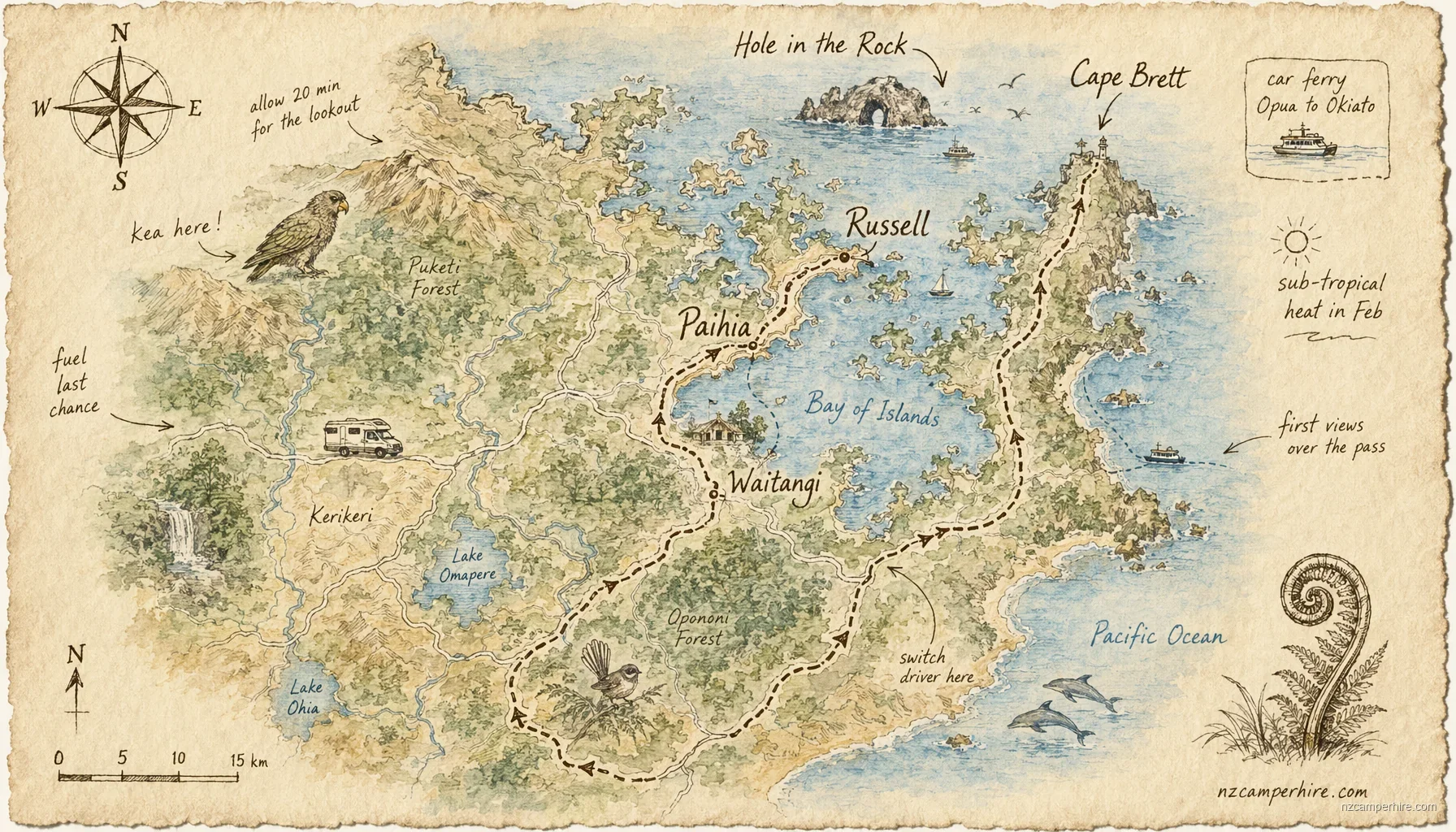
From Auckland, most travellers follow SH1 through Warkworth, Wellsford, Whangārei, and Kawakawa, then turn onto SH11 toward Paihia. Auckland to Paihia is about 230 km. In a motorhome, plan 3.5 to 4.5 hours, not counting a proper lunch stop. Friday afternoon traffic leaving Auckland can add an hour.
New Zealand drives on the left. Foreign licences in English are valid for up to 12 months. If your licence is not in English, carry an International Driving Permit or an approved translation. Minimum hire age varies from 18 to 25 depending on operator and vehicle class.
Paihia to Kerikeri is 24 km, about 25 minutes. Paihia to Russell by the Opua vehicle ferry is usually quicker and nicer than driving the long road around, though larger motorhomes should check ferry space and turn-up timing in busy weeks. Russell itself is tight, so park once and walk; the van will enjoy the rest as much as you do.
What to see, and what to skip
Waitangi Treaty Grounds is the anchor stop. Allow at least half a day, more if you want to read properly rather than skim. It explains the Treaty of Waitangi, the meeting house, waka, and the political story visitors often arrive not knowing.
Paihia is practical rather than beautiful in every corner. It has boat trips, groceries, fuel nearby, and easy holiday parks. Russell has the better slow afternoon feel, with waterfront walking, old buildings, and a quieter evening once day visitors leave.
At the right pace, the Bay feels less like a checklist and more like a place where the tide quietly organises your afternoon.
Kerikeri is worth the short drive for food, galleries, the Stone Store, and Kemp House. If the weather is settled, take a boat trip into the islands or out toward the Hole in the Rock, but do not build your whole visit around marine wildlife sightings. Dolphins are present in the wider bay, but operators follow strict rules and sightings are never guaranteed.
Skip trying to do Cape Reinga as a casual day trip from Paihia in a campervan. It is about 210 km each way, roughly 3 hours one way before stops. If the far north matters to you, treat it as its own night or two.
Where to stay overnight
Summer sites fill early, especially between Christmas and late January. Freedom camping is tightly controlled in the Far North. Use the freedom camping guide before relying on a beach car park, and remember that self-contained certification is not a free pass to stay anywhere.
- Paihia Top 10 Holiday Park: powered and non-powered sites, family-friendly, about 3 km from Paihia centre, useful for kayaking and being close to the water without town noise.
- Waitangi Holiday Park: powered sites and basic facilities, relaxed mixed crowd, about 2 km from Paihia centre, a good base for walking to Waitangi Treaty Grounds.
- Russell Top 10 Holiday Park: powered sites, tidy and family-friendly, about 500 m uphill from Russell waterfront, good if you want to leave the van parked and walk to dinner.
- Bay of Islands Holiday Park: powered and non-powered sites, quieter riverside feel, about 6 km from Paihia near Haruru Falls, useful if you prefer space over being in town.
- DOC Puketi Recreation Area Campsite: non-powered DOC camping, simple bush setting, about 35 km from Paihia, best for travellers who want kauri forest walks and do not need town facilities.
- Matauri Bay Holiday Park: powered and non-powered sites, beach-holiday feel, about 50 km north of Paihia, a strong choice if your plan includes the coast beyond Kerikeri.
Best time of year for Bay of Islands
January is the peak month. It has the warmest beach weather and the busiest campgrounds. If you are coming then, sort your overnight plan months out, not the week before. Roads are still manageable, but supermarkets, boat trips, and waterfront parking all feel tighter. January gives you the warmest beach days, but it also asks for earlier bookings and a little patience in car parks and supermarket aisles.
February and March are often the best balance: warm water, settled weather, and fewer school-holiday crowds. November and early December are also good, with longer days and less pressure on campsites. Winter is mild by New Zealand standards, but rain can sit over Northland for days, and some boat trips run reduced schedules.
Practical notes
Fuel is easy in Whangārei, Kawakawa, Paihia, Kerikeri, and Waipapa. Do not leave it until a remote beach road. For groceries, use Woolworths Waitangi for Paihia, Four Square Paihia for smaller shops, and New World Kerikeri or the larger Waipapa stores if you are stocking up for several days.
Mobile coverage is generally fine around Paihia, Waitangi, Russell, and Kerikeri. It fades on forest roads, outer bays, and some coastal valleys. Download maps before leaving town.
Dump tanks at your holiday park when you can. Paihia Top 10, Russell Top 10, Waitangi Holiday Park, and Bay of Islands Holiday Park all suit self-contained campervans, but visitor access to dump points can change. If you are not staying, phone first or check the local council listing on the day.
How long to stay
One night is too short unless you are only breaking the Auckland to Northland drive. You will see the waterfront, sleep, and leave with the feeling you missed the point.
Two nights is the honest minimum: one day for Waitangi and Paihia or Russell, then move on. Three nights is better for most first trips, because it gives you a weather window for an island boat trip and time for Kerikeri. Four nights suits slower travellers, families, and anyone using the Bay as a warm start before heading south toward Rotorua, Tongariro, or Wellington.
Bay of Islands rewards travellers who linger. Build in one slow morning — coffee on the camp table, the kettle whistling, the day not yet decided.
Pēwhairangi — known internationally as Bay of Islands
Ngāpuhi are the largest iwi in Aotearoa, with around 165,000 members. Their rohe covers most of Te Tai Tokerau (Northland), and the Bay of Islands is the historic heartland. This is where Te Tiriti o Waitangi — the founding document of modern New Zealand — was signed on 6 February 1840.
Kororāreka (now Russell), Waitangi, Paihia, and Kerikeri are all te reo names that pre-date European arrival. Waitangi means 'weeping waters' for the small waterfall at the river mouth where the Treaty Grounds now stand.
- Waitangi Treaty Grounds — The most significant historic site in New Zealand — where Te Tiriti was signed in 1840. Houses Te Whare Rūnanga (the carved meeting house) and Ngātokimatawhaorua (one of the largest waka taua / war canoes in the world). Public ticketed, daily cultural performances.
- Pompallier Mission, Russell — 1842 mission where some of the earliest te reo bibles were printed. Public ticketed.
- Christ Church, Russell — Oldest church in NZ (1836). Mixed colonial and Māori history — bullet holes from the 1845 Northern War are still visible.
Aoraki Routes acknowledges the mana whenua of Ngāpuhi. We recommend visiting cultural sites with respect and following the tikanga (protocol) of the host iwi.
Related reading
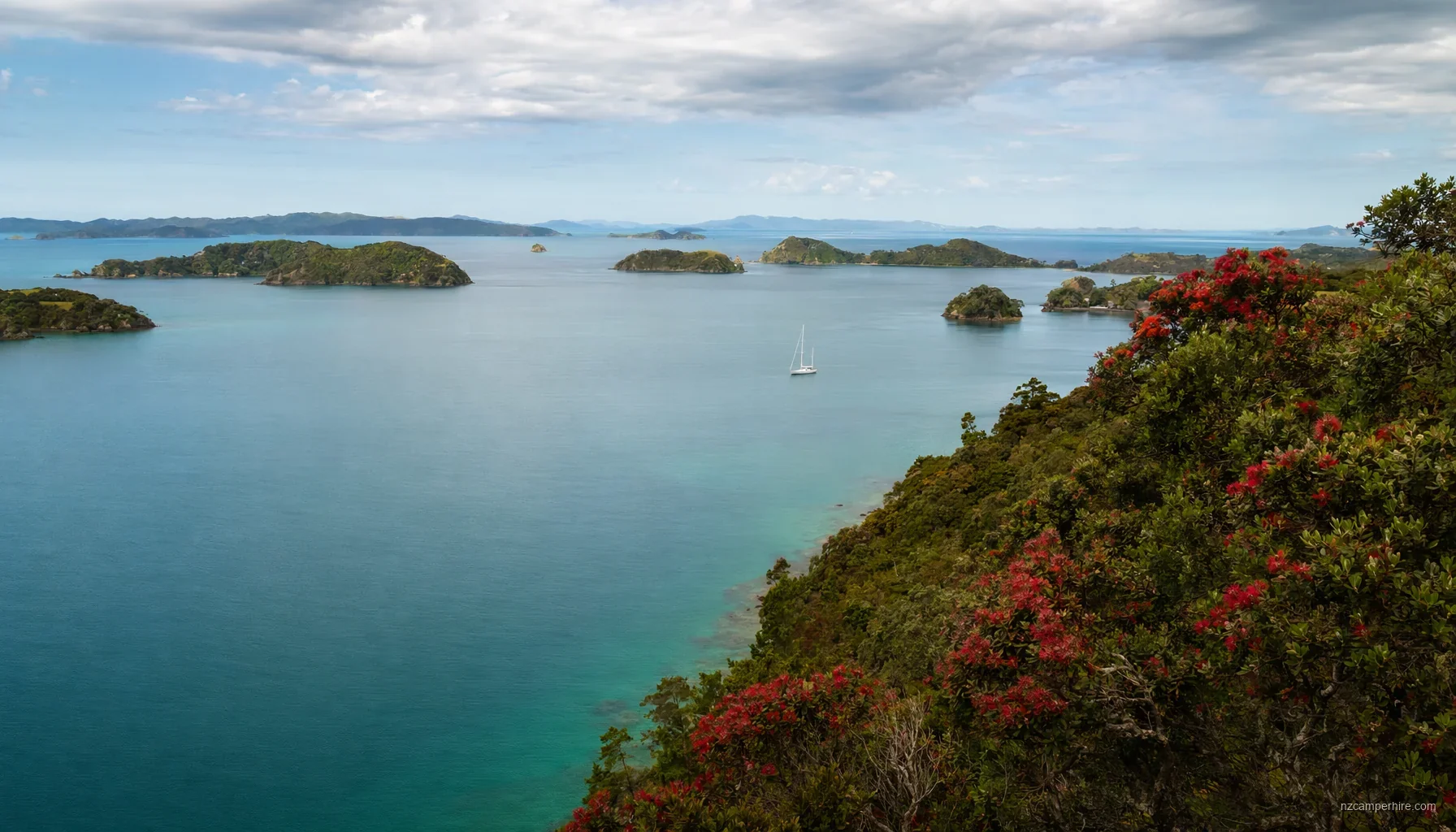 ROUTE
ROUTE Bay of Islands round-trip
Subtropical Northland — Paihia, Waitangi, dolphins, Russell, Ninety Mile Beach.
See the route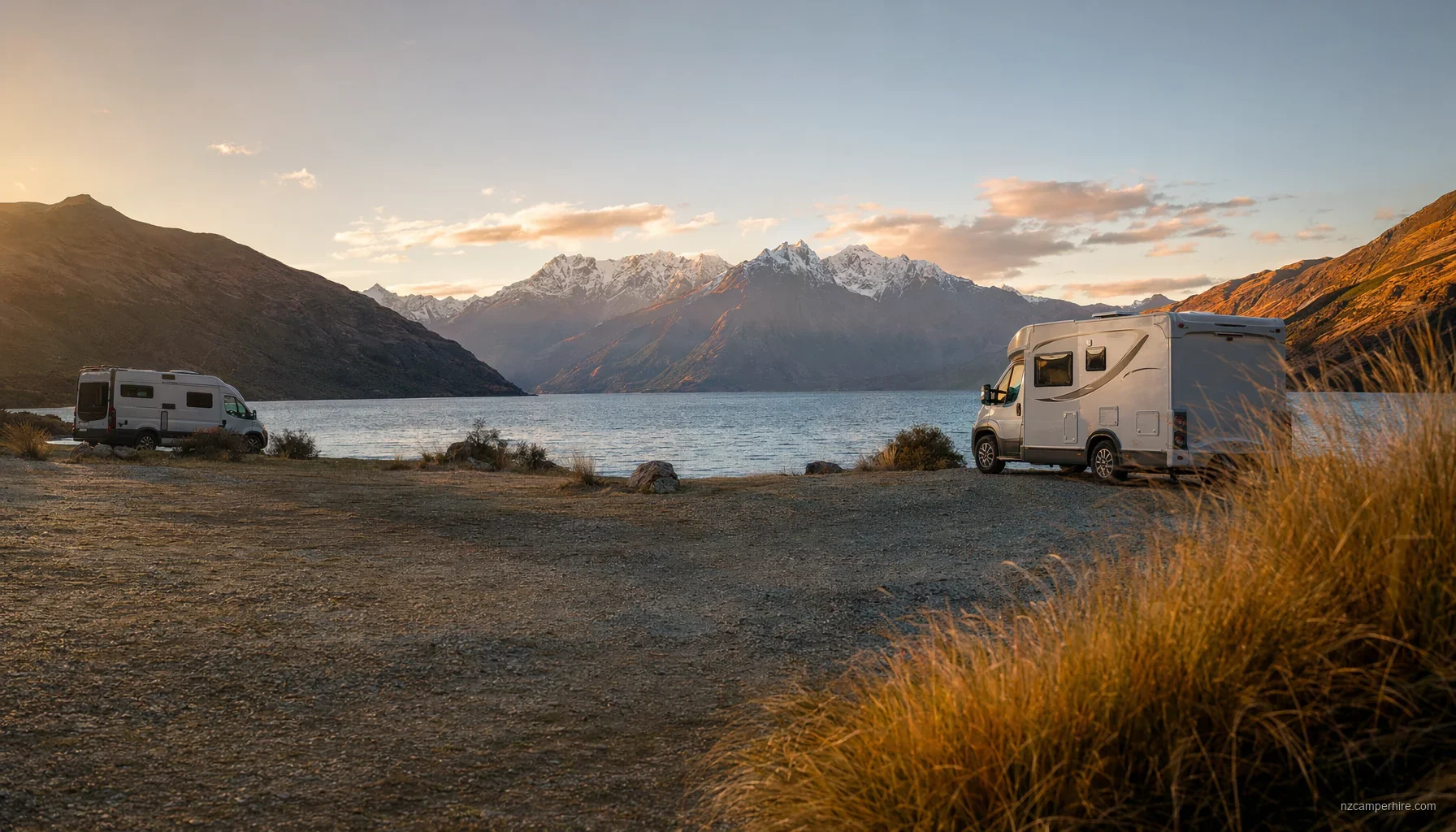 WHEN TO GO
 Summer (December-February)
Peak season — what to book early, where to escape the crowds, sunscreen reality.
Read the timing notes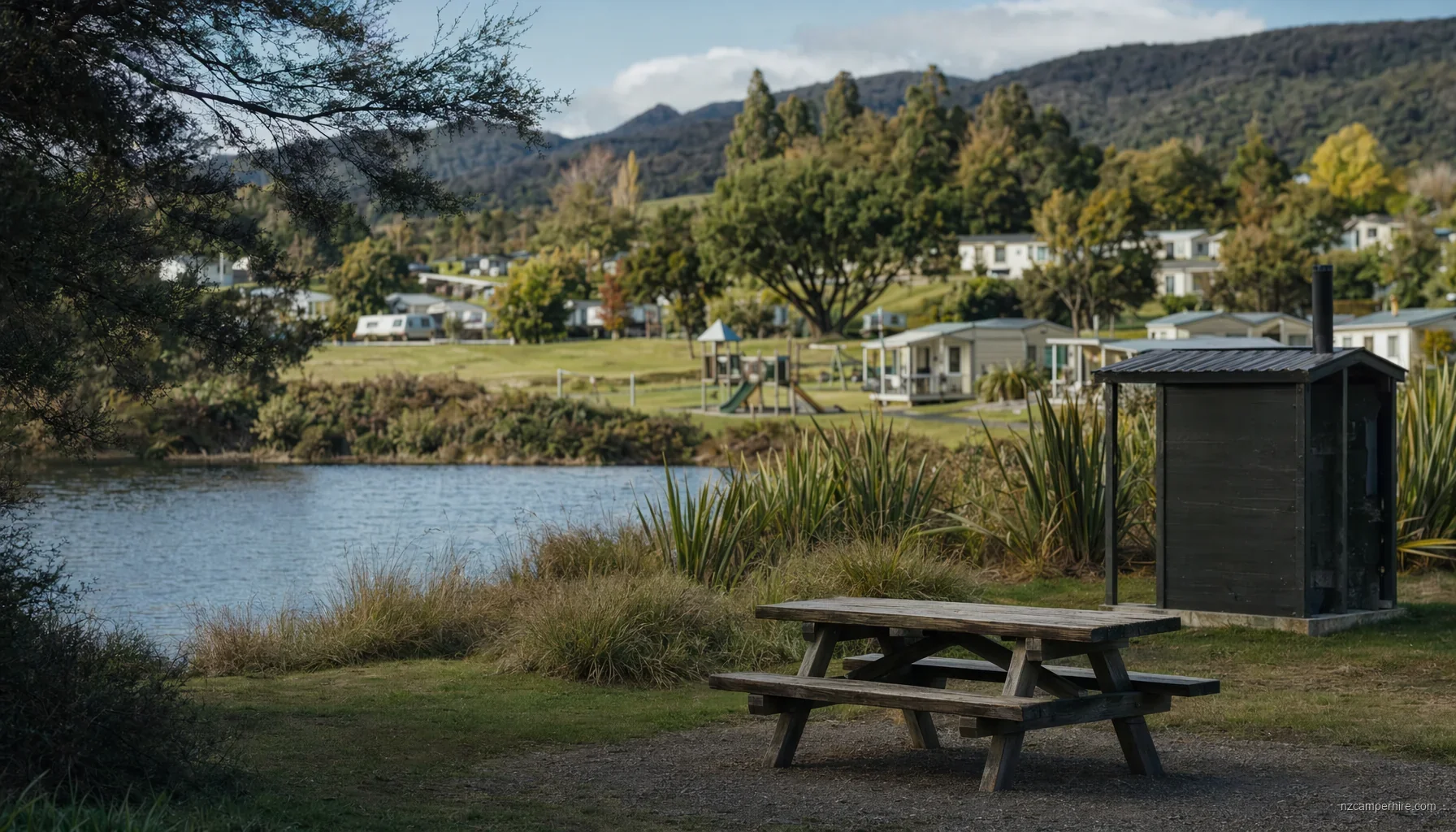 PRACTICAL GUIDE
 Holiday parks vs DOC campsites
Powered vs unpowered, facilities, booking, costs, and when each makes sense.
Read the guideBay of Islands FAQ
How many nights do I need in the Bay of Islands?
When is the best month to visit the Bay of Islands?
Where should I buy groceries before camping here?
Where can I dump grey water and toilet waste?
Have a planner shape a trip around this region
Tell us roughly when you're coming and how long you have. We'll come back with a route that gives this region the time it deserves.