What a NZ Campervan Trip Actually Costs
Rental + fuel + ferry + sites + food + activities for 7/14/21-day trips at each tier.
- busy-summer
- book-ahead
- ferry-stage
- pack-snacks
- full-day-drive
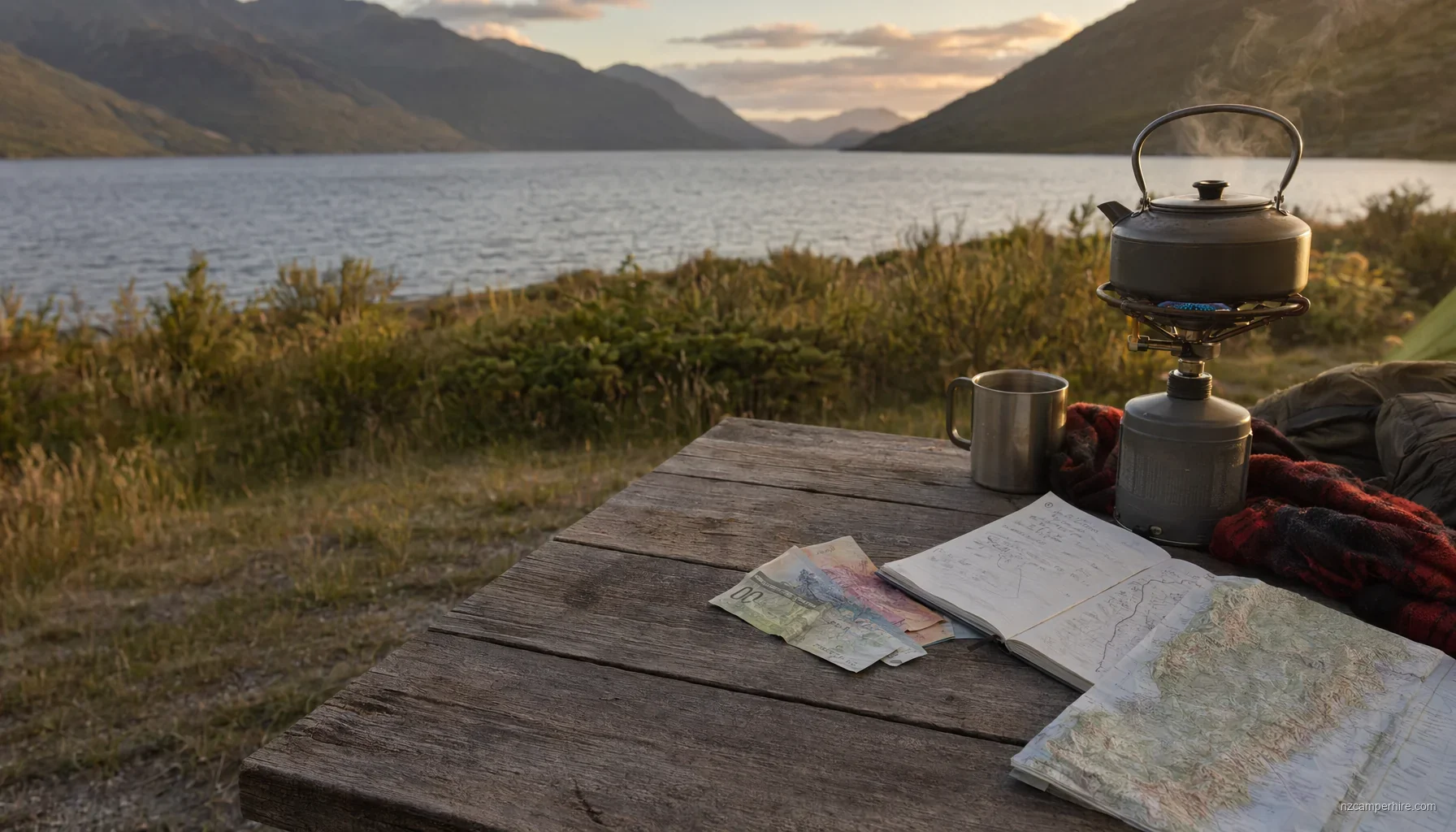
There is a particular quiet to a campervan morning in New Zealand: kettle ticking, jackets over the front seats, and somebody checking the weather before the first bakery opens. Then the receipts begin to gather, usually in the cup holder.
New Zealand campervan costs are not one tidy daily rate. The rental line is only the start. Fuel, campsites, insurance excess, ferry space, supermarket choices and paid activities can change the total by a lot.
For the examples below, use a base case of South Island in 14 days, March travel, a self-contained 2-berth from Christchurch, and a sensible pace through Lake Tekapo, Mount Cook, Wanaka, Queenstown and the West Coast.
Get the planning checklist — and reply with your dates if you'd like a planner to flag the cost-specific gotchas for your route.
Start with the trip shape, not the headline daily rate
The biggest mistake is pricing the vehicle first and the route second. A 7-day loop from Christchurch behaves very differently from South Island in 14 days, and both are different again from North Island in 10 days out of Auckland.
Build the budget in this order:
- Rental package and any one-way fee.
- Insurance excess option, bond and windscreen or tyre cover.
- Fuel, and road user charges if the vehicle is diesel and the operator bills them separately.
- Cook Strait ferry if crossing between Wellington and Picton.
- Holiday parks, DOC campsites and legal freedom camping nights.
- Food, laundry, LPG bottle swap or refill, and paid activities.
Seven days magnifies the daily hire rate because there are fewer nights to spread setup costs across. Fourteen days is the cleanest planning length for most South Island first-timers. Twenty-one days gives room to slow down, use more DOC sites, and avoid paying for every big activity in the same week.
The rental cost lines visitors often miss
The rental market usually splits into smaller older campers at a lower daily rate, self-contained 2-berths with toilet and grey-water capacity, and larger 4- to 6-berth motorhomes with more living space. Bigger is not automatically better. A 6-berth can be cheaper per person, but it is harder work on SH6 to Franz Josef, the Crown Range Road at 1,121 m, and tight holiday park sites in Queenstown.
Check what is included before you compare anything. Unlimited kilometres, bedding, kitchen gear, outdoor chairs, ferry permission, snow chain rules, extra driver fees and after-hours pickup can all move the total. Minimum hire age also matters. In New Zealand it commonly sits somewhere between 18 and 25 depending on operator and vehicle class.
Licence rules come from NZ Transport Agency Waka Kotahi. A foreign licence in English is generally valid for up to 12 months. If it is not in English, carry an International Driving Permit or approved translation. Missing that document can turn a cheap plan into a very expensive airport problem.
Fuel, road user charges and the ferry gap
New Zealand distances look small on a map. The roads do not drive like motorways in Germany, Canada or Australia. Allow 250 to 300 km as a full campervan day once you add photo stops, groceries and slower corners. Christchurch to Queenstown via SH8 and the Lindis Pass at 965 m is about 480 km and 6.5 to 7.5 hours in a camper, not a casual half day.
The budget starts to feel real when a short line on the map becomes a slow climb, a fuel stop, and ten minutes watching cloud move over a pass.
Fuel cost depends on petrol versus diesel, vehicle size, wind and mountains. Diesel campers may also carry road user charges, sometimes included and sometimes charged per kilometre at return. Ask how that is handled before you finalise your budget.
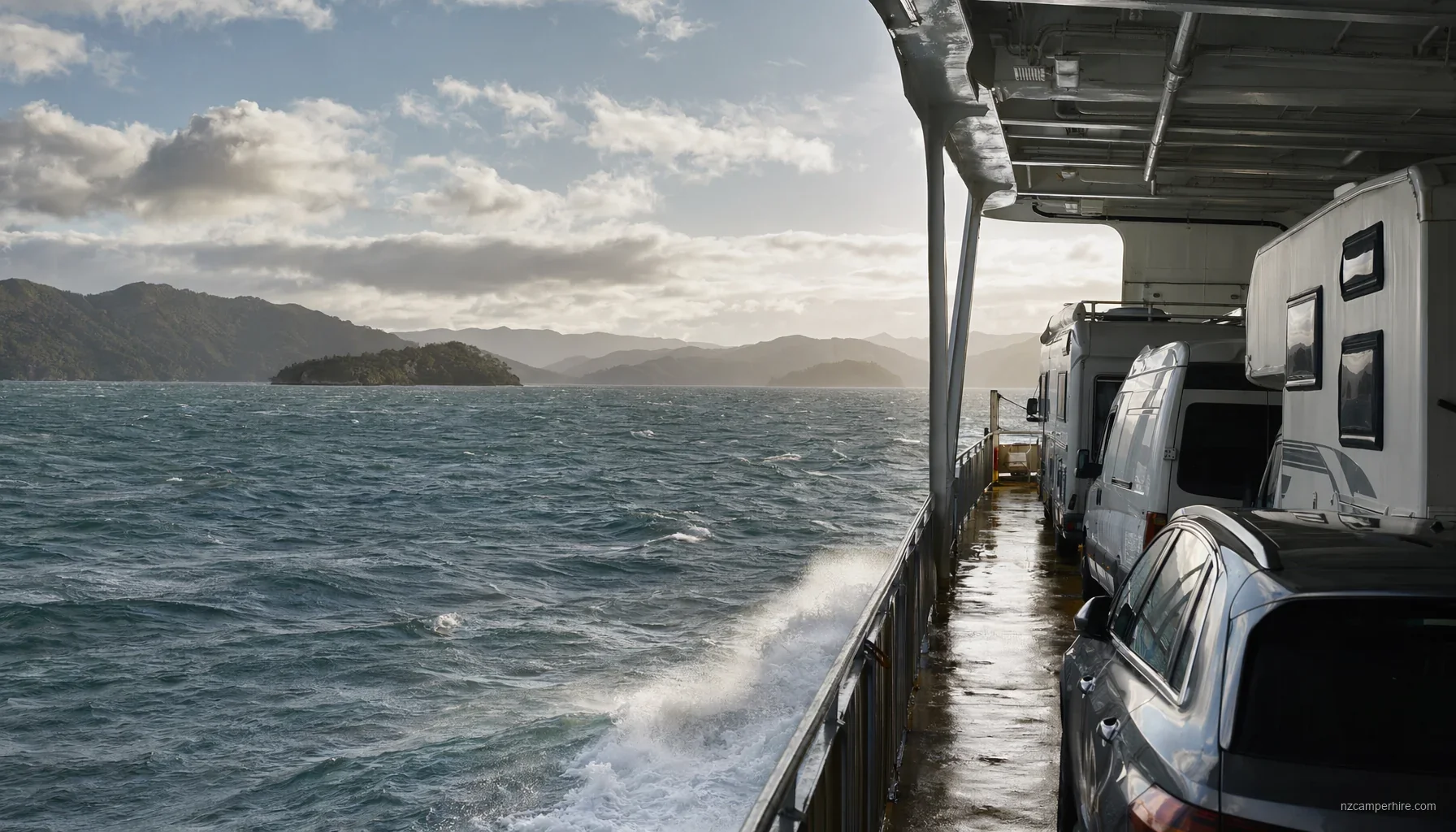
If your route uses both islands, add the Cook Strait ferry. Interislander and Bluebridge run Wellington to Picton. The crossing is about 3 hours 20 minutes, or about 3.5 hours with loading. Vehicle length changes the fare category. In peak summer, treat Picton-Wellington ferry space as a four-month-ahead planning job, not a two-week job. Pair this with the Cook Strait ferry guide before choosing a one-way route.
Campsites, food and paid stops by trip length
Campsite cost is a choice, but not a free-for-all. Legal freedom camping requires the right place and, in many areas, a properly self-contained vehicle. Council bylaws can be strict around Queenstown Lakes, Tasman and Auckland. Use the freedom camping guide and the vehicle-size guide together if you plan to save money this way.
Freedom camping can save money, but the cheapest night is not always the easiest night if you spend the evening hunting for a legal spot after dark.
A practical mix is one paid holiday park every two or three nights for showers, laundry, charging and dumping, with DOC or council sites between. Good examples include North South Holiday Park near Christchurch, Creeksyde Queenstown, Oamaru Top 10, Hokitika Holiday Park, Rotorua Thermal Holiday Park and Russell Top 10. DOC sites such as White Horse Hill, Lake Pukaki, Mavora Lakes and Cascade Creek suit slower itineraries, but facilities are simple.
Food is cheaper when you plan supermarket stops. Auckland, Christchurch, Rotorua and Queenstown have full supermarkets. Smaller resort towns and remote fuel stops cost more. Activities are the wild card. One glacier helicopter, Milford Sound cruise or Rotorua geothermal park can shift the week more than several campsite nights.
How 7, 14 and 21 days change the real total
For 7 days, keep the route tight. South Island in 7 days should usually stay with Christchurch, Lake Tekapo, Mount Cook, Wanaka or Queenstown, then back through SH8 or SH6 depending on weather. North Island in 7 days works better as Auckland, Rotorua and maybe Bay of Islands, not a full island lap. Short trips spend more per day because pickup, return, groceries and first-night setup do not shrink.
For 14 days, the balance improves. South Island in 14 days can include Milford Sound via SH94, the West Coast via Haast Pass at 564 m, and Arthur's Pass at 920 m without rushing every day. This is the base case we use for many cost checks.
For 21 days, costs rise overall but become easier to control per day. You can add Kaikoura, Dunedin, the Catlins or extra time in Rotorua and Hawke's Bay. You also gain weather flexibility, which matters in October, November and March as much as it does in mid-winter.
Rules and practicalities are easier to remember when you've felt them — the cold of a wet boot at a freedom camp, the relief of an early ferry slot. This guide is written from those moments, not from a checklist.
Related reading
 ROUTE
ROUTE North to South in 21 days
Full NZ road trip — both islands, ferry crossing, all major national parks.
See the route REGION
 Queenstown
Southern Lakes depot. Closest pickup for Milford Sound, Wanaka, Glenorchy, and the Southern Scenic Route.
See the region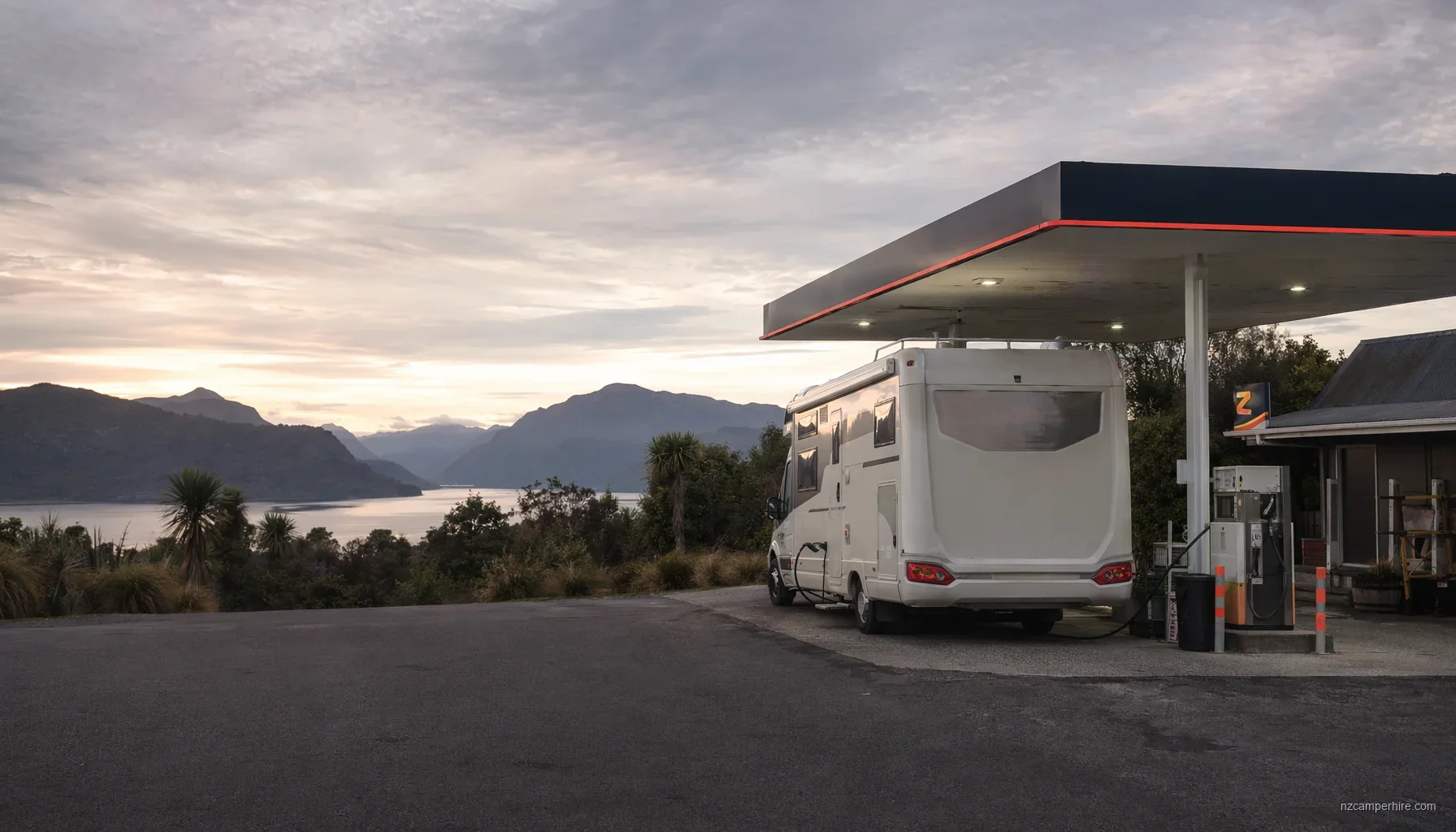 PRACTICAL GUIDE
 Fuel economy and prices in NZ
Diesel vs petrol, RUC charges for diesel, typical km-per-litre by motorhome size.
Read the guideWhat a NZ campervan trip actually costs FAQ
Is a campervan cheaper than a car and motels in New Zealand?
How much should I allow for fuel?
Can I keep costs down by freedom camping most nights?
Should I include the Cook Strait ferry in a first-trip budget?
Do campsites need to be planned in advance?
Have a planner answer this for your specific trip
Rules and practicalities depend on dates, party size, and route. Send us your outline and we'll come back with answers tailored to your trip.