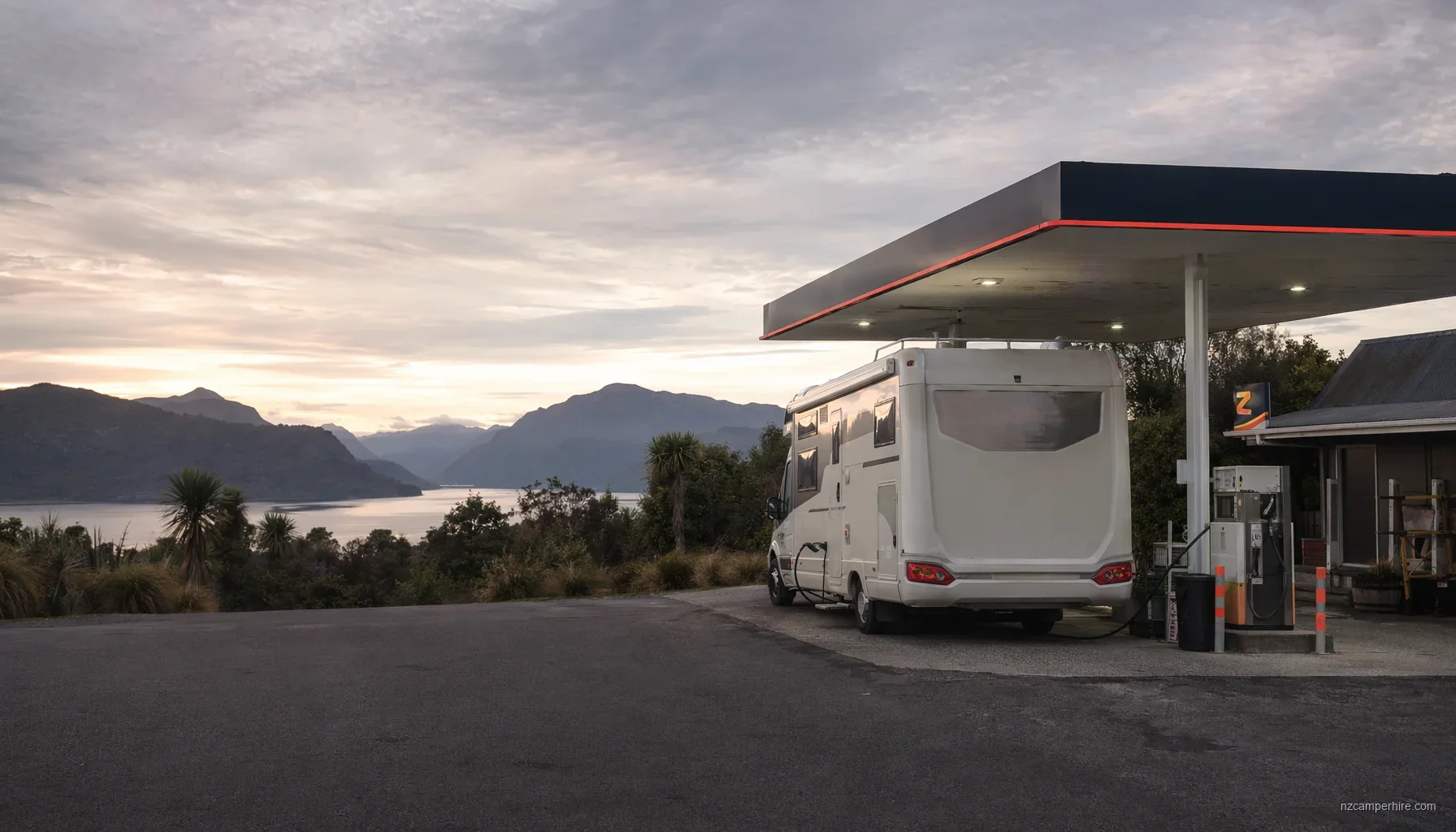
Fuel economy and prices in NZ motorhomes
Diesel vs petrol, RUC charges for diesel, typical km-per-litre by motorhome size.
- slow-morning
- wet-weather-plan
- pack-snacks
- full-day-drive
- quiet-roads
The day often starts kindly enough: kettle steaming in the van, cold air on the windscreen, and a service-station forecourt slowly waking up beside the highway. Then the pump screen lights up, the numbers begin moving, and the quiet maths of the journey joins you.
Fuel is one of the few New Zealand motorhome costs that feels simple until you are standing at a pump in Te Anau, wondering why diesel is cheaper but your rental agreement mentions road-user charges.
New Zealand distances look small on a map. The driving is not small. Hills, wind, single-lane bridges, SH6 on the West Coast, SH94 to Milford Sound, and slow town approaches all change fuel use.
Get the planning checklist — and reply with your dates if you'd like a planner to flag the fuel-specific gotchas for your route.
Read fuel economy in litres, not brochure optimism
International travellers often ask for fuel use in kilometres per litre. New Zealand rental paperwork may use litres per 100 km. Both are useful, but the second one makes budgeting easier.
A van using 10 L/100 km gets about 10 km per litre. A larger motorhome using 16 L/100 km gets about 6.25 km per litre. That difference matters on a South Island in 14 days route, where a normal loop from Christchurch through Lake Tekapo, Mount Cook, Queenstown, Wanaka, the West Coast and back can sit around 2,500 to 3,000 km once side trips are included.
Do not budget from the lowest number printed in a brochure. NZ has long climbs and exposed roads. Lindis Pass on SH8 reaches 965 m. Arthur's Pass on SH73 reaches 920 m. Crown Range Road reaches 1,121 m and is steep, narrow in places, and hard work for a heavy vehicle. Wind around Canterbury and the Mackenzie Country also pushes fuel use up.
Diesel, petrol and road-user charges
Petrol vehicles pay fuel tax at the pump. Diesel vehicles in New Zealand usually pay road-user charges, often shortened to RUC, because diesel does not carry the same road tax in the pump price.
In a rental motorhome, RUC is commonly handled by the operator. It may be charged per kilometre at the end, included in a prepaid kilometre pack, or built into the daily rate. Read that line before you compare a petrol van with a diesel motorhome. A diesel pump price can look lower, then the kilometre charge arrives later.
The official source is NZ Transport Agency, also known as Waka Kotahi: https://www.nzta.govt.nz/vehicles/road-user-charges/. RUC rates depend on vehicle type and weight band. For travellers, the practical question is simpler: ask how RUC is charged, whether GST is included, and what odometer reading is used at return.
Most larger motorhomes on the rental market are diesel. Many smaller campervans and people-movers are petrol. Neither is automatically cheaper for a first trip. Route length, vehicle size, and how the RUC is billed make the difference.
Typical fuel use by motorhome size
These are real-world planning ranges, not guarantees. A careful driver on SH1 can do better. A fast driver into a headwind near Lake Pukaki can do worse.
- Compact 2-berth camper: about 8 to 11 L/100 km, or roughly 9 to 12.5 km per litre.
- High-roof 2 or 3-berth camper: about 10 to 13 L/100 km, or roughly 7.5 to 10 km per litre.
- 4-berth motorhome: about 12 to 15 L/100 km, or roughly 6.5 to 8.5 km per litre.
- 6-berth motorhome: about 14 to 18 L/100 km, or roughly 5.5 to 7 km per litre.
The 6-berth is cheaper per person when four adults share it, but it uses more fuel and can be tiring on tight roads. The smaller camper is easier and usually lighter on fuel, but the larger motorhome can make wet evenings, luggage, and family cooking feel calmer. If your route includes Queenstown, the Crown Range, or repeated West Coast detours, read the vehicle-size guide before choosing the biggest layout.
Where fuel gets sparse or costly
Fuel prices change daily, and they vary by town. Larger centres such as Auckland, Christchurch, Hamilton and Dunedin usually give you more choice. Remote or tourist-heavy stops often cost more. Use current pump-price tools when you are in NZ rather than a number saved months earlier.
On South Island routes, fill before long scenic legs. Good habits are simple: top up in Christchurch before heading inland, in Twizel or Lake Tekapo before Mount Cook, in Queenstown or Te Anau before Milford Sound, in Wanaka before the Haast Pass on SH6, and in Hokitika or Greymouth before pushing north or east. Queenstown to Milford Sound is about 288 km each way via SH6 and SH94, and the one-way drive takes about 4 to 4.5 hours without long stops.
On a North Island in 10 days route, Auckland to Rotorua is about 230 km and 3 to 3.5 hours via SH1, SH27 and SH5 in normal conditions. Rotorua, Taupō, Tūrangi and Napier all have normal fuel access, but do not run the tank low late at night in small towns. Some stations are unattended after hours and require a card PIN. At a small-town after-hours pump, the card machine can feel like the strictest person on the forecourt, so know your PIN before the tank is empty.
How to build a fuel budget that survives reality
Start with your route kilometres, then add 10 to 15 percent for supermarket runs, campground detours, weather changes and wrong turns. A neat map line from Christchurch to Queenstown via SH8 and SH6 is about 480 km and 6.5 to 7.5 hours in a motorhome. Add Lake Pukaki viewpoints, a Mount Cook side trip, and a grocery stop, and the day is no longer the tidy number you first wrote down.
Use three inputs:
- Your expected kilometres for the whole route.
- The realistic L/100 km range for your vehicle size.
- The current petrol or diesel price, plus any RUC method shown in the rental agreement.
This guide works well beside the cost article, the freedom camping guide, and the vehicle-size guide. Fuel is not separate from those choices. A heavier vehicle, more powered holiday park nights in places such as Creeksyde Queenstown, and longer detours all change the final spend.
Driving habits that save fuel in NZ
New Zealand drives on the left. Foreign licences in English are generally valid for up to 12 months, and an International Driving Permit or approved translation is required if your licence is not in English. That matters because the first few days often involve more braking, sharper corrections, and slower decision-making.
For fuel economy, keep it boring. Hold a steady speed. Use lower gears on long descents instead of riding the brakes. Do not overtake just to arrive three minutes earlier. Pull over safely when traffic builds behind you, especially on SH6, SH73 and SH94. Keep water tanks sensible rather than full all day if you are not freedom camping that night.
You know the van is travelling well when the engine settles, the mirrors stay calm, and the next fuel stop feels planned rather than urgent.
Roof height matters too. A high motorhome into a Canterbury nor'wester uses more fuel than the same vehicle on a calm morning. If the forecast shows strong wind, slow down. You will save fuel, reduce fatigue, and make better choices at single-lane bridges and narrow lake roads.
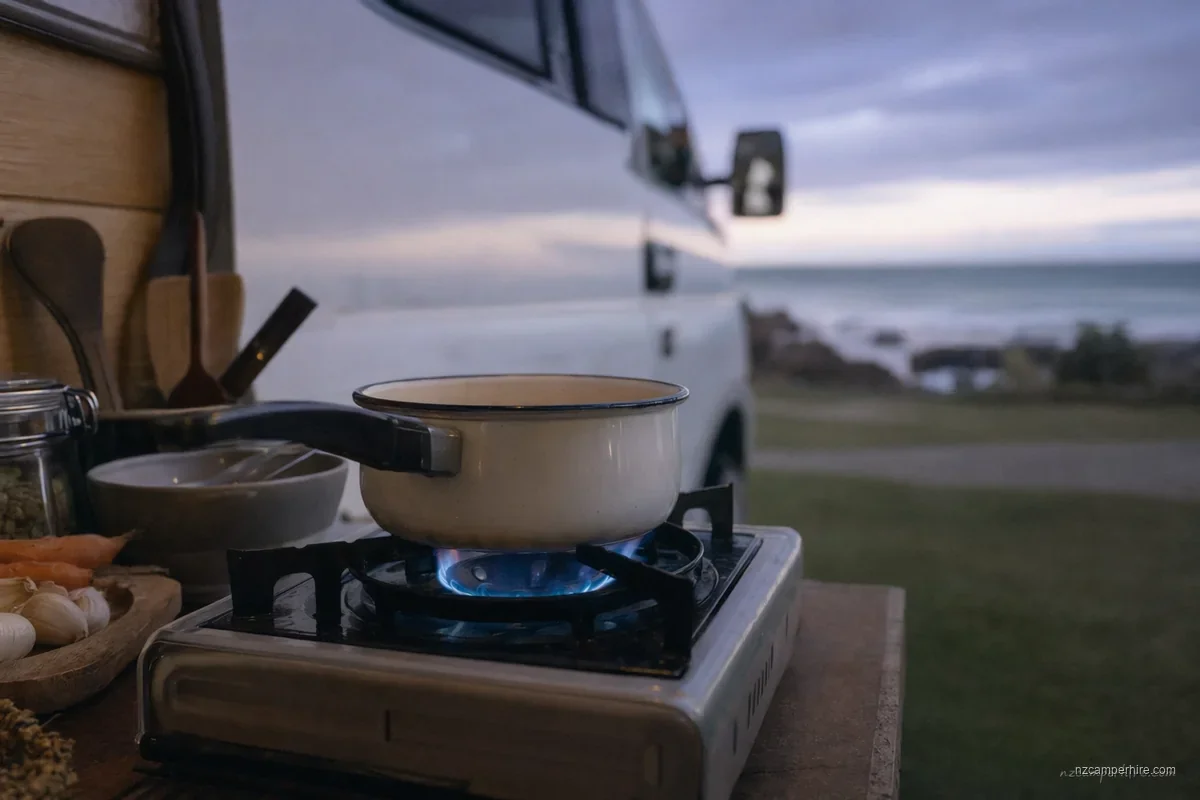
Rules and practicalities are easier to remember when you've felt them — the cold of a wet boot at a freedom camp, the relief of an early ferry slot. This guide is written from those moments, not from a checklist.
Related reading
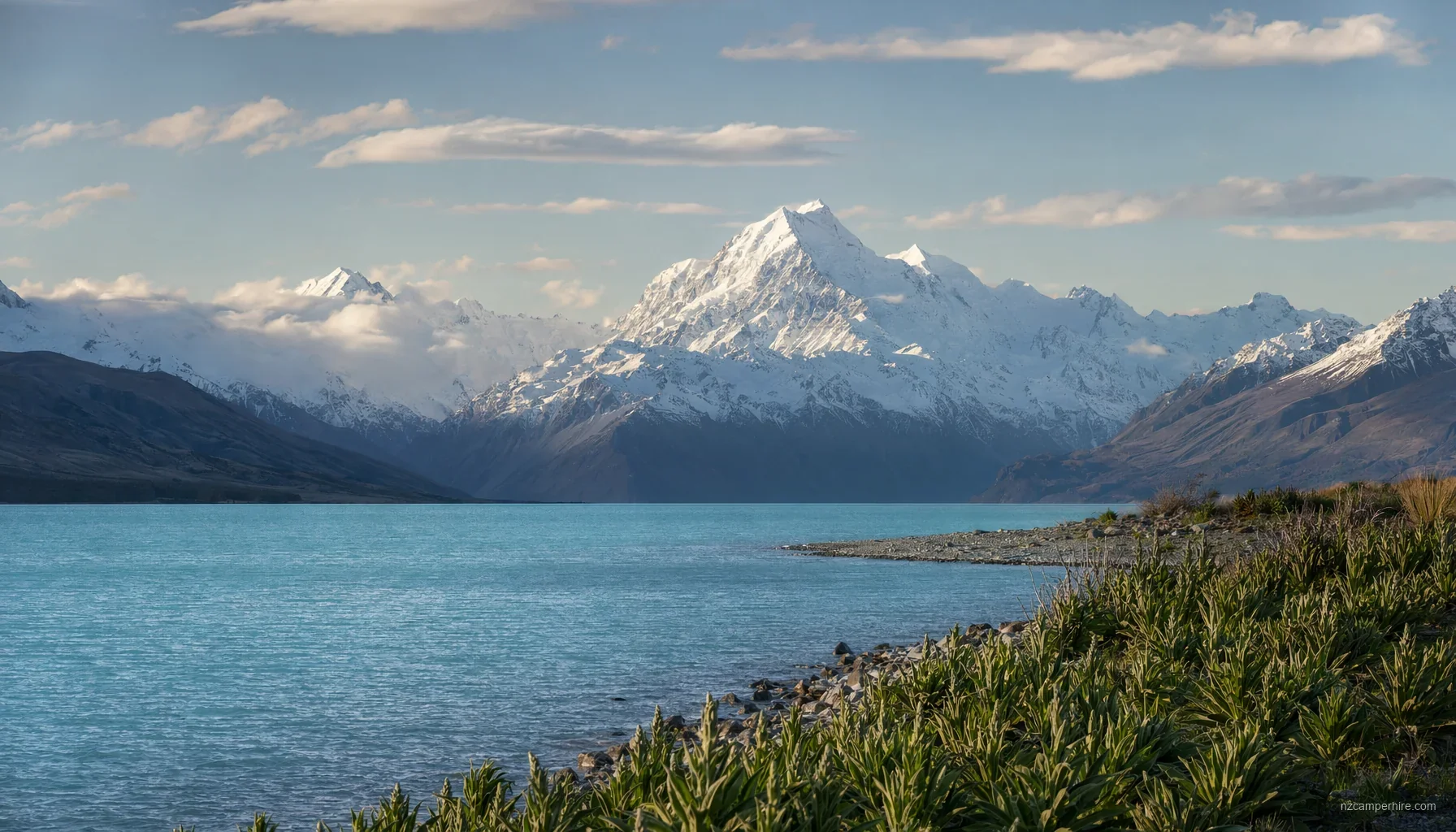 ROUTE
ROUTE South Island in 14 days
Classic clockwise South Island loop — Kaikoura, Nelson, West Coast glaciers, Wanaka, Queenstown, Milford Sound, Tekapo, back to Christchurch.
See the route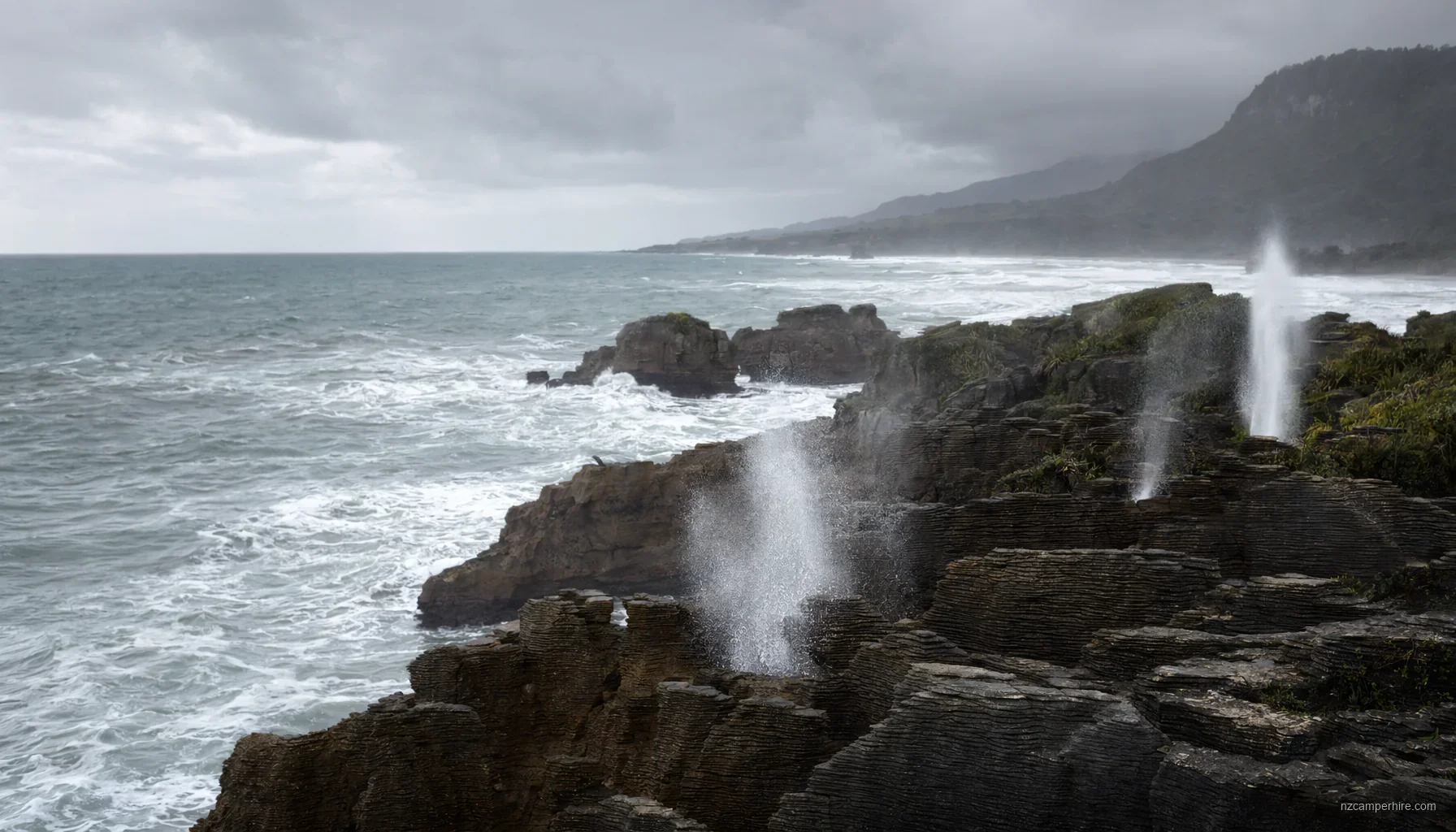 REGION
 West Coast
Wild glaciers, rainforest, and pancake rocks. Franz Josef, Fox Glacier, Punakaiki.
See the region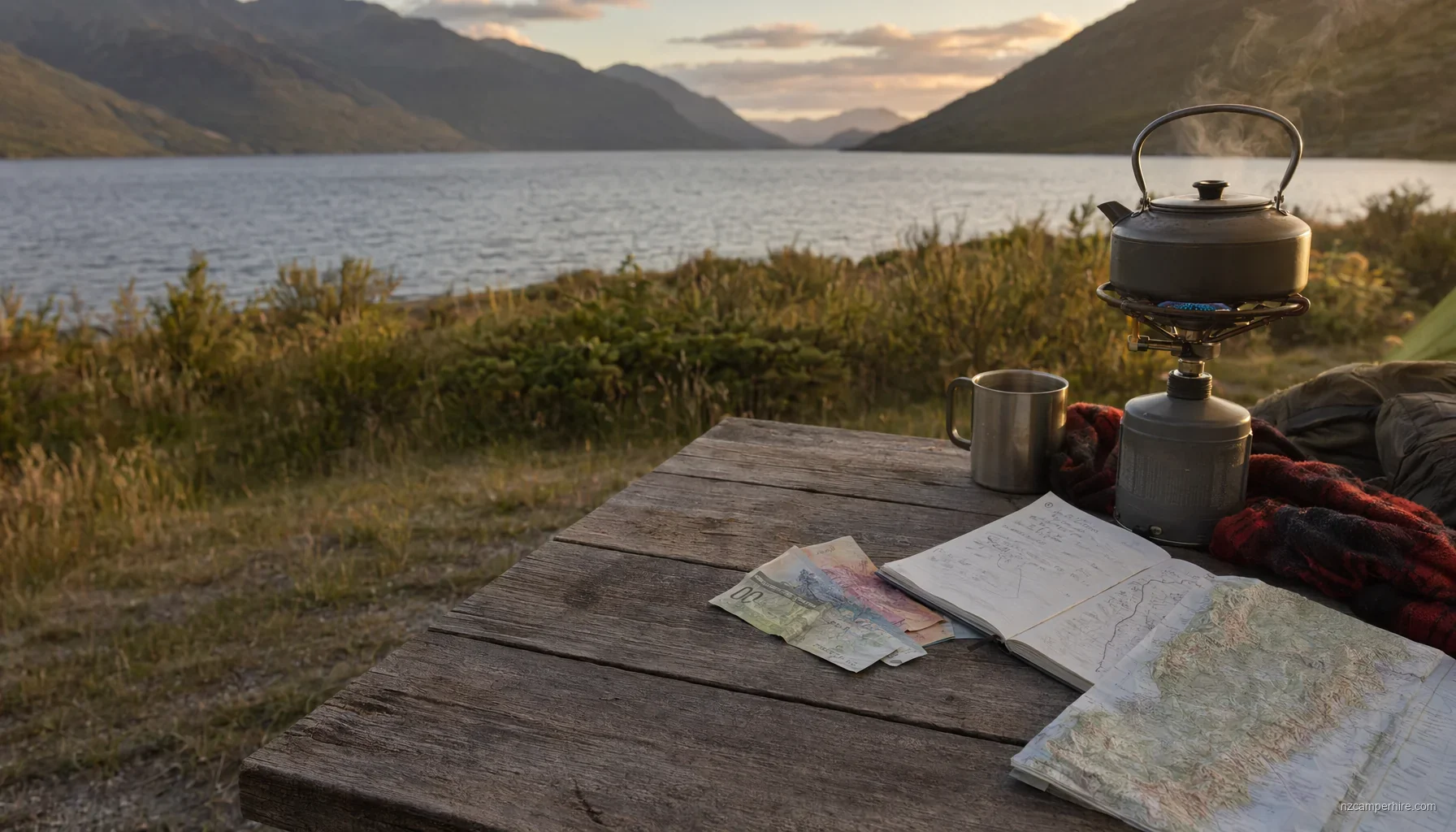 PRACTICAL GUIDE
 What a NZ campervan trip actually costs
Rental + fuel + ferry + sites + food + activities for 7/14/21-day trips at each tier.
Read the guideFuel economy and prices in NZ FAQ
Is diesel cheaper than petrol once RUC is included?
How many kilometres should I allow for a 14-day South Island trip?
Can I get fuel everywhere in New Zealand?
Do petrol stations let motorhomes dump grey water?
Should I carry spare fuel in a rented motorhome?
Have a planner answer this for your specific trip
Rules and practicalities depend on dates, party size, and route. Send us your outline and we'll come back with answers tailored to your trip.