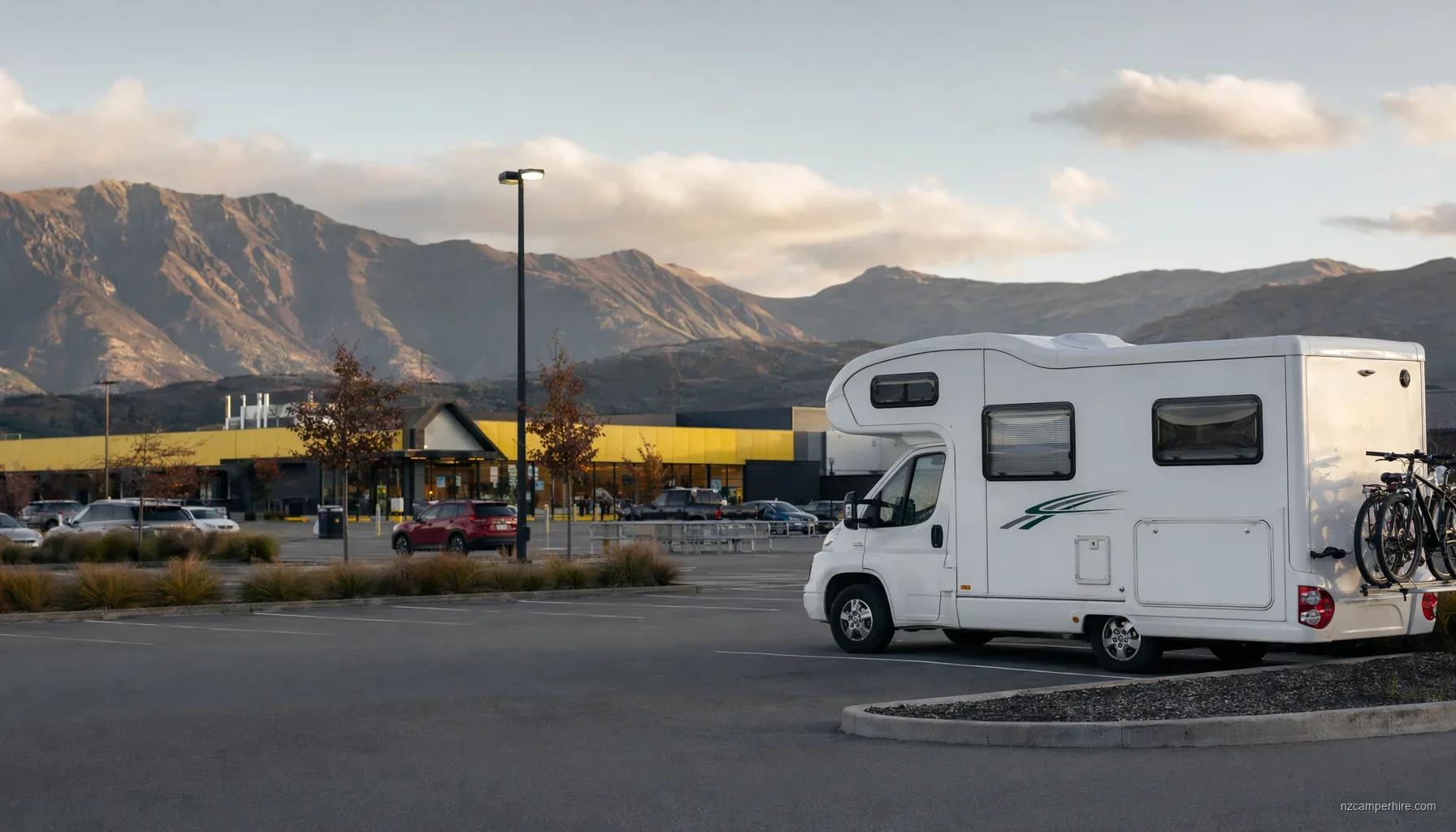
Food, groceries and cooking in a NZ motorhome
NZ supermarket chains, what's expensive, what to stock for a multi-week trip.
- slow-morning
- wet-weather-plan
- family-friendly
- pack-snacks
- book-ahead
There is a particular comfort in hearing the kettle click on while the van windows mist and a small-town main street starts moving outside. Breakfast feels easier when the next shop is not a guess.
Food planning in New Zealand is simple once you know the shape of the country. Big towns have full supermarkets. Small towns may have one compact store. Some scenic roads have no useful grocery stop for two or three hours.
The main trick is not cooking fancy meals. It is knowing when to stock up before SH6 on the West Coast, SH94 to Milford Sound, the Mackenzie Country around Lake Tekapo and Mount Cook, or a long North Island leg through Tongariro.
Get the planning checklist — and reply with your dates if you'd like a planner to flag the food-and-cooking-specific gotchas for your route.
The supermarket names you will actually see
New Zealand’s main supermarket chains are Woolworths, New World and Pak’nSave. Pak’nSave is usually the warehouse-style one with fewer frills. New World is common in regional towns and often has a good deli and bakery. Woolworths sits in most cities and many larger towns.
In smaller places you will see Four Square, FreshChoice and SuperValue. They are useful for bread, milk, fruit, eggs, pasta, tinned food and ice, but the range is smaller. Remote resort towns cost more because everything has travelled further and the rent is higher.
For a first motorhome shop, Auckland and Christchurch are easiest. In Christchurch, supermarkets around Hornby, Riccarton and Belfast work well if you are collecting near the airport or staying at North South Holiday Park. For the South Island in 14 days route, that first shop matters because the next few days may run through Lake Tekapo, Mount Cook and Queenstown, where top-up shopping is fine but full restocking is less efficient.
What costs more, and what is worth carrying
Do not assume New Zealand dairy, meat or wine will feel cheap because the country produces them. Visitor budgets are usually surprised by cheese, good coffee, packaged snacks, berries out of season, and ready-made meals. Basic pasta, rice, oats, eggs, carrots, apples, tinned tomatoes, tuna, wraps and soup are reliable motorhome staples.
Carry two days of easy meals, even if you prefer eating out. Weather closes plans here. A wet evening at Lake Pukaki, a late ferry arrival in Picton, or roadworks on SH1 north of Kaikoura can turn a restaurant plan into toast, soup and an early night.
A good camper pantry is quiet insurance for the night the rain starts tapping and the nearest café has already turned its lights off.
- Breakfast: oats, yoghurt, fruit, eggs, bread, instant coffee or plunger coffee.
- Lunch: wraps, cheese, hummus, salad, tinned fish, leftovers.
- Dinner: pasta, stir-fry vegetables, curry sauces, rice pouches, sausages, soup.
- Road food: nuts, crackers, chocolate, apples, water, and something that does not need cooking.
Where to stock up before the quiet stretches
The South Island has the biggest gaps between proper supermarkets. Before driving SH94 to Milford Sound, shop in Te Anau. There is no supermarket at Milford Sound, and Cascade Creek DOC campsite has no shop. Before the West Coast section of SH6, stock up in Wanaka, Queenstown, Hokitika or Greymouth depending on your direction. Haast has basic supplies, not a full shop.
For Lake Tekapo and Mount Cook (Aoraki), do a proper shop in Christchurch, Timaru or Queenstown. Twizel has a useful supermarket for top-ups, but you should not rely on tiny settlement stores for a full multi-day basket. If staying near White Horse Hill campground in Aoraki/Mount Cook National Park, arrive with dinner, breakfast and warm layers already sorted.
In the North Island, Auckland, Rotorua and Wellington are easy for groceries. The gaps feel shorter than the South Island, but Tongariro is the exception. If you are heading for Whakapapa, National Park Village or a DOC-style overnight, buy proper supplies in Turangi, Taupo or Rotorua first.
Cooking in a camper without making life hard
Most hired motorhomes have a gas hob, small fridge, sink, kettle, basic pots, plates and cutlery. Fridge space is the limit. Buy less chilled food than you would at home, and restock fresh items every few days. Keep meat sealed and low in the fridge. In summer, use the supermarket chiller bag or buy ice only if your vehicle has somewhere sensible to put it.
Cook with ventilation. Open the roof vent or a window when using gas. Do not run a stove to heat the vehicle. If wind makes outdoor cooking impossible, use the indoor hob properly rather than balancing a portable cooker outside a sliding door.
Holiday parks make cooking easier. Creeksyde Queenstown, Rotorua Thermal Holiday Park, Akaroa Top 10 and Oamaru Top 10 all give you more bench space, sinks and often a communal kitchen. That is useful after several nights of one-pot meals. DOC campsites such as Mavora Lakes, Lake Lyndon and Lake Pukaki are scenic but basic. Expect toilets, maybe water, and no kitchen. DOC campsites often give you the loveliest outlooks, but they also ask you to arrive more organised than a holiday park would.
Rubbish, water and food rules visitors miss
New Zealand is strict about biosecurity. On arrival, declare food, hiking boots, camping gear and anything that may carry soil or plant material. Fresh fruit, meat, honey and some packaged foods may be inspected or taken. The authority is the Ministry for Primary Industries: mpi.govt.nz. Declare it rather than guessing.
Once you are on the road, pack out rubbish. Many DOC campsites do not provide bins. Public recycling varies by council, and glass rules differ between districts. Never leave food scraps for birds. Kea, weka and gulls learn fast, and a clever bird can open bags, scatter rubbish and damage rubber seals.
Use signed drinking-water taps at holiday parks, dump stations and some visitor centres. Do not assume every petrol station has potable water. Grey water belongs in a dump station, not a roadside drain. If your food plan includes a lot of washing up, your water and waste tanks will fill faster than you expect.
Rules and practicalities are easier to remember when you've felt them — the cold of a wet boot at a freedom camp, the relief of an early ferry slot. This guide is written from those moments, not from a checklist.
Related reading
 ROUTE
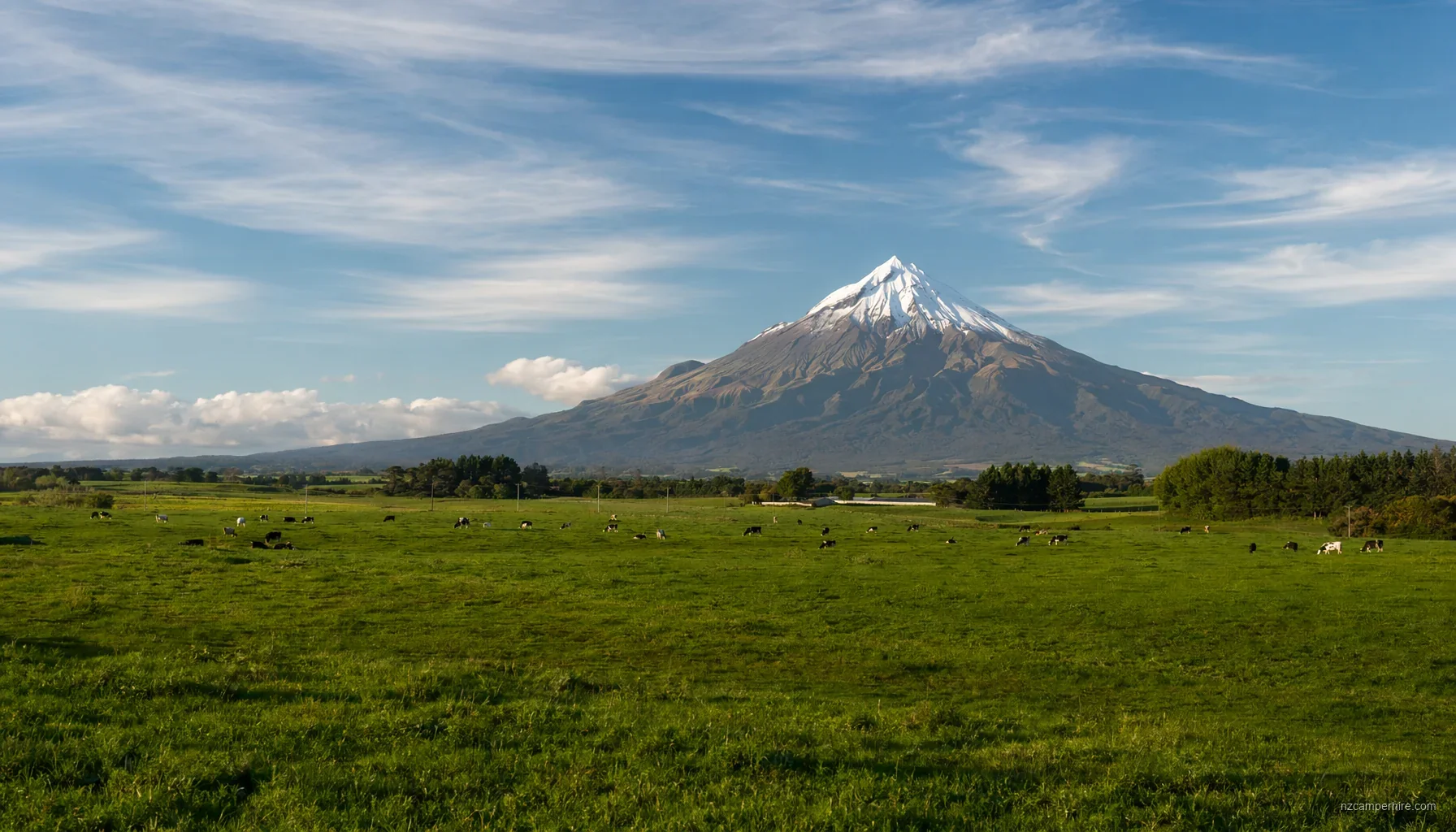
ROUTE North Island in 10 days
Auckland to Wellington via Bay of Islands, Coromandel, Rotorua, Hobbiton, and Tongariro.
See the route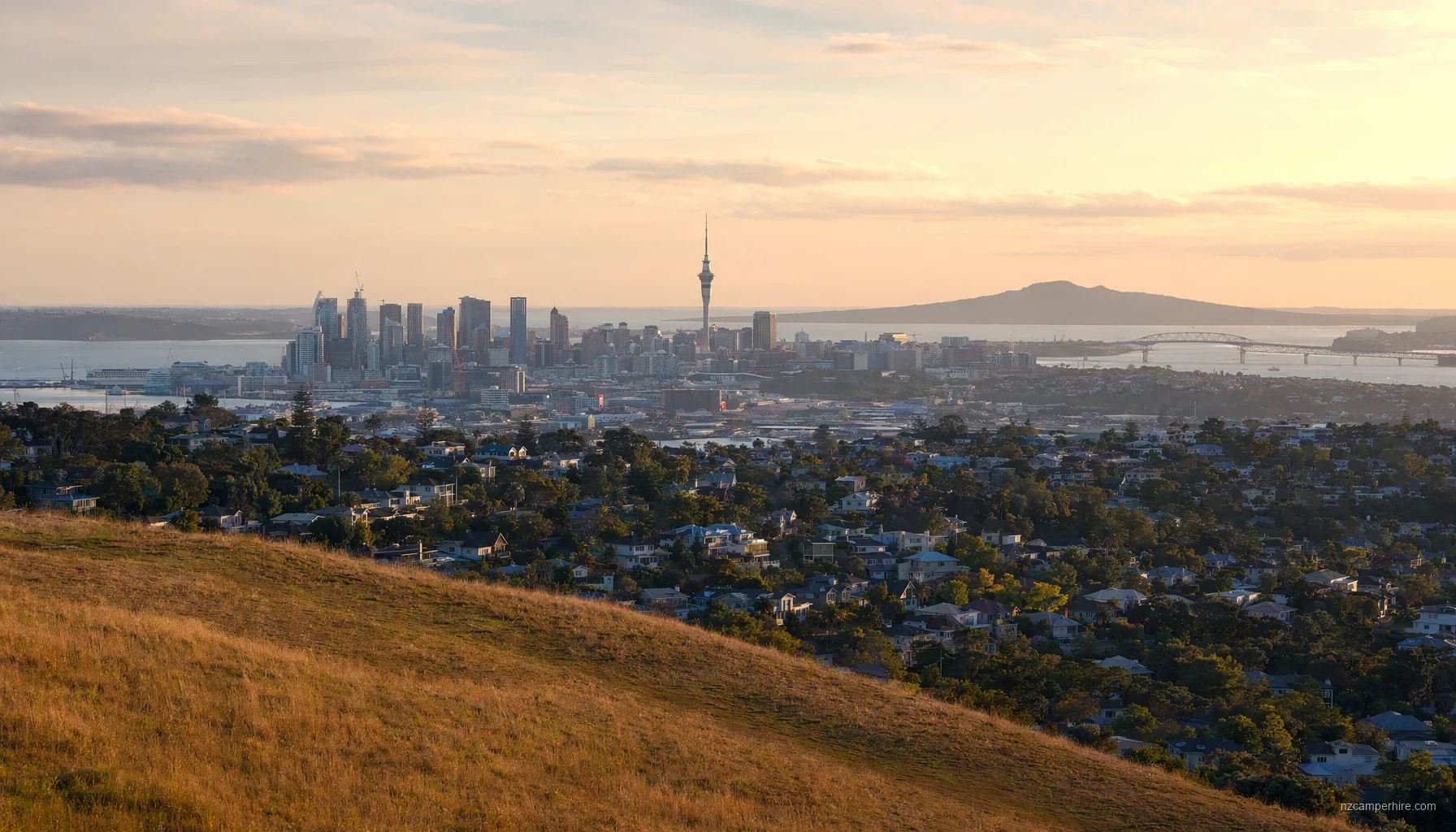 REGION
 Auckland
Largest North Island depot. Start of every classic North Island loop (Bay of Islands, Coromandel, Rotorua, Hobbiton, Tongariro).
See the region PRACTICAL GUIDE
 Internet and mobile in a NZ campervan
Best NZ SIMs for travellers, signal blackspots, and roaming reality.
Read the guideFood, groceries, and cooking FAQ
Can I bring food into New Zealand for my motorhome trip?
Are supermarkets open on Sundays and public holidays?
Where should I do the first big grocery shop after collecting a camper?
Can I cook at DOC campsites?
Can I dump grey water at a petrol station or roadside drain?
Have a planner answer this for your specific trip
Rules and practicalities depend on dates, party size, and route. Send us your outline and we'll come back with answers tailored to your trip.