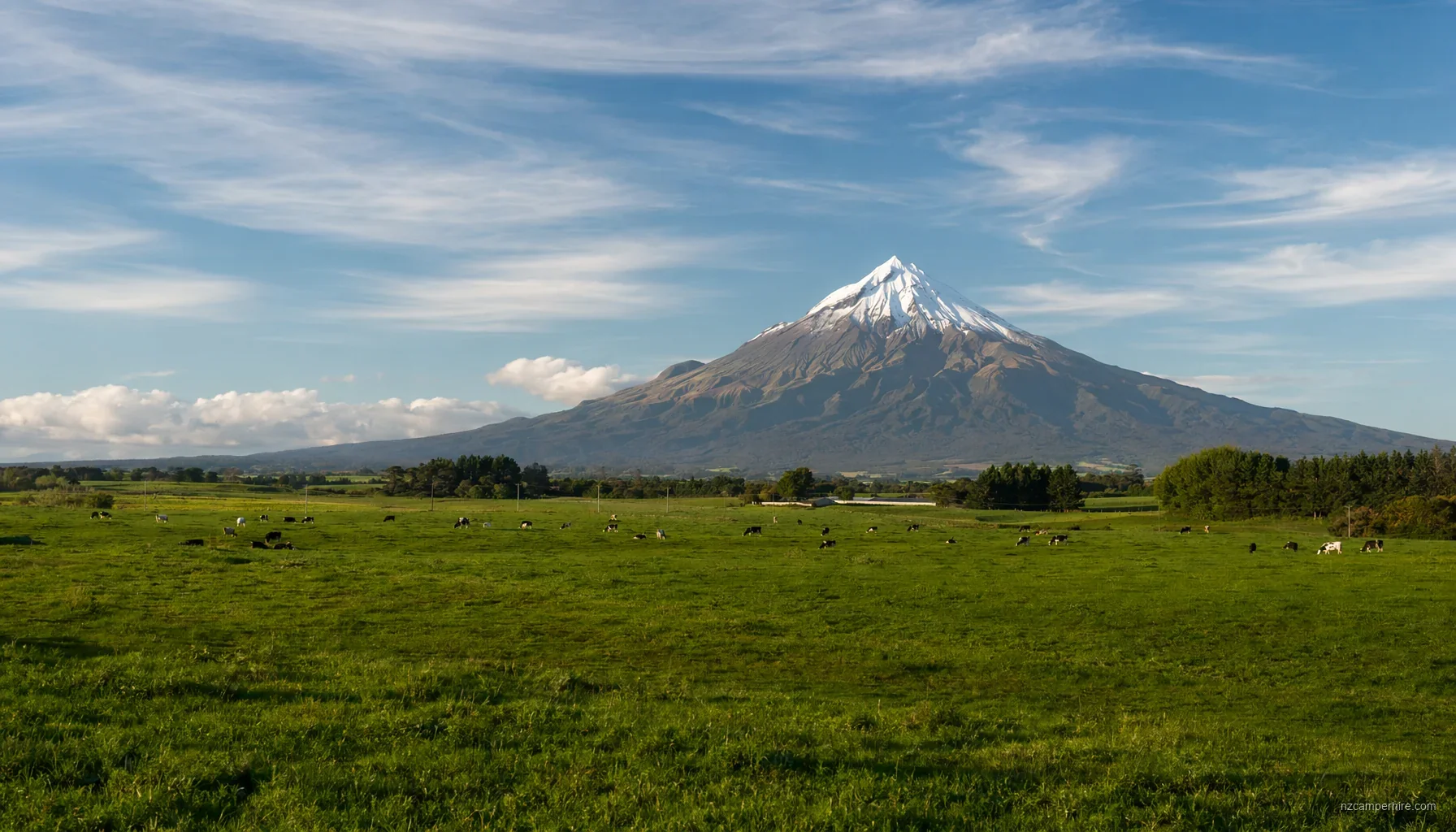
North Island in 10 Days by Motorhome
10 days · Auckland → Wellington
- coastal-stage
- volcanic-stage
- busy-summer
- book-ahead
- bring-warm-layers
Morning in Auckland often starts with gulls over the motorway and the kettle doing its small brave work in the van. It is a good route to begin gently, even when the map is already asking for decisions.
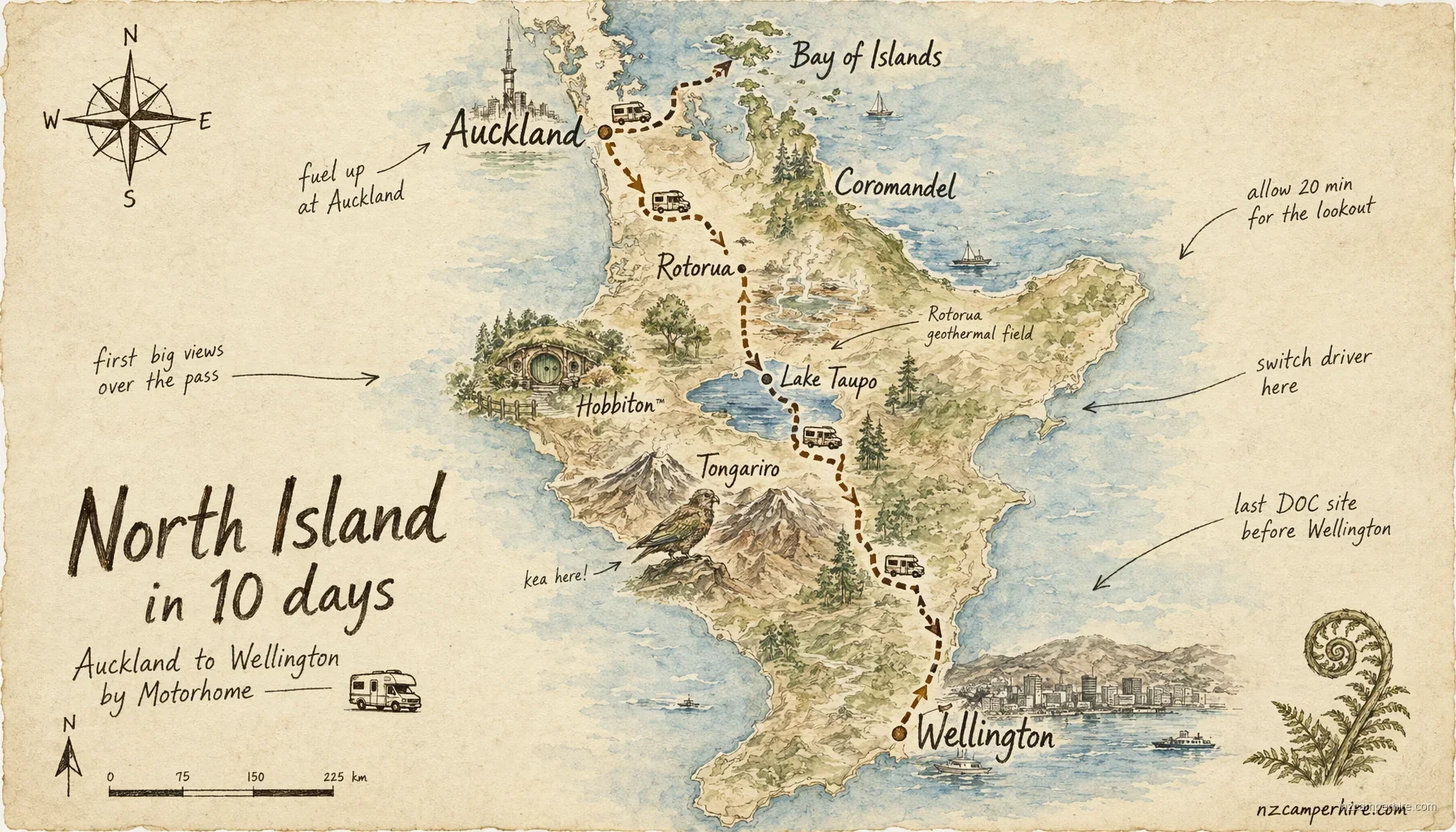
Ten days is enough for a strong first North Island motorhome route, but not enough to see every beach, geothermal valley, and wine town. This Auckland to Wellington plan keeps the big names in play: Bay of Islands, Coromandel, Rotorua, Hobbiton near Matamata, Tongariro National Park, and Wellington.
The trade-off is pace. Day 3 from the Bay of Islands to Coromandel is long, and you will not have time for Hawke's Bay or the East Cape on SH2. If you want slower beach time, look at our Bay of Islands region guide or the Coromandel region guide before fixing the route.
Get this route as a printable plan with the day-by-day, the holiday-park shortlist, and a packing checklist — send your dates if you'd like a planner to sense-check the pacing.
Why this North Island route works
This route suits first-time visitors who want variety without crossing Cook Strait. You get northern beaches, kauri country, the Coromandel coast, Rotorua's geothermal areas, Hobbiton in the Waikato, volcanic plateau driving, and a proper city finish in Wellington.
It is not a lazy loop. New Zealand roads are slower than they look on a map, especially SH25 around the Coromandel and SH1 through small towns north of Auckland. If your group includes young children, or if you are nervous about left-side driving, consider cutting one Bay of Islands night and adding it to Rotorua or Tongariro instead. The price of seeing both the Bay of Islands and Coromandel in ten days is that one travel day will feel like logistics, not leisure.
This page links naturally with the Auckland region guide, Rotorua region guide, Tongariro National Park region guide, our November when-to-go guide, the vehicle-size guide, and the freedom camping guide.
The shape of the trip
Start: Auckland. Finish: Wellington. Total distance: about 1,650 km once local driving is included. Driving time: roughly 25 to 28 pure hours, closer to 38 to 42 hours once food, viewpoints, fuel, and short walks are included.
There is no ferry on this route unless you continue to Picton. If you do, the Cook Strait Interislander or Bluebridge sailing from Wellington to Picton takes about 3.5 hours with loading. For December and January vehicle space, book around 4 months ahead, not 2 weeks out.
Most of the route uses SH1, SH25, SH2, SH5, and SH1 over the Central Plateau. The highest road point is the Desert Road on SH1 at about 1,074 m. In winter, it can close for snow or ice.
The slow part of this route is the part you'll remember. Build in at least one short evening where the kettle is the only sound — no driving, no plan, just the awning open and the day unwinding.
Day-by-day pacing
Day 1: Auckland → Paihia via SH1 and Whangārei
Distance: 230 km. Pure driving time: 3.5 hours; realistic with stops: 5.5 hours. Overnight: Waitangi Holiday Park. The day in one line: collect the camper, get used to left-side driving, stop at Whangārei Falls, and reach the Bay of Islands before dark.
Day 2: Paihia → Russell via Kerikeri and the Opua vehicle ferry
Distance: 70 km. Pure driving time: 1.5 hours; realistic with stops: 5 hours. Overnight: Russell Top 10. The day in one line: visit the Stone Store in Kerikeri, take the short Opua to Okiato ferry, then walk Russell's waterfront in the late afternoon.
Day 3: Bay of Islands → Coromandel Town via SH1, SH2 and SH25
Distance: 400 km. Pure driving time: 6 hours; realistic with stops: 8 to 8.5 hours. Overnight: Coromandel Shelly Beach Top 10. The day in one line: leave early, avoid central Auckland at peak time if you can, then take the Thames coast road carefully into Coromandel Town.
Day 4: Coromandel Town → Hot Water Beach via SH25
Distance: 95 km. Pure driving time: 2.25 hours; realistic with stops: 6 hours. Overnight: Hot Water Beach Top 10. The day in one line: ride the Driving Creek Railway, cross to the east coast, walk to Cathedral Cove if access is open, and time Hot Water Beach around low tide.
Day 5: Hot Water Beach → Rotorua via Matamata and SH5
Distance: 240 km. Pure driving time: 3.75 hours; realistic with stops: 6.5 hours. Overnight: Rotorua Thermal Holiday Park. The day in one line: leave the coast, stop at Hobbiton near Matamata in the Waikato, then roll into Rotorua with time for a hot pool.
Day 6: Rotorua local day via geothermal parks
Distance: 60 to 90 km. Pure driving time: 1 to 1.5 hours; realistic with stops: full day. Overnight: Rotorua Thermal Holiday Park. The day in one line: choose one major geothermal area, not three, then add the Redwoods or the lakefront rather than racing all day.
Day 7: Rotorua → Tongariro National Park via Taupō and SH1
Distance: 220 km. Pure driving time: 3.25 hours; realistic with stops: 6 hours. Overnight: Tongariro Holiday Park. The day in one line: stop at Huka Falls, stock up in Taupō, then drive SH1 across the Desert Road at 1,074 m if weather is settled.
Day 8: Tongariro National Park walking day
Distance: 30 to 50 km. Pure driving time: under 1 hour; realistic with stops: full day. Overnight: Tongariro Holiday Park. The day in one line: use a shuttle for the Tongariro Alpine Crossing if conditions are right, or choose Taranaki Falls and the Tama Lakes track in poorer weather.
Day 9: Tongariro National Park → Wellington via SH1
Distance: 330 km. Pure driving time: 5 hours; realistic with stops: 7.5 hours. Overnight: Wellington Top 10 Holiday Park in Lower Hutt. The day in one line: pass Waiōuru, Taihape, Bulls, and the Kāpiti Coast, then arrive before Wellington traffic gets awkward.
Day 10: Wellington local day and drop-off
Distance: 20 to 40 km. Pure driving time: under 1 hour; realistic with stops: half to full day. Overnight: none if flying or continuing south. The day in one line: leave the vehicle parked, visit Te Papa or Zealandia, and allow generous time for fuel, LPG, wastewater, and return checks.
Best months for this route
November is the cleanest month for many travellers. The roads are usually settled, daylight is long, and the big school-holiday crush has not started. February and March are also strong, especially for warmer water in the Bay of Islands and Coromandel.
You can feel the route change after Taupō, when the lake gives way to open plateau and everyone in the van quietly reaches for a warmer layer.
December and January work, but book powered sites earlier in Paihia, Hot Water Beach, Rotorua, and Wellington. The Coromandel is busy and SH25 can feel tight when everyone is towing boats.
June to August is possible, but Tongariro changes the conversation. The Desert Road can close, the Alpine Crossing becomes a winter alpine route, and you need to treat weather warnings seriously. If winter is your window, read the July when-to-go guide before committing to this exact shape.
Auckland to Wellington via Bay of Islands, Coromandel, Rotorua, Hobbiton, and Tongariro.
Vehicle size for North Island roads
For two adults, a 2-berth with an ensuite is the easiest size on this route. It is simpler in Auckland, easier at Hot Water Beach, and less tiring on the winding sections of SH25. A compact 4-berth ensuite gives more internal space and is common for couples who want a fixed bed feel; travellers will see this bracket across the larger rental fleets.
For four travellers, a 4-berth is workable if you pack lightly. A 6-berth is cheaper per person, but it is bulky through Coromandel Town, Rotorua car parks, and Wellington's narrow streets. Read the vehicle-size guide before choosing purely on beds.
Foreign licences in English are valid for up to 12 months in New Zealand. If your licence is not in English, carry an International Driving Permit or an approved translation. Minimum hire age varies, commonly from 18 to 25 depending on operator and vehicle class.
Fuel, food, parking, and camping logistics
Fuel is easy on this route if you plan like a local. Fill in Auckland before heading north, again in Whangārei or Paihia, then before leaving the Bay of Islands. Top up at Thames before the Coromandel coast if your gauge is low. Rotorua, Taupō, Turangi, Levin, and Wellington all have normal services.
Freedom camping is not a right in New Zealand. You need a certified self-contained vehicle, and local councils still decide where overnight stays are allowed. The Coromandel and Wellington are both stricter than many visitors expect. Use holiday parks for the first and last nights, and read the freedom camping guide before relying on free sites.
In cities, pay for convenience. North South Holiday Park is useful near Christchurch, but on this North Island route the equivalent thinking is simple: stay close enough to Auckland pickup or Wellington return that you are not doing a stressful dawn drive through traffic.
Where to slow down, and where to cut
Slow down in Rotorua if you are interested in geothermal areas, Māori cultural experiences, or mountain biking. It is the easiest place on this route to fill an extra night without wasting time.
Slow down in Tongariro if walking is a priority. The Tongariro Alpine Crossing is weather-dependent, and a spare day gives you a second chance. If the weather is poor, Taranaki Falls, Whakapapa village, and short lower-elevation tracks still make the stop worthwhile.
Cut Russell if you dislike ferry logistics or if Day 3 already looks too long. Cut Cathedral Cove if track access, parking, or shuttle arrangements are awkward on the day. Do not cut sleep before the Tongariro day. Tired driving on SH1 south to Wellington is no fun.
If you have two extra days
Add one night in the Bay of Islands and one in Tongariro. That creates a better balance than adding a brand-new region. With an extra Bay of Islands night, you can take a boat trip, visit Waitangi Treaty Grounds properly, or drive toward Mangonui without rushing.
With an extra Tongariro night, you get weather insurance for the Crossing and a calmer final drive to Wellington. If you want a bigger change, add Hawke's Bay only with at least three extra days, because the SH2 detour through Napier and wine country deserves more than a quick pass-through.
Related reading
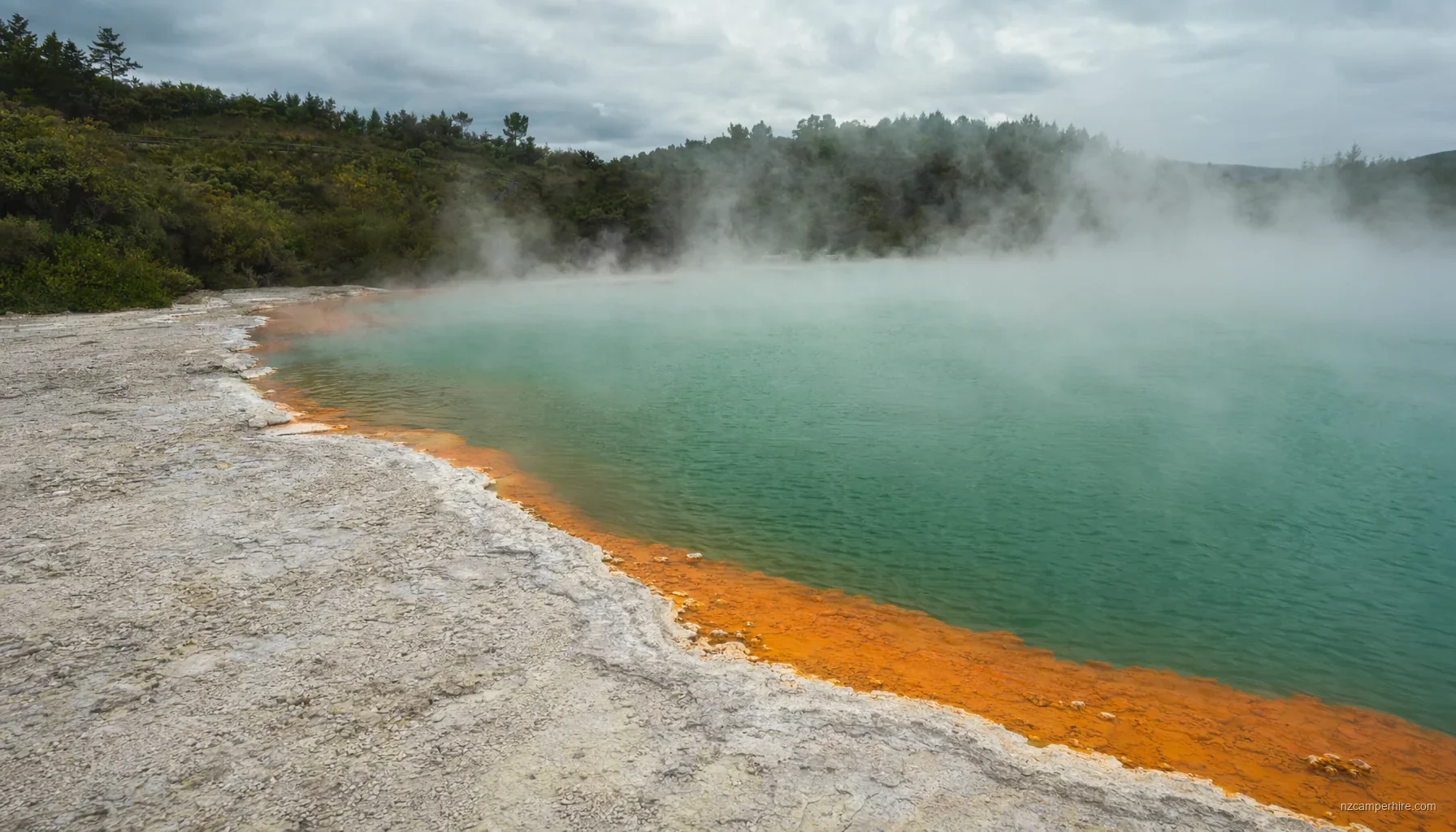 REGION
 Rotorua
Geothermal heartland — geysers, hot pools, Māori cultural experiences. 2.5 hours from Auckland.
See the region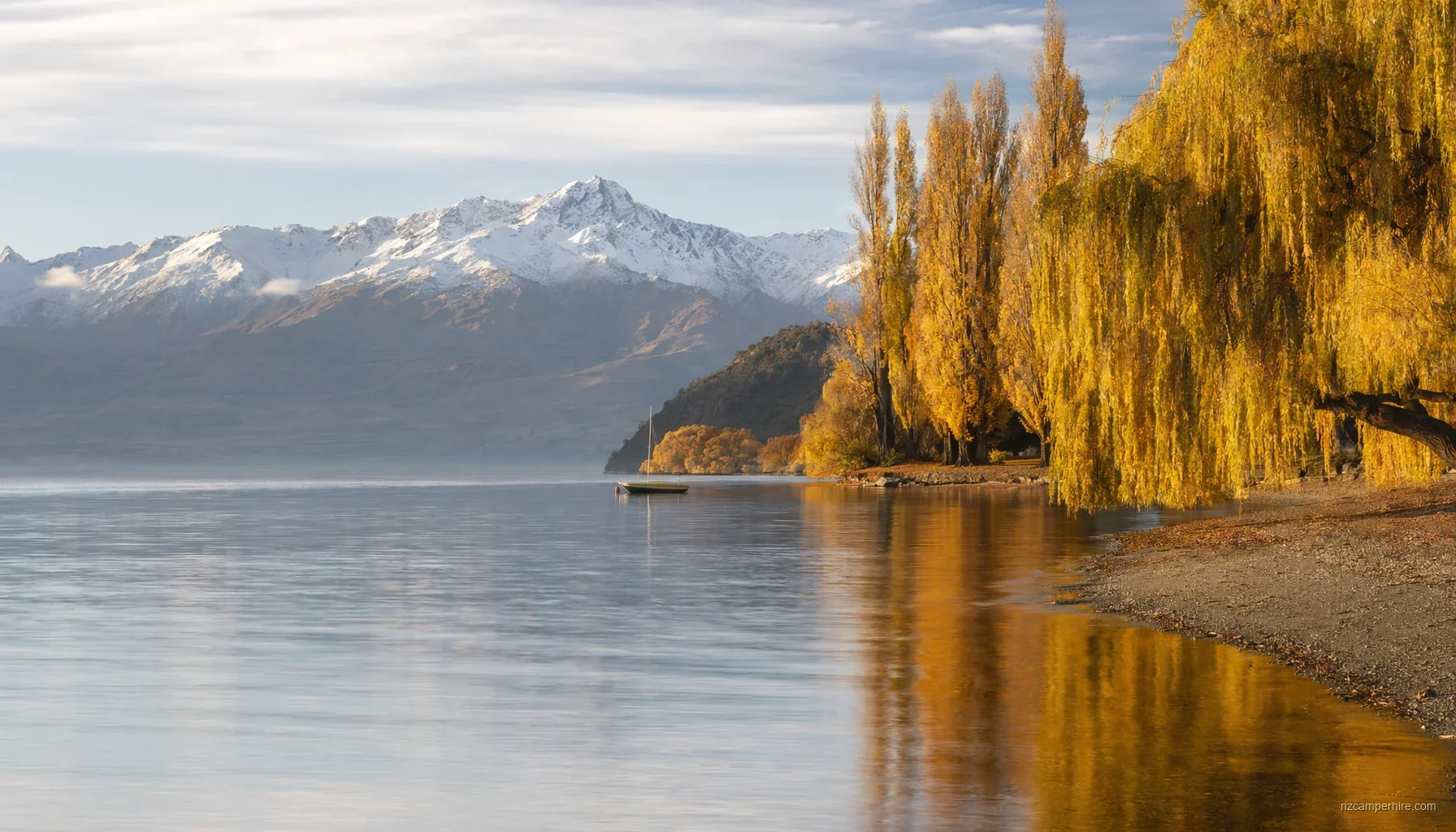 WHEN TO GO
 Shoulder seasons (March-May, September-November)
Sweet spot for many — better availability, lower rates, still good weather.
Read the timing notes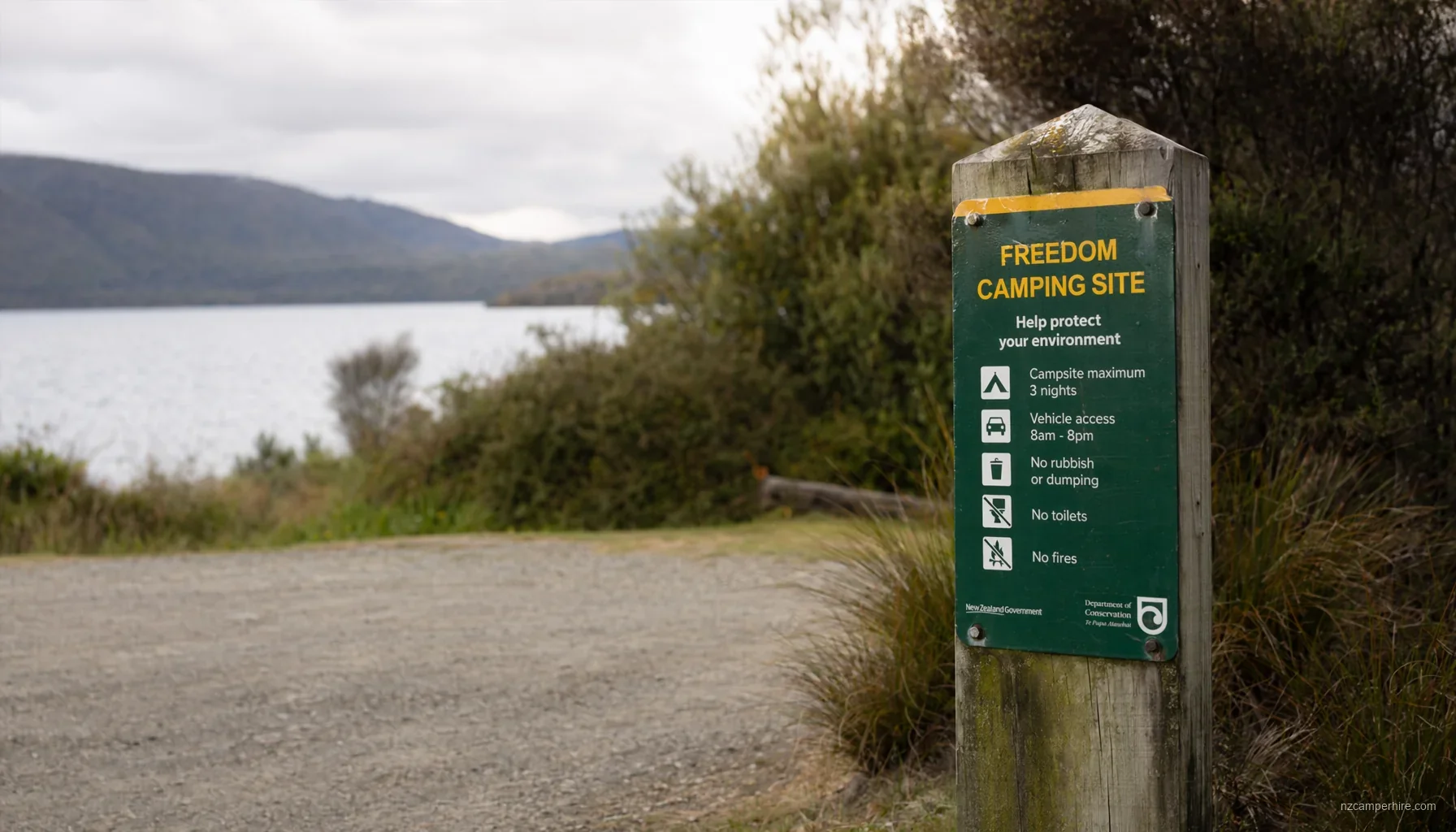 PRACTICAL GUIDE
 Freedom camping in NZ
Where you can legally freedom-camp in a self-contained vehicle, and where you'll get fined.
Read the guideNorth Island in 10 days FAQ
Is 10 days enough for Auckland to Wellington by motorhome?
Will there be a one-way drop-off fee from Auckland to Wellington?
Can we freedom camp on this route?
Is the Tongariro Alpine Crossing realistic on this itinerary?
Have a planner check this route for your dates
Send us a quick outline — dates, party size, must-sees. We come back with a vehicle recommendation and a paced route.