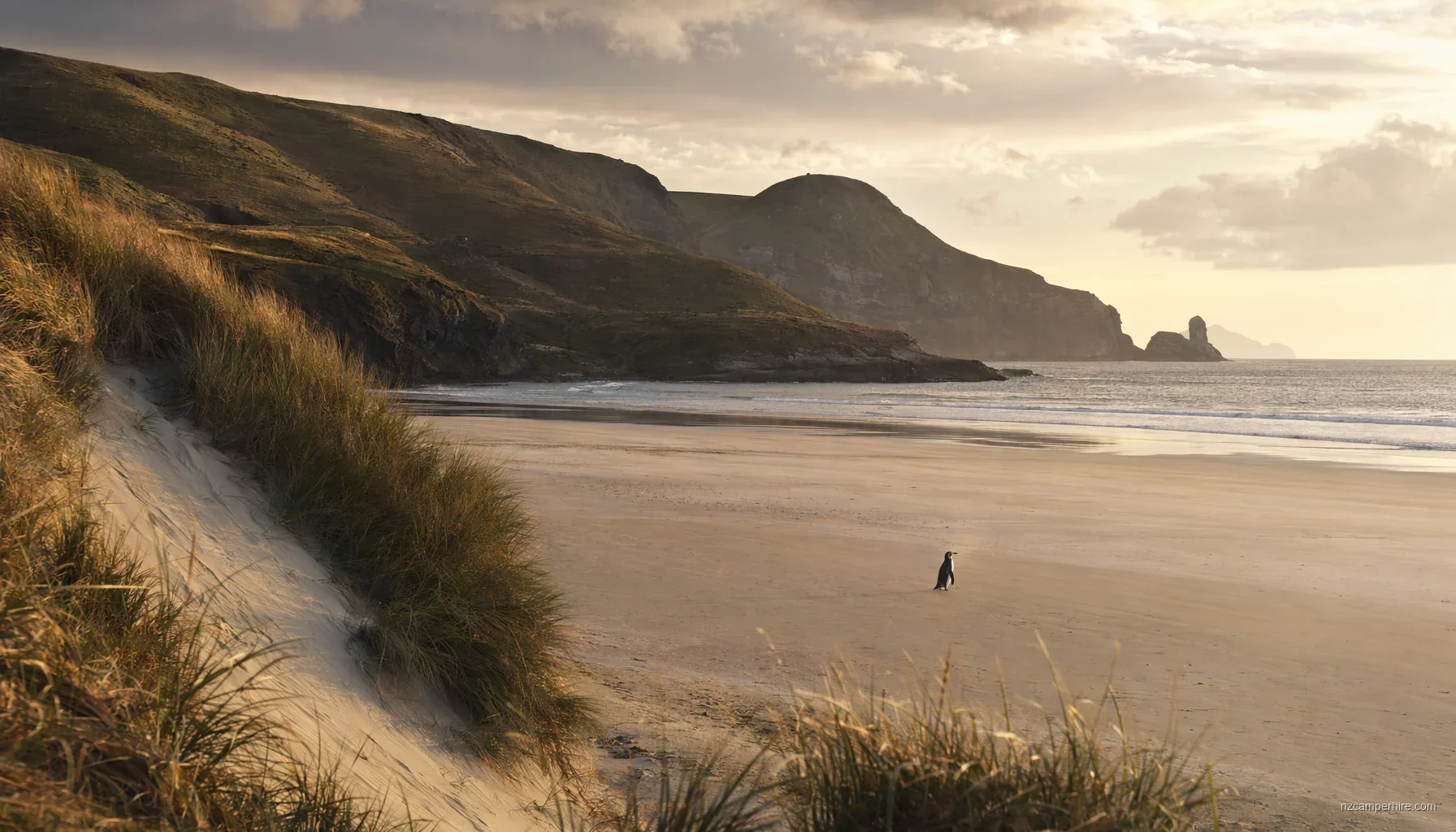
Dunedin by Motorhome: City, Coast and Wildlife
South Island · destination region
- coastal-stage
- busy-summer
- book-ahead
- bring-warm-layers
- seal-territory
On a still Dunedin morning, gulls work the harbour air while the first kettle hisses in a St Kilda cabin and the hills hold a cool blue shadow.
Dunedin is not a quick fuel stop between Christchurch and the Catlins. It is a compact southern city with steep streets, proper museums, surf beaches, student energy and the Otago Peninsula just beyond the suburbs.
For a motorhome trip, Dunedin works best when you slow down for two nights. Base yourself near St Kilda, Kaikorai Valley, Leith Valley or Portobello, then drive the peninsula in daylight without rushing the wildlife.
See route guides that pass through Dunedin — and reply with your dates if you'd like a planner to suggest the right number of nights here.
What Dunedin is for, in a motorhome
Dunedin suits travellers who want a different South Island rhythm. It is not alpine like Queenstown, and it is not empty-coastline like the Catlins. It is a heritage city with wildlife close enough to reach after lunch.
The usual motorhome pattern is simple. Arrive on SH1, settle into a powered site, use the city on foot or by bus, then take one careful day out to the Otago Peninsula. A 2-berth or compact 4-berth is the easier vehicle size here. A 6-berth is workable, but the peninsula roads, city kerbs and supermarket car parks take more patience.
Dunedin sits naturally on the Southern Scenic Route and also fits a slower South Island in 14 days itinerary. If your plan includes Christchurch, Dunedin, the Catlins and Queenstown, this is the place to put in a weather buffer rather than another long driving day.
Driving the city and peninsula in a campervan
New Zealand drives on the left. In Dunedin that matters because the roads are steep, the lanes can feel narrow, and local traffic moves quickly on the one-way system around the central city.
From Christchurch to Dunedin is about 360 km, 5 to 5.5 hours on SH1 with normal stops. From Dunedin to Oamaru is 115 km, 1.5 hours. From Dunedin to Queenstown via SH1, SH8 and SH6 is about 285 km, 4 to 4.5 hours. The Catlins route south is slower: Dunedin to Invercargill via the coast can easily become 330 km, 5.5 to 7 hours once you stop at waterfalls, lighthouses and gravel-road viewpoints.
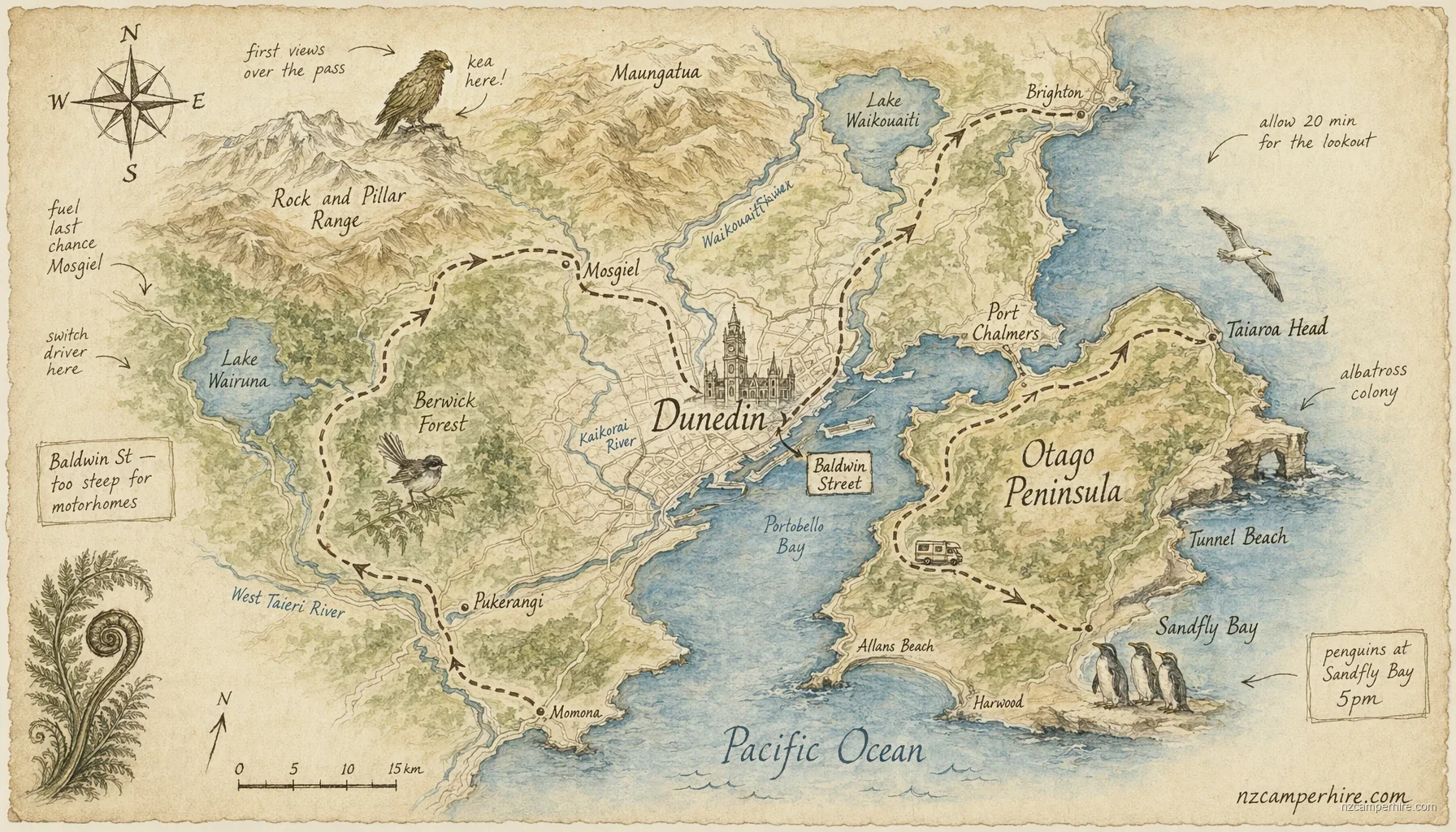
The Otago Peninsula is only 25 to 32 km from the Octagon, but allow 45 to 70 minutes each way. Portobello Road is scenic and narrow in places. Highcliff Road gives bigger views but is steeper and more exposed. The peninsula is close on the map, but it drives like a place that asks for daylight, patience and a willingness to let faster cars pass. In a larger motorhome, take the lower road, drive in daylight, and do not stop in passing places for photos.
What to see, and what to leave for next time
In the city, the easiest wins are the Dunedin Railway Station, Toitū Otago Settlers Museum, Otago Museum and the St Clair to St Kilda beach strip. Baldwin Street is famous, but parking a motorhome nearby can be awkward. If you already have a steep-street photo from elsewhere, skip it without guilt.
On the peninsula, Taiaroa Head has the Royal Albatross Centre and the evening blue penguin viewing at Pukekura. Larnach Castle is useful if the weather turns grey. Sandfly Bay has wild scenery and sea lions, but the walk is steep and sandy. Keep at least 20 m from sea lions, more if they move, and do not stand between an animal and the sea.
Time the peninsula gently and the reward is a quiet roadside pause, salt on the wind and one albatross writing slow circles above Taiaroa Head.
If you only have one night, choose either the city or the peninsula, not both. If you have two nights, do both slowly. If you have three, add Aramoana, Tunnel Beach, or a quieter morning around Port Chalmers.
Where to stay overnight
Book ahead in January and around university events. Freedom camping around Dunedin is tightly controlled, and many pretty coastal pull-offs are not legal overnight stops even if another van is parked there.
- Dunedin Holiday Park, St Kilda: powered and unpowered sites, family-friendly, about 4 km from the Octagon. Good for beach access, buses into town and an easy first night after SH1.
- Aaron Lodge Top 10, Kaikorai Valley: powered sites and facilities, quieter suburban feel, about 4 km from the centre. Handy if you want easier road access and less inner-city driving.
- Leith Valley Holiday Park: powered sites in a leafy valley, suits couples and families, about 3.5 km north of the Octagon. Useful for the Botanic Garden, university area and northern SH1 exit.
- Portobello Village Tourist Park: powered and unpowered sites, relaxed peninsula vibe, about 20 km or 30 minutes from central Dunedin. The draw is being closer to albatross and penguin viewing without a late drive back to town.
- Warrington Domain: no power, simple council-style coastal camping for certified self-contained vehicles, about 26 km north of Dunedin. Good beach setting, but check current Dunedin City Council rules before relying on it.
- DOC Trotters Gorge Campsite: non-powered DOC camping, quiet and basic, about 70 km north near Palmerston. Better as a nature stop on the way to Oamaru than as a base for Dunedin sightseeing.
Best time of year for Dunedin
January is the peak month for Dunedin motorhome travel. Days are long, the beaches are at their best, and the peninsula wildlife tours are busy. It is also when powered sites disappear first, so plan four to eight weeks ahead if you want a specific holiday park.
February and March are often the sweet spot. The weather is still settled by southern standards, the university has life again, and the roads are less pressured than early January. April brings cooler evenings but good light for photography. Winter is possible, especially for city museums and wildlife, but expect short days, wet southerlies and cold campground mornings.
If Dunedin sits inside a wider when-to-go plan, compare it with the Catlins and Queenstown rather than only with Christchurch. The coast can be windy while Central Otago is hot on the same day.
Practical notes before you roll south or north
For food, the practical supermarket run is South Dunedin, where large stores and fuel are easier to handle than the tight central streets. Fill before heading for the Otago Peninsula or the Catlins. Portobello has small supplies, not a full restock.
Dump tanks before you leave the city. Dunedin Holiday Park and Aaron Lodge Top 10 have guest facilities, and the Dunedin City Council lists public dump points, including central-city options that should be checked on the day. Do not plan to empty tanks at beach reserves or wildlife car parks.
Read the freedom camping guide before treating any coastal lay-by as a campsite. You also want the vehicle-size guide if you are choosing between a compact van and a larger berth for Otago Peninsula roads. Foreign licences in English are valid for up to 12 months in New Zealand; if your licence is not in English, carry an International Driving Permit or approved translation.

Dunedin rewards travellers who linger. Build in one slow morning — coffee on the camp table, the kettle whistling, the day not yet decided.
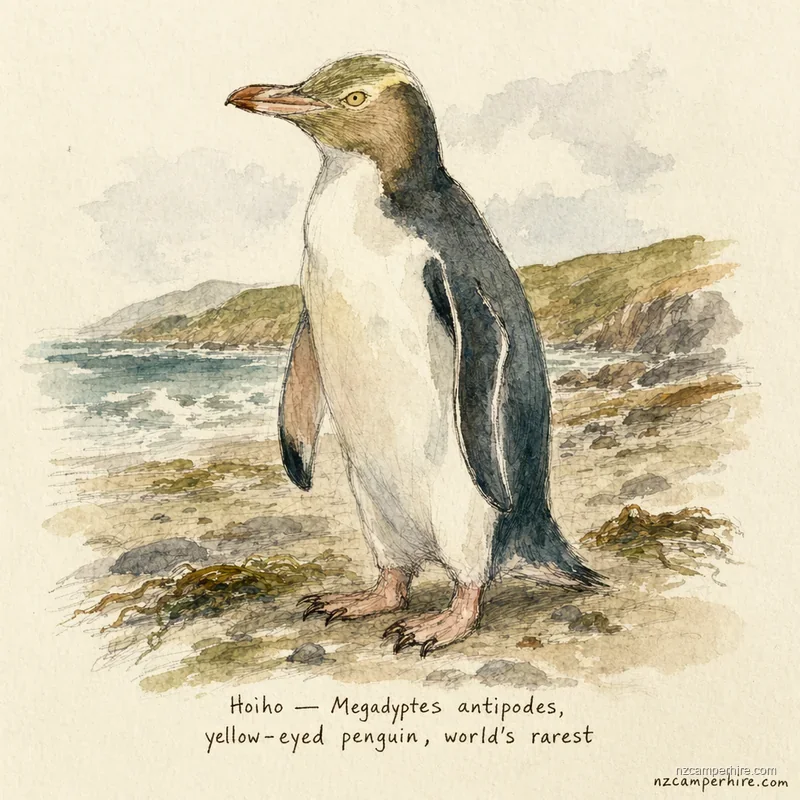
Ōtepoti — known internationally as Dunedin
Ōtākou — the harbour and peninsula that give the wider Otago region its name — is one of the most historically important Ngāi Tahu settlements in Te Waipounamu. Ōtākou Marae on the Otago Peninsula has been continuously occupied for hundreds of years. The local dialect uses 'k' where northern dialects use 'ng' — so Ngāi Tahu becomes Kāi Tahu, and Dunedin becomes a takiwā of Kāi Tahu Whānui.
The Otago Peninsula is Muaūpoko — 'the head of the fish' — referring to its shape. Taiaroa Head, where the royal albatross colony sits, is named for the great Ngāi Tahu rangatira Te Matenga Taiaroa.
- Tūhura Otago Museum — Tāngata Whenua gallery covers Kāi Tahu and wider Māori history of the south. Public, free entry.
- Ōtākou Marae (Otago Peninsula) — Visible from the harbour drive — the marae itself is private; visit only by invitation or booked experience. The adjacent church and cemetery are open to respectful visitors.
- Toitū Otago Settlers Museum — Includes the early Kāi Tahu / European contact history of the harbour. Public, free.
Aoraki Routes acknowledges the mana whenua of Ngāi Tahu (Kāti Huirapa Rūnaka ki Puketeraki and Te Rūnanga o Ōtākou). We recommend visiting cultural sites with respect and following the tikanga (protocol) of the host iwi.
Related reading
 ROUTE
ROUTE Southern Scenic Route
Lower-South-Island heritage trail — Catlins, Bluff, Te Anau, Milford Sound.
See the route WHEN TO GO
 Shoulder seasons (March-May, September-November)
Sweet spot for many — better availability, lower rates, still good weather.
Read the timing notes PRACTICAL GUIDE
 Holiday parks vs DOC campsites
Powered vs unpowered, facilities, booking, costs, and when each makes sense.
Read the guideDunedin FAQ
How many nights should I allow for Dunedin in a motorhome?
When is the best time to visit Dunedin?
Where should I shop for groceries in Dunedin?
Where can I dump grey water and toilet waste in Dunedin?
Have a planner shape a trip around this region
Tell us roughly when you're coming and how long you have. We'll come back with a route that gives this region the time it deserves.