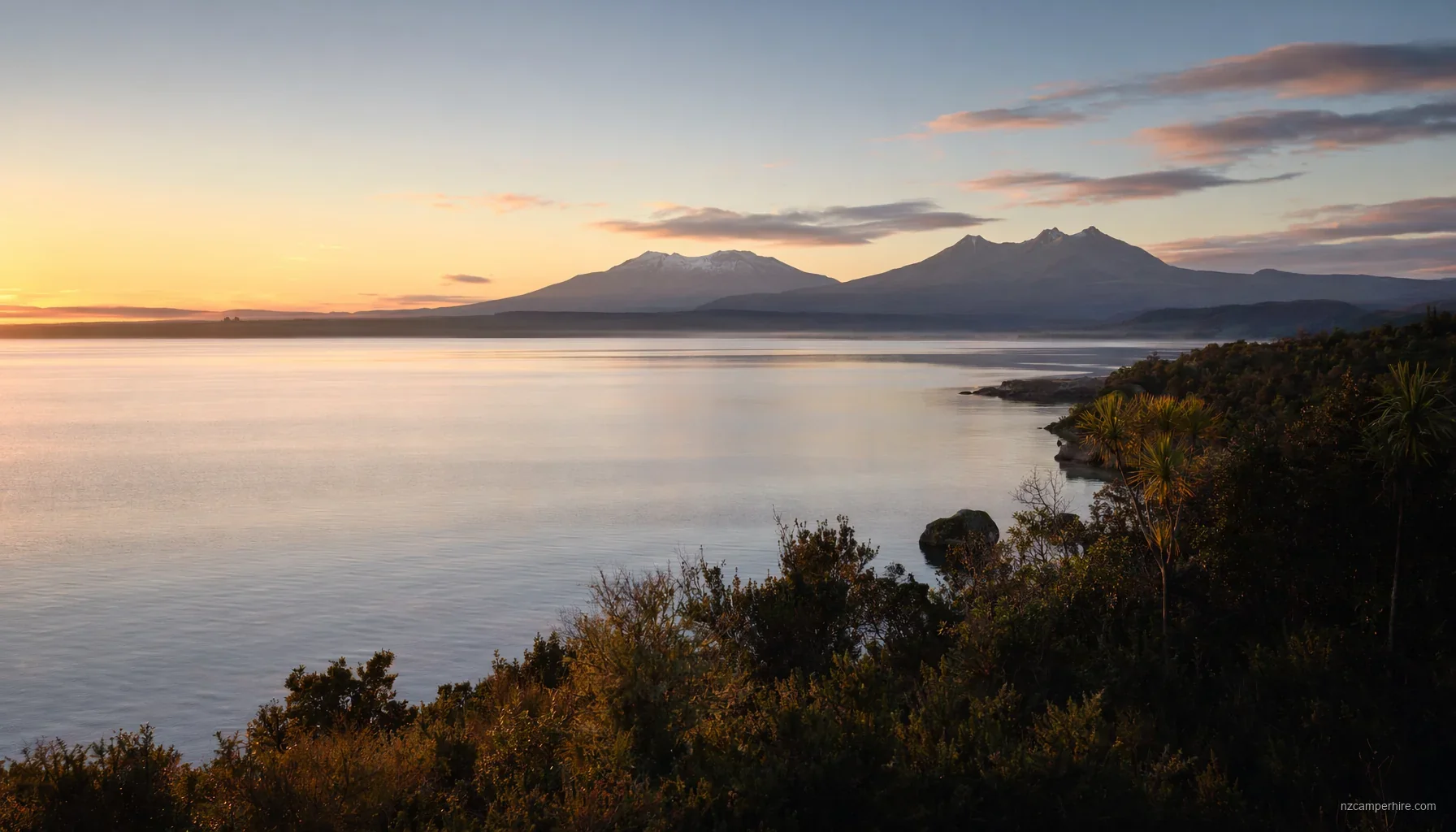
North Island in 7 Days: Auckland to Wellington
7 days · Auckland → Wellington
- volcanic-stage
- lake-stage
- busy-summer
- bring-warm-layers
- book-ahead
Auckland mornings can feel oddly gentle for a city handover: gulls over the yard, a takeaway coffee cooling in the cab, and the GPS sounding far too confident. Seven days from Auckland to Wellington is a quick North Island run. It works if you accept that Rotorua and Tongariro get the proper time, while the Bay of Islands, Coromandel and Hawke's Bay wait for another trip.
The route suits first-time motorhome travellers who want geothermal parks, lake country, one alpine day and a simple one-way finish in Wellington. You will drive on the left, cover about 850 km, and spend two of the seven days mostly outside the van.
Get this route as a printable plan with the day-by-day, the holiday-park shortlist, and a packing checklist — send your dates if you'd like a planner to sense-check the pacing.
Why this route works if you keep moving
This is the fast version of the North Island. Auckland gives you the easiest international arrival. Rotorua gives you geothermal areas, Māori cultural experiences and forest walks without long detours. Tongariro gives you the big mountain day. Wellington is a good end point if you are flying out, or if your next page is the Cook Strait ferry guide and a South Island in 14 days route.
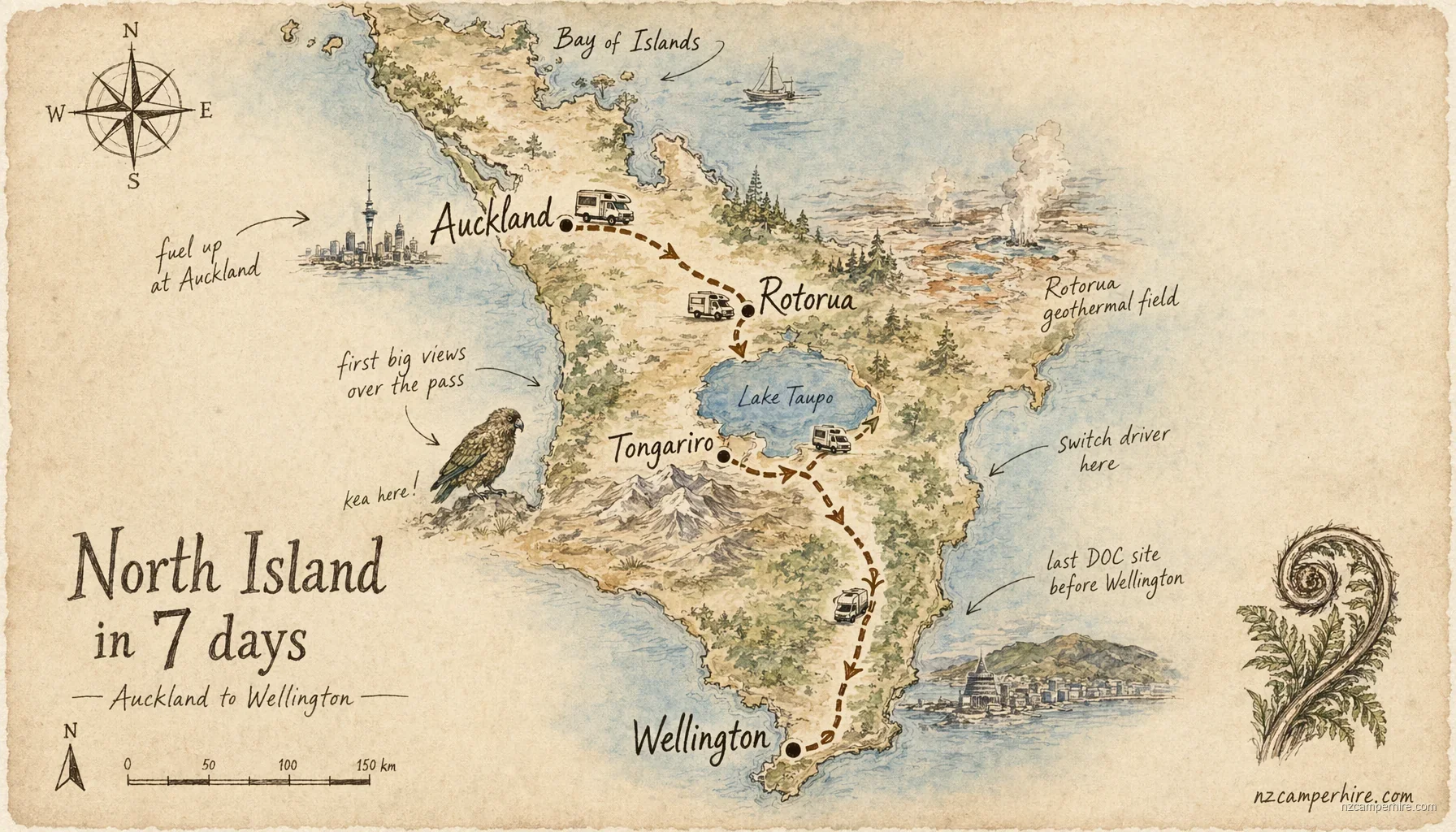
The trade-off is simple. You are not doing a full North Island loop. You are not reaching the Bay of Islands, and you are not swinging east to Hawke's Bay. If you add either one, this becomes a 10 to 12 day trip. For seven days, stay on the spine: Auckland, Rotorua, Taupo, Tongariro, Wellington.
For cross-links while planning, keep the Rotorua region guide, the Tongariro region guide and the Wellington region guide open. January is the busiest month on this route, so the when-to-go notes matter if you are travelling in school holidays.
The shape of it
Total distance is about 850 km, depending on local driving around Rotorua and Wellington. Pure wheel time is roughly 13 to 14 hours. Real travel time, with fuel, food, viewpoint stops and supermarket runs, is closer to 22 to 26 hours across the week.
It is a short route on paper, but the road is busy and varied, so the reward comes from leaving margin rather than chasing every signposted detour.
- Start: Auckland.
- End: Wellington.
- Main highways: SH1 leaving Auckland, SH27 and SH5 toward Rotorua, SH1 around Taupo and across the Desert Road, then SH1 south to Wellington.
- Highest road point: Desert Road, 1,074 m, on SH1 between Turangi and Waiouru.
- Ferry: not needed for this route unless you continue from Wellington to Picton.
- Trip style: one-way, not a loop.
New Zealand driving is slower than many visitors expect. SH1 is not a multi-lane motorway for most of this route. You will meet trucks, roadworks, roundabouts, small towns and passing lanes that appear just when you have stopped thinking about them.
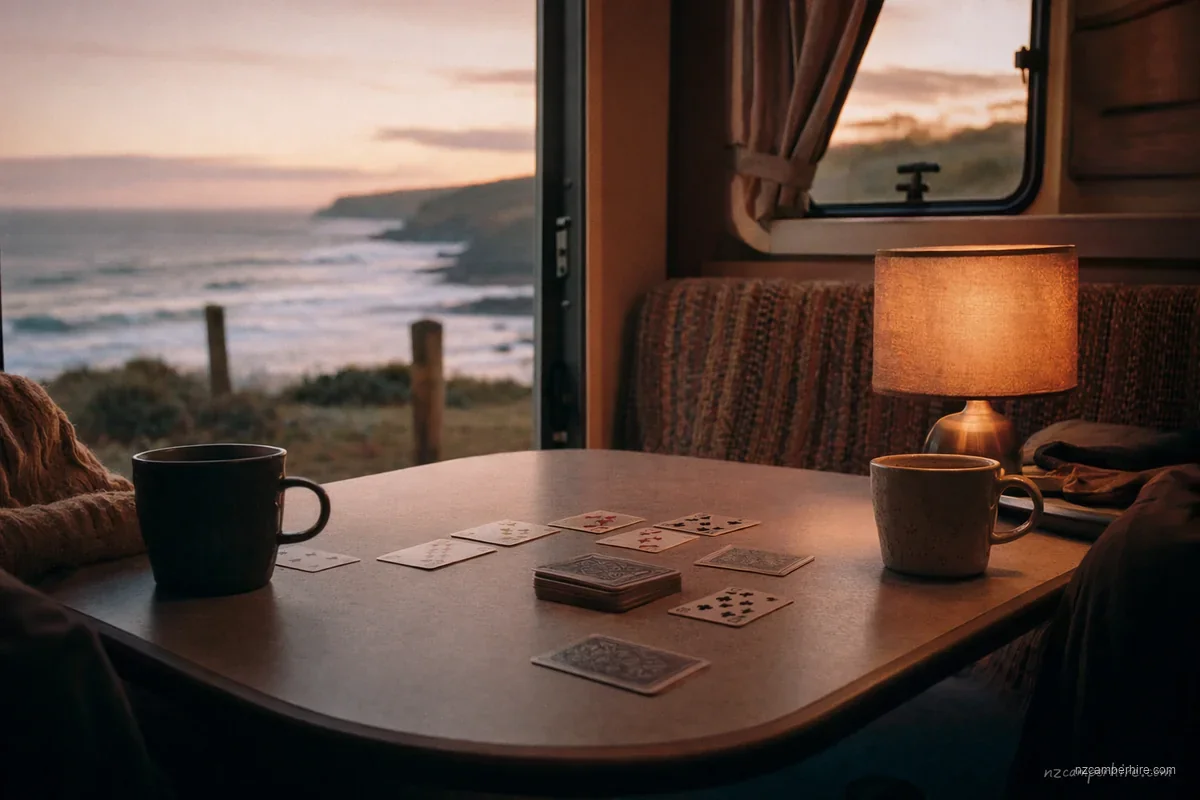
The slow part of this route is the part you'll remember. Build in at least one short evening where the kettle is the only sound — no driving, no plan, just the awning open and the day unwinding.
Route pacing by stop
Leg 1: Auckland to Rotorua via Matamata
Distance: 235 km
Pure driving time: 3 hours 15 minutes; realistic with stops: 5 to 6 hours
Overnight: Rotorua Thermal Holiday Park
In one line: Leave Auckland on SH1, cut through the Waikato on SH27, stop near Matamata if Hobbiton is on your list, then roll into Rotorua on SH5.
Leg 2: Rotorua local geothermal parks and the Redwoods
Distance: 40 to 60 km local driving
Pure driving time: 1 hour; realistic with stops: 4 to 6 hours
Overnight: Rotorua Thermal Holiday Park
In one line: Choose one paid geothermal area, walk the Redwoods, then use the hot pools rather than trying to visit every steam vent in town.
Leg 3: Rotorua to Taupo via Wai-O-Tapu and Huka Falls
Distance: 110 km with short detours
Pure driving time: 1 hour 30 minutes; realistic with stops: 4 to 5 hours
Overnight: Taupo DeBretts Spa Resort
In one line: Take SH5 south, stop early at Wai-O-Tapu if you like geothermal colour, then reach Huka Falls and Lake Taupo before late afternoon.
Leg 4: Taupo to Whakapapa Village via Turangi
Distance: 110 km
Pure driving time: 1 hour 45 minutes; realistic with stops: 3 to 4 hours
Overnight: Whakapapa Holiday Park
In one line: Follow SH1 down the lake edge, buy food in Turangi, then use SH47 and SH48 for the climb into Tongariro National Park.
Leg 5: Whakapapa Village local Tongariro Alpine Crossing shuttles
Distance: 20 to 40 km local driving or shuttle transfers
Pure driving time: 30 minutes; realistic with stops: 8 to 10 hours including the walk
Overnight: Whakapapa Holiday Park
In one line: Do the Tongariro Alpine Crossing only if the forecast is right, or swap to Taranaki Falls and the visitor centre if wind, ice or cloud says no.
Leg 6: Whakapapa Village to Wellington via the Desert Road
Distance: 335 km
Pure driving time: 4 hours 45 minutes; realistic with stops: 6.5 to 7.5 hours
Overnight: Wellington TOP 10 Holiday Park, Lower Hutt
In one line: Leave early, join SH1 near Turangi, cross the Desert Road at 1,074 m, pause at Taihape or Bulls, then take the careful final run into Wellington traffic.
Leg 7: Wellington local harbour and city viewpoints
Distance: 20 to 35 km local driving
Pure driving time: 45 minutes; realistic with stops: 4 to 6 hours
Overnight: Wellington TOP 10 Holiday Park, Lower Hutt, if you are not flying or crossing the strait the same day
In one line: Park once, use public transport or walk the waterfront, visit Te Papa, then keep the van out of tight central streets where possible.
Best months for this Auckland to Wellington run
November, February and March are the easiest months for this route. You get longer daylight than winter, less holiday pressure than January, and a better chance of a settled Tongariro day. December and January work, but book holiday parks earlier, especially Rotorua Thermal Holiday Park and Whakapapa Holiday Park.
Winter is possible, but it changes the trip. The Desert Road can close in snow or ice. Tongariro Alpine Crossing becomes an alpine undertaking, not a normal day walk. If your travel month is June, July or August, read the when-to-go month guide and treat Tongariro as flexible rather than guaranteed.
You'll feel the central plateau change after sunset, when the van windows cool quickly and the kettle becomes the most useful piece of equipment on board.
April and May are underrated if you are comfortable with cooler evenings. Pack warm layers for the central plateau. Rotorua may feel mild, while Whakapapa Village at around 1,100 m can feel properly cold after sunset.
Faster North Island route — Auckland to Wellington with Rotorua and Tongariro stops.
Vehicle size for the North Island roads
For two adults, a 2-berth or compact 4-berth ensuite is usually the cleanest fit. The roads are not extreme, but Rotorua parking, Taupo supermarket stops and Wellington's tighter streets all reward a shorter vehicle. A larger 6-berth can work for families, but it is slower to park and less pleasant in city traffic.
If you are comparing layouts, use the vehicle-size guide before choosing. The question is not only beds. It is internal storage, toilet and shower setup, child-seat rules, heating, and how confidently you can reverse a tall vehicle on the left side of the road.
In the rental market, travellers researching this bracket may see compact ensuite layouts with different bed setups, storage, bathrooms and vehicle ages. Treat model labels as examples of layout and age, not as the route decision itself.
Fuel, parking and one-way logistics
Fuel is straightforward on this route if you do not run the tank low. Fill before leaving Auckland if the handover has been slow. Rotorua, Taupo, Turangi, Waiouru, Taihape, Levin and the Wellington region all have fuel. Do not leave Whakapapa with a near-empty tank and assume the next convenient station will appear at the right moment.
One-way hires from Auckland to Wellington are common, but the fee can vary by season, vehicle type and fleet direction. Sometimes it is modest. Sometimes the same route prices better in reverse. This is one reason a planner should sense-check the pacing and direction before you build flights around it.
Foreign licences in English are valid in New Zealand for up to 12 months. If your licence is not in English, carry an International Driving Permit or approved translation. Minimum hire age varies, usually somewhere from 18 to 25 depending on operator and vehicle class.
If you continue to the South Island, the Cook Strait crossing from Wellington to Picton runs with Interislander or Bluebridge. Allow about 3.5 hours including loading. For December and January vehicle space, book about 4 months ahead rather than waiting until the week before.
Where to slow down vs where to skip
Slow down in Rotorua and Tongariro. Those are the reasons this seven-day route exists. In Rotorua, choose fewer activities and do them properly. One geothermal area plus the Redwoods is better than three rushed paid stops and no time to cook dinner.
Slow down again at Whakapapa. Mountain weather does not care about your spreadsheet. If the mountain day is clear, use it. If it is not, take the shorter walks and do not force the Tongariro Alpine Crossing.
Skip long detours on the long southbound drive. The drive to Wellington is already a full travel day. Whanganui is worth visiting on a longer North Island route, but adding it here makes the final day too stretched. Save it for a 10-day version.
Seven days is enough for the North Island spine. It is not enough for every coast road. That is not a failure of planning. It is the shape of the country.
If you are a day behind
If the first day goes sideways because of a late flight or a slow vehicle handover, stop short in the Waikato and reach Rotorua the next morning. Do not drive tired on your first left-side afternoon. It is better to lose a Rotorua activity than start the trip stressed.
If Tongariro weather is poor, do not add a recovery day unless the crossing is the main point of your whole trip. Continue to Wellington and use the time well there. Te Papa, Zealandia and the waterfront are easier in uncertain weather than another day waiting under cloud at altitude.
If you need to cut one overnight, remove Taupo and drive Rotorua to Whakapapa in one day via SH5, SH1, SH47 and SH48. It is about 210 km, 3 hours pure driving, and 5 hours with stops. Keep the supermarket stop in Turangi.
Related reading
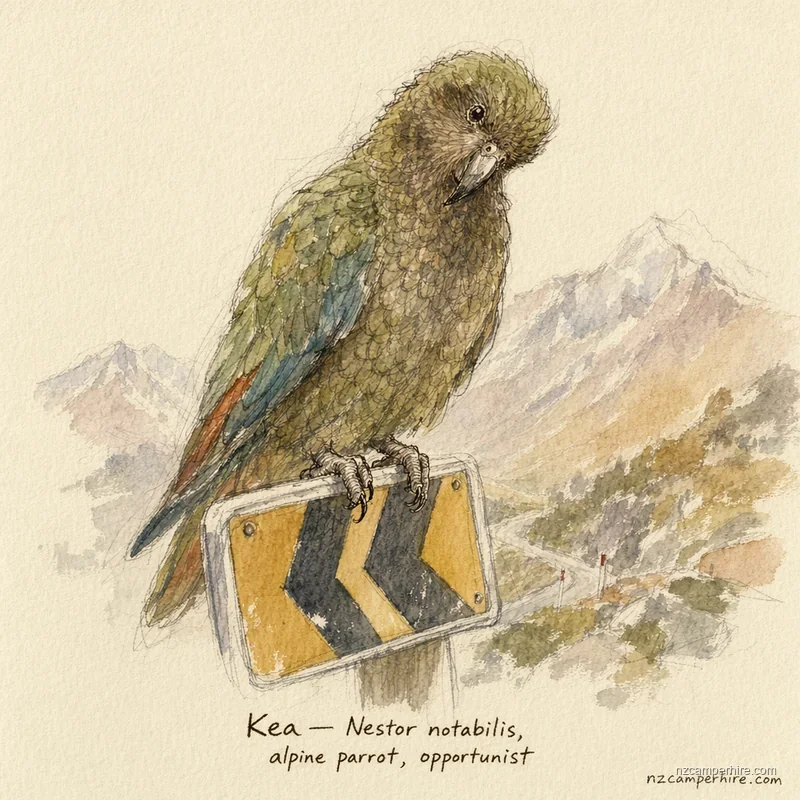
 REGION
 Tongariro National Park
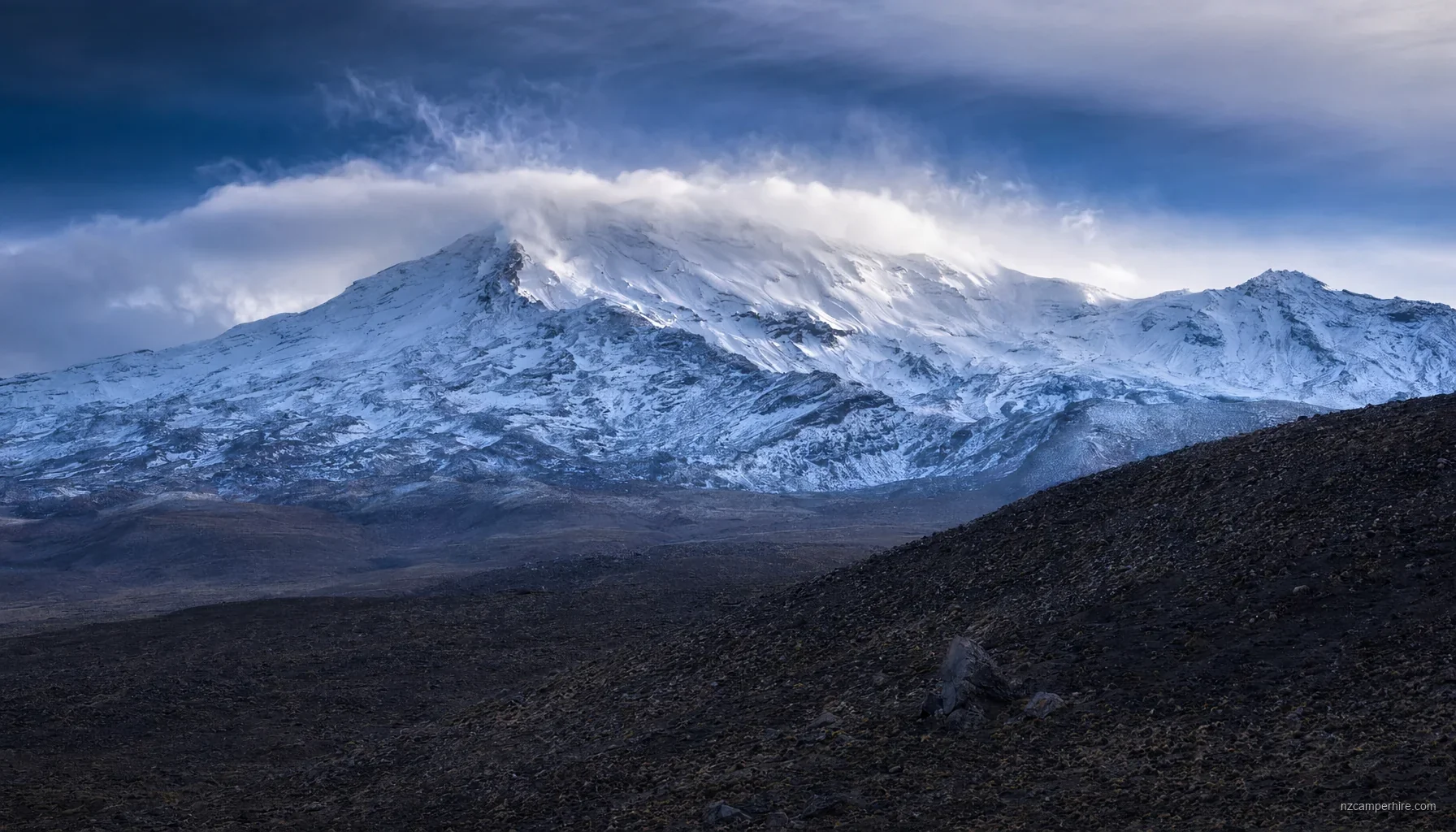
Three active volcanoes and the Tongariro Alpine Crossing — NZ's most famous day hike.
See the region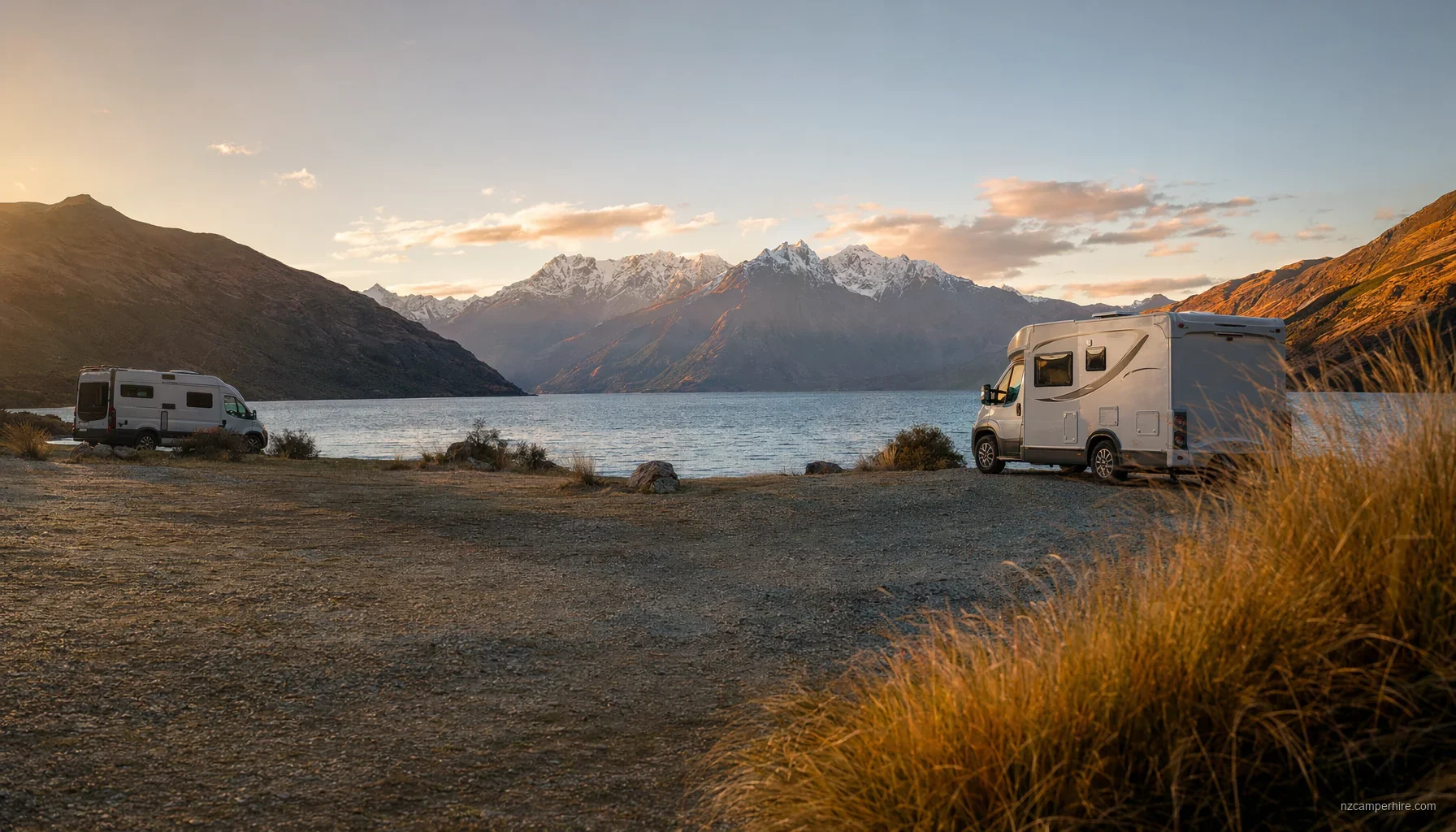 WHEN TO GO
 Summer (December-February)
Peak season — what to book early, where to escape the crowds, sunscreen reality.
Read the timing notes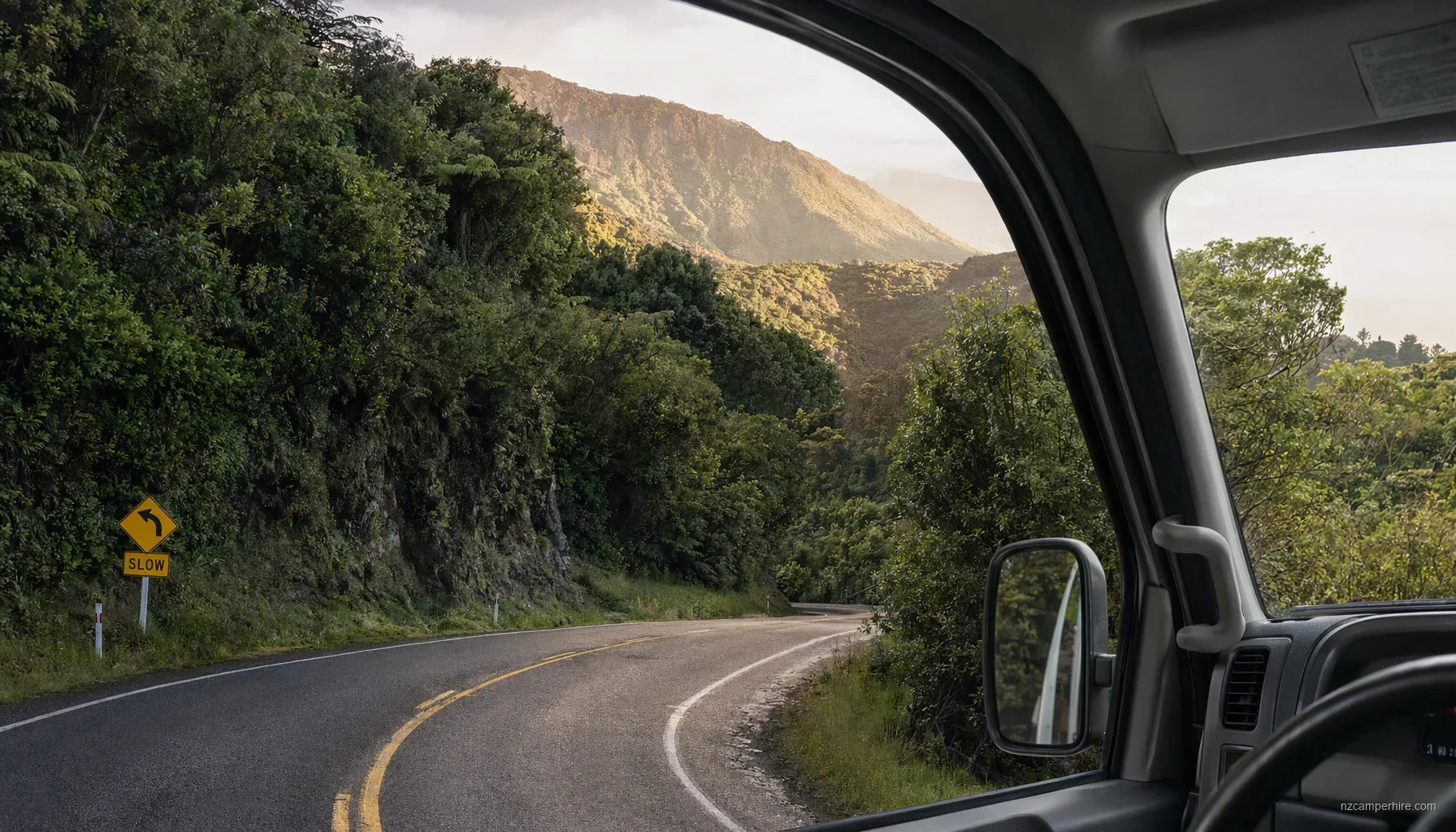 PRACTICAL GUIDE
 Driving on the left in NZ
Roundabouts, give-way rules, narrow bridges, and the one-lane bridge etiquette.
Read the guideNorth Island in 7 days FAQ
Is seven days enough for Auckland to Wellington by motorhome?
Will I pay a one-way drop-off fee from Auckland to Wellington?
Can we rely on doing the Tongariro Alpine Crossing on Day 5?
Is this route safe in winter?
Have a planner check this route for your dates
Send us a quick outline — dates, party size, must-sees. We come back with a vehicle recommendation and a paced route.