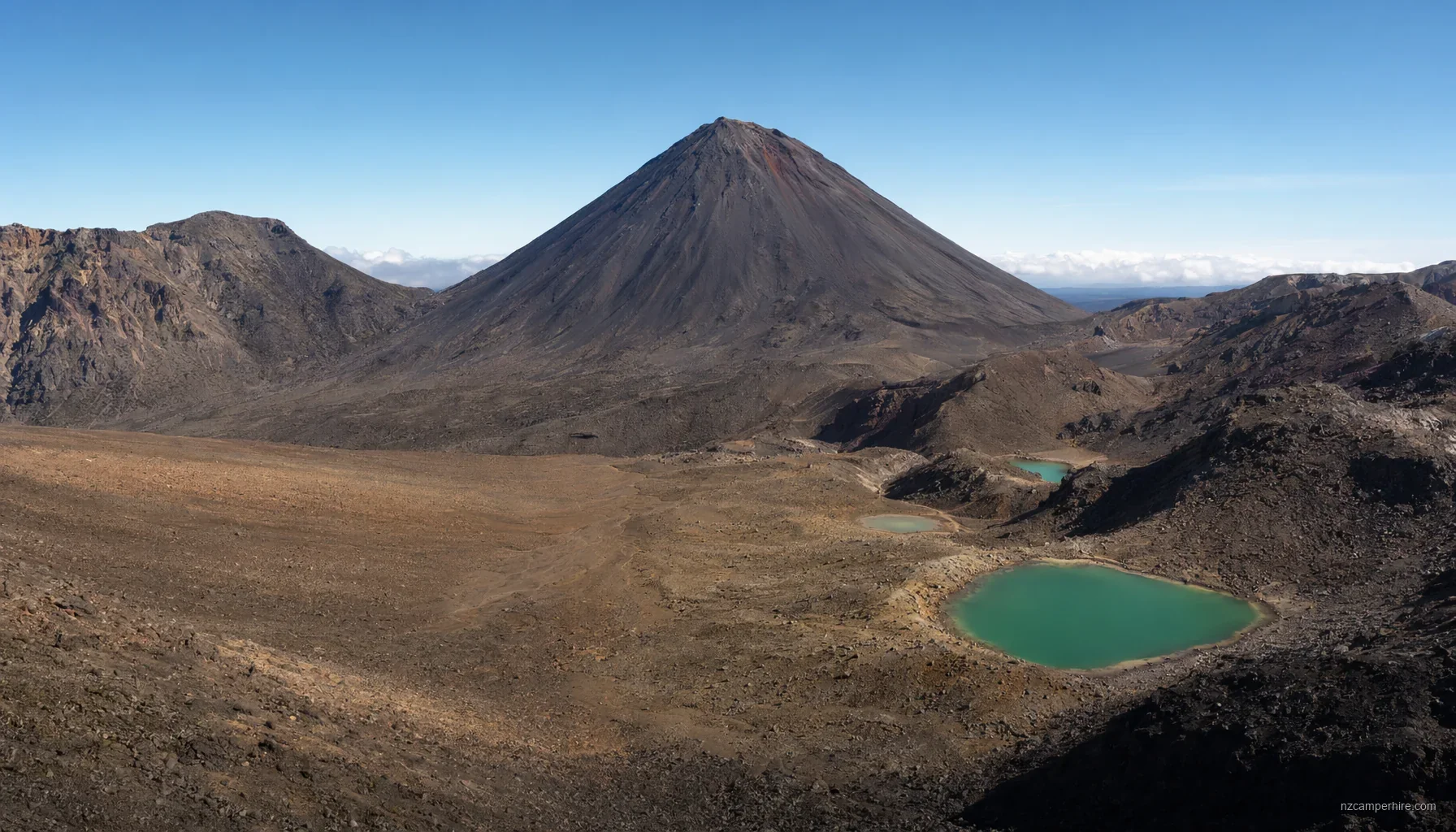
Rotorua and Tongariro 5-Day Motorhome Loop
5 days · Auckland → Auckland
- busy-summer
- book-ahead
- bring-warm-layers
- lake-stage
- volcanic-stage
On a still Auckland morning, this route begins with the kettle clicking off while the motorway hums beyond the depot gates. By evening, the air can smell faintly of sulphur in Rotorua, which is less postcard than proof that the earth is very much awake.
This 5-day North Island loop suits travellers who want geothermal Rotorua, the Hobbiton set near Matamata in Waikato, and a serious alpine day in Tongariro National Park without changing islands. It starts and ends in Auckland, so there is no Cook Strait ferry and no one-way drop-off problem.
The trade-off is pace. Five days is enough, but only if you treat the Tongariro Alpine Crossing as weather-dependent and accept one or two long driving days on SH1, SH5, SH4 and SH3.
Get this route as a printable plan with the day-by-day, the holiday-park shortlist, and a packing checklist — send your dates if you'd like a planner to sense-check the pacing.
Why this loop works
This is a good first motorhome route because it gives you three different North Island landscapes without a complicated road pattern: Auckland city exit, Waikato farmland, Rotorua geothermal country, Lake Taupo, and the volcanic plateau around Tongariro.
It links well with the Auckland region guide, the Rotorua region guide, and the Tongariro region guide. It also sits beside longer route ideas such as a North Island 10-day route or an Auckland to Wellington route if you later decide to add the ferry south.
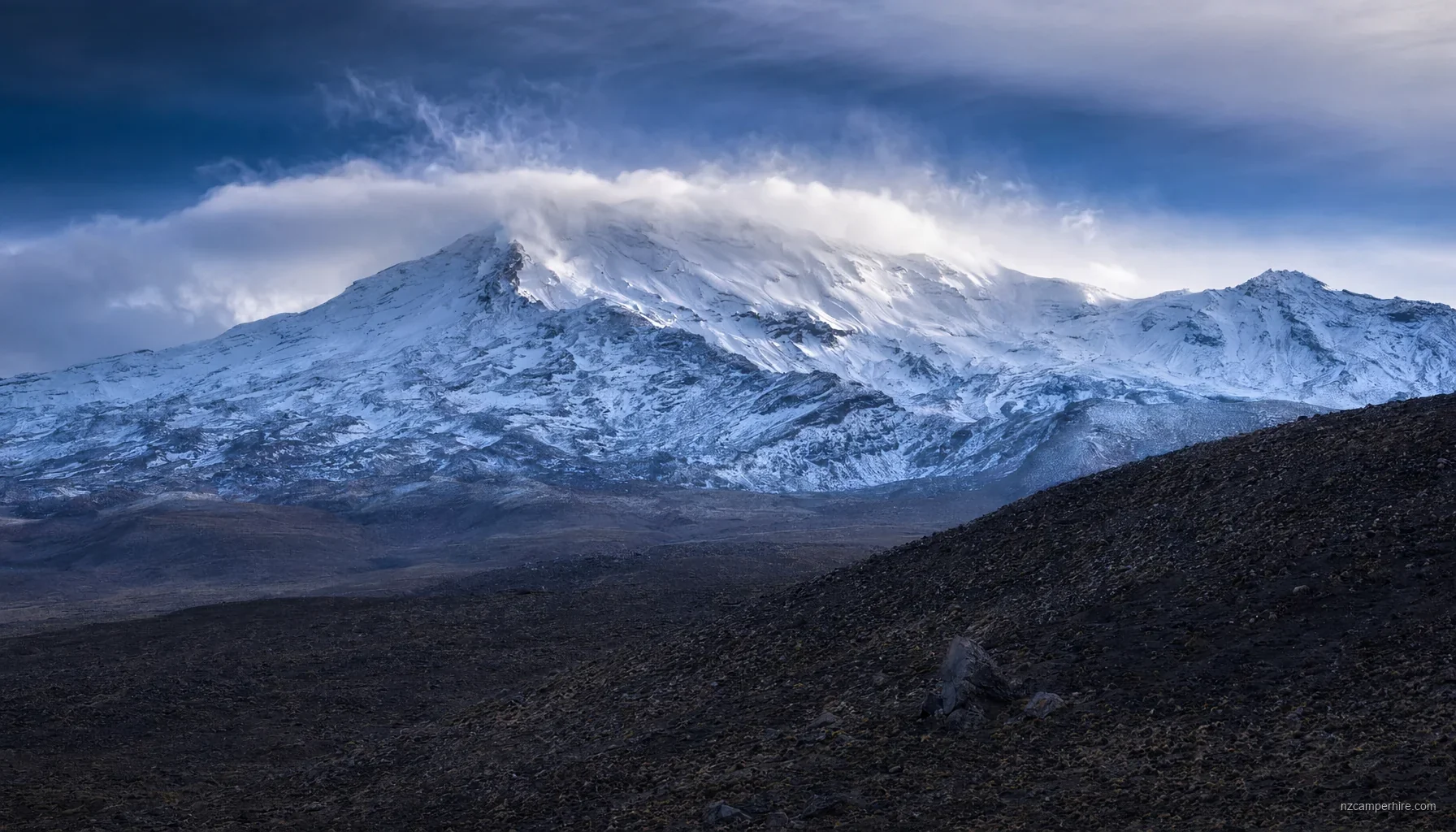
The main caution is the Tongariro Alpine Crossing. It is a 19.4 km alpine walk, usually 6 to 8 hours, and it is not a casual roadside stop. Build your day around the shuttle, the forecast, and the fact that bad weather can close the route at short notice.
The loop at a glance
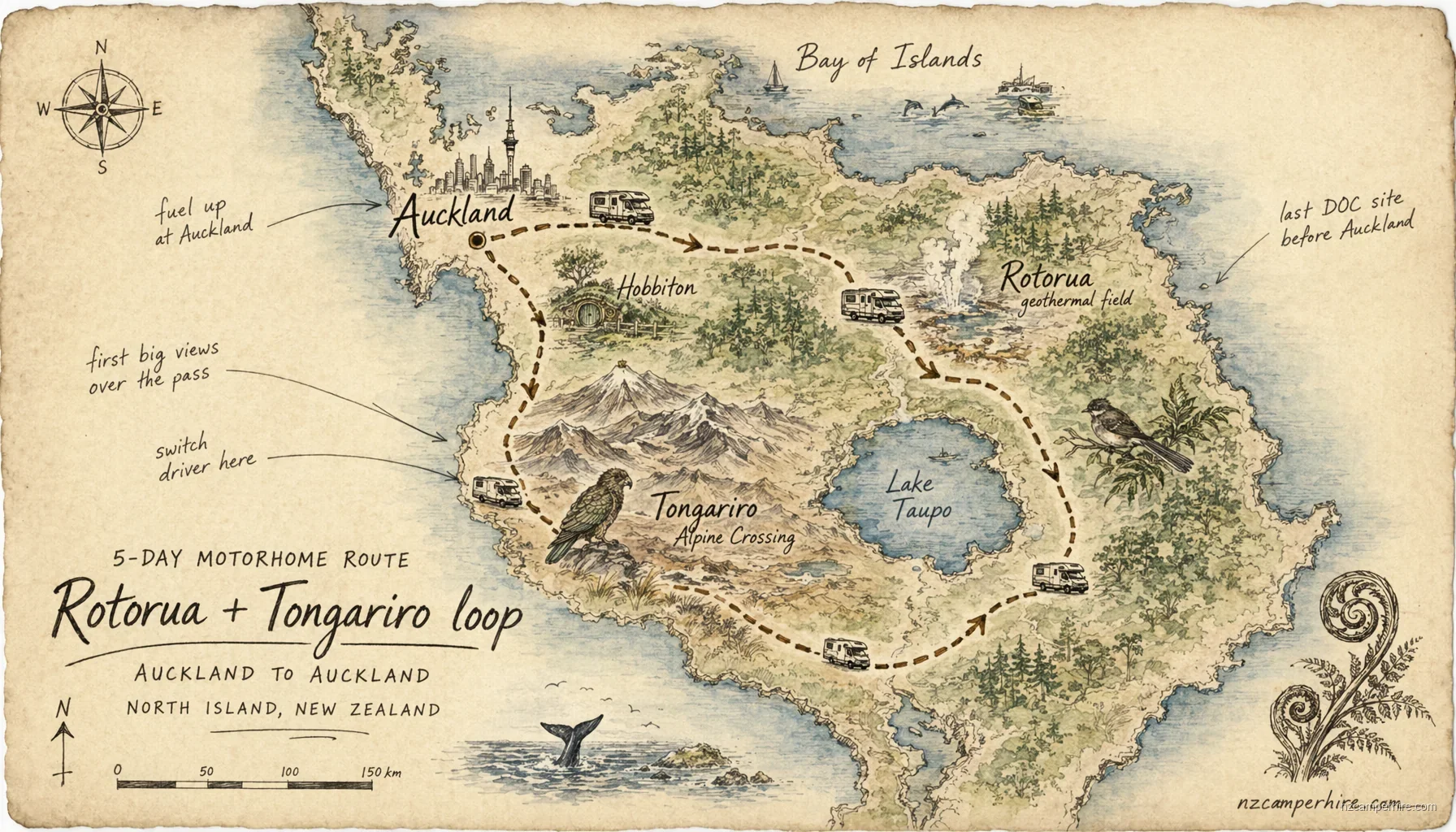
- Route shape: Auckland to Rotorua, Rotorua to Tongariro, Tongariro back to Auckland via Waitomo or Te Kuiti.
- Total distance: about 930 to 980 km, depending on the Waitomo detour and local Rotorua driving.
- Total driving: about 13 to 15 pure driving hours. In a camper, plan 19 to 23 hours once you include fuel, food, photo stops and town exits.
- Ferry: none. This is a North Island loop.
- Main roads: SH1 out of Auckland, SH2 and SH27 to Matamata, SH5 to Rotorua and Taupo, SH1 over the Desert Road, then SH4, SH3 and SH1 back to Auckland.
- Highest road point: the Desert Road section of SH1 reaches about 1,074 m. It can be windy, icy or closed in winter storms.
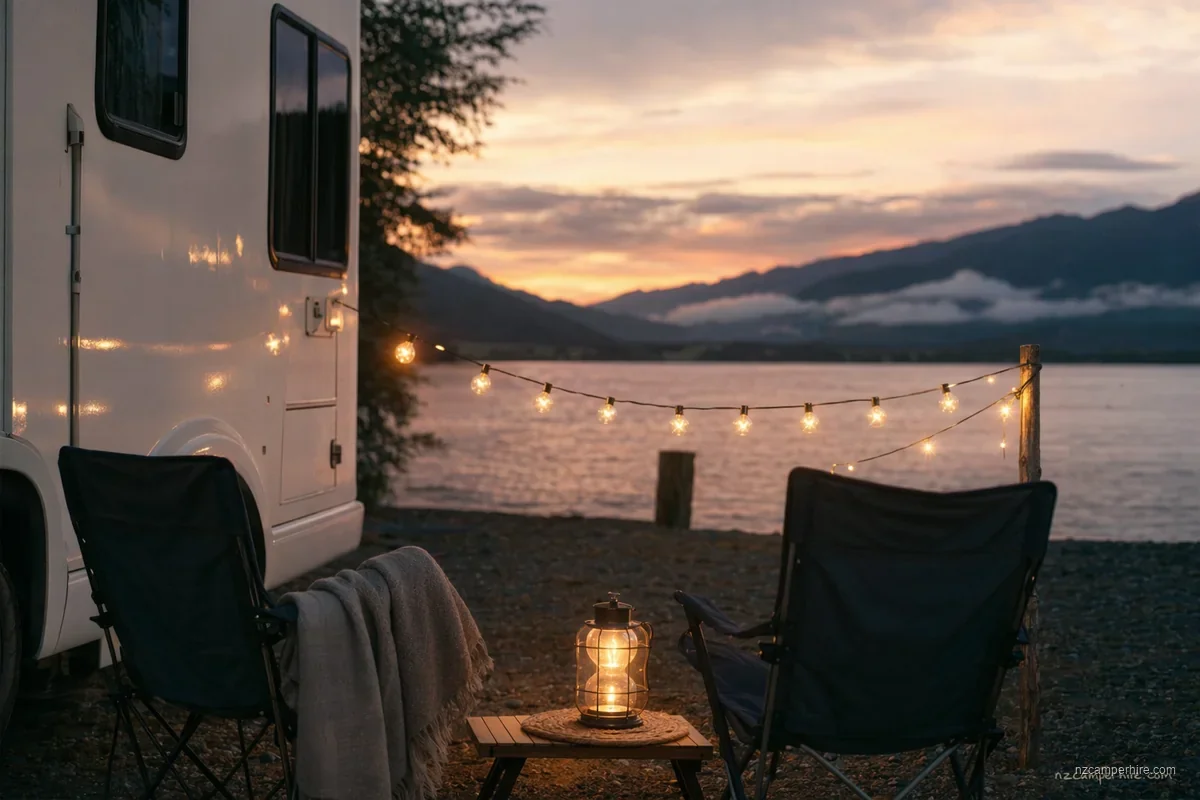
The slow part of this route is the part you'll remember. Build in at least one short evening where the kettle is the only sound — no driving, no plan, just the awning open and the day unwinding.
Day-by-day pacing
Day 1: Auckland → Rotorua via Hobbiton
Distance: 235 km.
Pure driving time: 3.25 to 3.5 hours; realistic with stops: 6.5 to 7.5 hours if you include a Hobbiton tour.
Overnight: Rotorua Thermal Holiday Park.
The day in one line: Leave Auckland early on SH1, use SH2 and SH27 to Matamata for Hobbiton, then continue on SH5 to Rotorua.
Day 2: Rotorua → Rotorua geothermal day
Distance: 40 to 80 km local driving.
Pure driving time: 1 to 1.5 hours; realistic with stops: 5 to 7 hours.
Overnight: Rotorua Thermal Holiday Park.
The day in one line: Choose one geothermal area, add the Redwoods or lakefront, and do not try to visit every steam vent in town.
Day 3: Rotorua → Tongariro via Taupo and the Desert Road
Distance: 270 km.
Pure driving time: 3.75 to 4 hours; realistic with stops: 5.5 to 6.5 hours.
Overnight: Whakapapa Holiday Park.
The day in one line: Follow SH5 to Taupo, stop at Huka Falls, cross SH1 and the Desert Road at 1,074 m, then turn toward Whakapapa Village.
Day 4: Tongariro → Tongariro Alpine Crossing day
Distance: 35 to 60 km by shuttle and local road transfers.
Pure driving time: about 1 hour; realistic with stops: 8 to 10 hours including the 19.4 km walk.
Overnight: Whakapapa Holiday Park, or Tongariro Holiday Park if your shuttle works better from that side.
The day in one line: Take an early shuttle to Mangatepopo, walk only if the forecast is safe, and let the shuttle return you from Ketetahi.
Day 5: Tongariro → Auckland via Waitomo or Te Kuiti
Distance: 335 km direct via Taumarunui and Te Kuiti, or about 385 km with Waitomo Caves.
Pure driving time: 4.75 to 5.5 hours; realistic with stops: 6.5 to 8 hours.
Overnight: Takapuna Beach Holiday Park if you keep the camper one more night, otherwise return in Auckland only if your timing is comfortable.
The day in one line: Use SH4 and SH3 north, add Waitomo only if you are fresh, then join SH1 for the Auckland run.
Best months and crossing weather
For most first-time visitors, February and March are the easiest months for this loop. The roads are busy but manageable, Rotorua evenings are warm, and Tongariro usually has more settled weather than in spring. The March when-to-go guide is the best match if you want warm days without the strongest December to January pressure.
November and April can also work. October can still carry snow and ice on the Crossing. From May to September, treat Tongariro as winter alpine terrain. You may need a guided option, crampons and an ice axe, and the Desert Road can close during snow or high wind.
You'll know the forecast has given you a good morning when the van windows are cool at dawn and Ruapehu sits clear instead of hiding behind its usual grey blanket.
Do not use a fixed booking in Auckland on Day 5 that depends on the Crossing going ahead. Weather can move the walk by a day.
Volcanic plateau loop — Hobbiton, Rotorua geothermal, Tongariro Alpine Crossing.
Vehicle size and camping rules
For two adults, a 2-berth ensuite or compact 4-berth ensuite is the easiest fit. You get a toilet and shower for certified self-contained camping rules, but the vehicle is still manageable in Rotorua car parks, supermarket bays and the tighter lanes around holiday parks.
A 6-berth can do this loop, especially for families, but it is slower on windy plateau roads and less pleasant in Auckland traffic. If you are weighing layouts, read the 2-berth vs 4-berth vehicle-size guide before choosing purely by bed count.
Freedom camping is not a simple fallback in this area. Rotorua, Taupo and Ruapehu District all have local rules, and some areas ban overnight parking even for certified self-contained vehicles. Use the freedom camping guide before assuming a lakefront or trailhead car park is legal.
Fuel, roads and practical logistics
Fuel is easy in Auckland, Matamata, Rotorua, Taupo, Turangi, National Park, Taumarunui, Te Kuiti and Hamilton. Do not run the tank low before the Desert Road or late at night around National Park. Services thin out quickly once you leave the larger towns.
New Zealand drives on the left. If your licence is in English, it is usually valid for driving here for up to 12 months. If it is not in English, carry an International Driving Permit or an approved translation. Minimum hire age varies by operator and vehicle class, commonly from 18 to 25.
Allow more time than a phone map suggests. SH1 south of Auckland can crawl at commuter times, SH5 has curves and truck traffic, and the plateau can bring fog, rain, wind and sudden temperature changes even in summer.
Where to slow down and where to cut
Slow down in Rotorua if geothermal activity is the reason you chose this loop. One paid geothermal area plus a forest or lake stop is better than three rushed admissions and a late arrival.
The trade-off is simple: every extra paid stop in Rotorua takes time from the plateau, so choose the one you most want and leave the rest alone.
Slow down in Tongariro if the weather is marginal. Taranaki Falls, Tawhai Falls and the shorter walks from Whakapapa Village are useful alternatives when the full Crossing is unsafe.
Cut Waitomo on the return if Day 4 was hard or wet. The caves are worthwhile, but they turn the last day into a long haul. Cut the Desert Road loop only if winter conditions make it poor, then route more directly through Turangi and National Park.
If you gain or lose a day
If you have 2 extra days, add one night at Lake Taupo and one spare night in Tongariro. The Taupo night breaks the Rotorua to Tongariro drive, and the spare Tongariro night gives you a real weather buffer for the Crossing.
If you are a day behind, remove Hobbiton or Waitomo rather than cutting the Rotorua night or forcing the Crossing after a late arrival. Hobbiton runs timed tours, so it is easy to schedule on a future North Island trip. Tongariro needs sleep, food, water and a safe forecast.
Related reading
 REGION
 Tongariro National Park
Three active volcanoes and the Tongariro Alpine Crossing — NZ's most famous day hike.
See the region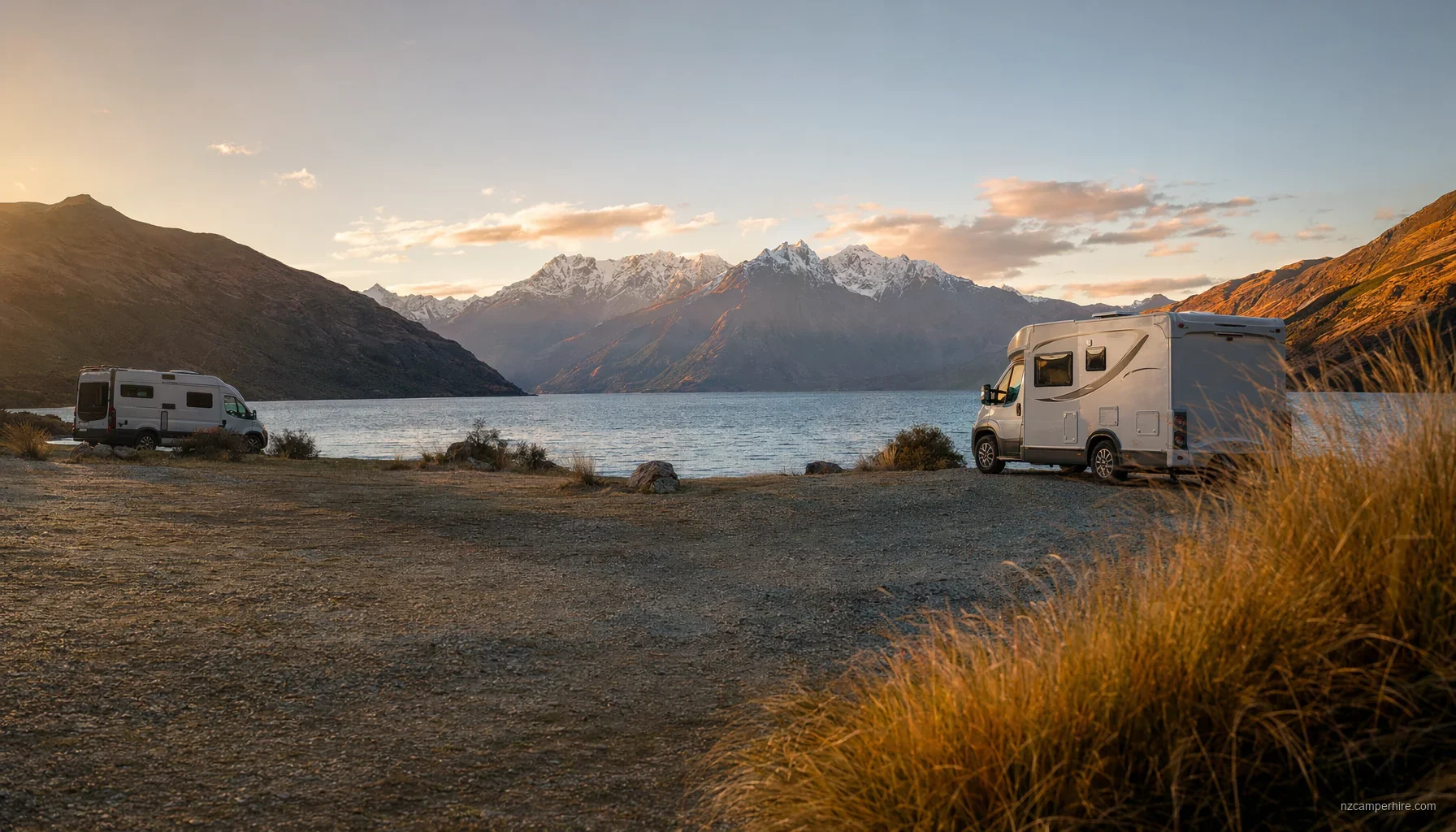 WHEN TO GO
 Summer (December-February)
Peak season — what to book early, where to escape the crowds, sunscreen reality.
Read the timing notes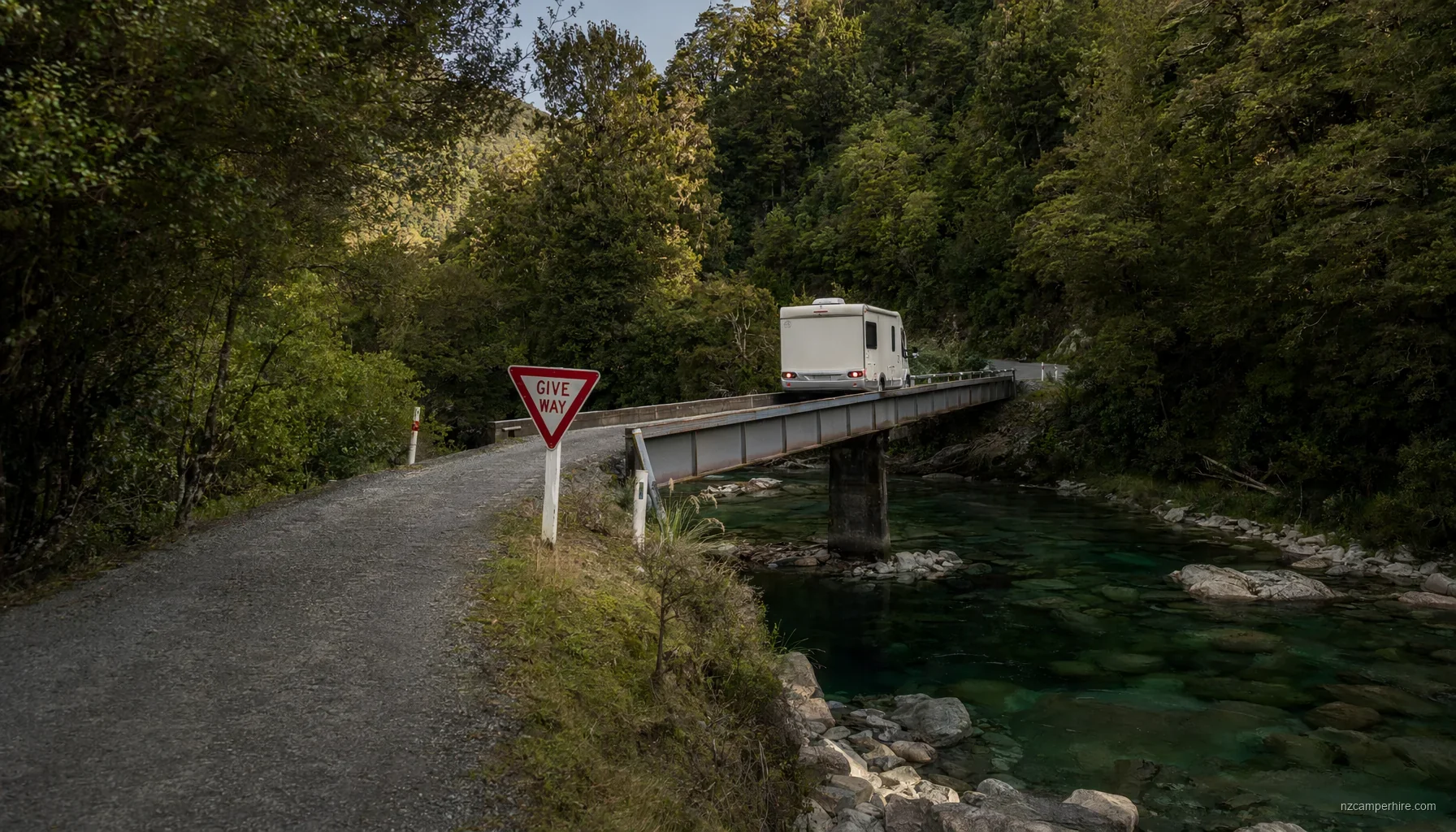 PRACTICAL GUIDE
 First time driving a motorhome
Height awareness, swing on turns, parking, reversing — short briefing before pickup.
Read the guideRotorua + Tongariro loop FAQ
Can we do the Tongariro Alpine Crossing on this 5-day loop?
Is Hobbiton easy to include between Auckland and Rotorua?
What camper size is sensible for this route?
Are winter road closures a real issue on this loop?
Have a planner check this route for your dates
Send us a quick outline — dates, party size, must-sees. We come back with a vehicle recommendation and a paced route.