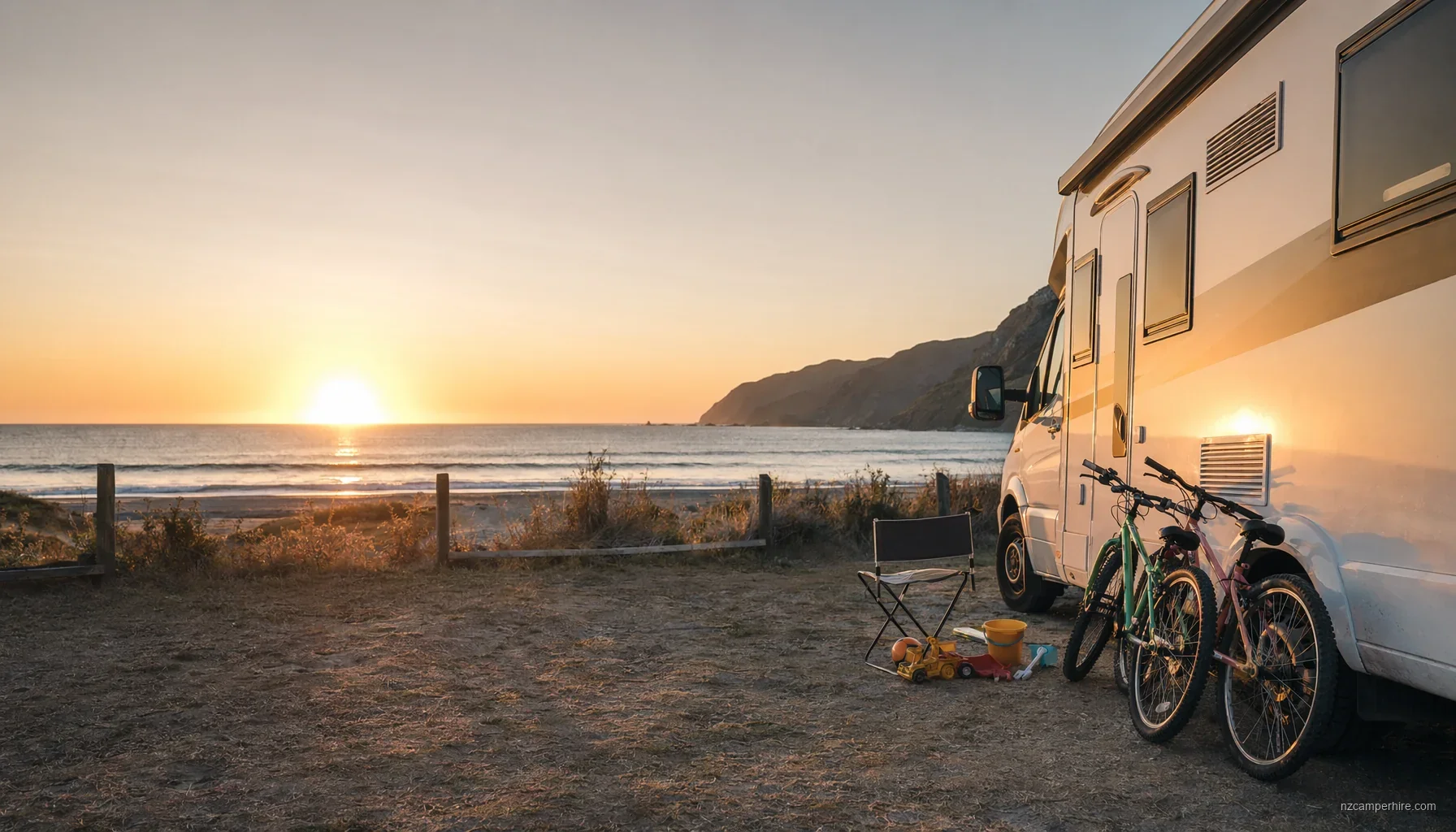
Travelling with Kids in a NZ Campervan
Berth choice, car seats, screen vs activity balance on long driving days.
- family-friendly
- wet-weather-plan
- pack-snacks
- bring-warm-layers
- book-ahead
Some family mornings in a campervan start with a kettle rattling, socks drying over a seatback, and one child asking for breakfast before the blinds are fully open. That is part of the charm, and also part of the planning.
New Zealand works well for a family motorhome trip, but it is not a small-country drive in the way many visitors expect. Roads are winding, towns are spread out, and a wet afternoon inside the van can feel longer than SH1.
The big choices are simple: enough legal belted seats, the right berth size, realistic driving days, and campsites where children can move without you watching every wheel track.
Get the planning checklist — and reply with your dates if you'd like a planner to flag the kid-specific gotchas for your route.
Start with seatbelts, not bed layout
Every child must travel in a fitted, approved seatbelt position. Nobody can sit or sleep in a rear bed while the vehicle is moving. This catches families who see a roomy rear lounge and assume it is usable on the road.
Waka Kotahi, the NZ Transport Agency, sets the child restraint rules. In plain terms: children under 7 must use an approved child restraint, children aged 7 must use one if available, and children 8 and over must use a safety belt. If your licence is not in English, bring an International Driving Permit or approved translation. Foreign licences in English are valid for up to 12 months.
Book child restraints early for December, January and February travel. Also check the exact restraint type. A toddler seat, booster and rear-facing infant capsule are not interchangeable, and not every motorhome has anchor points in every rear position.
Choose a berth for rainy evenings
A 4-berth can suit two adults and two smaller children if you pack lightly and accept daily bed-making. A 6-berth gives better separation and storage, but it is longer, wider, and less relaxed in town centres such as Queenstown or Rotorua.
The trade-off is real. The larger van is cheaper per person on some dates and easier at bedtime. It is also harder on narrow roads like the Crown Range Road between Wanaka and Queenstown, which climbs to 1,121 m, and slower on SH6 through the West Coast. If one parent is nervous about left-side driving, size matters.
For families landing in Christchurch and following South Island in 14 days, a 6-berth is manageable if you keep driving days short. For North Island in 10 days from Auckland, a compact 4-berth can be easier around supermarket car parks, geothermal stops and holiday park lanes.
Set child-friendly driving limits
New Zealand driving times are not motorway times. Allow 60 to 70 km per hour as a planning average once you include roadworks, photo stops, toilet breaks and lunch.
- Christchurch to Lake Tekapo: about 230 km, usually 3 to 3.5 hours via SH1 and SH8 with children.
- Lake Tekapo to Queenstown: about 255 km, 3.5 to 4.5 hours via SH8 and Lindis Pass at 965 m.
- Auckland to Rotorua: about 230 km, 3 to 3.5 hours depending on SH1 traffic and meal stops.
- Queenstown to Te Anau: about 170 km, 2.5 to 3 hours, longer if you stop often on the lake roads.
The gentler plan can look less efficient on paper, but it usually buys you calmer evenings and fewer back-seat negotiations.
Plan one proper stop every 90 minutes. On longer South Island days, use lakefront stops at Tekapo, Wanaka or Lake Pukaki rather than trying to push through. Children do better when the day has a swim, a playground or a short walk, not just another scenic lookout.
Campsites that help families sleep
Holiday parks are often worth it with kids. You get hot showers, laundry, kitchens, playground space and a safer place to reset after a long drive. North South Holiday Park near Christchurch Airport is useful for the first or last night. Creeksyde Queenstown has a central location but tight access, so arrive before dark. Rotorua Thermal Holiday Park works well for pool time and easy food runs.
The best family campsite nights often sound very ordinary: showers running, pasta boiling, and children finally using their outside voices outside.
DOC campsites can be excellent, but check facilities before promising comfort. White Horse Hill near Aoraki/Mount Cook has strong scenery and basic facilities. Lake Pukaki is handy for a low-key stop in the Mackenzie Country. Cascade Creek on the Milford Road is beautiful, but sandflies and weather can be hard work with tired children.
Freedom camping is not a family fallback plan. You need the right self-contained certification, local bylaws vary, and councils in places such as Queenstown Lakes and Auckland are strict. Read the freedom camping guide before you build it into a route.
Food, screens and the small stuff
Stock up before remote sections. Bigger supermarkets are easier in Auckland, Christchurch, Rotorua, Queenstown and larger provincial towns. Once you are on SH94 toward Milford Sound or SH6 down the West Coast, choice drops and prices rise.
Use screens deliberately. Download maps, music and shows before rural driving. Mobile coverage is patchy in Fiordland, parts of the West Coast, and around mountain valleys. Keep a small bag inside the cab with snacks, wipes, warm layers, water bottles and a rubbish bag. Do not bury rain jackets under the rear bed.
For activities, mix one paid attraction with one free outdoor stop each day. In Rotorua, a morning geothermal visit plus an afternoon playground or lake walk works better than three ticketed stops. In Queenstown, build in downtime. Children rarely care that the next viewpoint is famous if they have been belted in for four hours.
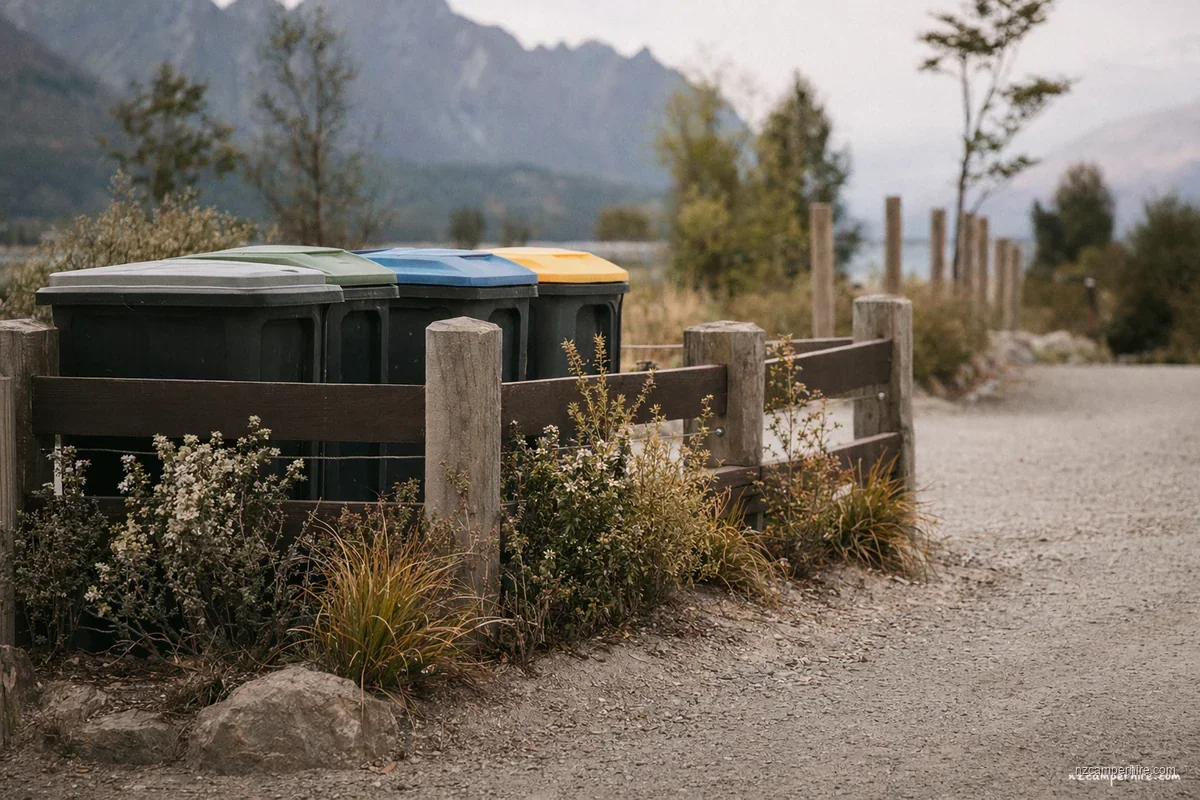
Rules and practicalities are easier to remember when you've felt them — the cold of a wet boot at a freedom camp, the relief of an early ferry slot. This guide is written from those moments, not from a checklist.
Related reading
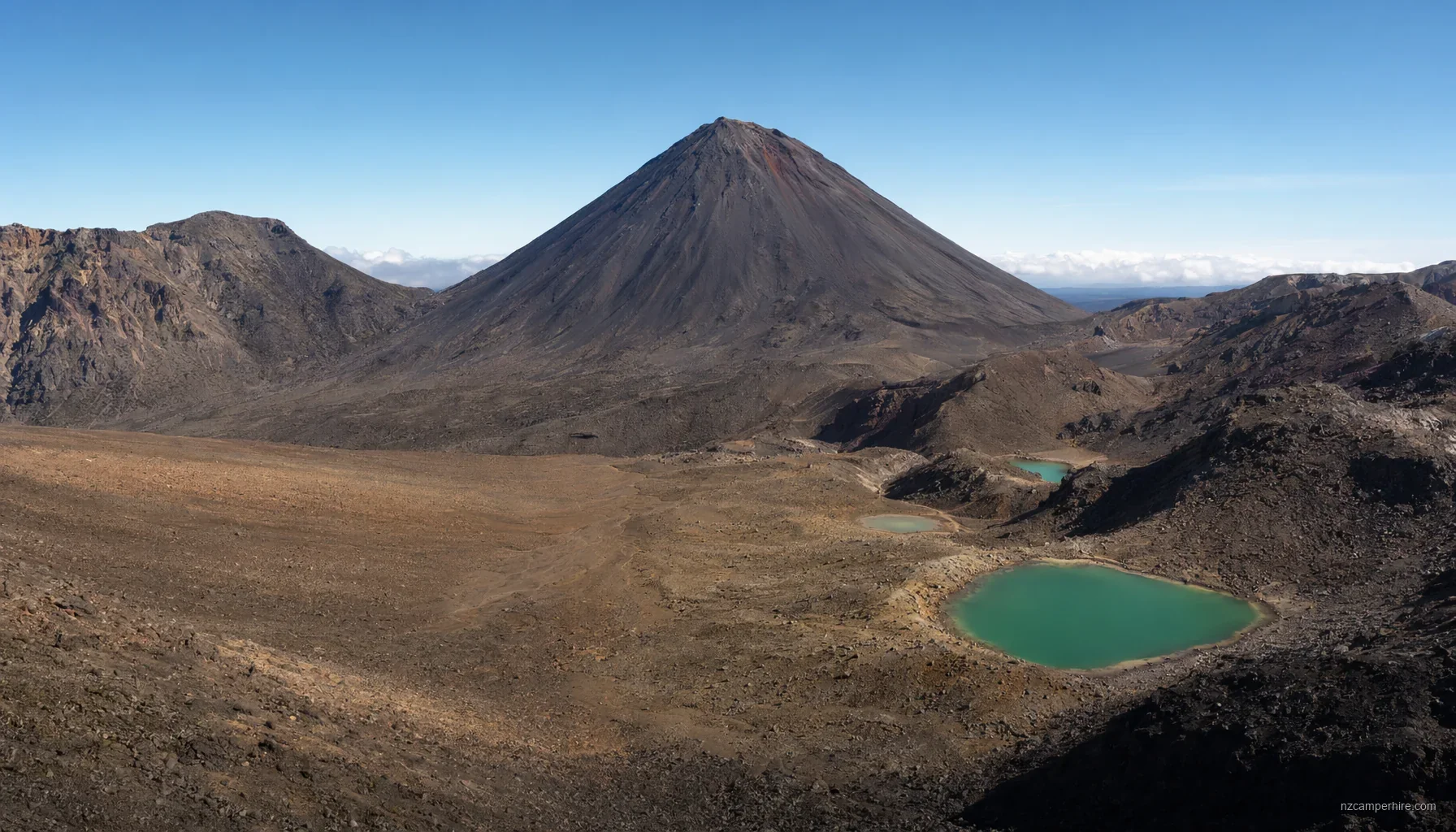 ROUTE
ROUTE Rotorua + Tongariro loop
Volcanic plateau loop — Hobbiton, Rotorua geothermal, Tongariro Alpine Crossing.
See the route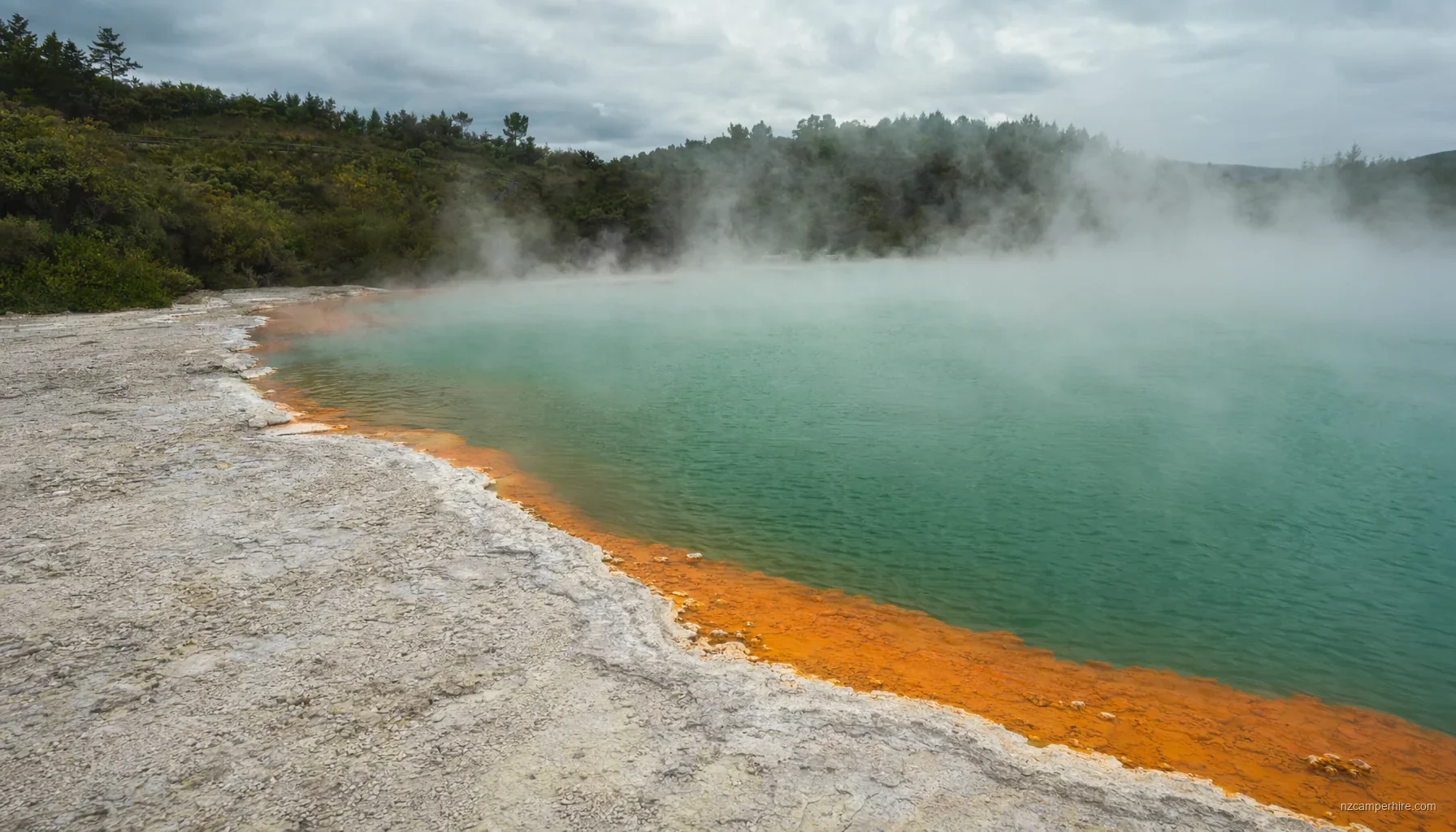 REGION
 Rotorua
Geothermal heartland — geysers, hot pools, Māori cultural experiences. 2.5 hours from Auckland.
See the region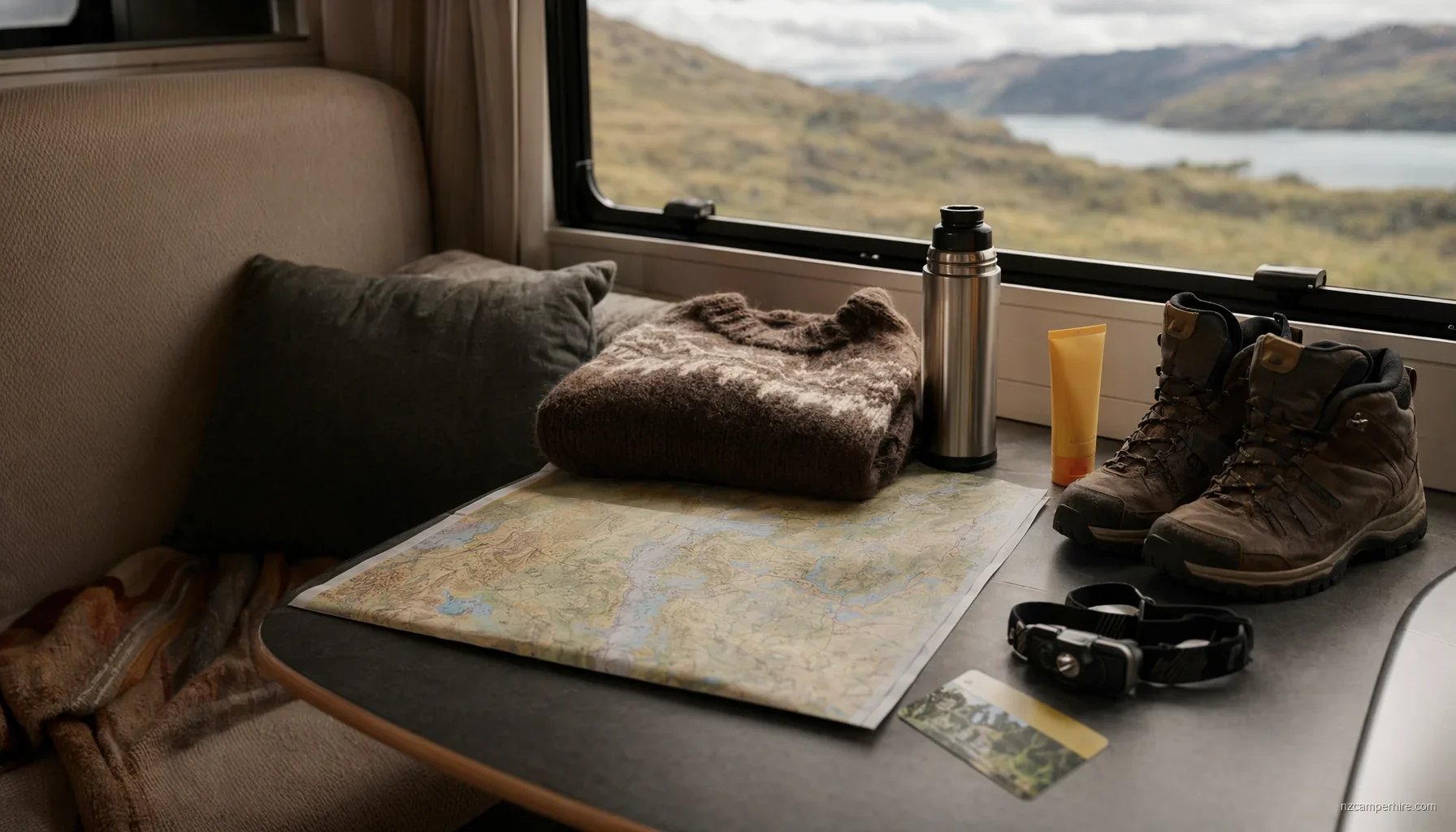 PRACTICAL GUIDE
 What to pack for a NZ campervan trip
What the rental operator typically provides, what you should bring from home, and what's easier to buy on arrival.
Read the guideTravelling with kids FAQ
Do children need car seats in a NZ motorhome?
Can children sleep in the back while we drive?
Is a 6-berth motorhome too big for a family trip?
How far should we drive each day with kids?
Are DOC campsites suitable for children?
Have a planner answer this for your specific trip
Rules and practicalities depend on dates, party size, and route. Send us your outline and we'll come back with answers tailored to your trip.